Ask anyone who has ever opened a hospital bill in the United States, and the phrase “emergency room” tends to trigger a small wave of dread. Yet in a surprising number of places around the world, walking into an ER looks almost nothing like that experience. In these countries, the financial side of a medical emergency barely registers, sometimes costing less than a takeaway espresso, and often nothing at all.
The reasons vary from country to country. Some rely on tax-funded universal systems that eliminate billing altogether. Others use small, capped copayments designed to prevent people from avoiding care they actually need. Below are eight places where the price of urgent medical help stays remarkably, almost quietly, low.
United Kingdom
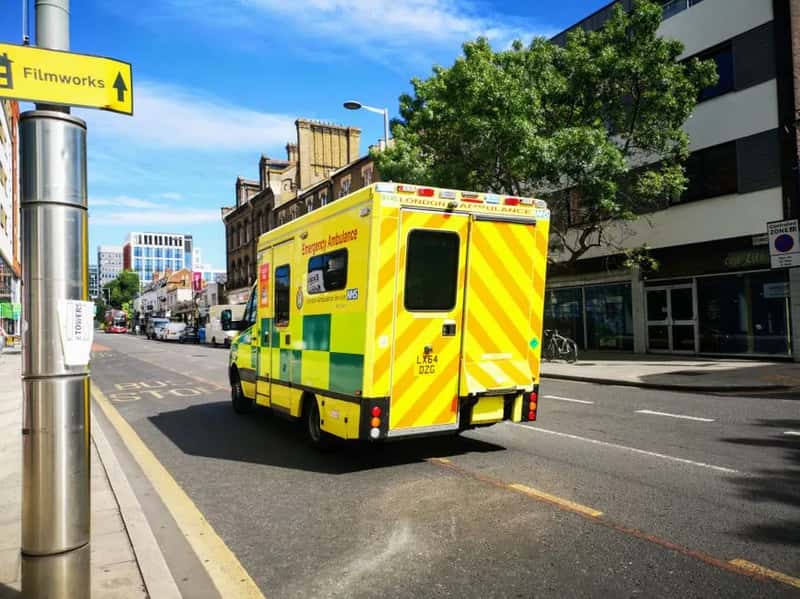
The National Health Service treats every walk-in emergency the same way, regardless of who you are or where you are from. Emergency care including ambulance and emergency department treatment is free to everyone including overseas visitors, though ongoing care such as hospital admission is chargeable unless the patient meets criteria for free NHS care.[1] That single rule turns a potential financial crisis into a non issue for anyone who simply needs to be seen, stabilized, and sent home.
The scale of this system is hard to overstate. There are approximately 10 million A&E attendances per year in England alone.[2] Ambulance callouts are covered too, since ambulance services are publicly funded and dispatched through the 999/112 system with no direct charge to the caller.[3] The tradeoff shows up in waiting rooms rather than invoices, since the NHS target of admitting, transferring, or discharging most A&E patients within four hours has come under pressure, with average waits running two to four hours and some patients waiting far longer during peak periods.[2]
Denmark
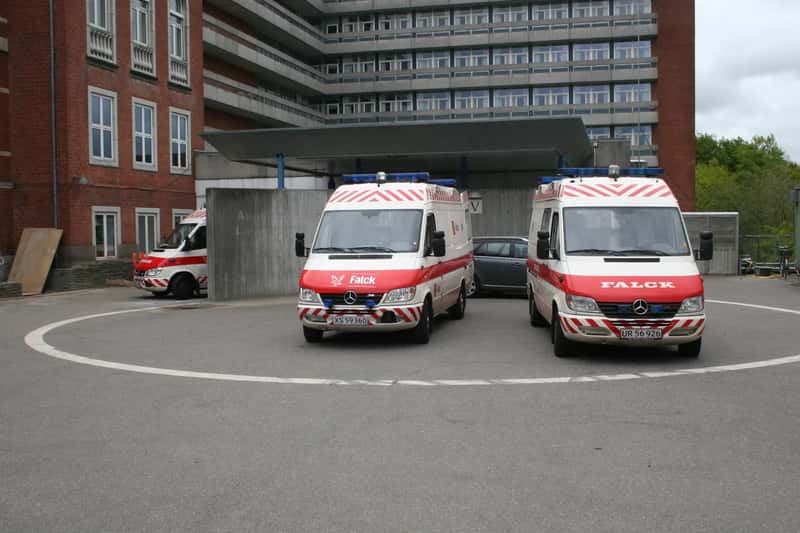
Danish healthcare operates on a principle that leaves little room for confusion at the billing desk, because there usually isn’t one. Denmark provides free healthcare to all residents, funded through taxation, and the system is entirely free at the point of use, with no copays for doctor visits, hospital stays, or emergency care.[4] That includes the moment someone shows up at an emergency department after an accident or sudden illness.
The coverage extends beyond adults dealing with a crisis. Dental care for children under 18 is also free[4], reinforcing a system built around prevention as much as emergency response. The one honest caveat, as with most universal systems, is patience rather than payment, since wait times for elective procedures can be long[4] even though urgent care itself moves quickly.
Canada
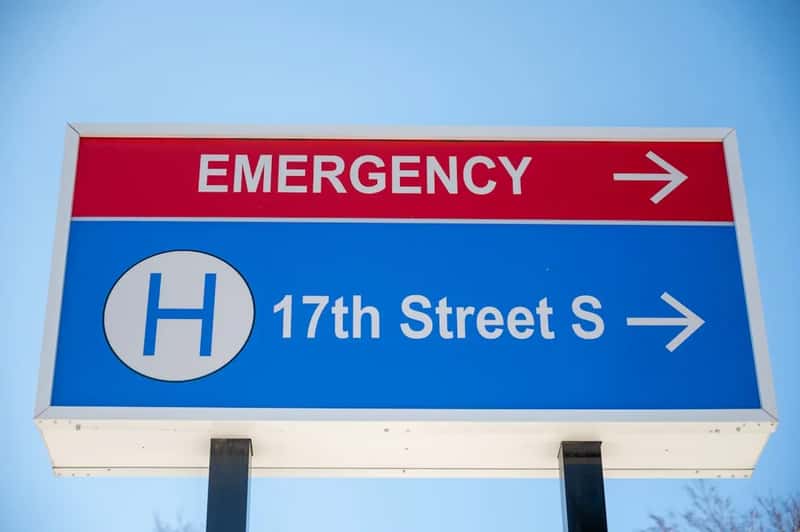
For residents, Canada’s approach to emergency care removes cost from the equation almost entirely. Canada’s Medicare system covers citizens, permanent residents, refugees, and First Nations people, administered through 13 provincial and territorial plans, each offering free access to core services like GP visits, emergency care, maternity, and mental health.[5] Someone experiencing chest pain or a broken bone in Toronto or Calgary walks out without a bill for the emergency visit itself.
The system’s real strain shows up before people ever reach the ER, in the form of delays getting referred to specialists. In 2024, the average wait between a GP referral and treatment reached 30 weeks, the longest ever recorded nationally, though 91 percent of Canadians still report having a regular doctor, a much higher access rate than many OECD peers.[5] It is worth noting this generosity is reserved for residents, since a visitor without coverage faces a dramatically different reality, with a simple emergency room visit potentially running into the thousands of dollars.
Australia

Australia’s Medicare system mirrors the UK’s promise of care without a price tag attached, at least for those who qualify. Australia’s Medicare is the country’s universal healthcare scheme, providing benefits for medical treatments and hospital stays for citizens and permanent residents, covering essential treatments in public hospitals, and it is free for locals just as in the UK.[6] An emergency room visit at a public hospital in Sydney or Perth simply does not generate a bill for eligible patients.
What makes Australia particularly interesting for travelers is its network of bilateral arrangements. The country has Reciprocal Health Care Agreements, meaning citizens of the UK, New Zealand, Ireland, Italy, Finland, Sweden, Belgium, the Netherlands, Norway, Slovenia, Estonia, Croatia, or Malta may get limited Medicare coverage for medically necessary care during a temporary stay.[6] Even so, many residents still carry supplementary coverage, since about 55 percent of Australians also carry private health insurance for extras like dental, optical, and private hospital rooms[4], none of which changes the fact that a genuine emergency stays essentially free.
New Zealand

New Zealand runs one of the more unusual systems on this list, built around the idea that accidents deserve automatic, no fault coverage. Emergency departments treat people who have a serious illness or injury that needs urgent care, and anyone in the country can go to a hospital’s emergency department for that kind of urgent attention.[7] Once inside, a triage nurse or doctor assesses the illness or injury and decides how urgent it is and how soon treatment is needed[7], a process that does not hinge on a patient’s ability to pay upfront.
Accident coverage in particular sets New Zealand apart, since the country’s Accident Compensation Corporation scheme extends no fault injury cover broadly. Visitors without residency status face a different scale of charges though, since fees for short-term visa holders start at roughly 567 New Zealand dollars per visit, with stays exceeding ten hours costing at least 1,768 dollars[8]. For residents and those covered under ACC, however, the accident related portion of an ER visit typically involves only a modest co-payment rather than a market-rate bill.
Norway
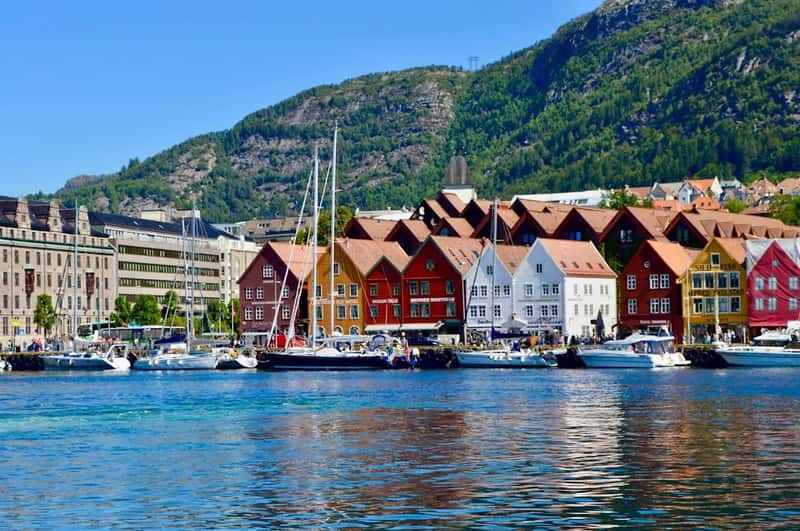
Norway’s system leans on small, predictable fees rather than pure freebies, but the ceiling on those fees is what makes it remarkable. All registered residents are enrolled in the National Insurance Scheme, which covers GP visits, specialist appointments, hospital stays, mental health services, and most prescriptions, subject to a small annual patient contribution capped at NOK 2,040 per year in 2026, above which all services are free for the rest of the calendar year.[9] A single outpatient emergency visit typically costs a few hundred kroner, similar to a nice coffee and pastry, and stops adding up once that cap is reached.
Serious cases avoid the fee structure altogether. Hospital care in Norway is entirely free for all residents, with no daily fees, copayments, or charges for inpatient treatment, surgery, or emergency services.[10] The system is also becoming gentler for younger patients, since starting August 1, 2026, 16 and 17 year olds no longer have to pay user fees for healthcare services covered by the national exemption card scheme, meaning everyone under 18 is now exempt from healthcare co-payments.[11]
Sweden

Sweden keeps its emergency fees flat, transparent, and tied directly to age. The fee for a hospital stay at an emergency centre is SEK 400 for ages 18 to 84, SEK 120 for those under 18, and completely free for patients 85 and older.[12] That works out to somewhere around 40 US dollars for most adults, hardly a bank-breaking sum for genuine emergency care.
As in Norway, an annual ceiling keeps costs from stacking up for people who need frequent care. The maximum limit for patient charges is SEK 1,400 for outpatient healthcare over a twelve month period, after which the patient receives a card for cost-free health care visits, valid across the whole country.[12] The broader payoff of this model shows in national statistics, since only 1.2 percent of residents report unmet healthcare needs, one of the lowest rates in the OECD.[5]
Cuba

Cuba stands apart from every other country on this list because its free healthcare model exists despite, not because of, a wealthy economy. Cuba provides entirely free universal healthcare despite being a low-income country[4], meaning an emergency room visit there costs nothing regardless of the patient’s ability to pay or their nationality within the domestic system. It is a striking example of policy priority overriding GDP.
The outcomes tied to this approach are frequently cited by public health researchers. Cuba has more doctors per capita than any country and has achieved health outcomes comparable to developed nations, including infant mortality rates lower than the United States.[4] That combination of universal access and a heavy investment in primary care physicians helps explain why the free model has persisted for decades rather than buckling under its own ambition.