Finding a doctor abroad who actually understands what you’re describing, rather than nodding politely through a language barrier, ranks high on the list of quiet anxieties for anyone moving overseas. It’s the kind of detail that rarely comes up in glossy relocation guides until the moment you’re sitting in a waiting room trying to mime a symptom. The good news is that a handful of countries have built healthcare systems where English isn’t an afterthought, it’s practically the second working language of the exam room.
1. Netherlands

The Dutch healthcare system has quietly become one of the most accessible in Europe for English speakers, partly because Dutch professionals generally learn English from primary school onward. Many healthcare professionals, particularly in urban areas, speak English fluently, and the healthcare system in the country is equipped to care for international patients. Registration is not optional, though. In the Netherlands, residents must first register with their local GP. You are free to choose any doctor you want, and you can switch physicians freely. However, your doctor must be located close to your home.
Amsterdam in particular has developed a small ecosystem of clinics built around international patients. The Dutch capital of Amsterdam has several English-speaking doctors who’ll see tourists or expat patients on short notice or offer 24-hour emergency care. Organizations like Healthcare for Internationals exist specifically to smooth over the language gap, and organizations like Healthcare for Internationals (H4i) work to make healthcare more accessible for expats, providing information on finding English-speaking healthcare providers and even have a network of clinics attuned to the international community.
2. Germany

Germany’s dual insurance model, splitting the population between statutory and private coverage, gets a lot of attention, but the language side of things matters just as much for newcomers. Germany operates a dual healthcare system combining statutory public health insurance (GKV) with private health insurance (PKV), ensuring universal access and world-class medical services. Public coverage is mandatory for employees earning under €66,600 annually, while high earners and self-employed professionals can choose private insurance.
The country’s investment in healthcare infrastructure is substantial, and that scale tends to translate into more international staff in bigger cities. The country allocates 12.7% of its GDP to healthcare, resulting in advanced hospitals, efficient services, and advanced diagnostics, and according to OECD rankings and World Health Organization data, Germany is among the top five globally for quality and outcomes. Practically speaking, expats with work or long-term visas must provide proof of health insurance before arrival, making compliance straightforward, and the registration process is digitized, with English-speaking doctors common in urban centers.
3. Spain

Spain has become something of a magnet for retirees and remote workers, and its healthcare system has adapted accordingly, especially along the coast. With high-quality medical facilities, English-speaking doctors, and strong emphasis on preventive medical care, Spain is not only one of the best healthcare systems in Europe but, also one of the most expat-friendly.
The concentration of English speakers is not evenly spread across the country, though it’s dense where expats tend to settle. English-speaking doctors are widely available, particularly in major cities and expat hubs like Madrid, Barcelona, Malaga, and the Costa del Sol. Private insurance also tends to be remarkably affordable compared to what many arrivals expect, with one contributor noting “private insurance runs about $75 a month and covers nearly everything – plus, there are reasonable wait times.”
4. Portugal

Portugal often gets overshadowed by its bigger neighbor, but its healthcare scene for English speakers has grown considerably, particularly around Lisbon and Porto. Lisbon and Porto have particularly strong concentrations of English-speaking medical professionals. The dual public-private structure gives newcomers flexibility depending on budget and urgency.
What tends to stand out to people who move there is less about the language itself and more about how doctors use the time they have. Affordable prices, short wait times, and English-speaking doctors who communicate clearly are common, especially in larger cities. Access to the public system does come with a catch worth knowing upfront, since to access the national health care system, you must have tax residency in Portugal and a tax number. Private care, purchased through local banks, fills that gap easily enough for most newcomers.
5. United Arab Emirates
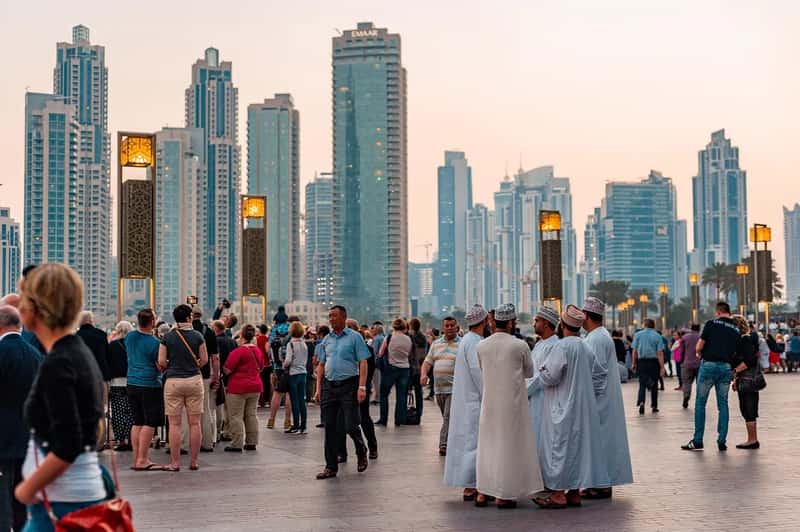
Dubai and Abu Dhabi run on a healthcare model built almost entirely around a foreign workforce, both as patients and as providers. This can be attributed to the country’s high expat population, and many expats prefer to go to private hospitals because of shorter wait times and English-speaking doctors, with the UAE having, in fact, the world’s highest percentage of expats, accounting for 88% of its entire population.
Staffing reflects that reality directly. Medical staff are well trained, are often expats themselves and generally speak excellent English. The scale of the system is considerable too, and the country’s public healthcare sector has 45 hospitals, employing 8,322 doctors and 20,480 nurses, while the private healthcare sector far exceeds the public one with 98 hospitals with a total of 14,785 doctors and 33,435 nurses.
6. Singapore
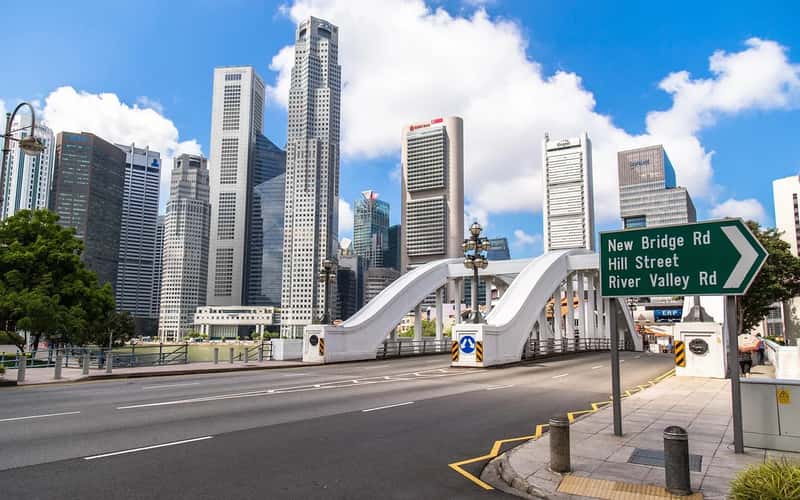
Singapore’s reputation in medical circles has less to do with being English-friendly by accident and more to do with English simply being the working language of its hospitals. English is the main language used by medical staff in Singapore hospitals. That extends into the credentials of the physicians themselves, many of whom trained overseas before returning.
The system leans heavily on international training pedigrees, and many doctors in Singapore are trained in the U.S., U.K., or Australia. Beyond routine care, the country has built a reputation for handling complicated cases, since the country is known for complex diagnostics, robotic-assisted surgeries, and advanced cancer therapies such as proton beam therapy, with private hospitals and specialist centers often handling rare and difficult cases thanks to a high level of medical expertise.
7. Malaysia

Malaysia has spent the better part of two decades building a medical tourism industry, and English fluency was baked into that strategy from the start. Western accreditation is also a vital component for confidence in undergoing foreign medical treatments, and hospitals in Penang and Kuala Lumpur were among Southeast Asia’s first recipients of the United States’ prestigious Joint Commission International (JCI) certification. Now Malaysia has eight JCI-accredited hospitals for medical tourists to book with.
Language support goes beyond English alone in some of the busier tourist-facing hospitals. Some hospitals in Penang also have entire wings specializing in tourists, and have translators for 22 different languages, including Dutch, Norwegian, Swedish and Russian, as well as a teams of English-speaking staff. The training pedigree of local doctors reinforces the comfort level for English speakers, with reports noting that 88% of its doctors hold international credentials from the UK, US, or Australia.
8. Thailand

Thailand’s hospitals, particularly in Bangkok, have long served as a template for what large-scale international patient care can look like. Facilities such as Bumrungrad International Hospital in Bangkok treat more than 1.1 million international patients annually, reflecting the country’s longstanding reputation as a global healthcare hub. That volume alone forces a level of English fluency among staff that smaller systems simply don’t need to develop.
The accreditation numbers back up the reputation rather than just relying on word of mouth. Thailand hosts more than 60 JCI-accredited hospitals, reinforcing international quality standards. The government has also worked to remove friction for foreign patients, since the Thai government’s Medical Hub strategy has streamlined medical visas, reduced bureaucratic delays, and actively promoted healthcare travel through global marketing campaigns. On the ground, English-speaking staff guide patients step by step, and international patient coordinators manage travel, accommodation and recovery schedules.
None of these eight countries guarantee that every single doctor you meet will speak flawless English, and rural clinics almost anywhere will test that assumption. What they do offer is a much higher baseline probability, built through decades of medical training pipelines, expat density, or deliberate government strategy, that the person examining you will understand exactly what you’re trying to say. For anyone planning a move or even a longer stay abroad, that’s a detail worth checking before the passport gets stamped, not after.