The trailhead is dark at 4 AM.
You lace your boots tighter than necessary.
Your pack weighs more than it should.
You chose this route. The hardest one on the board.
And somewhere beneath the bravado and the gear and the GPS coordinates, there is a child who still believes they must bleed before they are allowed to breathe. The gap between who you tell people you are – the adventurer, the endurance athlete, the one who “just loves a challenge” – and who you actually are when you sit still long enough to hear yourself think, is enormous. Vast. Uncomfortable in the way that flat trails never are.
1. The Earned Rest Illusion
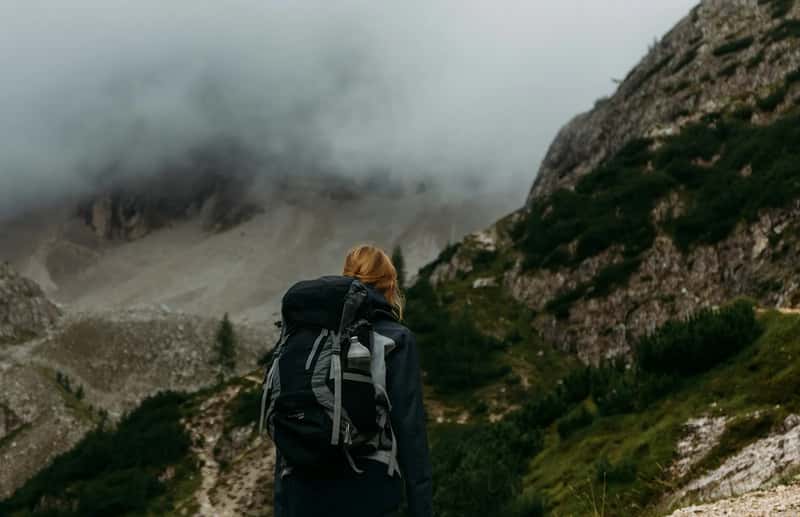
There is a quiet contract many of us signed in childhood. It was never written down. Nobody handed it over with a pen.
But we signed it anyway.
The terms were simple: suffer first, rest later. Work hard enough, and you get to stop. Be uncomfortable enough, and peace becomes permissible. You can’t relax without guilt. Rest doesn’t feel earned; it feels dangerous. And so you find yourself at elevation. Knees aching. Lungs burning. Rationalizing the brutality of a 22-mile day as if the mountain owes you a debt for your pain.
The summit view feels magnificent. But notice what you actually feel when you sit down.
Relief. Not joy.
Relief that you’ve finally done enough to deserve the view. That is the illusion. The rest was always yours. You just couldn’t accept it on flat ground.
2. The Conditional Love Blueprint
Self-worth begins in childhood. How your parents or caregivers treated you became the template for your self-worth. If your parents were attentive and comforting, you probably learned that you matter. However, if your parents were absent, inattentive, inconsistent, or harsh, you learned that others couldn’t be trusted, that your needs don’t matter, and that you don’t deserve to be cared for and loved.
That blueprint doesn’t disappear when you turn eighteen.
It moves into your body. It lives in your tendons. It whispers from your hip flexors on mile sixteen.
Overachieving often stems from early life experiences that left us feeling inadequate, unseen, or unsafe. Whether it is childhood emotional neglect, high expectations from parents, or experiencing instability, we may have learned to equate our worth with our accomplishments. This is especially true if love or approval was conditional – given only when we excelled or met certain standards.
You chose the hardest route. Because somewhere inside, you are still trying to excel enough to be loved.
3. The Body Keeps the Elevation
You carry more weight than your pack.
Research shows that early trauma can rewire the brain, increasing stress responses and shaping behaviors that prioritize control, perfectionism, and avoidance of perceived failure. Trauma survivors often operate in fight-or-flight mode, making high achievement feel like a necessity rather than a choice.
This is not metaphor. This is neurology.
When your nervous system never got to learn that stillness was safe, movement becomes medicine. But also armor. The trail gives your hypervigilance somewhere to go. It transforms the internal alarm system – the one that was always scanning for danger in your childhood home – into something that looks like athletic excellence from the outside.
You read the terrain beautifully. You anticipate every risk.
Of course you do. You’ve been doing threat assessment since you were six years old.
4. The Suffering Ledger
There is an invisible ledger that some of us keep.
Every blister is a deposit. Every vertical gain is currency. It was rather enthusiasm and determination that was expressed – completion of the distance at all cost – rather than the importance of pleasure hiking. That phrase: at all cost. Sit with it.
Why is there a cost at all?
When your nervous system is stuck in fight-or-flight mode for years, doing becomes a way to quiet the internal noise. You might not feel safe unless you’re busy. You might not feel worthy unless you’re achieving. The trail becomes a permission slip. If I suffer enough miles, I earn the campfire. I earn the stillness. I earn the right to look at the stars without my internal critic telling me I should be doing something more productive.
The ledger is always open. It never closes.
No summit balances it.
5. The First-Person Reckoning
I once chose a route that added eleven miles and 4,000 feet of elevation gain for no tactical reason.
I told everyone it was for the views.
The honest answer is simpler and darker: I didn’t feel I had done enough yet. The easier path felt like cheating. Like arriving somewhere I hadn’t properly suffered into. I remember reaching camp at dusk, body wrecked, and feeling – for exactly four minutes – something close to peace. Then the voice returned: tomorrow needs to be harder.
We see this pattern in the archetypal overachiever: someone haunted by old narratives, sprinting endlessly on the treadmill of success. Each achievement only feeds the fire to accomplish more. There’s no finish line, no true satisfaction – just the constant compulsion to prove worth.
The mountains didn’t ask me to do that to myself.
I brought that contract from home.
6. The Identity Uniform
The gear is part of it.
The technical fabrics. The aggressive boot rating. The route cards laminated and color-coded. There is a whole identity constructed around being someone who does the hard things. Sometimes, overachievement is the mask that trauma wears. High-functioning overachievers are often lauded by society. We’re told we’re doing it “right” because we’re productive. But many of us didn’t become this way by chance.
The hiking identity is socially elegant. Nobody questions it.
The world celebrates it. You get the Instagram caption and the admiring looks and the “I could never do that” from friends. Which is, of course, precisely the point. Many of us subconsciously chase success out of an unrelenting need to be perfect, to gain external validation that we never got in childhood, and to prove ourselves worthy of love.
The uniform hides the wound beautifully.
7. The Stillness Phobia
Ask one of these hikers to sit in a hammock for three hours with no phone and no destination.
Watch what happens.
Terrifying. Because rest brings stillness, and stillness makes room for the feelings you’ve been trying to outrun. The trail keeps the feelings at a manageable distance. There is always the next switchback. The next water source. The next decision about terrain. For some individuals, high achievement may also serve as a means of avoiding or numbing the painful emotions associated with trauma. Immersing oneself in work or achieving external validation can provide a temporary escape from the distressing memories, intrusive thoughts, or emotional pain linked to the trauma.
The trail is perfect for this.
It is relentless in its demand for presence. It swallows every quiet moment whole and hands you another obstacle. You never have to face the particular silence that lives inside a room where nothing is required of you.
That silence is the real difficult terrain.
8. The Control Cartography
Difficult routes offer something seductive: the illusion of total control.
You chose the gradient. You packed the kit. You studied the elevation map until it was memorized. High achieving behaviors can provide individuals with a sense of control and agency in the aftermath of trauma. Traumatic events often leave individuals feeling powerless and vulnerable, and engaging in high achievement allows them to regain a sense of mastery and control over their lives. By setting goals, working diligently, and achieving success, they can create a structured and predictable environment that counteracts the chaos and unpredictability of their traumatic experiences.
The mountain is chaotic, yes. Weather shifts. Trail conditions change.
But the chaos is external. Named. Navigable. It is infinitely more manageable than the internal geography of an unexamined childhood.
Childhood trauma can come from growing up in an environment where approval had to be earned, mistakes carried shame, or emotions weren’t welcome. When safety depends on performance or control, your nervous system learns to stay on alert. It becomes your default setting – even decades later.
The mountain doesn’t shame you. The mountain just requires your body.
That feels like freedom. It is not the same thing.
9. The Self-Punishment Disguised as Adventure
There is a difference between challenge and punishment.
The line is thin. It is also crucial.
A lifelong attachment to adventure was not in itself diagnostic, but reckless and impulsive decisions on hikes helped to complete a picture that the psychiatrist said was pretty clear. When a hiker pushes through genuine injury, ignores body signals, adds miles in the dark, refuses to turn back – that is not resilience. That is a familiar pattern wearing new clothes. Overachievers often override their own needs. Rest feels like weakness. Pause feels like danger. So they push harder, fueled by the fear of not being enough.
On the trail, this looks heroic from a distance.
Up close, it looks like a person who cannot extend to themselves the basic mercy they would offer a stranger.
You would tell a friend to stop. You would never tell yourself the same.
10. The Summit Is Not the Destination
You reach the top. The view is real. The feeling is real.
And then, within hours, sometimes minutes, something hollow arrives.
Difficulty celebrating wins – always looking for the next challenge instead of appreciating personal progress – this is the signature of trauma-driven achievement. The trauma lies not just in the experiences themselves, but in the deeply ingrained belief that to be loved, accepted, or worthy, we must constantly prove ourselves. As adults, this looks like overachieving: an endless cycle of work, success, and burnout, with a constant fear that if we stop pushing ourselves, we will lose everything.
The summit does not heal the original wound.
The summit never could. No peak is high enough to prove to a seven-year-old that they were worthy of rest. No elevation gain closes the distance between who you are and who your early environment told you you needed to become before you could be acceptable. For many high achievers, success isn’t just about ambition – it’s about survival. If you grew up navigating trauma, you may have learned that excelling was the only way to feel safe, valued, or in control. Whether it was a childhood filled with instability, the pressure to prove yourself in spaces where you felt unseen, or the need to avoid disappointing those around you, achievement may have become your coping mechanism.
The mountain will always be there. Another one will always be harder. The inner voice will always find a new standard you haven’t yet met.
And that is the thing worth sitting with. Not at the summit. Not after the miles. Right now. In the ordinary quiet of an ordinary afternoon. The trail asks for your body. Hiking isn’t just a way to explore nature; it’s a way to reconnect with yourself, find clarity, and boost your mental wellbeing. But the reconnection the trail promises can only happen if you are willing to ask the question it quietly poses with every brutal ascent: what, exactly, are you trying to prove, and to whom?
The hardest terrain you will ever navigate does not appear on any map. It has no trailhead marker. No elevation profile. It is the interior landscape of a person who is learning – slowly, imperfectly, with resistance – that they were always allowed to rest. That the permission was never the mountain’s to give. Self-worth isn’t something you earn. You don’t have to prove your worth to yourself or others. Self-worth isn’t a reflection of your achievements or station in life. That simple sentence is heavier than any pack. Most people who choose the hardest routes will read it, nod, and then go plan a harder route. Because knowing is not the same as believing. And believing – truly believing you were enough before the first mile – that is the summit nobody photographs.
Somewhere, right now, there is a person checking the weather forecast for a route that will punish them for five days. They are excited. They are afraid. They are mistaking one feeling for the other. And some quiet part of them already knows – before the tent is packed, before the boots are broken in, before the trailhead appears in the headlights at 4 AM – that what they are looking for will not be waiting at the top.
It was always back at the beginning. In the moment before the suffering started. In the exhale they never let themselves take.