Most people picture the hard part of RV life as the driving: the tight turns, the gas stations, the white-knuckle bridges. Ask veterans, though, and many will tell you the costly mistakes tend to happen after the engine shuts off, in the first 20 minutes at the campsite.
The 22 steps below are the quiet routine experienced owners run through almost every time they park. None of it is glamorous, and some of it will surprise you. One step costs nothing and takes two minutes, one involves a small gadget that guards your most expensive electronics, and one is so easy to skip that nearly every RVer has blown it at least once.
#22: Before Backing In, They Walk the Site on Foot
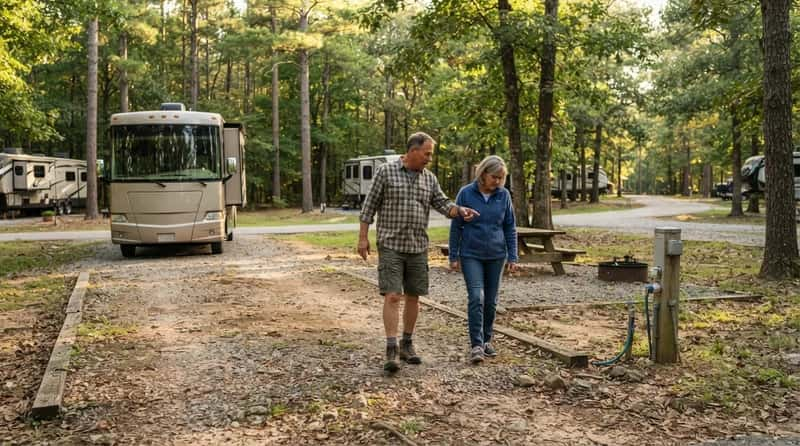
The most skipped step in camping is also the cheapest. Seasoned owners get out and walk the pad first. They look for stumps, rocks, soft dirt, and low branches, and they check where the hookups sit compared with the RV’s connections.
It takes about two minutes. Plenty of scraped sides and crushed vent covers start with the words “I thought I had room.” A spotter, or a partner on the phone, is the standard backup, and veterans treat it as a rule rather than an insult. But that’s nothing compared to the danger hiding above your head at #21…
#21: They Look Up for the Roof-Wrecking Branch
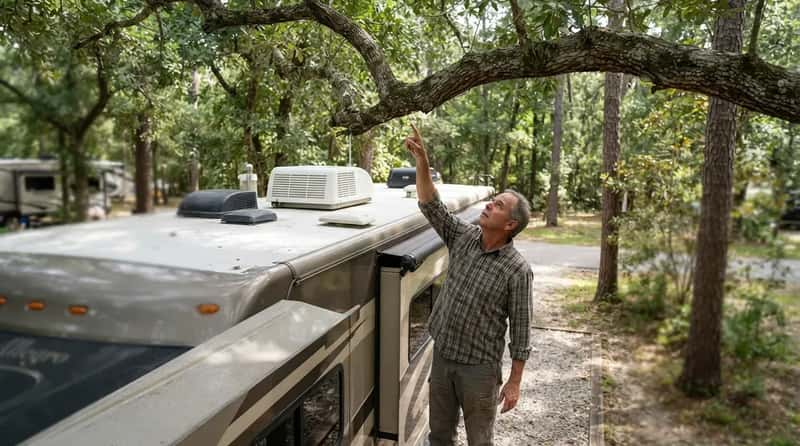
Your roof is the one part of the rig you can’t see from the driver’s seat. Experienced RVers scan for overhanging limbs, especially above the air conditioner, vents, and awning. Sap and snapped branches leave a mess that lasts long after the trip ends.
Some will even skip a “pretty” shaded site for this reason. A plainer, more open spot can save a repair bill. If a limb looks questionable, they move. Next comes a step that quietly affects your fridge and your sleep…
#20: They Level the Rig Before Touching Anything Else
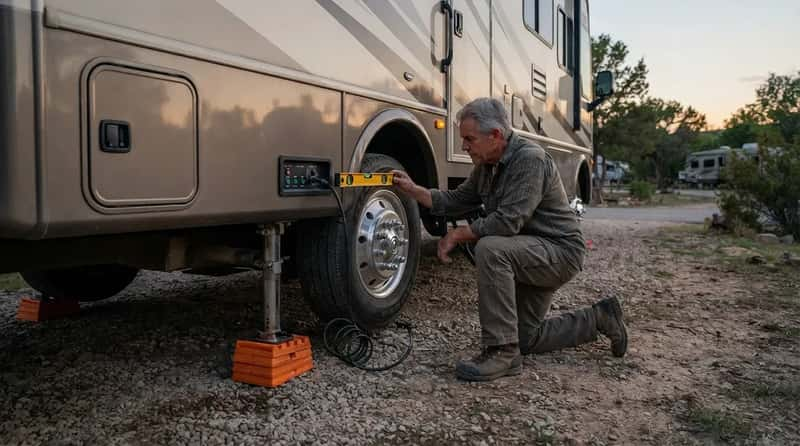
A crooked RV can quietly sabotage its own refrigerator. Many RV fridges use an absorption cooling system, which needs the rig to be reasonably level to work properly. Parked at a tilt for long stretches, those fridges can cool poorly.
That’s why veterans reach for a bubble level or a phone app before they unhook or extend anything. They level side to side first, then front to back. It also saves your sleep, since nobody wants a bed that rolls them toward the wall. But leveling only works if the ground cooperates, and that’s where #18 comes in…
#19: They Chock the Wheels Before Unhitching
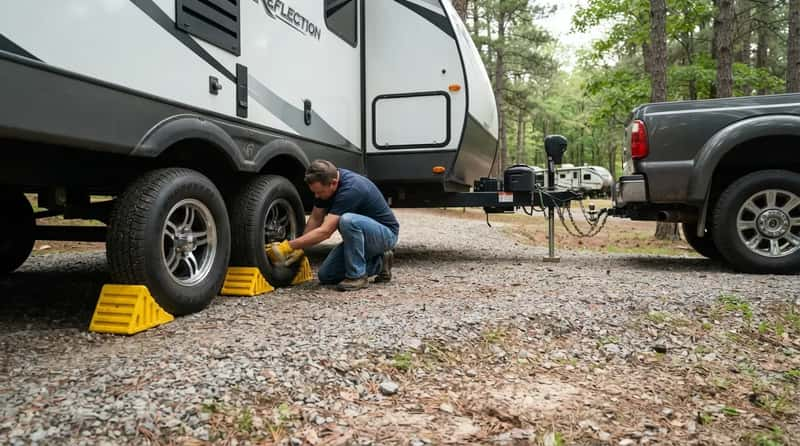
The order of operations is the whole secret. Experienced towers put wheel chocks in place before they disconnect from the truck. An unhitched trailer on even a mild slope can roll if only the parking brake is holding it.
Many chock both sides of at least one axle. It’s one of the oldest rules in the RV community, and it still gets skipped by people in a hurry. Most runaway-trailer stories begin with a shortcut. And the next mistake is one people make while thinking they’re being careful…
#18: They Never Trust the Ground Under the Jacks
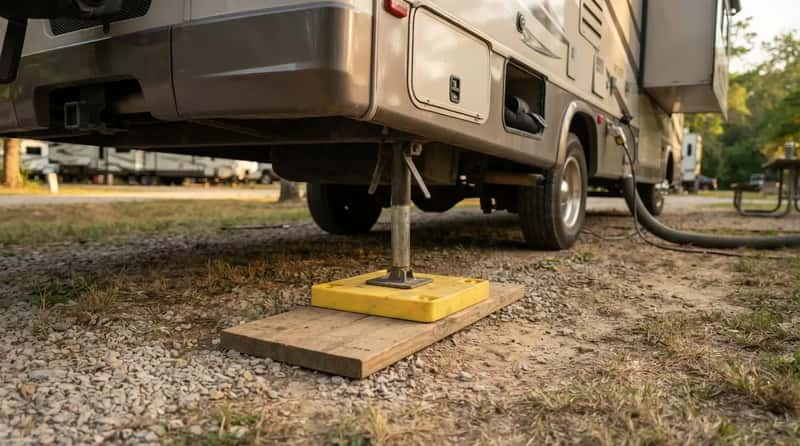
Stabilizer jacks are built to steady your RV, not to lift it. Their job is to cut down on rocking, not to hold up the weight. Seasoned owners know that soft dirt, wet grass, and hot asphalt can let a jack pad sink or dig in.
Many carry sturdy boards or purpose-made jack pads to spread the load. Hot pavement is the one people forget, because a bare jack can leave a deep dent that the next camper gets to find. Now for a step that’s all about electricity…
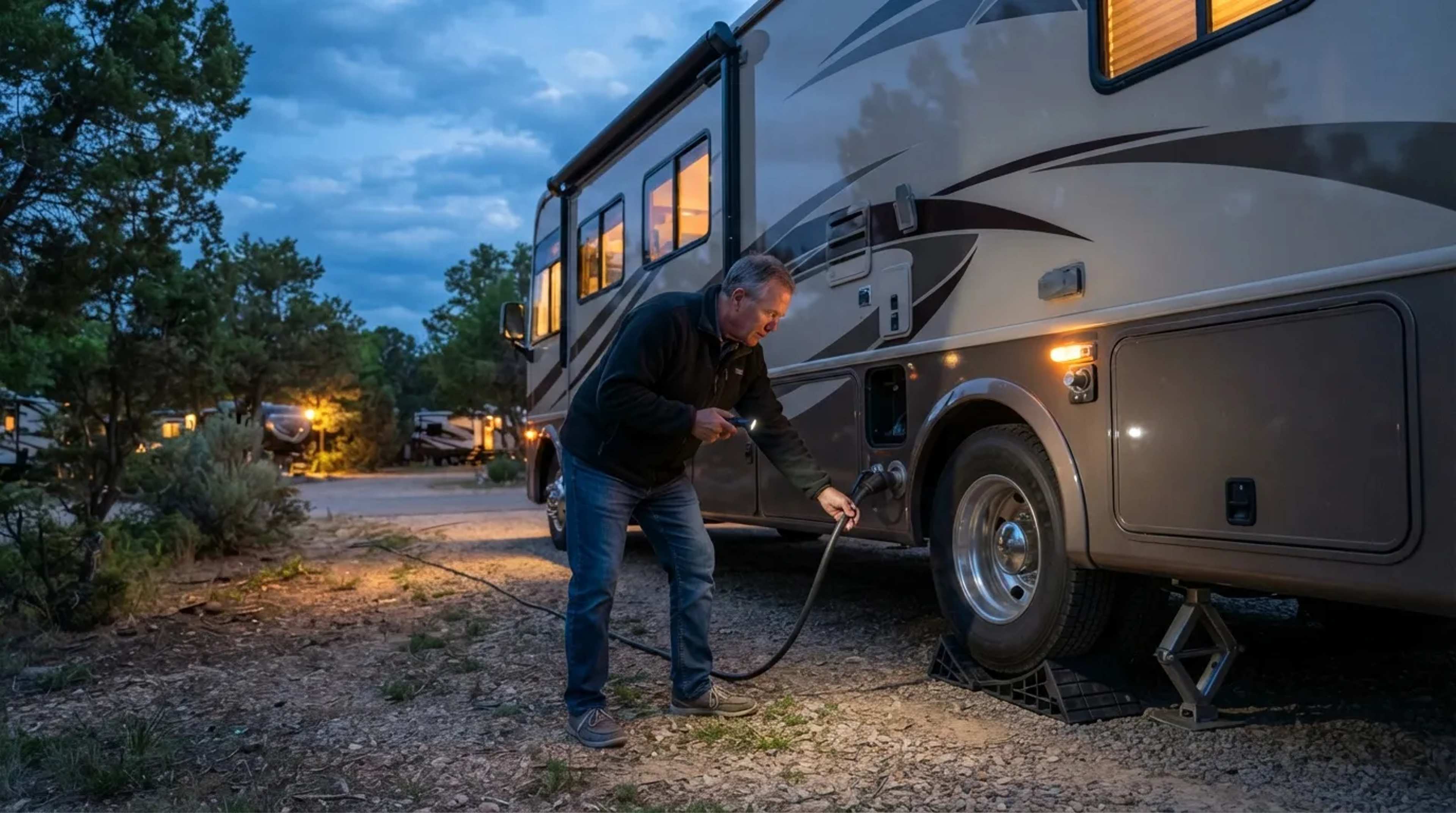
#17: They Plug the Surge Protector In First, Not the RV
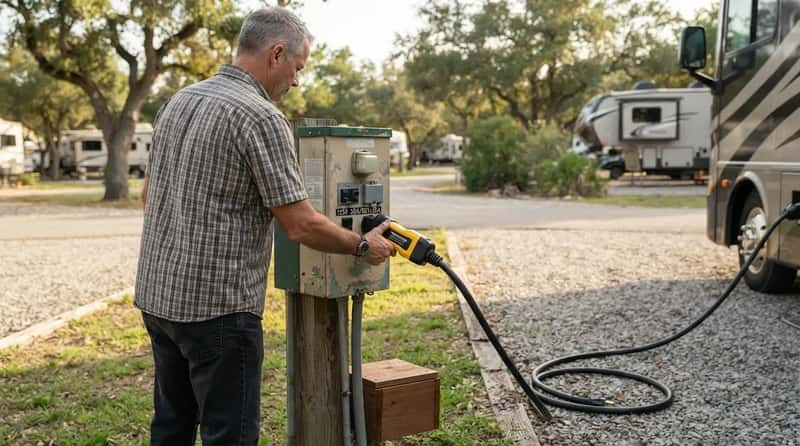
Campground pedestals aren’t always as safe as they look. Veterans plug a surge protector or electrical management system into the pedestal first, then connect the RV cord to it. Pedestals can have miswired outlets, low voltage, or worn connections that you’d never spot by eye.
The protector is a relatively cheap shield for pricey electronics, air conditioners, and appliances. Some models display fault codes, which gives you a reason to refuse a bad pedestal and ask for a different site. Many RVers call it one of the best protection-per-dollar purchases they’ve made. Next is a number people get wrong all the time…
#16: They Know Exactly How Many Amps They’re Working With
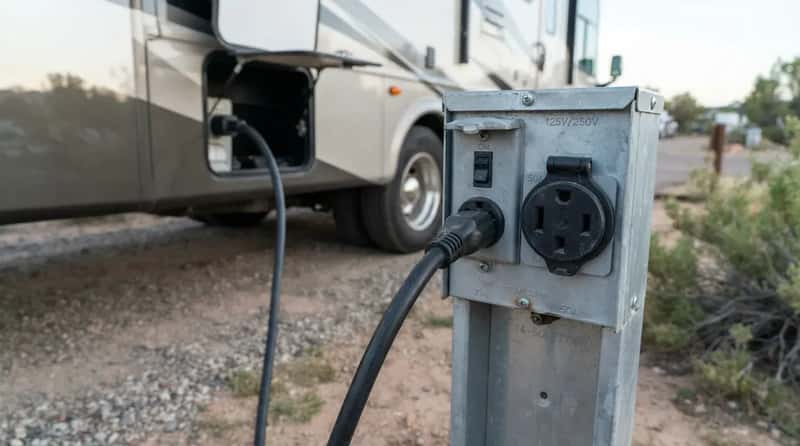
A 30-amp RV connection delivers roughly 3,600 watts, while a 50-amp service delivers about 12,000. That math comes from amps times volts, with 50-amp service using two 120-volt legs. Seasoned owners know which one they have before they run anything.
That’s why they don’t fire up the microwave, the hair dryer, and the air conditioner all at once on a 30-amp hookup. A tripped breaker at 9 p.m. is the usual lesson. Adapters help with plug shapes, but they never add capacity. Next is a hidden threat sitting right at the spigot…
#15: They Put a Water Pressure Regulator On Before the Hose
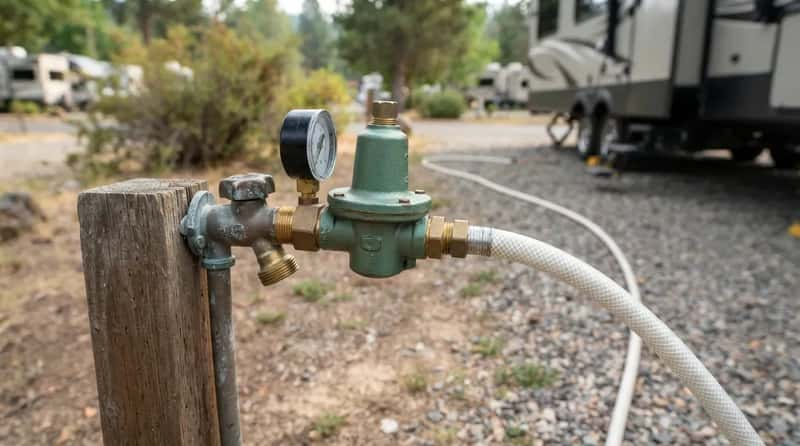
Campground water pressure can quietly burst RV plumbing. RV plumbing is generally built for lower pressure than a typical house. Many RV guides suggest keeping it somewhere around 40 to 60 psi.
Fast Facts
- Many RV guides suggest keeping pressure inside the rig around 40 to 60 psi.
- Campground spigots aren’t set up with RV plumbing in mind, so pressure can vary widely from site to site.
- The regulator screws onto the spigot first, ahead of the hose and everything behind it.
- A simple pressure gauge on the regulator lets you check the number before you connect.
Veterans screw the regulator directly onto the spigot, then attach the hose, so the hose and everything behind it are protected. A weak seam or fitting can fail behind a wall, and you won’t know until the floor is wet. The next item is about what the water touches before it reaches your glass…
#14: They Use a Dedicated Drinking-Water Hose
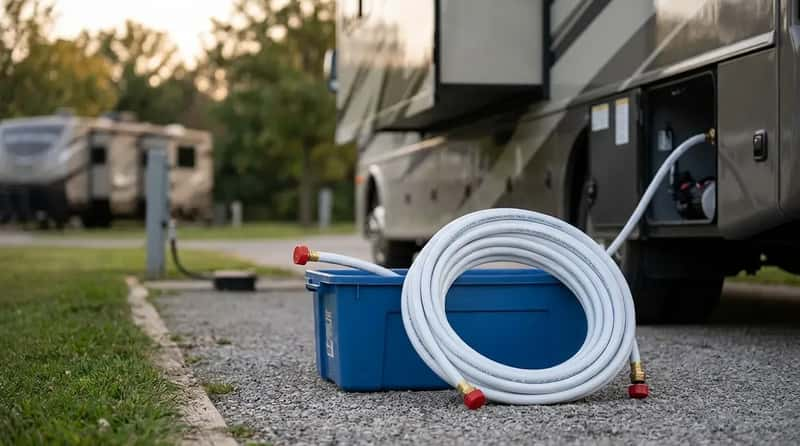
Your old garden hose was never meant for the water you drink. Experienced RVers use a hose labeled drinking-water safe, usually white or blue. They store it away from the sewer gear and keep the ends capped.
Many also run the water for a moment before connecting, to flush out whatever has been sitting at the spigot. It’s a small habit that avoids funny tastes and worse. Some add a basic inline filter too. The next tip comes from people who learned the hard way…
#13: They Hook Up the Sewer Hose but Keep the Black Valve Shut
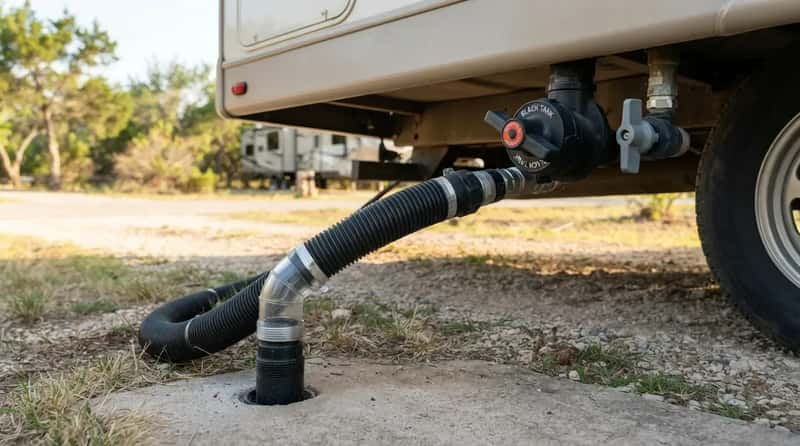
Leaving the black tank valve open is the classic rookie mistake. The liquids drain away while the solids pile up, leaving a stubborn, ugly mess in the tank. Experienced owners connect the hose, then wait until the tank is well filled before dumping.
Gray water is different, and many people open that valve more often. A lot of campers also dump black first, then gray, so the gray water rinses the hose. It’s a debate, but this method has loyal fans. The next step is the one that gets overlooked most…
#12: They Sniff for Propane the Moment They Open the Door
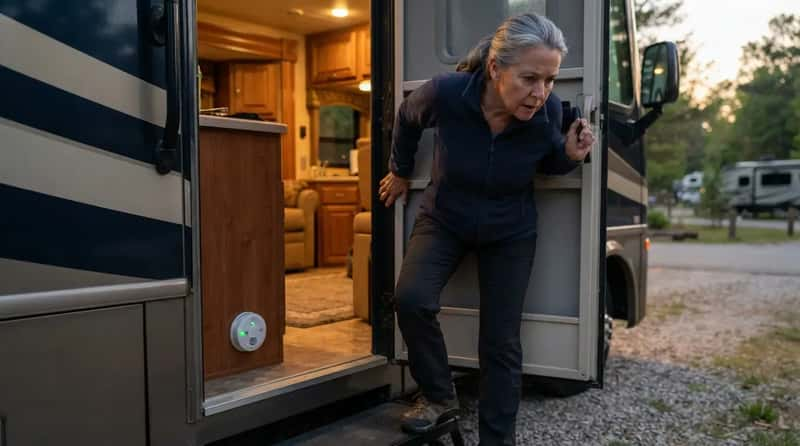
Propane has a smell added on purpose, so you can catch a leak. That rotten-egg odor is the warning. Veterans pay attention to it the second they step inside, especially after a bumpy drive.
Worth Knowing
- The rotten-egg smell comes from an added odorant, commonly ethyl mercaptan, because propane itself has almost no scent.
- Propane is heavier than air, so it tends to settle low, which is why propane detectors are typically mounted near the floor.
- If you smell it, don’t flip switches or use anything that could spark.
- Get everyone outside first, then make the call from a safe distance.
If they smell it, they shut off the supply, ventilate, and get everyone out. They don’t flip switches or light anything. Many also close the propane valve while traveling, then reopen it at camp. The next step makes sure the alarm will actually sound when it counts…
#11: They Test the Detectors Instead of Assuming They Work
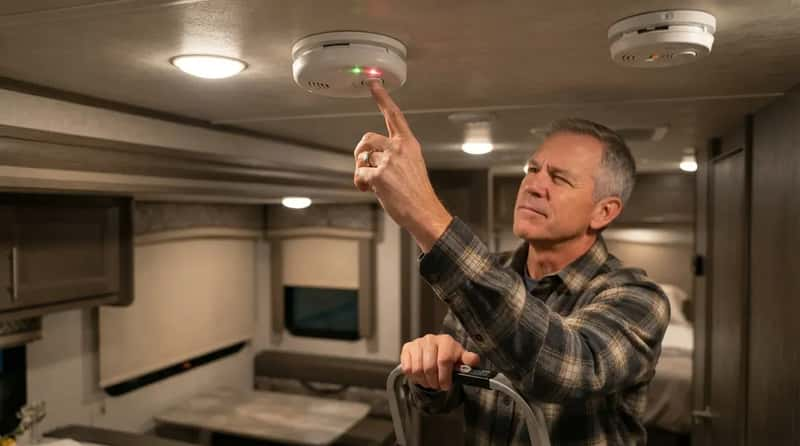
Safety alarms have expiration dates, and many RVers never check. Smoke, carbon monoxide, and propane detectors all wear out over time. The date is usually printed right on the unit.
Seasoned owners press the test button when they settle in, especially after storage. They also carry spare batteries. It’s boring, but a silent alarm is a nasty surprise at 2 a.m. Next, something tiny that may be building a home right where your appliances breathe…
#10: They Check the Outside Vents for Nests
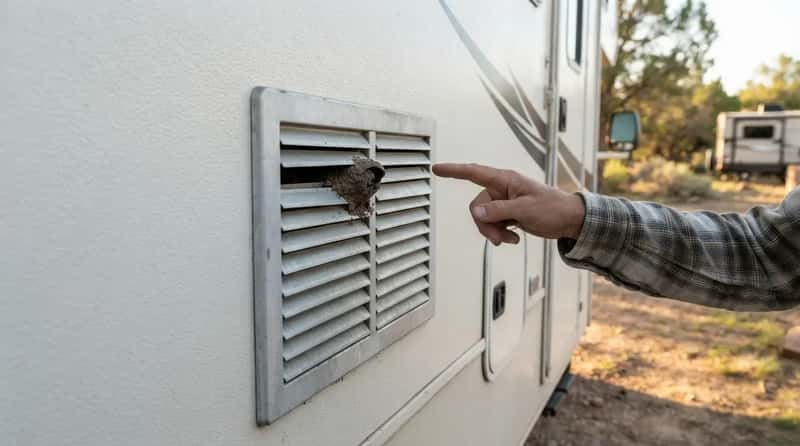
Tiny insects can shut down big appliances. Mud daubers and other insects are known to build nests in RV vents, including those for water heaters and furnaces. A blocked vent can make an appliance run badly or not at all.
Experienced owners glance at those exterior vents when they arrive, especially after storage. Many fit mesh screens made for the job. It’s a quick look that can save you from a cold shower. Our next item is for anyone who likes a good night’s sleep and a backup plan…
#9: They Find the Exit Route Before They Need It
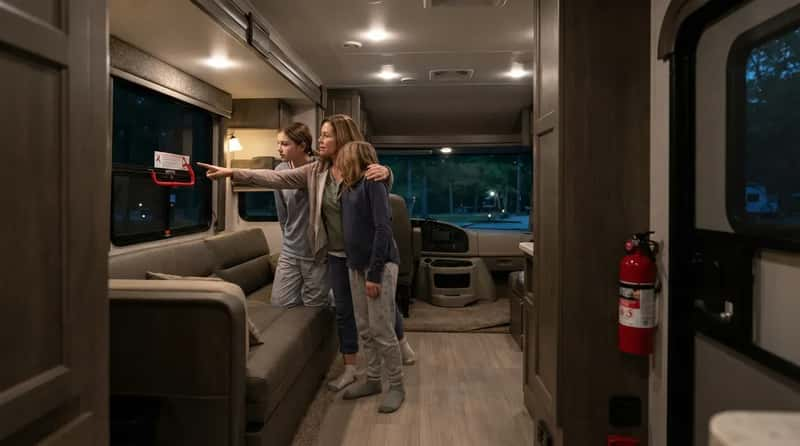
Most people never think about how to get out of their RV in an emergency. Veterans make sure they know where the main door, the emergency exit window, and the fire extinguisher are. They keep those paths clear at night.
They also make sure everyone traveling with them knows. It sounds dramatic, but a small space can fill with smoke fast. Knowing the plan ahead of time is simply calm preparation. After that, a weather habit that has saved plenty of awnings…
#8: They Respect the Wind and the Forecast
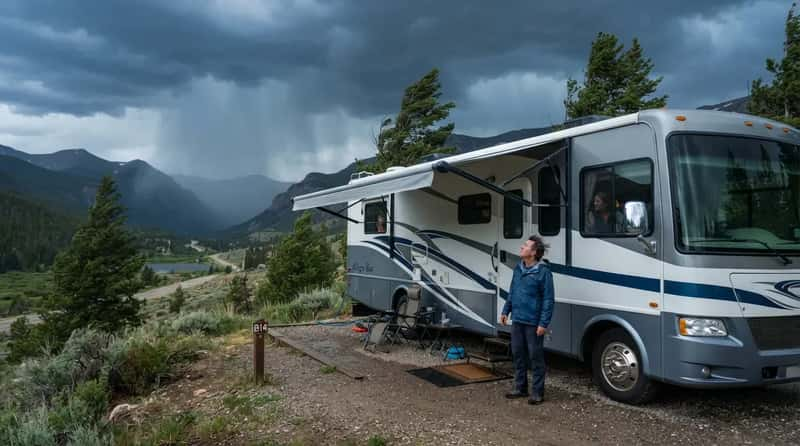
An open awning in a sudden gust can bend like paper. Seasoned RVers check the forecast the moment they arrive. If wind is expected, they retract the awning and secure anything loose.
They also bring it in before leaving the site, even for a short outing. Many treat “it’ll be fine” as the most expensive sentence in camping. Storm warnings change where they park, and sometimes whether they stay at all. The next step keeps your gear from walking away…
#7: They Lock the Bays and Bring the Gear Inside
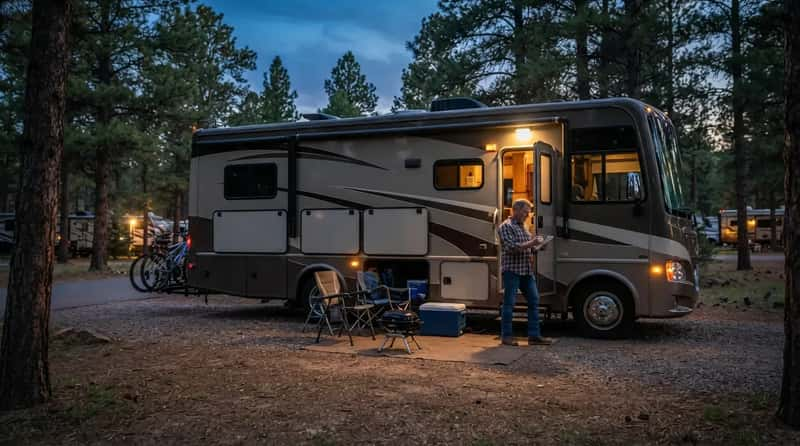
Campgrounds feel safe, which is exactly why gear goes missing. Experienced owners lock storage bays and bring in the bikes, grills, and chairs they can’t afford to lose. Wildlife can be a bigger problem than people, and raccoons love an unlatched cooler.
Some also tuck away anything that smells like food. It’s simple and it’s free. A few minutes at dusk beats a morning of wondering where the grill went. Here’s what the pros do about the people parked next door…
#6: They Learn the Quiet Hours and Generator Rules on Arrival
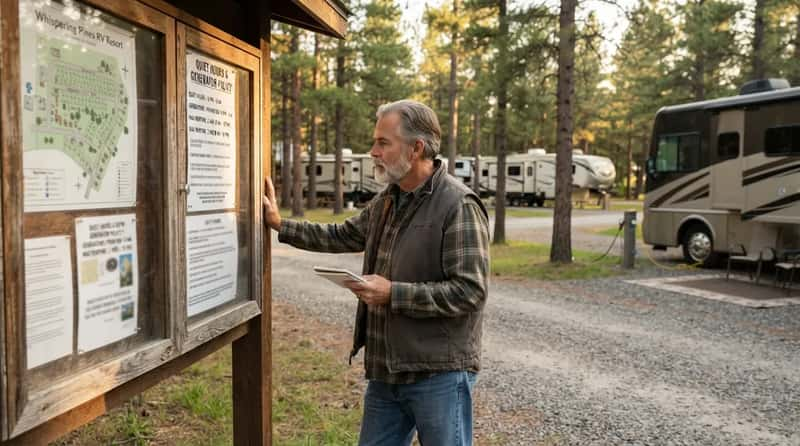
Quiet hours are the unwritten law of every campground. Veterans find out when they start and when generators must go off. Many parks post those rules at check-in, and they can vary from place to place.
Some campers argue generators spark more neighbor friction than anything else. Experienced owners check the schedule and plan their cooking and charging around it. Being a good neighbor often pays off in a friendlier stay. Next up, a step that sits right under your wheels…
#5: After the Drive, They Touch the Hubs and Check the Tires
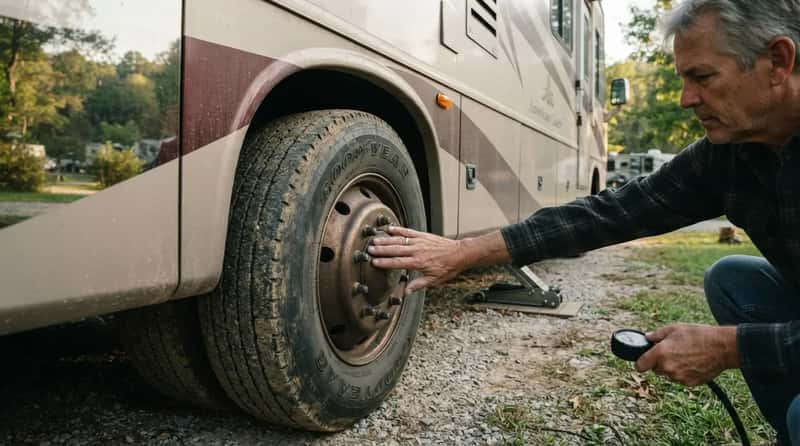
A hot wheel hub can be an early warning that something’s wrong. Many tow owners carefully check wheel hubs and tires after arriving. Unusual heat, a bulge, or a missing lug nut is far better found in a campsite than on a highway.
They also check tire pressure when the tires are cold, using the pressure listed on the vehicle or trailer placard. It’s one of the most repeated tips from tire and RV safety groups. A quick lap around the rig can head off a big problem. Next, a rule that has less to do with your rig and more to do with the forest…
#4: They Never Haul Firewood From Home
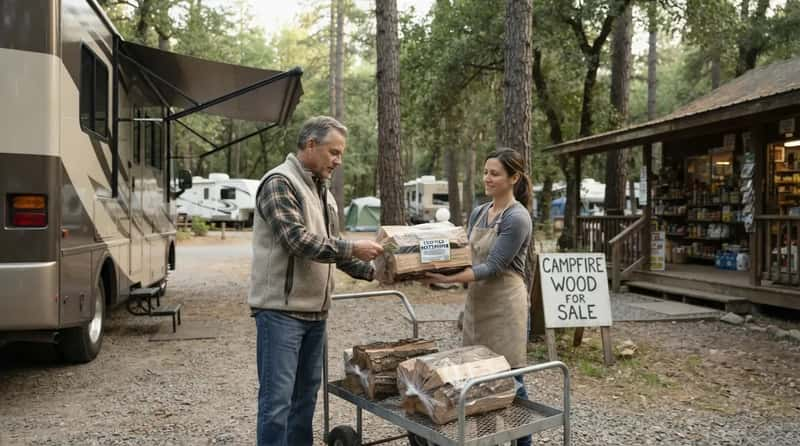
That bundle of logs from your backyard could carry forest-killing hitchhikers. Many state and federal agencies advise campers to buy or gather firewood near where they’ll burn it. Invasive insects and diseases can hide in a log that looks perfectly fine.
Quick Compare
- Hauled from home: Could carry hidden pests, and some states restrict or ban it.
- Bought near camp: The standard advice, since the wood stays close to where it grew.
- Certified heat-treated bundles: Processed to reduce pest risk, so look for the certification label.
Experienced RVers buy it locally and burn it all. Many also check fire restrictions, which can change quickly in dry seasons. A campfire is a pleasure, and a sudden ban is a surprise nobody wants. The next two steps matter most when plans fall apart…
#3: They Check the Signal and Download Offline Maps
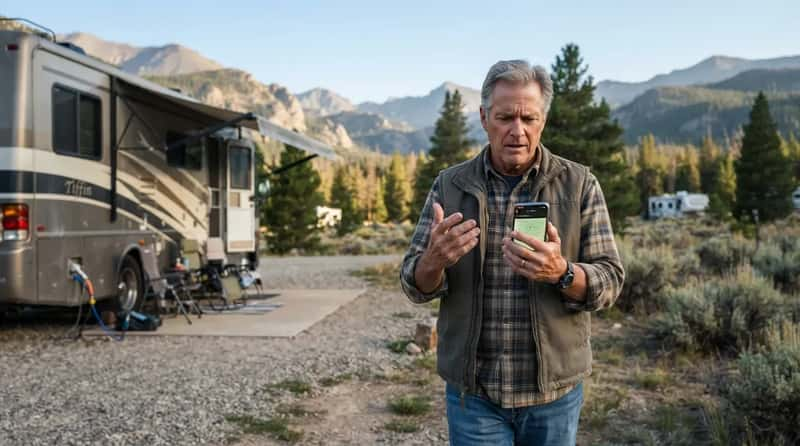
The campground’s “great connection” may not exist at your site. Seasoned owners check their cell signal the minute they arrive. If it’s weak, they know to walk to a better spot before they actually need to make a call.
They also download offline maps and save the address of the nearest hospital and repair shop. Remote areas can leave you without service for long stretches. Preparing before you need it is the whole idea. Now, the setup that decides how you sleep…
#2: They Get the Night Setup Done Before Dark
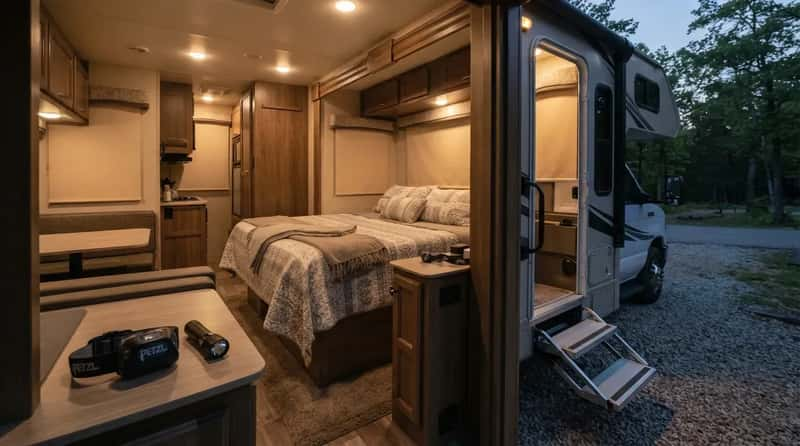
Fumbling around for a flashlight is how a lot of campers get hurt. Veterans put a headlamp or flashlight in the same spot every night. They also drop the steps, shut the shades, and make the bed before sunset.
At a Glance
- Headlamp or flashlight goes in the same spot every night.
- Entry steps are down and clear of clutter.
- Shades are closed before the lights come on.
- Bed is made while there’s still daylight.
Closed shades keep the interior private and cooler. A routine like this makes nighttime bathroom trips easier and safer. The last step is the one seasoned owners swear by, and almost every RVer has skipped it at least once…
#1: They Do One Last Walk-Around Before Bed
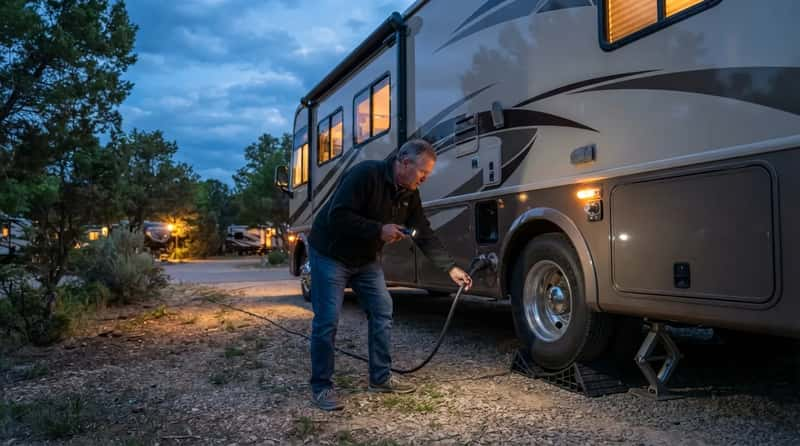
The final lap around the rig is the habit that separates veterans from everyone else. They check that the hookups are secure, the propane is as it should be, the awning is in, and the bays are locked. They also look at the ground under the jacks and the position of the chocks.
It takes a couple of minutes, and it catches whatever the rest of the routine missed. Plenty of RVers who’ve driven off with something still attached never skip it again. It’s boring, repetitive, and exactly why the pros sleep so well.
None of these steps is flashy. Together, they turn a frantic arrival into a calm routine that runs on muscle memory.
The best RVers don’t have secret gear. They have habits they never skip, and a quiet campsite at night is the reward.