You open the cabin door, drop your bag and look for the balcony from the photos. There’s a glass door, a railing and a rush of river air, but nowhere to actually stand. That small letdown is exactly what this list is about: the quiet details that rarely make the brochure and tend to show up only once you start unpacking.
Some of these quirks are charming. A few can decide whether you spend the week watching castles drift past or staring at a concrete dock wall. And the last entry explains why the price that pulled you in may not belong to the cabin you’ve been picturing.
#15 – Every Cabin Has a Window, and That Quietly Changes How You Book
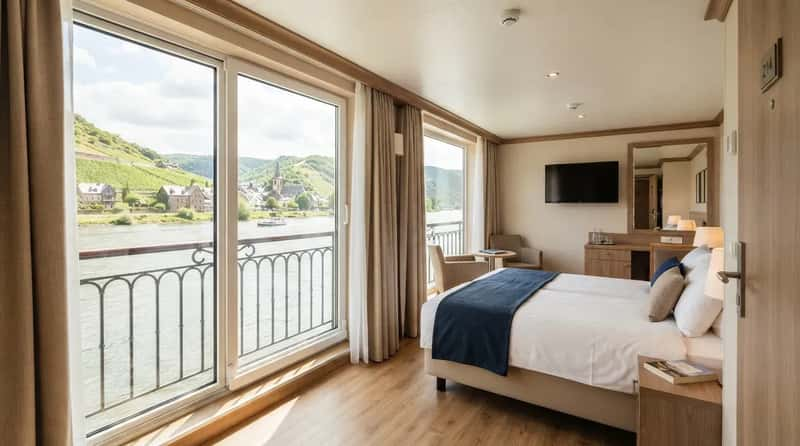
Ocean cruisers know the gamble of the windowless inside cabin. River cruises don’t have that gamble, because every river cruise stateroom has at least a window. River ships are slim, so every room sits along the hull and gets some daylight.
That sounds like a minor perk, but it changes the whole decision. Nobody is stuck in a dark box, so the real question becomes what kind of window you get. Cabins that look nearly identical on a booking page can feel completely different once you’re inside. The next entry covers the version that surprises people most.
#14 – “Aquarium Class” Is a Real Nickname, and Your Window Won’t Open
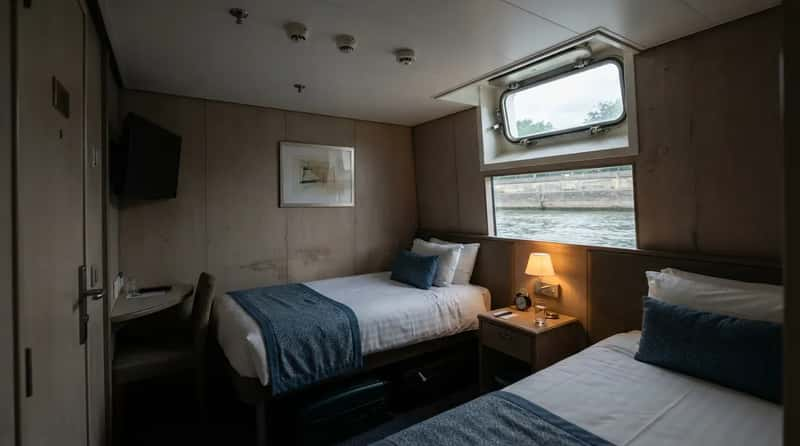
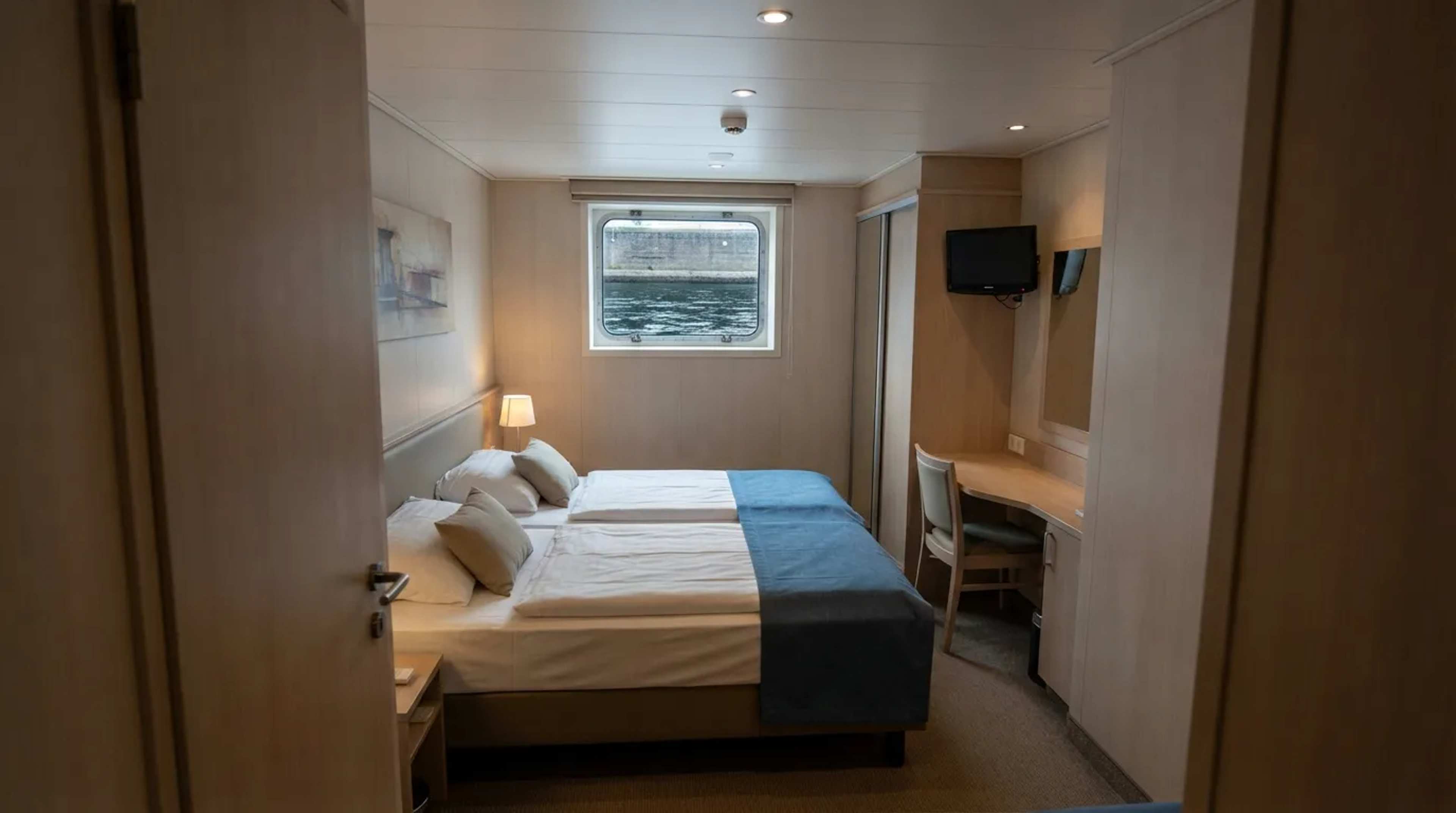
Cruise Critic notes that “aquarium class” is a humorous term for lower-deck cabins that sit below the waterline. These cabins do have a window, but it’s set high on the wall and it doesn’t open. Another agency describes a “transom” window, placed higher than a normal one and just above the waterline.
Fast Facts
- “Aquarium class” is a joking nickname for cabins below the waterline.
- The window sits high on the wall.
- It doesn’t open, so there’s no fresh air from it.
- The view is mostly sky and the occasional slice of bank.
So you get daylight, but not fresh air and not much of a view. Some travelers sleep fine down there and never think twice. Others argue that anyone who books a river cruise for the scenery shouldn’t pick this category. And wait until you see what the cheapest rooms stare at when the ship is parked.
#13 – The “Balcony” You Can’t Actually Step Onto
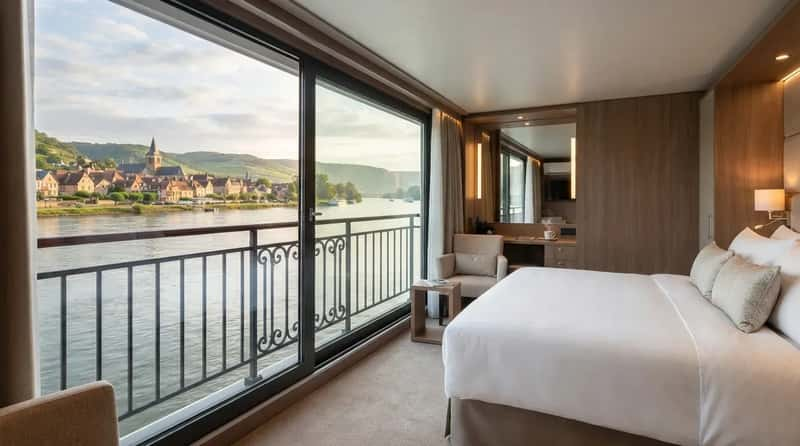
The French balcony is the signature of modern river ships. It’s essentially a floor-to-ceiling glass door that opens onto a railing, and you stay inside. Some people call it a Juliet balcony. Cruise Critic puts it plainly: French balconies open for air but can’t be stepped onto.
That’s not a flaw. It’s a trade. On a ship this narrow, a French balcony saves space, so the cabin itself can be larger.
Still, if you pictured coffee outside in your robe at sunrise, this isn’t that. The real surprise is what a “real” balcony costs you.
#12 – The Step-Out Balcony Isn’t Always the Upgrade It Sounds Like
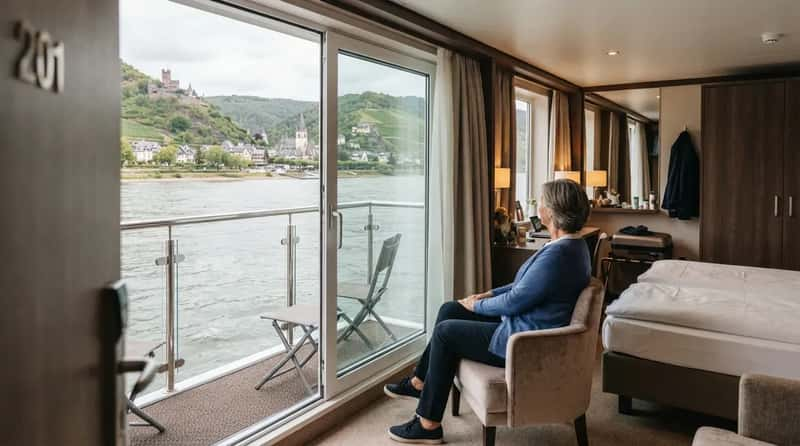
A true veranda feels like the premium pick. But Cruise Critic points out that true balconies give up interior space, and weather can limit how often you’ll use them. On a river you’re often in cooler air, and the scenery keeps changing right outside the glass anyway.
Quick Compare
- French balcony: opens for fresh air, you stay inside, and the room keeps its floor space.
- Step-out veranda: you can stand outside, but it takes interior space and weather limits how often you’ll use it.
- The twist: on certain Uniworld ships, both cabin types measure 196 sq ft.
One UK agency shared that insider tip about Uniworld. So whether the extra money buys you something you’ll actually use is a personal call. Then there’s the question of how big these rooms really are.
#11 – Smaller Than an Ocean Cabin? Usually, but Not Always
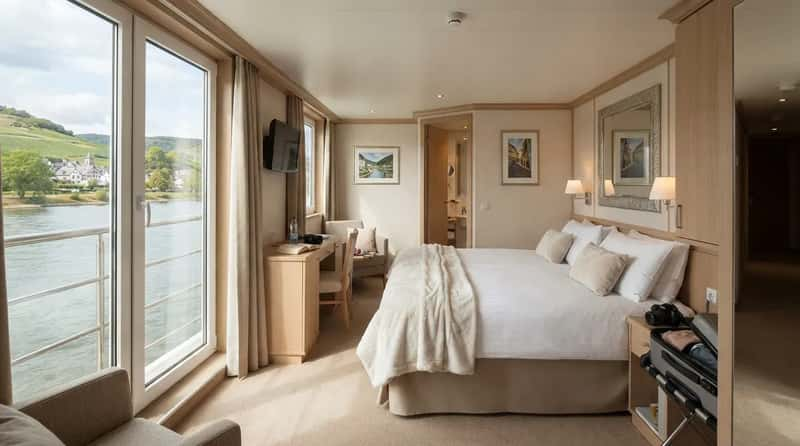
The common wisdom is that river cabins tend to be smaller than ocean ones, though not always. One first-timer’s guide lists typical ranges. Standard cabins are often around 150 sq ft, French balcony cabins around 135-170, and veranda cabins around 200-235. Those are rough figures, and they vary by line and ship.
Suites can feel like a different species. On Scenic, the 360-square-foot Royal Balcony Suite and the 475-square-foot Royal One Bedroom Suite separate the bedroom from the living area. Most guests will never see those, though. Meanwhile, the cheaper choices have a much bigger problem at the dock.
#10 – Cheap Cabins Often Stare Straight at the Dock Wall
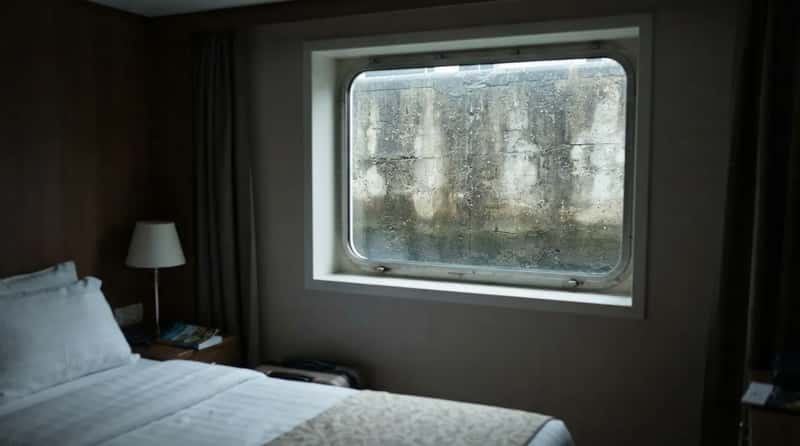
Here’s a detail that rarely makes the brochure. One small-ship guide warns that lower-deck cabins look straight at the dock wall when the ship is moored, and a week of river cruising includes many hours tied up. The scenery you paid for is only outside while the ship is moving.
That guide’s advice is to book at least the mid-deck level with a veranda or French balcony. In busy ports, ships can also tie up side by side, so a neighboring hull may fill your view. Next, a small surprise about the bed itself.
#9 – Your “Queen Bed” May Really Be Two Twins in Disguise
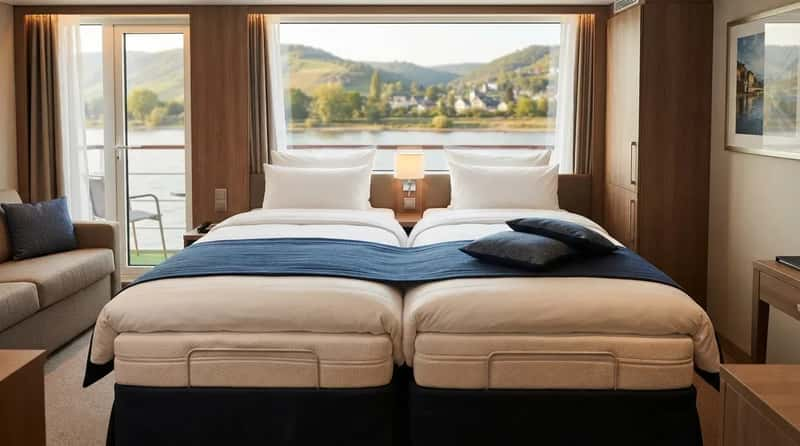
Cruise Critic explains the standard setup. River cabins have a queen-size bed that can be split into two twins. If you’re traveling with a friend or sibling, that’s a lifesaver. If you’re a couple, it’s worth knowing the bed can go either way.
Worth Knowing
- The standard river bed is a queen that can split into two twins.
- Friends and siblings usually want the twin setup.
- Some ships point the bed at the window, and Avalon’s beds face the river.
- Confirm your configuration before you arrive.
Some ships design the whole room around the view. One guide describes a concept where the entire stateroom works like a balcony, with the bed facing the window. Another notes that Avalon’s beds are oriented to face the river directly. Confirm your bed setup before you arrive, not after. And then there’s the storage mystery.
#8 – The Storage Is Hidden, and Sometimes the Air Conditioner Takes It
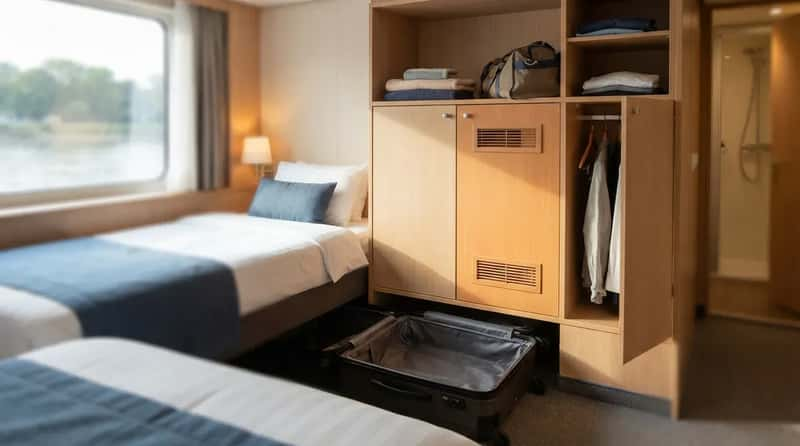
River cabins are compact, but they hide a lot. Cruise cabin guides point to under-bed storage as especially useful, perfect for suitcases and bulky items. One cruise line writes that on its river ships there’s always plenty of room to stow suitcases under the bed.
But storage can be misleading. One reviewer of a budget TUI cabin found less space than it first appeared, because the air conditioning unit took up two of the cupboards. The same cabin still had a closet with hanging space and another with shelves. Now for the bathroom, where expectations really crash.
#7 – Forget the Bathtub: Most River Cabins Are Shower-Only
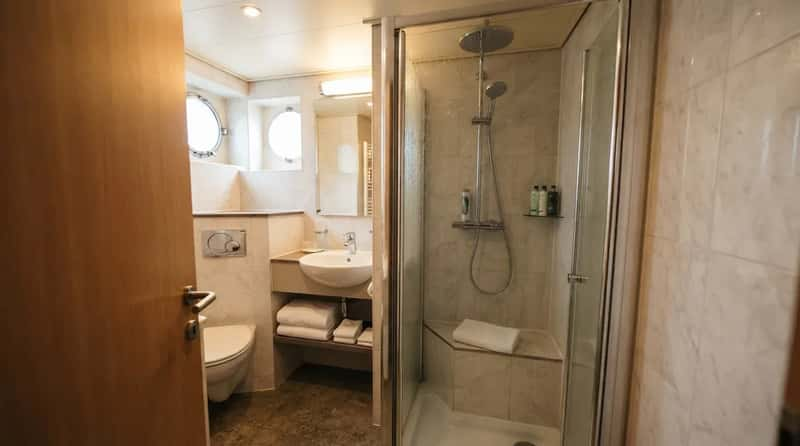
Planning a long soak after a day of sightseeing? Cruise Critic is blunt: most river cruise cabins are shower-only unless you book a suite. Expect a compact bathroom with a shower, sink and toilet.
Some lines try to make up for it. One cruise line says its rooms have an extra-spacious bathroom with a shower bench. Others stay basic. And in one budget cabin review, the bathroom design raised a bigger issue than size.
#6 – The Bathroom Privacy Surprise Nobody Warns You About
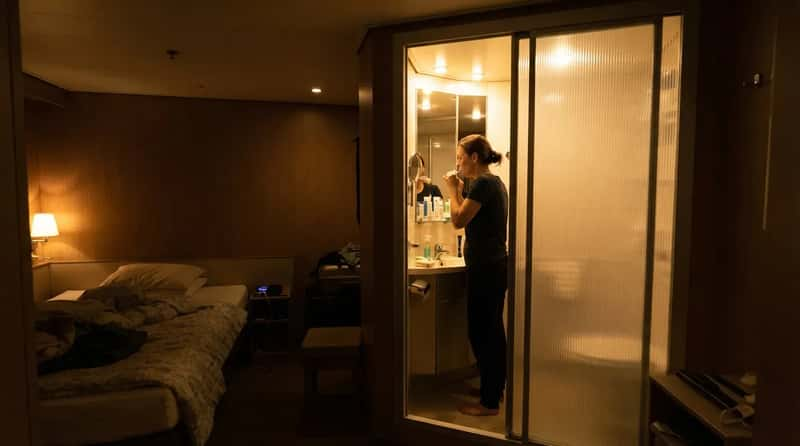
This one comes from a single review of a budget TUI cabin, so layouts will differ. The reviewer reported that during the day you could see who was in the bathroom from the main cabin. At night it got worse: with the bathroom light on, you could make out what a person was wearing and exactly what they were doing.
It won’t bother everyone, and the reviewer said it was far worse after dark. But if you’re sharing with a friend, a colleague or a relative, it matters. Look at photos of the bathroom door before you book, and ask the line directly. Meanwhile, charging your phone has its own surprises.
#5 – Outlets and Hair Dryers Can Catch You Off Guard
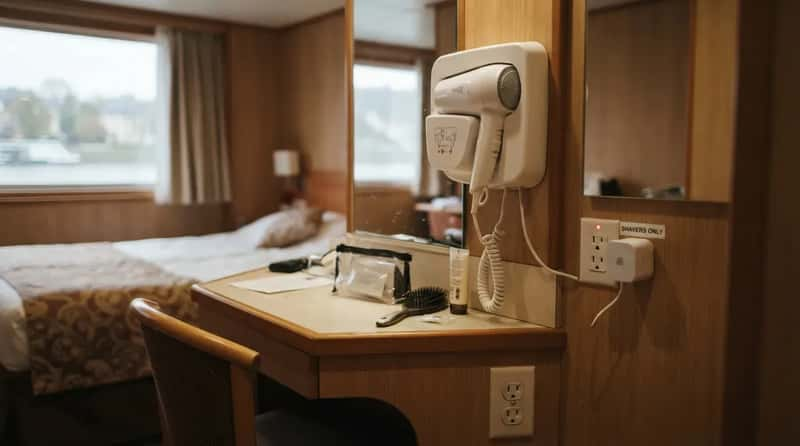
Power is one of the first things people check, and it varies. One line advertises that every stateroom includes USB ports and US electrical outlets. Cruise cabin guides, meanwhile, warn that on older ships you should expect only a small number of outlets. That’s a good reason to check your specific ship.
If a ship has fewer sockets than you expect, a power strip can help. Check the line’s rules on strips first. The bigger daily annoyance isn’t power at all. It’s what happens when you take a hot shower.
#4 – One Hot Shower Can Fog the Entire Cabin
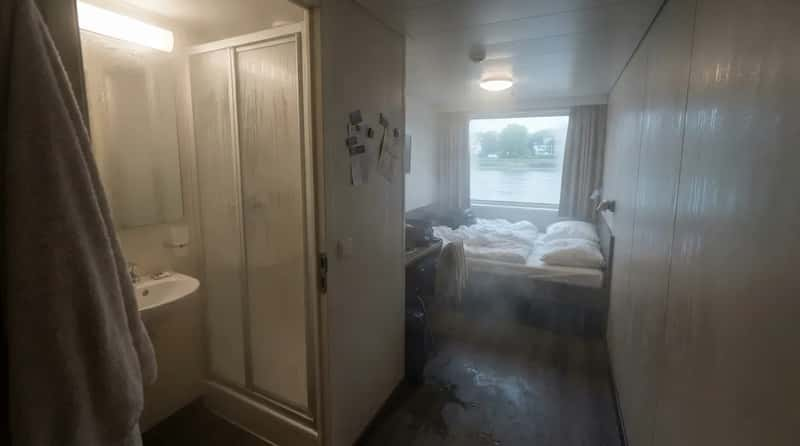
Cruise cabin guides share a warning about steam. A few steamy showers can fog up an entire cabin, and the room can feel damp for hours afterward. These guides cover cruise ships generally, but river cabins are small too.
Drying is slow too. One guide notes that with so little air movement, damp things take a long time to dry. Another tip: most cabin walls are metal, so magnets will stick to them, though not in the bathroom. Next, what actually comes with the room.
#3 – “Included” Means Very Different Things Behind the Cabin Door
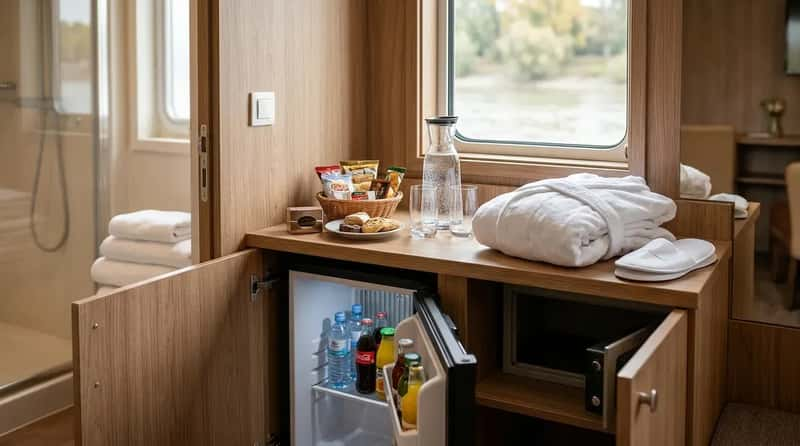
Two cabins of similar size can come with very different perks. One line lists a complimentary minibar, pre-packaged snacks on arrival, filtered water, in-room breakfast service and a room service menu on request. It also includes free laundry service once per voyage.
At a Glance
- Food and drink: minibar, snacks, filtered water, in-room breakfast on some lines.
- Laundry: free service once per voyage on one line.
- Valuables: a safe, which Riviera Travel lists.
- Comfort extras: towels, slippers and toiletries, which vary by line.
Another line highlights different touches. Riviera Travel says its cabins have ample storage and a safe for valuables, plus thick fluffy towels, slippers and complimentary toiletries. Some travelers would argue these extras matter more than a few extra square feet. Compare what’s included, not just the room size. Then there’s the real reason the rooms are the size they are.
#2 – The Locks Decide How Big Your Room Can Be

This is the part nobody mentions. River ships have to be narrow enough to fit through locks. Celebrity’s guide agrees that river cabins are smaller than ocean ones because ships must conform to a set width.
That width is a hard ceiling, whatever you pay. The difference between lines is how cleverly they use it. First-timer guides say modern longships maximize natural light with floor-to-ceiling windows and French balconies.
So the smartest cabin often isn’t the largest. It’s the one that solves the narrow-hull problem best. And that brings us to the price you see first.
#1 – The Advertised Price Usually Buys the Lowest Cabin on the Ship
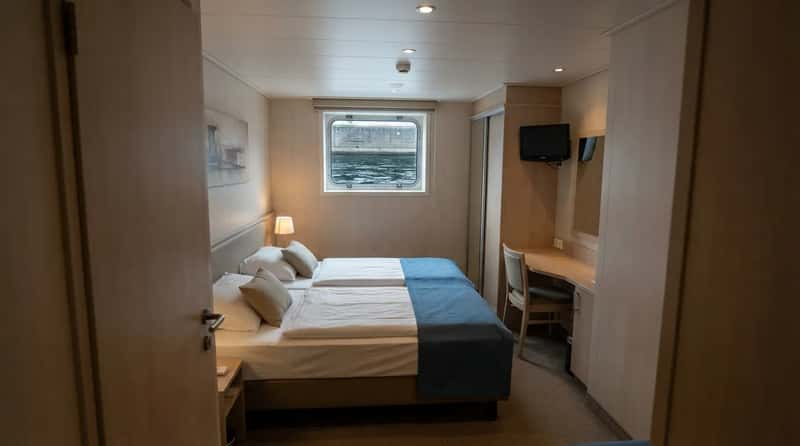
That tempting starting fare belongs to one specific room. One agency explains that the lowest category is what the “lead-in” price refers to: the number you see advertised. It’s the small-window cabin, with most of the room below the waterline. Another guide lists a common mistake: booking the cheapest cabin without checking the deck.
There are exceptions. One agency pointed to Tauck’s Loft category, where a seating area with a floor-to-ceiling window replaces the small window up high. That was written about older ships, so check what’s offered today.
The lesson holds anyway. The price you saw first may not buy the cabin you pictured.
A river ship cabin is a small, clever room built around a fixed hull width, and the biggest surprises are the window, the deck and the bathroom, not the thread count. Check the deck plan, ask about the bed setup, and compare what’s actually in the room. Which of these would have changed the cabin you booked?