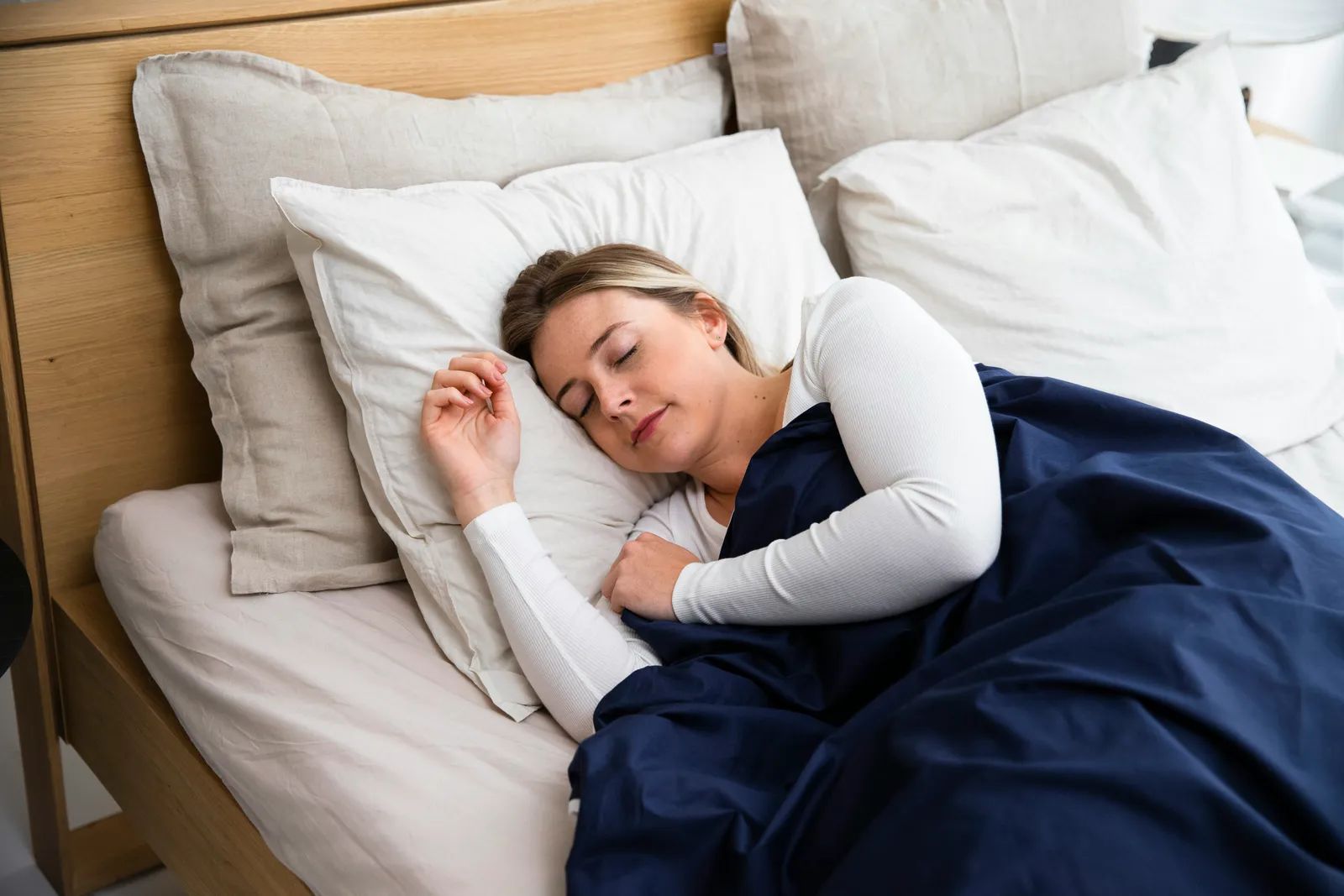
You turn off the lights at your usual time, leave the phone alone, and the room is as cool as you like. Then, somewhere around 2 or 3 a.m., you surface feeling overheated, restless, or fully alert for no clear reason. A ([1])recent article on this pattern points out that midlife sleep disruption usually has several contributors working together, not one hormonal switch.
A Wake-Up Without an Obvious Trigger
Some of the most unsettling nights come with no dramatic cause. There is no soaked sheet and no noise pulling you out of sleep, yet the rest of the night feels thin and patchy by morning.
Perimenopause, the years leading toward menopause, is when ovarian hormone output starts to swing unpredictably. Cycles can stretch, shorten, or stop following a recognizable pattern, and sleep often changes along with them. Estrogen and progesterone reach well beyond reproduction, touching systems that govern temperature, mood, and rest.
Many women do not remember a full hot flash, yet they still notice that their sleep has grown lighter. Research suggests that hot flashes and reproductive hormone changes both contribute to sleep trouble, though neither explains every case. That is why two women of similar ages can report very different nights.
Why the Body Runs Hot in the Small Hours
Waking up hot is one of the most recognizable midlife sleep complaints, and it is more than a preference for a cooler bedroom. Hormonal changes can affect the hypothalamus, the brain region that helps regulate body temperature.
During the transition, the thermoneutral zone, the band of core temperature in which the body does not need to trigger heat-loss or heat-conserving responses, may narrow. When that band shrinks, a fairly small rise in temperature can set off sweating or flushing.
The result is a familiar loop. You drift off comfortably, wake overheated, push off the covers, and then feel chilled once the sweat dries. Each interruption chips away at sleep continuity, even when the hours in bed look adequate on paper.
Progesterone adds another layer. Its levels become less predictable as ovulation changes, and its neuroactive metabolites interact with GABA-A receptors, which carry inhibitory signals in the brain. Researchers are still working out how these changes relate to sleep. A single hormone reading, however, cannot reliably explain a poor night, so treatment decisions should weigh menstrual history, symptoms, and overall health.
When the Mind Stays on Duty
The sweat may be gone within minutes, but attention often lingers. A thought about tomorrow’s meeting or an unfinished task can turn the effort of falling back asleep into a test that feels impossible to pass.
Clinicians sometimes describe this as hyperarousal, a state in which body and mind stay more active than sleep requires, even without a real threat. Over time, repeated broken nights can make bedtime itself stressful, so the dread of another bad night becomes a trigger of its own.
The autonomic nervous system helps explain this tug of war. Sympathetic activity prepares the body for action, while parasympathetic pathways support recovery and rest. These systems shift in balance rather than flipping on and off like a switch.
That distinction matters when choosing help. A calming bedtime routine is unlikely to fix nights dominated by hot flashes, and cooler pajamas will not quiet a racing mind. Targeting the main driver of wakefulness usually works better than applying one fix to every problem.
What Trackers and New Devices Can and Cannot Show
Deep sleep, also called slow-wave sleep, tends to decrease across adulthood, and nighttime awakenings may become more frequent. Not every woman loses deep sleep at the same pace, since medications, activity levels, environment, and health conditions can all shift the numbers.
Wearables have made these patterns easier to see, but their readings need context. Most consumer devices estimate sleep stages from movement and cardiovascular signals rather than measuring brain activity directly. A low deep-sleep percentage on a watch is not a diagnosis, and it does not prove that hormones are responsible. Trends over several weeks, such as whether wake times repeat and whether sweats line up with interruptions, tend to be more informative.
Some newer products go further. Transcutaneous auricular vagus nerve stimulation, or taVNS, delivers controlled electrical pulses through electrodes placed against parts of the outer ear that connect to the vagus nerve.
Related Stories From Travelbinger



A 2024 randomized trial published in JAMA Network Open tested this approach in 72 adults with chronic insomnia. Participants received either active or sham stimulation in 30-minute sessions, twice daily on five days a week, over eight weeks. The active group showed greater improvement on Pittsburgh Sleep Quality Index scores than the sham group.
The limits are significant. The trial took place at a single center and enrolled people with chronic insomnia rather than women with perimenopause-related sleep problems. It does not show that taVNS treats hormonal sleep disruption or can replace menopause care.
Practical Steps Worth Trying Before Another Gadget
Rather than adding another product to the nightstand, it can help to test a few changes that target a specific source of disruption:
- Plan for temperature with breathable sleepwear, bedding that handles moisture, and a spare layer or light blanket within reach.
- Review caffeine and alcohol timing. Caffeine can stay active for hours, so an afternoon coffee may still matter, and alcohol may bring early drowsiness but often fragments sleep later in the night.
- Keep wake times steady, get daylight in the morning, and move regularly. Walking, swimming, strength training, and gentle yoga all qualify.
- Ask a clinician about cognitive behavioral therapy for insomnia, or CBT-I. The treatment targets the thoughts and habits that keep insomnia going, and the International Menopause Society lists it as a first-line option for sleep disturbances during the menopausal transition.
These approaches are not interchangeable. Someone whose main problem is repeated night sweats may need treatment aimed at vasomotor symptoms, while persistent trouble falling asleep may respond more directly to CBT-I. Ongoing problems that affect focus, mood, or daily function deserve a professional evaluation, because obstructive sleep apnea, restless legs syndrome, thyroid disorders, depression, and medication effects can also play a part.
A 3 a.m. wake-up is rarely a mystery with one answer. It is more often a clue pointing to hormones, body temperature, stress, and the ordinary changes of midlife working together. Paying close attention for a few weeks may reveal which of those factors shows up most often on the nights that matter.