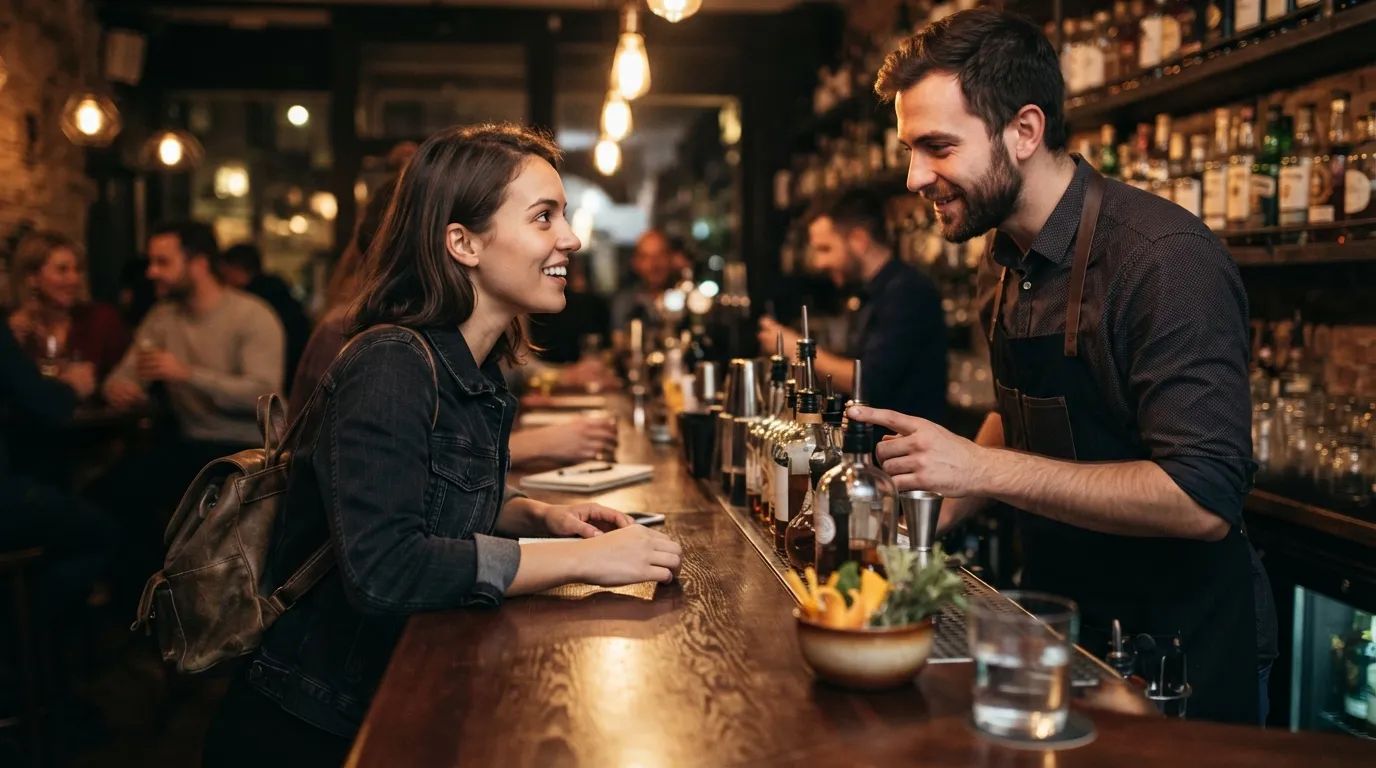
Most people assume bar staff are too busy to notice who’s sitting across the counter. They’re wrong.
Within four seconds, an experienced bartender has already guessed your nationality, sized up your budget, and quietly bet on your tip – before you’ve said a single word.
That’s not a lucky guess. It’s pattern recognition built shift after shift, in hotel lounges, cruise ships, and tourist-heavy bars where the same behaviors repeat every single night.
Turns out, the drink in your hand is the least interesting thing about you. Here’s what bar staff actually notice first – and the biggest tell is saved for last.
16. How You Walk Through the Door
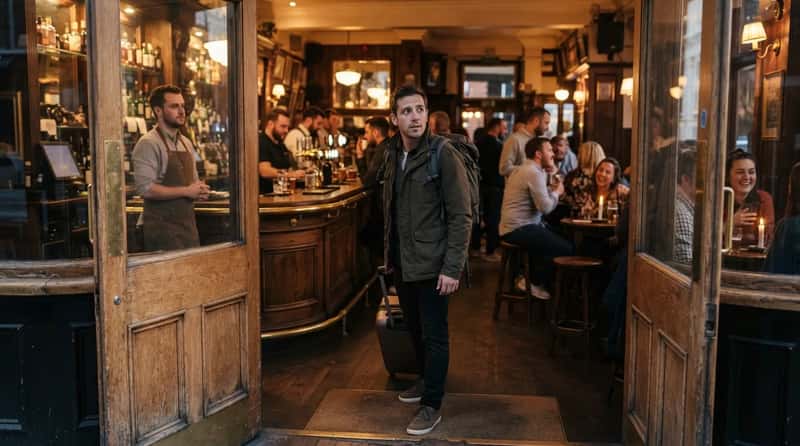
Your entrance is the opening move in a game you didn’t know you were playing.
Bartenders scan for how intoxicated you already are, and if you’ve clearly pre-loaded before arriving, that read happens instantly.
Travellers linger in the doorway, scanning for a free stool or a friendly face. Locals rarely do, because locals already know exactly where they’re headed.
That hesitation – head swiveling, eyes searching the room – reads instantly as “first time here,” even in a place you’ve visited a dozen times before.
The ten-second read tells staff how much guidance the next twenty minutes will require, long before you’ve even reached the bar top.
Confidence in your walk buys you a completely different first impression than confusion does, and bartenders clock the gap immediately.
15. The Travel Stress Written on Your Shoulders
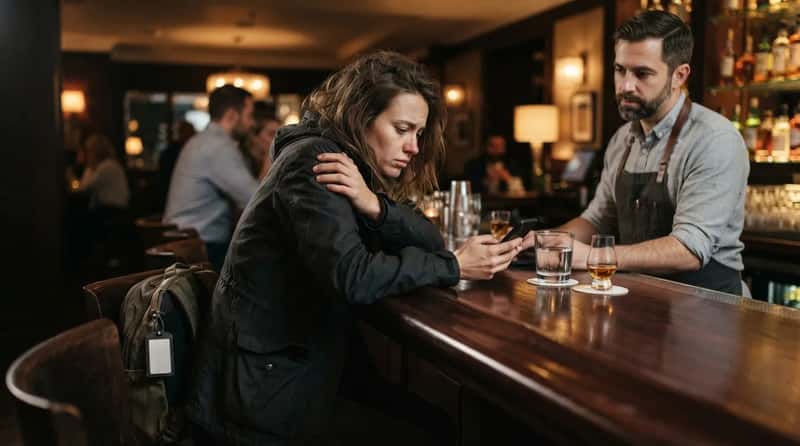
Seasoned hotel bartenders don’t just pour drinks – they read your arrival energy.
People come straight off flights carrying visible weight: a delayed connection, a lost bag, a day that’s gone sideways. Good bartenders clock it the second you sit down.
The tell is almost always in the shoulders – how high they’re sitting, how tightly your hands are wrapped around your phone or your bag.
A stressed traveller gets a lighter touch: quicker pours, less small talk, room to just breathe for a minute.
The bartender who gives you space without being asked isn’t being cold. They’ve already worked out exactly what you need.
Most travellers never realize this quiet calibration is happening at all. The group you walked in with, though, tells an entirely different story.
14. Who’s Really Running Your Group
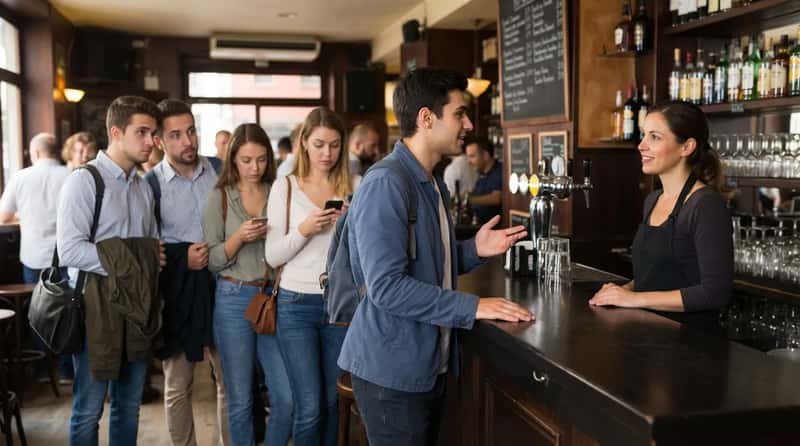
Walk in with four friends, and a bartender has your group mapped within thirty seconds.
Solo orders, date orders, and group orders each hand over different intel – and the group is often the easiest to read of all.
The person who steps forward while everyone else hangs back instantly flags the whole table as unfamiliar with local bar culture.
This “spokesperson” pattern is one of the most common bartenders see: one person talks, the rest stand around awkwardly waiting to be told what’s happening.
Locals almost always order for themselves, even in a big group, which is exactly why this pattern stands out so fast.
Staff use that first read to predict the whole night – how much patience is needed, how many repeated orders are coming, and whether one big tab or several small rounds lie ahead.
13. Your Nationality, Guessed Before You Speak
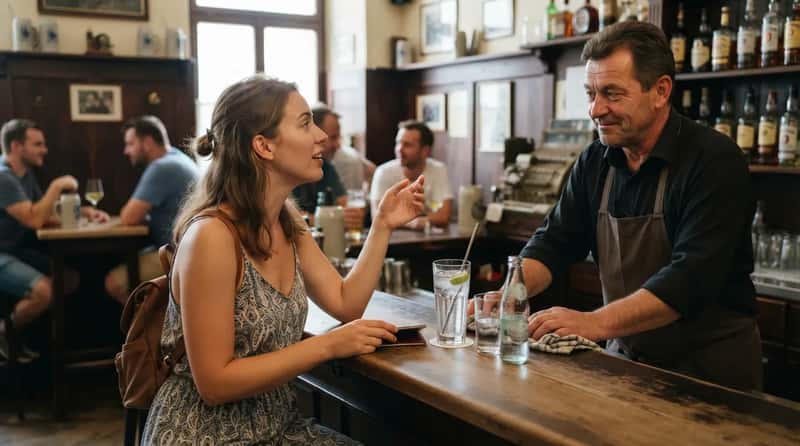
Bar staff in international cities carry a running mental map that most travellers would find unsettling.
Walk into a bar in Lisbon, Prague, or Bangkok, and staff can often name your country before you’ve finished ordering.
It usually comes down to phrasing, or one small habit that locals simply don’t share, like the exact way you ask for a menu.
For Americans, it’s rarely volume that gives them away – it’s the specific requests that feel normal at home and stick out everywhere else.
Ordering a vodka soda in Vienna or a frozen margarita in Croatia is a flashing neon sign, and bartenders in those cities say it comes almost exclusively from American tourists.
At a Glance: Drink Orders That Give Nationalities Away
- American travellers: vodka soda or frozen margarita, ordered almost on autopilot.
- German travellers: beer requested by brand name rather than style.
- British travellers: pint sizes and lager brands named with total confidence.
- Local regulars: order whatever the bar is actually known for, not what’s familiar from home.
German travellers, by contrast, tend to order beer by brand rather than style. Every nationality has its tell, and the menu in your hands is about to make yours even more obvious.
12. How You Handle the Menu
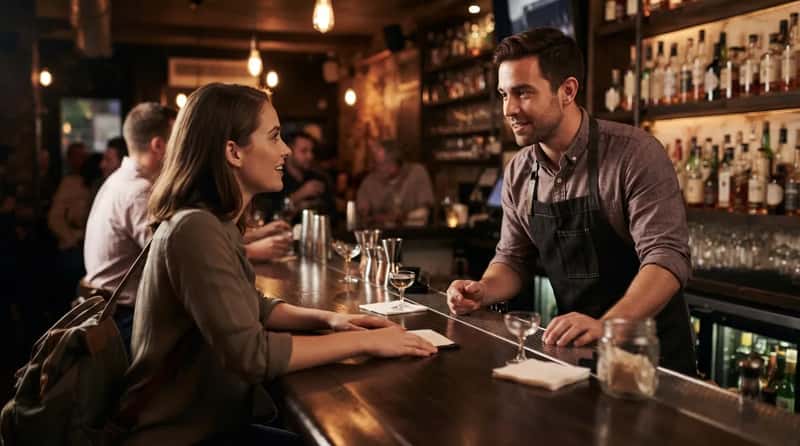
The menu tells a bartender almost as much as your first sentence does.
Photographing every page of the cocktail list, then still asking “what do you recommend?” with zero direction, signals you’re overwhelmed.
It hands the bartender the wheel entirely – and while good ones will take it, it also tells them you probably won’t order with confidence.
The traveller who skips the menu and asks “what’s local, what do you actually like?” gets treated as a peer almost instantly.
That single question signals curiosity instead of tourist-mode consumption, and it changes the tone of the whole exchange.
Your menu behavior sets the stage for everything that follows – and the next tell arrives the moment you actually open your mouth.
11. Your Opening Line
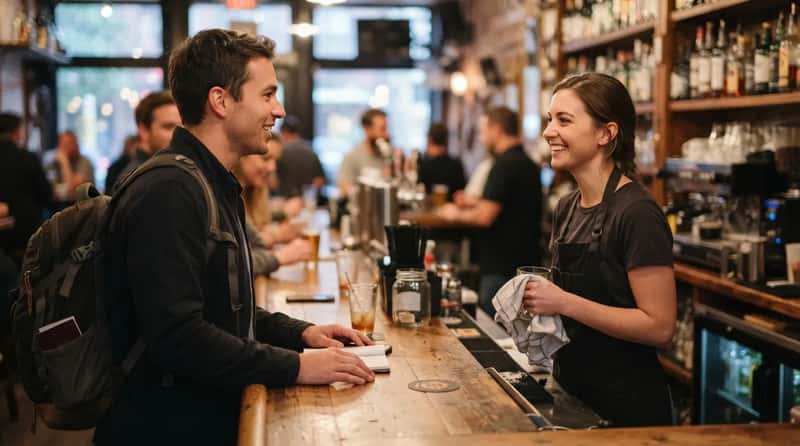
The first sentence out of your mouth tells a bartender almost everything about the interaction ahead.
Launching straight into an order with no greeting codes you as transactional, like someone treating the bar as a vending machine with a face.
The traveller who opens with “hi, how’s your night going?” instead of firing off an order gets coded completely differently.
That small opener tells a bartender you actually see the person standing in front of you, not just the drink they’re about to hand over.
It sounds almost absurdly simple, but bartenders consistently say it shapes the warmth of everything that follows.
How you try to grab their attention next is even more telling than the words you use.
10. How You Try to Get Their Attention
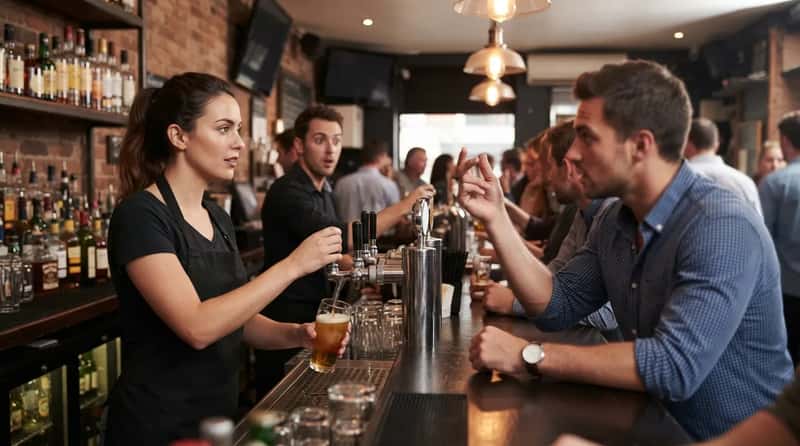
This might be the single most universally noticed habit in the entire industry.
Your bartender is not a dog. Snapping fingers or whistling doesn’t get you served faster – it just gets you remembered for the wrong reason.
Guests who click their fingers or talk over someone already being served tend to keep that same energy going all night.
Eye contact signals you’ve been seen and you’re probably next in line. Waving, snapping, or flashing cash is the fastest way to get quietly skipped over instead.
The correct move – catching their eye and giving a small nod – is something locals pick up fast and tourists almost never do.
What you order next confirms whatever quiet decision the bartender has already made about you.
9. What You Order (and What It Reveals)
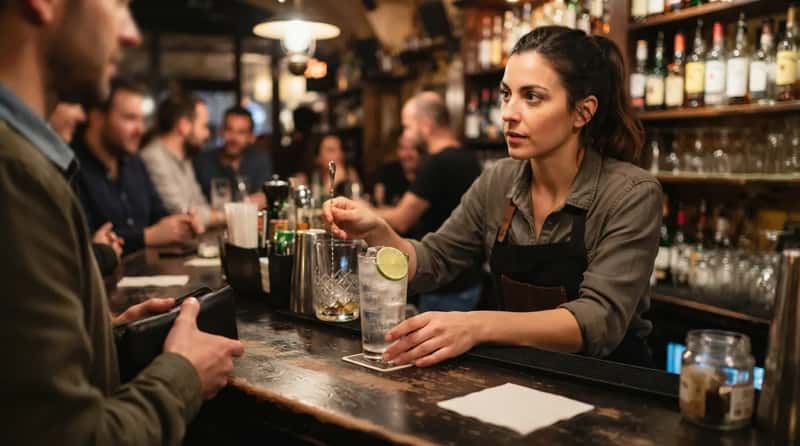
Locals order what the bar does well. Travellers order what they already know from home.
Ask bartenders in almost any European capital, and vodka soda comes up constantly as a tourist tell – a safe order back home that barely exists as a go-to elsewhere.
In cities where cocktail culture leans toward wine or local spirits, that request can land oddly plain, and staff will often double-check they heard you right.
It’s not a crime to order what you like, but it instantly tells the room you’re from out of town.
Order a Negroni, and you’re either an experienced drinker or trying hard to look like one – bartenders can usually tell the difference within a sip.
Order a vodka martini with no vermouth, and staff quietly expect a second round to follow within minutes.
8. How You Modify Your Order
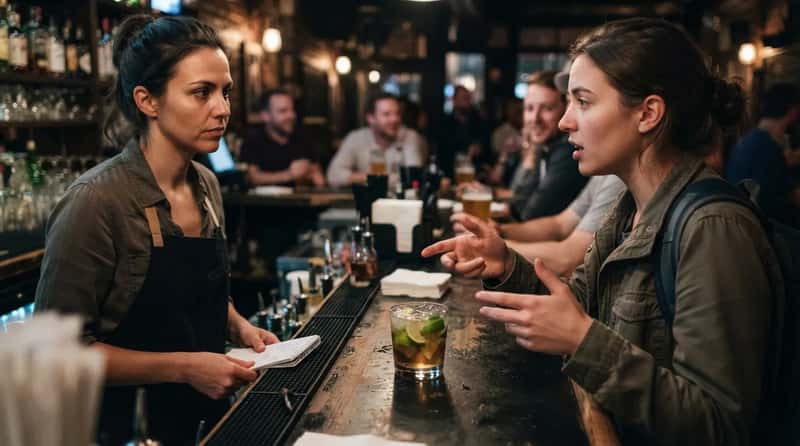
Over-customizing a cheap drink is one of the clearest signals in the trade, and almost nobody who does it realizes it.
Extra lime, light ice, a specific glass, go easy on the soda – maximum demands on a minimum-cost order is a classic tip-prediction flag bartenders watch for.
Ordering confidently is a skill, and plenty of travellers skip it entirely, hedging every request with three or four extra conditions.
If a bartender looks blank at your request, the fix is simple: describe what’s in the drink instead of just naming it.
Not every bartender knows your favorite niche cocktail from back home, and that’s fine, as long as you help them get there.
Ordering something hyper-regional in a foreign bar is the most common version of this mistake, and it signals you haven’t thought about where you actually are.
7. The Tipping Read That Starts Before the Bill
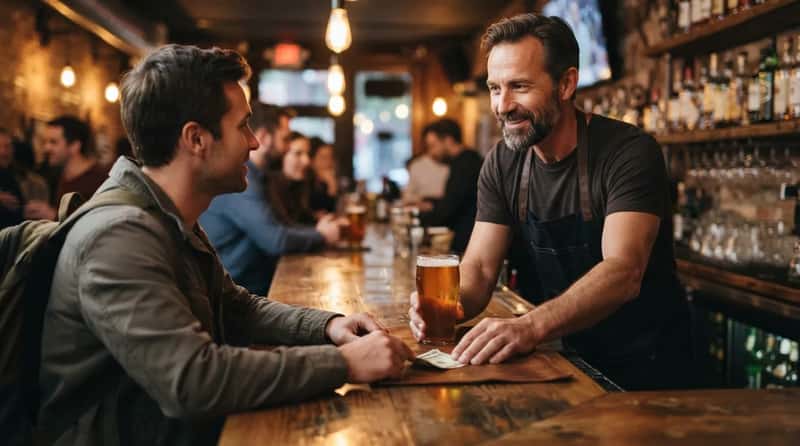
Experienced bartenders quietly predict your tip from the moment you sit down, and most travellers never notice it happening.
The read comes from small cues stacked up over the whole interaction: eye contact, tone, whether you’ve acknowledged the person actually serving you.
It isn’t a foolproof science. It’s pattern recognition built after thousands of nights on sore feet, refined shift after shift.
What you order is often the very first clue, but how you treat the exchange around it matters just as much.
Show genuine interest and tip decently on the first round, and a bartender will skip everyone else to reach you first on the second.
Tipping customs vary wildly by country, which is exactly where travellers trip up the most – and that’s the next thing worth knowing.
6. Whether You Understand Local Tipping Customs
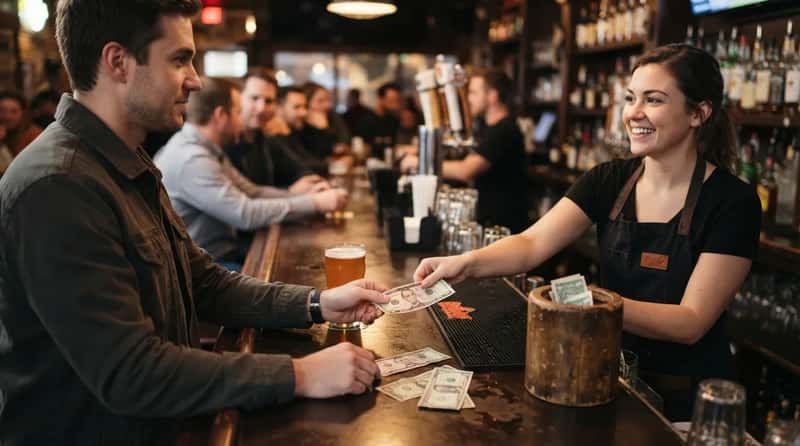
Tipping is one of the most loaded signals a traveller can send, and getting it wrong in either direction gets noticed immediately.
Whether to pay per round or run a tab, whether cash gets handed over or left on the bar – all second nature to a local, and a visible source of confusion for a visitor.
In England, for instance, you’d rarely tip in a pub. You’d buy the bartender a drink instead, which is its own small ritual to learn.
In parts of Japan, tipping can actually feel awkward or even be politely refused, while in the US it’s practically an obligation.
Quick Compare: Tipping Around the World
- United States: tipping at bars is standard, typically $1-2 per drink or 15-20% on a full tab.
- United Kingdom: tipping isn’t expected when ordering at the bar; offering to “buy the bartender a drink” is the traditional gesture instead.
- Japan: tipping isn’t part of everyday service culture, and an unexpected tip can sometimes cause confusion rather than gratitude.
Over-tipping in a no-tip culture can feel just as strange as under-tipping somewhere it’s expected, and bartenders notice both extremes.
How smoothly you navigate payment tells staff whether you’ve traveled before, whether you understand local norms, and – most revealingly – whether a good tip is coming.
5. How You Behave While the Drink Is Being Made
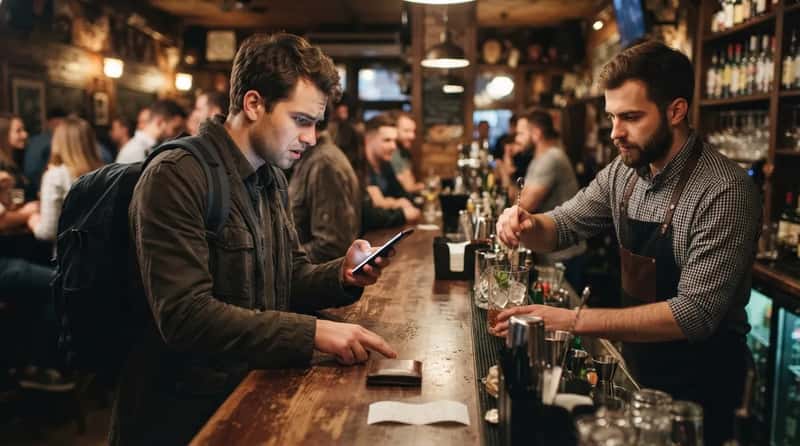
What happens after you order is just as revealing as everything that came before it.
Standing still, relaxed, tells a bartender something specific. So does fidgeting, and travellers fidget more than almost any other type of customer.
Impatience is one of the most consistent tourist markers in the business, right up there with checking a phone every ten seconds.
Good bartenders are constantly scanning the room for shifts in energy or early tension, watching for problems before they grow into something bigger.
On the flip side, the traveller who gets warmer and more curious as the night goes on is genuinely noticed and quietly appreciated.
Alcohol just removes the filter – whatever comes out at drink four was already there underneath the whole time.
4. Whether You Treat Staff Like People or Furniture
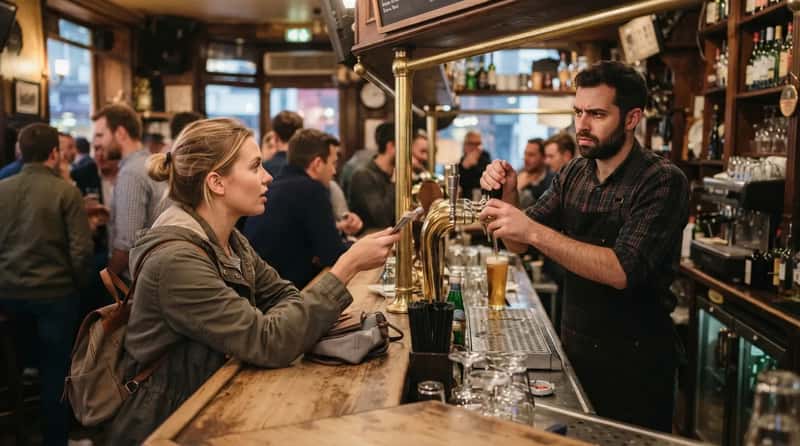
This is the tell bartenders remember longest, and talk about most once the shift ends.
The traveller who talks to bar staff like a vending machine is one of the most common sights in tourist-heavy bars – and one of the most remembered.
Not fondly. Bartenders talk to each other, and word about a rude table travels faster than you’d think.
Being decent costs absolutely nothing, yet it’s one of the rarest things bartenders say they actually see from strangers passing through.
Being memorable for the wrong reason follows you around the bar all night, shaping every pour and every wait time after that.
The next tell surprises nearly every traveller who hears it, because most have no idea they’re doing it at all.
3. Whether You’re Actually Present or Just Passing Through
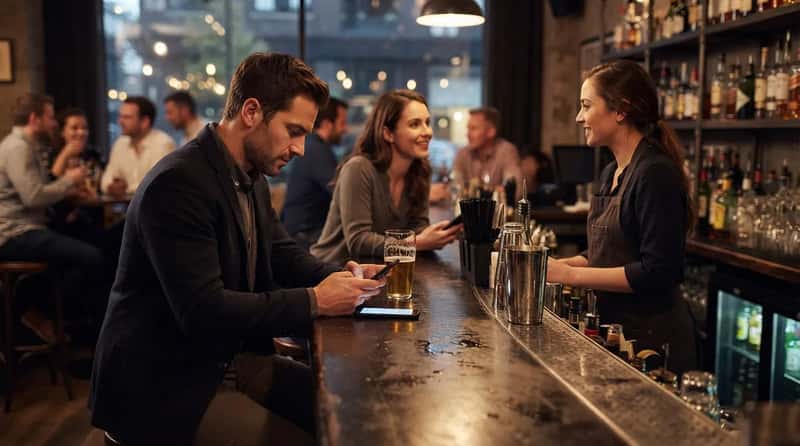
The phone on the bar is one of the most reliable tourist identifiers in the industry right now.
The traveller who treats the bar as a pitstop – eyes on the screen, drink downed, gone – is the most forgettable person in the room.
The one who looks up, asks a question, and actually engages with the person serving them gets remembered, recommended, and quietly taken care of.
Business travel blending into leisure has only made this more common, with more guests sitting at hotel bars still half-tethered to their inbox.
Bartenders notice the difference between someone unwinding and someone merely occupying a stool while their mind is somewhere else entirely.
That difference shapes the warmth of the service that follows – and the next detail shapes even more.
2. The Moment You Ask Something Genuine
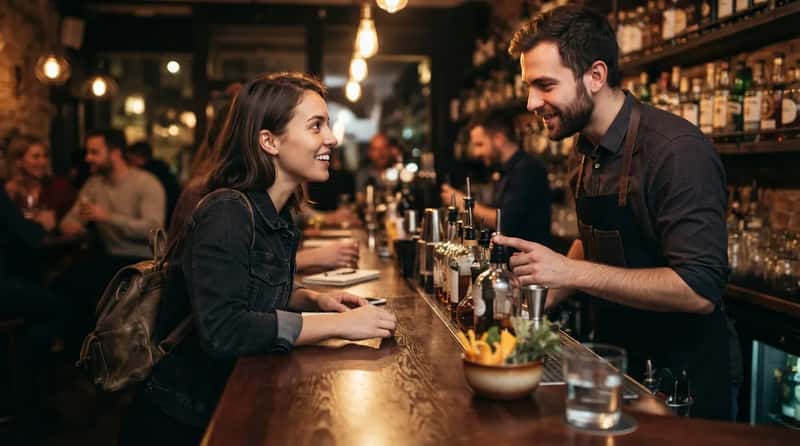
Curiosity is the rarest and most rewarded thing bar staff see in a traveller.
What looks like intuition in a skilled bartender is really an observation skill sharpened over thousands of guests and thousands of nights.
Most travellers walk in aiming to be served. The ones who ask a genuine question get something different back entirely.
The traveller who skips the menu and asks “what’s local, what do you actually like?” gets treated as a peer almost instantly.
Worth Knowing: Small Moves That Change the Whole Interaction
- Ask “what’s local?” instead of scrolling through the whole menu.
- Learn two or three local phrases before you sit down.
- Watch how regulars order and tip before doing your own thing.
- Greet the bartender like a person, not a service button.
Learn a few local phrases, watch how locals behave before acting, greet people with real curiosity, and something shifts. You stop being a tourist and start being a temporary neighbor – and that shift is felt immediately on the other side of the bar.
1. Whether You See the Person, Not Just the Role
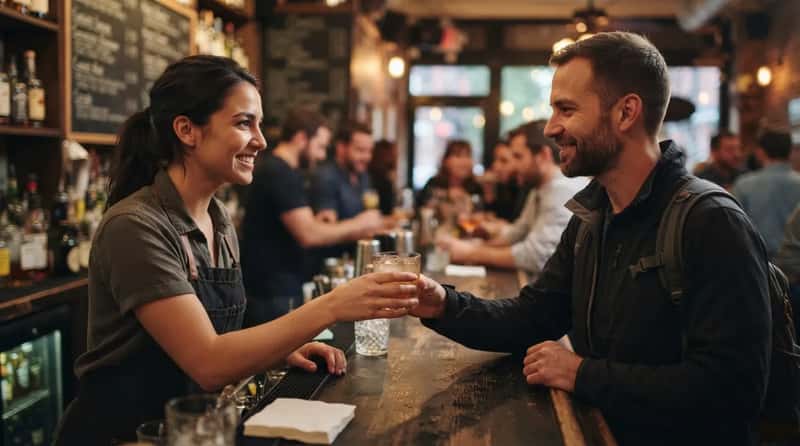
Every other item on this list leads here. This is what bar staff actually remember, long after you’ve checked out.
Eye contact, waiting your turn, and a genuine thank you buy better service, because staff in busy venues quietly calibrate quality to how respectful a guest is from the first interaction.
A good tip will never make up for a bad attitude. Respect gets noticed first, and money gets noticed second.
The longer you work this job, the better you get at reading people – and the more important you realize it is.
A sentiment echoed by bartenders everywhere
The travellers who understand this rarely have to think about it consciously, because it comes naturally once you’re genuinely present.
How you treat the person serving you sticks around far longer than how much you paid them.
The Bottom Line
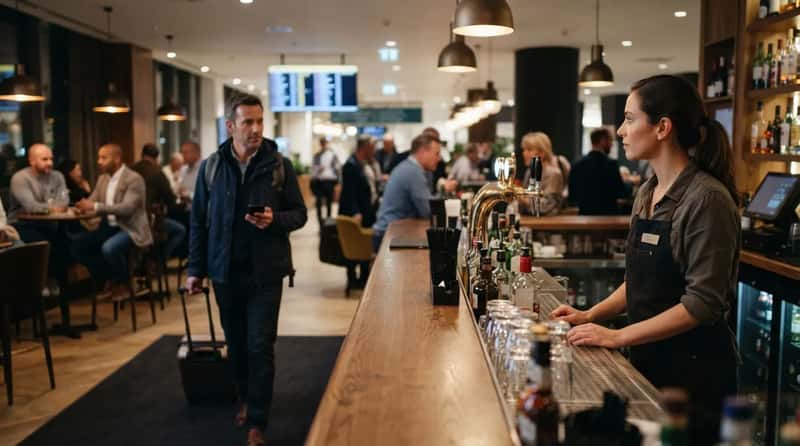
Most travellers assume bar staff are too busy to notice anything beyond the order. They’re wrong.
Experienced bartenders – especially on tourist strips, in hotel lounges, on cruise ships, and at airport terminals – read total strangers with almost forensic speed.
By the time you’ve said a single word, they’ve clocked how you walked in, guessed your nationality, and quietly bet on your tip.
The patterns repeat across every city and culture: snapping fingers, over-modifying a cheap drink, staring at a phone, ordering what you know instead of what the bar does well.
But so does the genuine hello, the curious question, the moment you actually looked up from your screen.
The travellers who get the best nights aren’t the highest spenders – they’re the ones who treated the bar like a place, and the person behind it like a person.