At the Farnborough International Airshow this week, the usual noise around blockbuster jet orders took a back seat to something quieter and more telling. Executives from both Boeing and Airbus spent as much time talking about patience as they did about progress, a shift that says a lot about where the industry actually stands in 2026.
For an event that has historically been about splashy order announcements, this year’s gathering felt more like a status update. The two companies that build nearly every narrow-body jet flying today are each thinking hard about what comes after the 737 MAX and the A320neo, yet neither seems eager to say so out loud just yet.
A rare moment of agreement at Farnborough

It is not often that Boeing and Airbus sound like they are reading from the same script, but that is roughly what happened this week. Boeing and Airbus are starting to map out the next generation of narrow-body aircraft, but the world’s two dominant planemakers say their airline customers are more concerned with getting today’s jets delivered than pressing for all-new models. That framing came from both sides of the rivalry, which is notable given how differently the two companies usually talk about their product plans.
While the two CEOs struck different tones, they pointed to broadly similar timeframes. Airbus CEO Guillaume Faury even reacted with a single word, “Perfect,” when Boeing’s more cautious stance was relayed to him in a separate conversation, a small moment that captured just how aligned the two rivals have become on timing, even if not on messaging.
Boeing’s math problem: fix the balance sheet first

Boeing’s position going into Farnborough was blunt. Boeing CEO Kelly Ortberg told CNBC on Monday that the plane maker will need “a couple more years” to repair its finances before launching a new commercial jet, signaling that the company is focused more on stabilizing its existing business rather than rushing to develop a successor to its bestselling 737 MAX. It is not a subtle point. Boeing is essentially saying it cannot afford to launch a clean sheet aircraft program right now, no matter how the technology is progressing.
Ortberg laid out the logic in fairly simple terms. “We think about three things that have to happen,” Ortberg told CNBC’s Phil LeBeau. “First of all, we have to be ready, and part of that is getting our financial house in order, and we’re working on that. It’s going to take a couple more years to get where we want to be.” Some reporting has suggested the timeline could slip even further. CEO Kelly Ortberg made clear that a next-generation narrow-body aircraft is not expected until the late 2030s, with the immediate priority being financial repair and production ramp-up.
Airbus draws a line in the sand for 2030
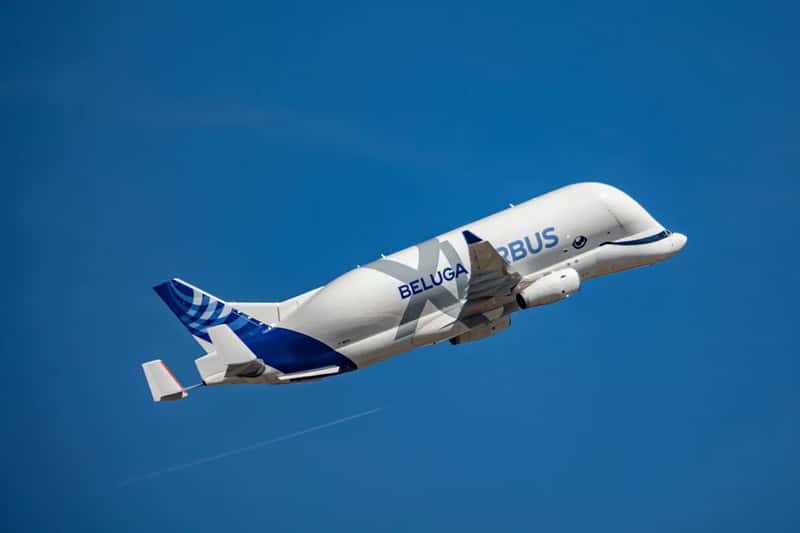
Airbus, by contrast, has actually put a number on the calendar. Airbus CEO Guillaume Faury said the European manufacturer is targeting the launch of a next-generation single-aisle program around 2030, with entry into service in the second half of the following decade. That is a meaningfully firmer commitment than anything Boeing has offered, and it reflects Airbus’s stronger financial footing after years of dominating the single-aisle market.
Faury has also been careful to frame the timing as a long game rather than a sprint. “We’re a long-term industry,” Faury said. “It takes time to prepare the technologies, to launch a program for the product, for the production system, [to] enter into service with the certification, do the ramp up.” It is a reminder that even a company with a healthier order book and stronger cash position is not treating a new aircraft launch lightly.
Airlines send a clear message: don’t rush

If there was one recurring theme from the airline side at Farnborough, it was caution. Airline executives cautioned planemakers Boeing and Airbus not to rush out a new generation of commercial jets without ensuring their technology is mature enough. That is not the kind of pressure planemakers are used to hearing when a new product cycle starts to loom.
One of the more pointed comments came from a leasing executive rather than an airline itself. “I’m not keen to see a new narrow body in a 2030 time frame,” Paul Kent, chief commercial officer at BOC Aviation, told the Airline Leaders Summit, held at the Farnborough Airshow, adding that when aircraft launch before they are fully mature, the program needs to run for many years to become economically viable. It is a fair concern. Airlines have lived through enough early-build teething problems on recent aircraft that they are wary of repeating the experience on an entirely new platform.
The order backlog that buys everyone time

Part of the reason airlines can afford to be patient is that they are already sitting on years of unfilled orders. As of March 31st, 2026, Airbus reported a commercial aircraft backlog of 9,031 aircraft, which based on the company’s 2026 delivery target of 870 aircraft, represents approximately 10.4 years of production coverage. Boeing’s situation looks similar in scale. Based on current manufacturing paces and 2026 delivery forecasts, Boeing’s overall order book continues to provide the company with approximately 10.1 years of production coverage.
Industry wide, the picture is even more stretched. The latest commercial aircraft orders and deliveries data from ADS showed that 16,683 aircraft were on backlog order at the end of April 2026, up 5% year on year and the highest figure ever recorded by the trade association. With queues that long, an airline placing an order today would likely wait the better part of a decade for delivery anyway, so there is little urgency to lock in a next-generation jet that does not yet exist on paper.
Open fan engines: the technology waiting in the wings

Whatever shape the next narrow-body takes, engine technology will likely define it. CFM International, the joint venture between GE Aerospace and Safran, used Farnborough to update progress on its RISE program, a research effort into open fan engine architecture that removes the traditional casing around the fan blades. Developers say this configuration could improve fuel efficiency by more than 20% compared with current narrowbody turbofans.
The program is still firmly in the testing phase rather than anywhere near production. Safran Aircraft Engines is accelerating towards full scale tests of the low pressure system, including the four meter diameter composite fan, intended for the RISE open fan engine demonstrator, with initial tests expected towards the end of the year or in early 2027. A flight demonstration is also planned. CFM and partner Airbus will fly what has been described as a product representative demonstrator aboard a modified A380 around 2029.
Boeing’s parallel bets: quieter inlets and truss braced wings
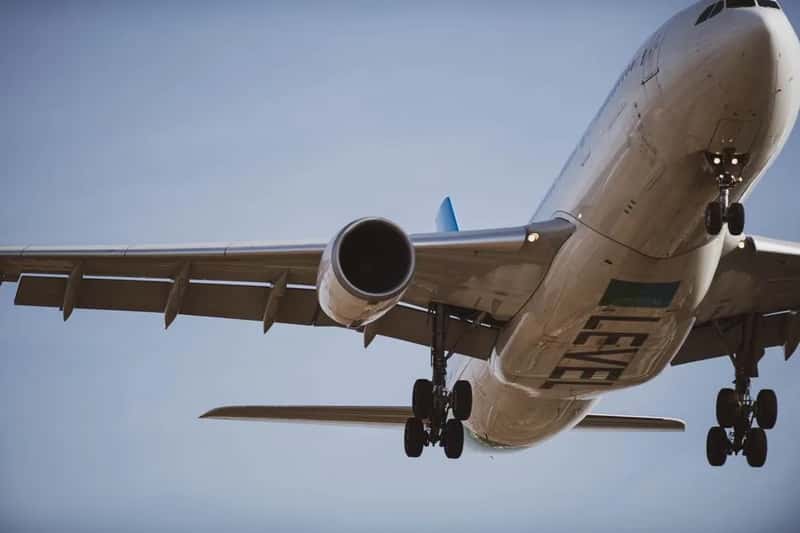
Boeing has not been sitting entirely still while it waits on its finances. The company is running its own technology trials that could eventually feed into a future single-aisle design. Boeing ecoDemonstrator 2026 flight tests began in Glasgow, Montana, as Boeing, Lufthansa and Rolls-Royce evaluate a Next-Generation Inlet that shortens the engine nacelle without sacrificing noise performance, a key step before any manufacturer can commit a next-generation narrowbody to a clean sheet design.
Separately, analysts have pointed to another concept Boeing has been quietly exploring. Analysts at Leeham News suggest that Boeing is pursuing multiple parallel concepts, one being the Transonic Truss-Braced Wing, a high efficiency design with ultra-slender wings supported by trusses that could dramatically cut drag and fuel burn but would require large folding sections to fit at standard airport gates. None of this amounts to a committed program yet, but it shows Boeing is not simply waiting around with empty hands.
Production quality remains the bigger headache
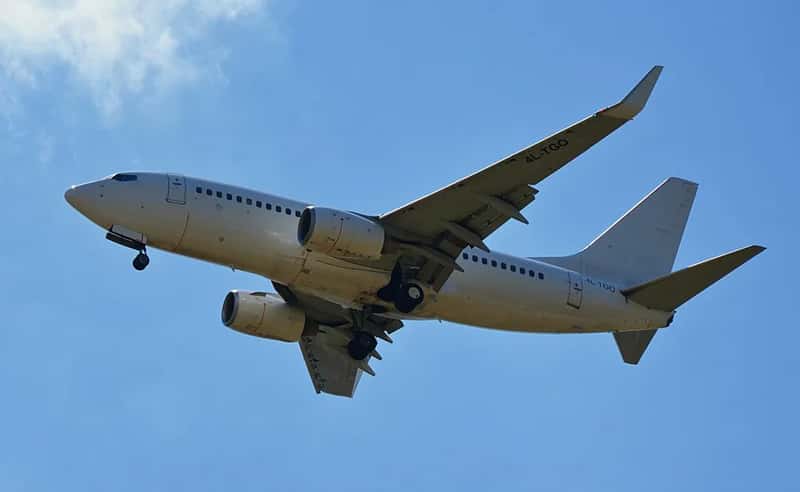
For all the talk about next-generation jets, both companies are still dealing with more immediate problems on today’s aircraft. It comes as aircraft manufacturers experience persistent production bottlenecks across the industry, and Boeing is trying to increase 737 Max output while still reeling from a series of production and quality issues and a near catastrophic blowout of a fuselage door plug in January 2024. Those issues have understandably consumed a large share of management attention over the past two years.
Airbus has faced its own supply chain strain, though for different reasons. Airbus has said engine availability, particularly from Pratt & Whitney, forced it to adjust production plans for this year and next, although Faury said the situation had stabilized. Investors, for their part, seem to be watching these operational details far more closely than any future jet announcement. RBC Capital Markets analysts said last week that investors are focused on Boeing’s ability to increase production of the 737 Max and 787, complete certification of the Max 7 and Max 10, improve margins, and generate cash, with investors remaining focused on production, certification and supply chains rather than new aircraft programs.
History’s warning: the risk of moving too fast, or too slow
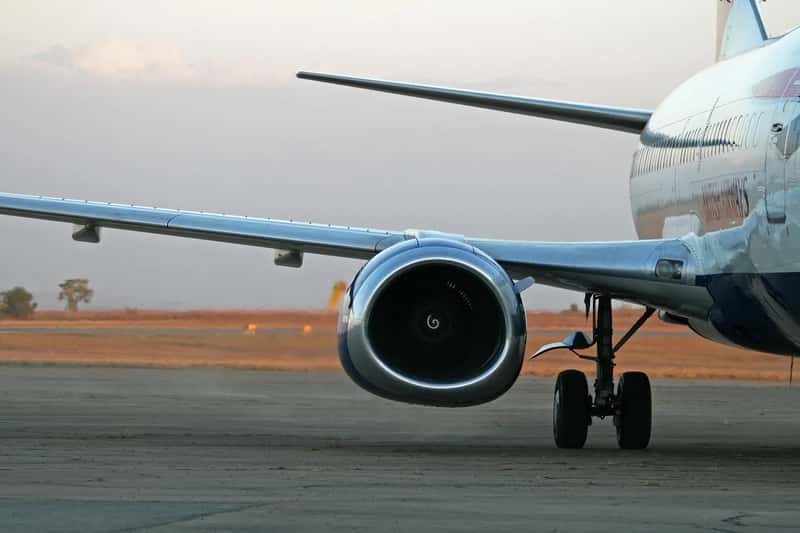
There is a cautionary tale sitting behind all of this patience, and it is one Boeing knows well. The company’s decision two decades ago to re-engine the 737 rather than design a clean sheet replacement was cheaper and faster at the time, but it left a gap that Airbus exploited. That decision allowed quick deployment at lower cost, but Airbus seized the initiative with the A321neo, capturing a commanding lead in the largest segment of the single-aisle market.
The imbalance shows up clearly in the numbers. According to backlog data compiled by Forecast International, Airbus had a total backlog of 7,657 narrowbody aircraft, including A220s and A320neo aircraft, while Boeing’s narrowbody backlog stood at 4,823 aircraft. Industry commentary has drawn a direct line between that history and the current caution. Industry insiders point out that Boeing faces a dilemma regarding the strategic timing of its next narrow-body aircraft, moving too quickly could mean key technologies are not mature enough, while waiting too long could allow competitors to seize market share, replaying the passive scenario where Boeing rushed the 737 MAX to market after Airbus launched the A320neo.
What airlines actually seem to want right now

Strip away the engineering talk and the airline preference is fairly simple: reliability over novelty, at least for the time being. The technology also has to be ready, Ortberg said, and airline customers must be ready to move on from Boeing’s current product line, adding that right now customers are telling him to focus on the existing product line and its maturity before moving to a new airplane. That is a fairly candid admission from a manufacturer, and it lines up with what industry observers have picked up elsewhere.
Durability, not raw performance gains, appears to be the priority for many operators today. Airlines are currently more focused on aircraft and engine durability issues than on rushing to adopt new models, with one analyst observing that airlines are less worried about more technology improvements and more worried about durability, which buys Boeing more time to refine its existing product line. For carriers still dealing with maintenance backlogs and engine shop visit delays on current jets, that instinct makes practical sense.
Final thoughts

Nothing about this moment suggests Boeing or Airbus has abandoned the idea of a new narrow-body jet. If anything, the technical groundwork, from open fan engine testing to new inlet designs, is moving forward at a steady pace behind the scenes. What has changed is the sense of urgency around actually launching a program, and both airlines and analysts seem comfortable with that slower rhythm for now.
The real test will come later this decade, when Airbus’s stated 2030 launch target arrives and Boeing has to decide whether its financial recovery has gone far enough to justify a commitment of its own. Until then, expect more testing milestones, more cautious language from CEOs, and airlines that keep asking for one thing above all: make the planes you already sell work better before you try to sell us something new.