
Most travelers have a rule of thumb tucked away for buying plane tickets. Maybe it’s booking on a Tuesday, or waiting for a mysterious price drop that never seems to come. The trouble is that a lot of that folk wisdom has quietly stopped working, and some of it was never quite as solid as it sounded.
Airlines now adjust prices dozens of times a day using automated systems, which means the old shortcuts travelers relied on for years have either weakened or disappeared entirely. Understanding what actually still matters, and what doesn’t, can be the difference between a fair fare and an unnecessarily expensive one.
The booking window still moves the needle

While day-of-week tricks have become unreliable, how far ahead you book remains one of the few factors researchers consistently agree on. The CheapAir 2026 Annual Airfare Study, based on 917 million domestic fares, confirms a “prime booking window” of 21 to 60 days before departure, narrowing to a sweet spot at 28 to 35 days.[1] Google’s own data lines up closely with this, showing prices bottom out at a similar point in the calendar.
The Google study found something similar, with the prices bottoming out about 44 days before departure and good pricing at any point from 21 to 60 days in advance.[2] International trips run on a longer clock. The Expedia Air Hacks report found that for the best price, travelers should book flights within the U.S. 34 to 86 days prior to departure, or about one to three months’ notice.[2]
The “Tuesday rule” is effectively dead

For over a decade, travelers were told to book on Tuesday afternoons for the best deals. That advice has not aged well. Hopper’s chief economist Hayley Berg told reporters in April 2026 that “the Tuesday 3 PM rule is dead – algorithms now update fares 24/7, often more than 200 times per day”.[1]
Hopper’s own team has been blunt about it. “There’s no one day or golden rule when to book,” Lindsay Schwimer, a consumer travel expert at the booking app Hopper, said, while Hayley Berg, Hopper’s lead economist, added that “there’s a common myth that booking on a Tuesday will guarantee a traveler the best price.”[3] Google reached a similar conclusion years earlier. A 2022 Google study found that purchasing tickets on Tuesdays, Wednesdays and Thursdays was cheaper than buying flights on the weekends, though Google itself concluded there isn’t much value in purchasing tickets on a certain day of the week.[2]
Conflicting studies on the cheapest booking day

Here is where things get genuinely confusing for anyone trying to follow the data. Different companies, using different datasets, have landed on different answers in consecutive years, which tells you something about how thin these margins really are. Expedia’s myth-busting analysis, created in partnership with the Airlines Reporting Corporation, found that booking flights on a Sunday can save travelers up to 17%, proving day of the week does matter.[4]
Yet barely a year later, Expedia’s own report flipped the script entirely. For years, the tip was to book on Tuesday, but according to Expedia’s 2026 Air Hacks Report, Friday is now the cheapest day to book flights.[5] Meanwhile, a separate 2024 dataset pointed in yet another direction. A 2024 data study by Upgraded Points found that the best day to purchase airline tickets is Monday or Tuesday, with Friday and Saturday being the most expensive.[2] When the “best day” keeps changing depending on who ran the numbers and when, that’s usually a sign the effect itself is small and unstable.
Day-of-week booking savings are smaller than they sound
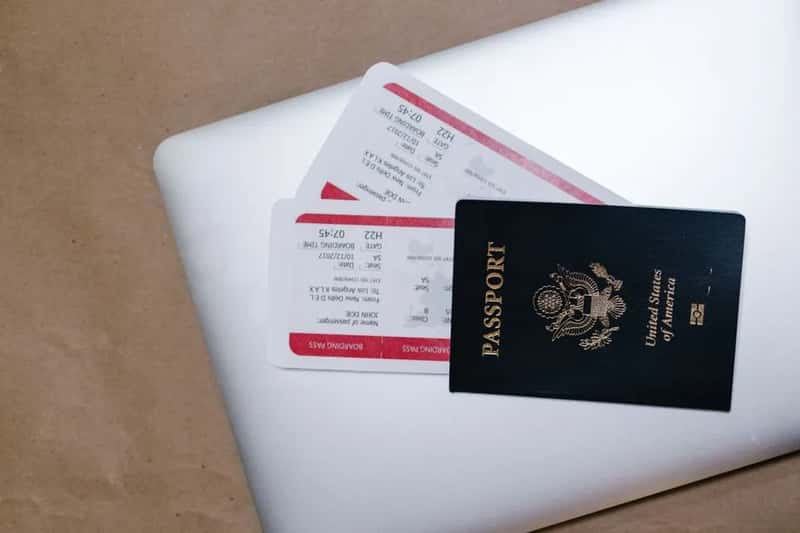
Even when a study does find a cheapest booking day, the actual dollar savings tend to be modest once you look past the headline. A 2025 study by Expedia found the cheapest day to book flights is Sunday, though booking Sunday rather than Monday or Friday only saves travelers an average of 6% on domestic flights, which on a $300 ticket comes out to about $18.[2] That’s a real number, but it’s not the kind of savings that should reshape someone’s entire travel planning.
Independent research backs up how narrow this margin really is. NerdWallet and AmEx Global Business Travel both reported that day-of-week booking variation is typically less than 3 percent, meaning the big lever is the booking window, not the booking weekday.[1] A travel industry voice put it plainly when discussing whether chasing these small savings is worth the hassle. The day of the week you choose to book airfare is “only a small factor in your dream vacation,” and contorting yourself into an itinerary with extra connections to save fifty dollars may not be worth the mental or physical anguish.[5]
The day you fly matters more than the day you book

This is one of the most common mix-ups travelers make, and it’s worth separating clearly. The cheapest day to fly is not necessarily the cheapest day to book, and mixing them up can cost you.[6] The two decisions operate on completely different mechanics, and only one of them has strong, consistent evidence behind it.
Tuesday, Wednesday, and Saturday departures are consistently the cheapest, while business and leisure travelers cluster around the weekend, driving those fares up.[6] The size of that gap is not trivial either. Expedia’s 2026 data backs this up: flying domestically on a Tuesday is about 14% cheaper than a Sunday departure.[6] A separate Google-sourced figure lands in the same neighborhood. “The cheapest days to travel are still Monday through Wednesday, about 13% cheaper than flying over the weekend,” according to a 2025 Google report.[3]
What time of day you book barely registers

Some travelers still believe fares drop at specific hours, often overnight, and that checking prices at 3 a.m. gives some kind of edge. There’s little support for that idea in current pricing systems. Airfare prices change regularly based on supply and demand and the airline’s resulting prediction of how it can maximize income on remaining seats, a process usually run by software that updates fares any time of day, any day of the week, just as likely at night as during business hours.[7]
This constant repricing is really the core reason so much of the old advice has broken down. As a flight fills up or doesn’t, airlines will continuously change prices to maximize their potential profit, which means fares may not only change daily but can even change multiple times throughout the day.[7] Waiting for a magic hour to strike is largely wasted effort in a system built to react to demand in real time rather than the clock.
Seasonal timing carries bigger stakes than weekly timing

While day-of-week debates rage on among researchers, the calendar month you choose to fly in tends to produce far more dramatic swings. August is the most affordable month to travel, with flights 29% cheaper on average than December, saving travelers roughly $120 per ticket.[8] That’s a gap far larger than anything tied to a single weekday.
Winter carries its own quiet opportunity too. January is the cheapest month to fly domestically, driven by lower demand after the holidays.[8] On the international side, shifting travel by a season rather than a few days can produce a noticeable discount. In Europe, April to May and September to October bring good weather, thinner crowds, and fares that can run 20 to 40% below peak.[6]
Booking too early rarely pays off

There’s a persistent assumption that locking in a flight the moment tickets go on sale guarantees the lowest price. The data doesn’t really support that instinct. Most airlines allow customers to book flights up to 11 months in advance, but booking on nearly a full year’s notice rarely results in the best price.[2]
Recent booking-window research reinforces the same pattern for shorter horizons too. The most affordable booking window for domestic economy flights is 15 to 30 days before departure, averaging $130 less than bookings made more than six months out.[9] International itineraries follow a similar shape, just stretched further out. International travelers can save $190 on average by booking 31 to 45 days ahead, instead of six months out.[9]
Waiting too long carries its own risk

If booking a year out is usually wasteful, waiting until the last minute is its own gamble, and not always the one people expect. There are cases where a short-notice booking actually turns out cheaper than assumed. For those bold travelers, booking 8 to 15 days ahead can offer the best value, saving an average of $225.[9]
That said, this window is unpredictable by nature, especially around high-demand dates. Good news for when wanderlust strikes at the last minute can turn sour fast, since popular travel periods tend to mean higher fares.[7] Knowing the busiest stretches on the calendar helps explain why. The busiest travel dates include May 22, July 3, and August 29.[8] Booking close to departure on or near those dates tends to work against the traveler rather than in their favor.
Airline-specific patterns complicate a single universal rule

One reason the “best day to book” keeps shifting from study to study is that pricing behavior isn’t uniform across carriers. A detailed comparison of major US airlines found real differences hiding beneath the national averages. Tuesday is the cheapest day to book flights overall, with ticket prices averaging $213.31, followed closely by Monday at $213.44, while Saturday proved to be the most expensive day to purchase airfare, with ticket prices averaging $241.61.[10]
But that overall pattern breaks down once you look at individual carriers, which is where a lot of the confusion in headline studies comes from. The real takeaway from the study is that the best day of the week to book flights depends greatly on the airline, with Alaska Airlines showing Thursday as its cheapest booking day at an average ticket price of $274.69, while American Airlines showed Sunday as its cheapest booking day at $271.47.[10] Chasing a single universal rule across every airline is likely to miss savings that only show up carrier by carrier.
Final thoughts

The research from 2024 through 2026 tells a fairly consistent story once you strip away the competing headlines. The booking window, roughly three to eight weeks out for domestic trips and one to three months for international ones, still matters. The day of the week you fly matters more than most people realize, while the day you happen to click “buy” barely moves the price at all.
Timing a flight perfectly has never really been about finding one secret trick. It’s about knowing which variables genuinely affect price, and which ones are leftover advice from an era before software started rewriting fares hundreds of times a day.