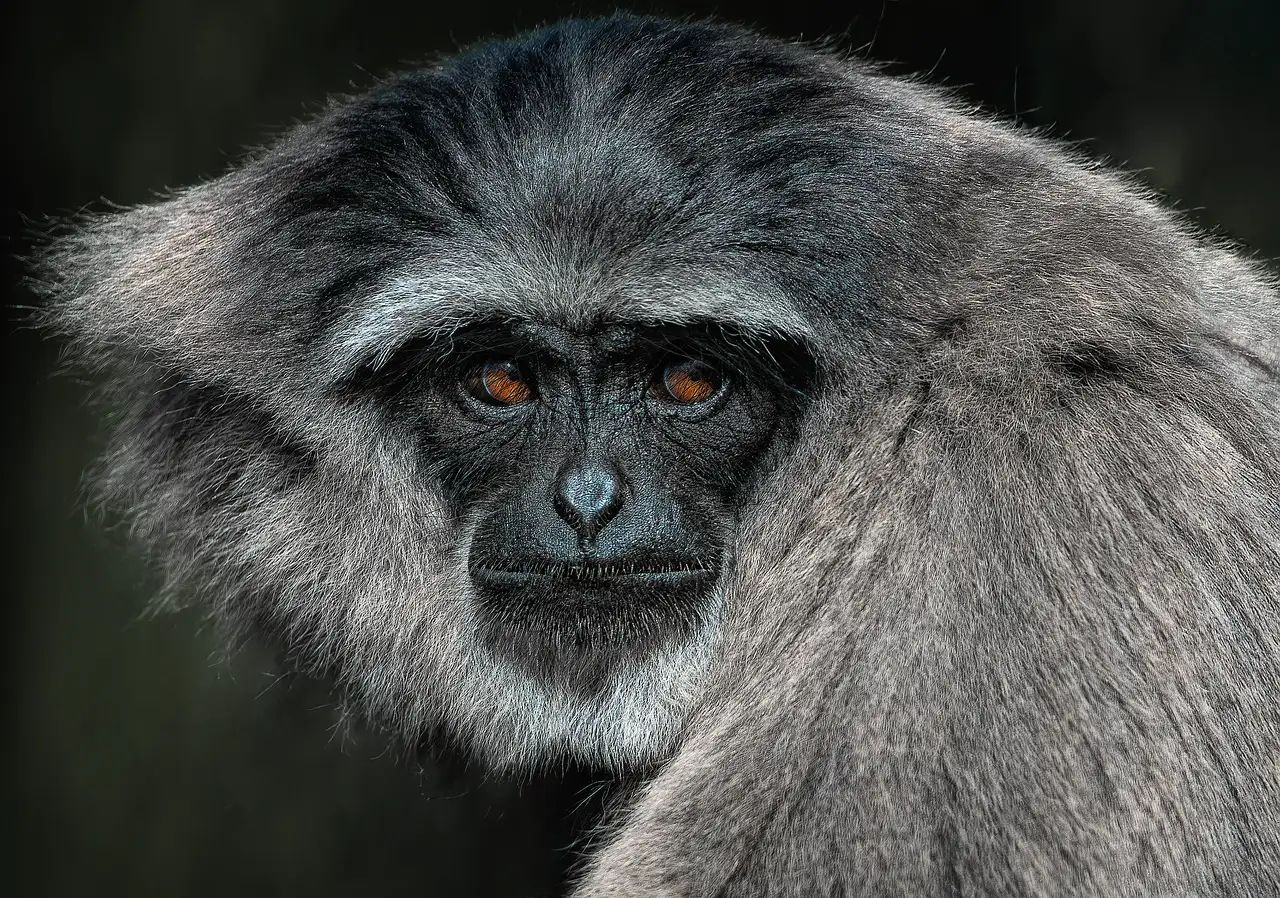
Central Kalimantan, Indonesia – Each morning, a gibbon pair often begins to sing before sunrise, and their voices build into a duet that fills the rainforest canopy. This is the familiar soundtrack of Borneo’s forests. This year, that soundtrack has thinned. Smoke from Indonesia’s worst fire crisis in more than a decade has spread across the island, and field teams say the apes are singing less, and sometimes not at all ([1]).
Mornings that start late, or not at all
On the heaviest haze days, the Borneo Nature Foundation field team in Sebangau has noticed that gibbon songs are shorter than usual. Some morning duets begin well after the normal time. On other days, the forest simply stays quiet.
Susan Cheyne, co-director of the Borneo Nature Foundation, has seen this kind of change before. She recorded a similar pattern in the same area after forest fires in 2006. The current observations have not yet been formally analyzed, and researchers will need to wait until the fires die down and fieldwork can safely resume before they can sort out what is driving the changes.
Why a duet carries so much weight
For gibbons, singing is far more than background noise. These fiercely territorial and socially monogamous primates use song to attract mates and to warn rivals away from their ground. Paired adults perform their duets to signal how strong their partnership is, so a missing or shortened performance can carry a message of its own.
That is why researchers are paying close attention. A morning without a duet may reflect stress in the animals, a disruption to the way they communicate, or both. Scientists are still working to determine how much each factor contributes.
- Shorter songs and later starts have been reported on the haziest days.
- The field team’s observations match a pattern recorded after fires in 2006.
- Smoke is considered a major factor because it irritates the airways and dims the morning light that cues duets.
- Formal analysis must wait until the fires subside and fieldwork can resume.
A haze that reaches far beyond one forest
The smoke is part of a much larger episode. Forest and peatland fires across Indonesia have pushed air quality in parts of Malaysian Borneo to hazardous levels, and the haze is the region’s worst since 2015 ([2]). According to the Indonesian government, fires between January and July burned more than 200,000 hectares across Borneo and Sumatra, an area roughly three times the size of Jakarta ([2]).
Authorities have also moved against those they blame for setting the fires. Indonesian officials have charged 72 people with deliberately igniting forest fires in provinces on Borneo and Sumatra, with suspects accused of burning land to prepare it for planting ([3]).
Related Stories From Travelbinger



What the silence could tell us
Gibbons are not the only creatures feeling the strain. Conservationists have been rescuing wildlife from fire-affected forests, including orangutans, and the haze has been linked to health problems for people across the region. The quiet mornings in Borneo offer a simple signal that the damage reaches well beyond the smoke that can be seen from a city street.
Whether the gibbons return to their full duets will depend on how quickly the fires are brought under control and how long the air stays clear. Until then, the forest’s most recognizable morning sound remains uncertain.