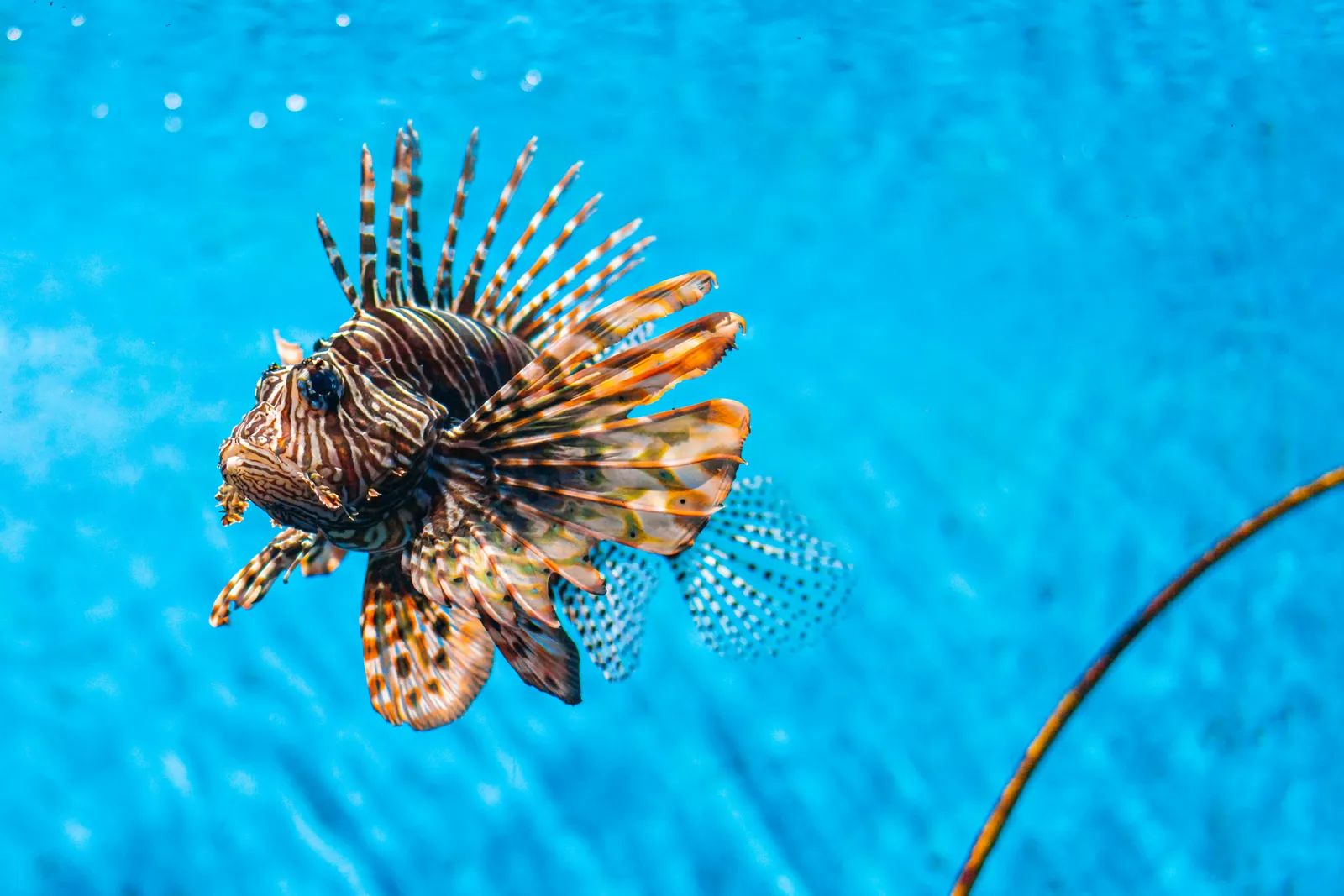
Porto Seguro – Local authorities have launched a paid removal program after invasive lionfish reached the Abrolhos reef system off northeastern Brazil. Fishers have already delivered at least 440 of the venomous fish in recent weeks under the government-backed effort. The move aims to slow the spread of a species that lacks natural predators in the region and preys heavily on native juvenile fish.
Why the Response Began Now
The arrival of lionfish at Abrolhos marks a new phase in their expansion across the South Atlantic. These fish, originally from the Indo-Pacific and Red Sea, have already altered reef ecosystems farther north in the Caribbean and western Atlantic. Officials in Porto Seguro responded quickly once sightings increased, offering payments to local fishers to harvest the invaders before populations grow further. The program treats the issue as both an ecological and economic priority. The practical effect is immediate for the fishing community. Participants receive compensation for each fish turned in, creating a direct financial incentive to target the species. This approach draws on existing local knowledge of the waters while addressing the rapid reproduction rates typical of lionfish. Without intervention, the fish could reduce stocks of commercially important species that support both small-scale fisheries and larger operations.
Threats to the Abrolhos Ecosystem
Abrolhos stands out as the largest and most biodiverse reef complex in the South Atlantic. It features distinctive mushroom-shaped coral formations known as chapeirões and supports at least 90 coral species along with 266 fish species. Several of those fish, including the goliath grouper and blue parrotfish, already carry national endangered listings. Lionfish predation on juveniles adds pressure to populations already under stress from other factors. The reefs also serve as the primary breeding and nursing area for humpback whales in the western South Atlantic. Any decline in reef health could ripple outward to affect tourism activities such as diving and whale watching that depend on intact habitats. Biologists note that the full extent of the lionfish presence remains under assessment because the invasion is recent.
Consequences for Local Economies
Depletion of native fish stocks carries direct costs for the fishing sector. Reduced catches of target species lower incomes for fishers and related businesses that process or sell seafood. Tourism operators face parallel risks if degraded reefs lose appeal for visitors seeking snorkeling or diving experiences. The government payment scheme attempts to offset some of these pressures in the short term by providing an alternative revenue stream. It also signals official recognition that early action can limit longer-term damage. Stakeholders in both fishing and tourism now watch the program’s results closely as a test of whether paid harvesting can contain the invasion.
Next Steps for Monitoring and Control
Authorities continue to track lionfish numbers and distribution around Abrolhos while the removal effort runs. Data from the paid harvests will help refine estimates of how far the species has spread and how quickly it reproduces in these waters. Further measures may include expanded fishing zones or additional incentives if the current effort proves insufficient. The episode illustrates how coastal communities can mobilize quickly when an invasive species threatens both biodiversity and livelihoods. Continued vigilance will determine whether the reefs retain their ecological and economic value in the years ahead.