Pop open a blank world map and ask the average person to point to a handful of countries that make headlines every week, and you might be surprised at how many hands hover uncertainly over the wrong continent. This isn’t a new problem. For decades, researchers have tested Americans’ geography knowledge, and the results tend to tell the same story: even when a country dominates the news cycle, plenty of people simply don’t know where it sits on the globe.
Below are nine countries that have repeatedly tripped up American test-takers in national surveys, from the early 2000s through the more recent wave of polling tied to the war in Ukraine. Some of these nations were, at the time of testing, literally at the center of American foreign policy and military action. That’s what makes the numbers so striking.
Ukraine
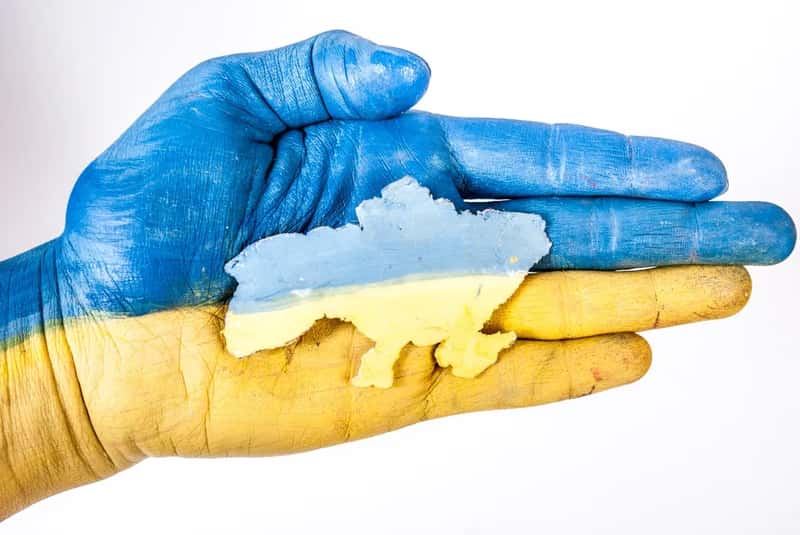
When Russia first invaded Ukraine in 2014, political scientists tested Americans by asking them to click on Ukraine’s location on a blank map. Only 16 percent were on the mark, and the median respondent was a staggering 1,800 miles away, with a significant number of those surveyed mistaking Ukraine for Kazakhstan, and with others picking locales including Australia, the Falkland Islands, the American Midwest, Alaska, a surprising number in Greenland, and a few lonely dots even placed floating in the Bay of Bengal.[1] That works out to roughly only 1 in 6 Americans knowing where Ukraine is on a map[2], according to the researchers who ran the poll.
Fast forward to February 2022, right as Russian troops massed on Ukraine’s border again, and the picture had improved only modestly. A Morning Consult poll found that just roughly 34 percent of Americans were able to locate Ukraine on a world map[3]. Interestingly, the same poll found that people who could correctly place Ukraine were noticeably more supportive of tougher policy responses toward Russia, suggesting that geographic knowledge and foreign policy opinions are more tangled together than most people realize.
Afghanistan
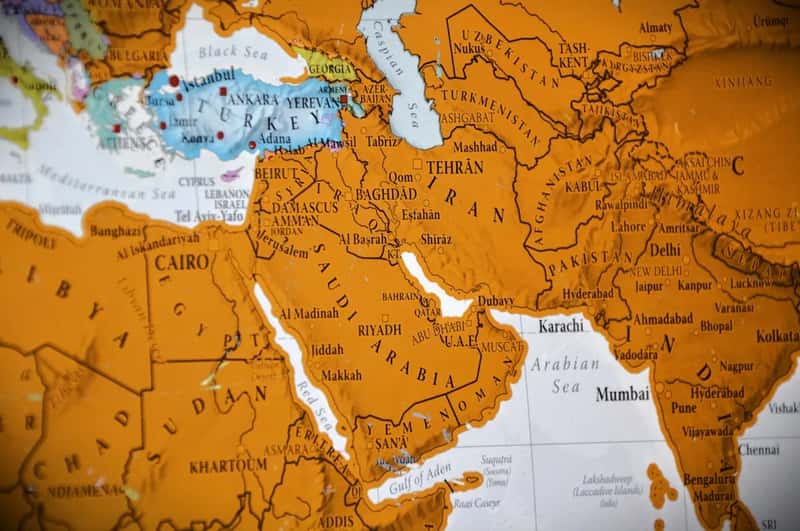
In late 2002, with American troops already fighting in Afghanistan, National Geographic tested young adults on the country’s location. The results were sobering: half drew a complete blank on its location, and only 17 percent could pick it out correctly on an unlabeled map[4]. This came after a full year of nonstop news coverage about the country, which makes the number even harder to explain away.
Four years later, in the 2006 National Geographic-Roper follow-up survey, things had barely budged. Eighty-eight percent could not find Afghanistan on a map of Asia[5]. By that point the United States had been militarily involved in the country for half a decade, yet the vast majority of young Americans surveyed still couldn’t place it correctly.
Iraq
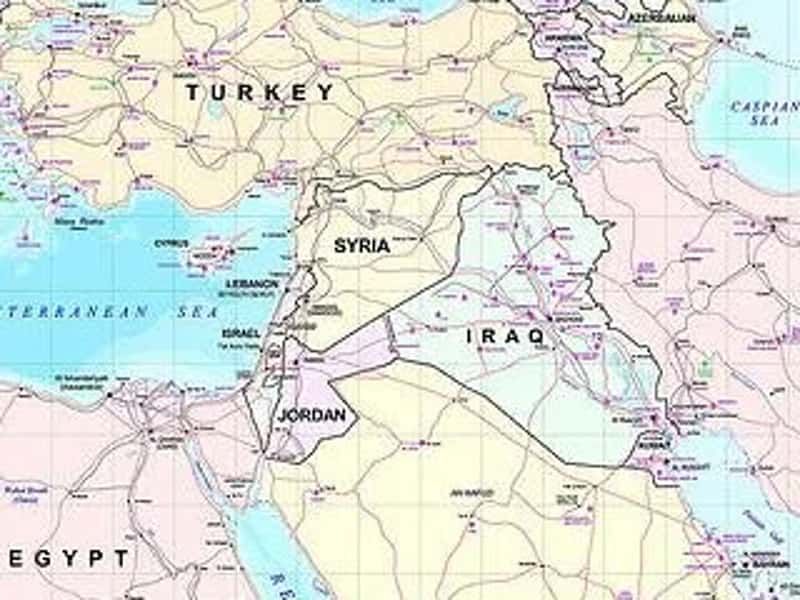
Iraq might be the single most tested country in American geography surveys, largely because of the two Gulf wars and the extended U.S. military presence there. In 2006, three years into the Iraq War, six in 10 respondents could not find Iraq on a map of the Middle East[6]. That’s despite near-constant television coverage of the conflict during that period.
A separate Roper poll conducted around the same time echoed that finding almost exactly, reporting that 63 percent of young Americans were unable to find Iraq on a map[7]. Researchers at the time noted that thousands of young Americans of prime enlistment age were being asked to support or even serve in a war in a country most of them could not visually locate.
Iran
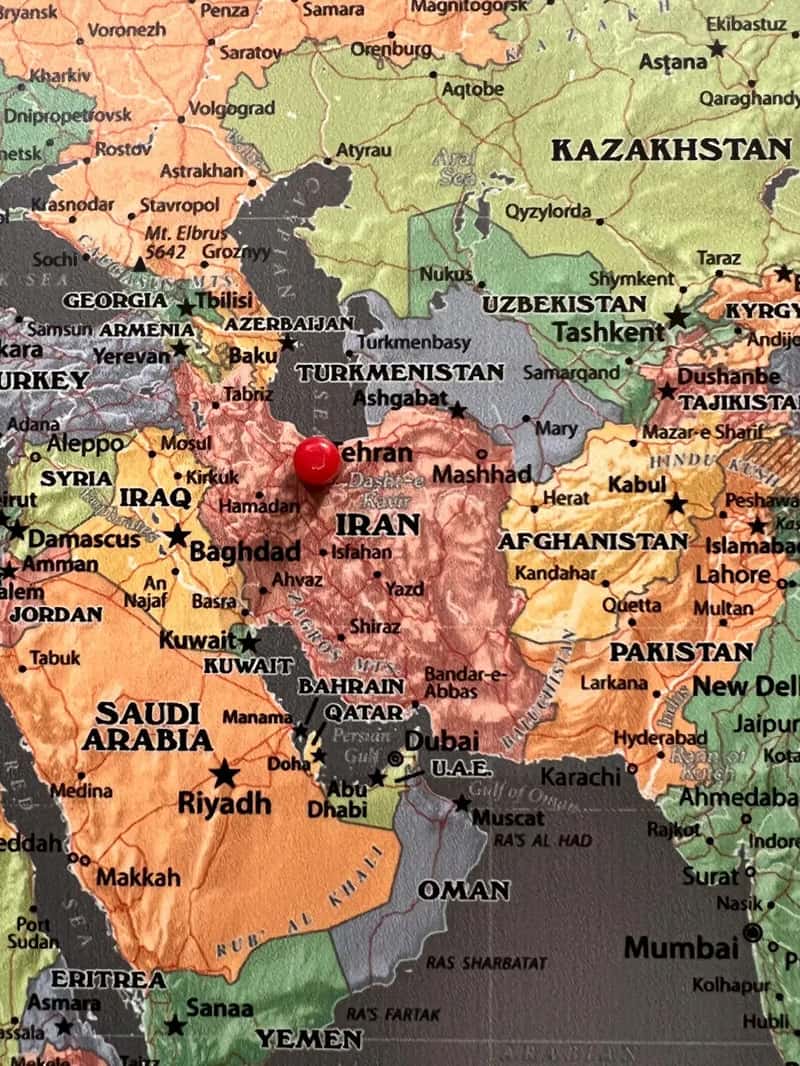
Iran fared just as poorly as its neighbor in these surveys, despite regularly appearing in headlines about nuclear negotiations and regional tension. The 2006 National Geographic-Roper study found that only one in four young Americans, about 26 percent, could find Iran[8] when shown a blank map of the Middle East.
Other research from the same period put the failure rate even higher. One analysis noted that seventy-five percent could not find international hotspots like Israel or Iran[7] on a map, meaning three out of every four respondents missed the mark entirely. Given how frequently Iran features in U.S. foreign policy discussions, that gap in basic geographic awareness is notable.
Israel
Israel is arguably one of the most discussed countries in American media and foreign policy, yet it hasn’t been immune to this pattern. The 2006 survey found that seventy-five percent of respondents were unable to locate Israel on a map of the Middle East[6], a striking figure considering how often the Israeli-Palestinian conflict appears in U.S. news coverage.
An earlier breakdown of the same survey data put the number of correct answers at roughly one in four, noting that only about 25 percent of young Americans could find Israel[8] on an unlabeled map. Researchers pointed out that this was true even though respondents had grown up hearing about the region’s conflicts essentially their entire lives.
North Korea
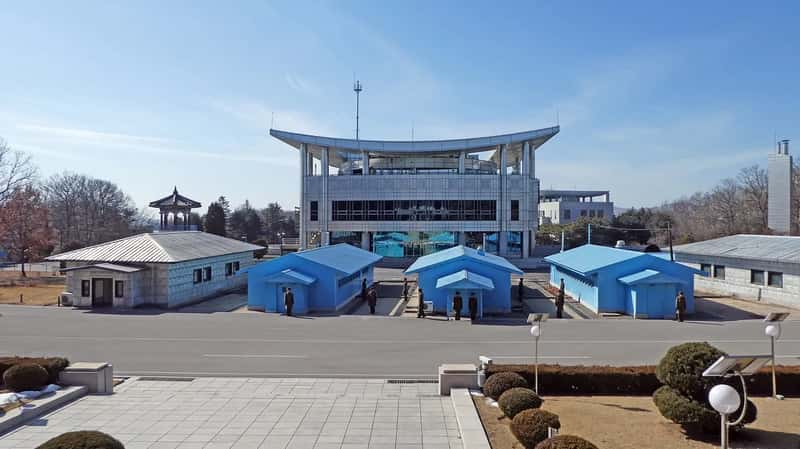
North Korea presents an interesting case because it’s not just a remote curiosity, it borders one of America’s closest allies and hosts one of the most heavily guarded frontiers on Earth. Yet the 2006 National Geographic-Roper survey found that 70 percent of young Americans could not find North Korea on a map[5].
The knowledge gaps went beyond simple location, too. The same research showed that six in 10 respondents did not know the border between North and South Korea is the most heavily fortified in the world[6], with a notable share instead guessing that the U.S.-Mexico border held that distinction. It’s a reminder that map skills and factual knowledge about a place often go hand in hand.
Indonesia

Indonesia is the fourth most populous country on the planet, yet it rarely registers on the average American’s mental map. A review of the 2006 National Geographic survey results noted that most respondents couldn’t find the United Kingdom, Egypt, and Indonesia on a world map[9], lumping this massive Southeast Asian archipelago in with countries most people would assume are far easier to locate.
The gaps extended to basic facts about the country as well. Survey data showed that 75 percent of young Americans did not know that a majority of Indonesia’s population is Muslim[5], despite Indonesia being home to the largest Muslim population of any nation on Earth. That combination of missing location knowledge and missing cultural context paints a fairly complete picture of how little attention the country tends to get in American classrooms.
United Kingdom
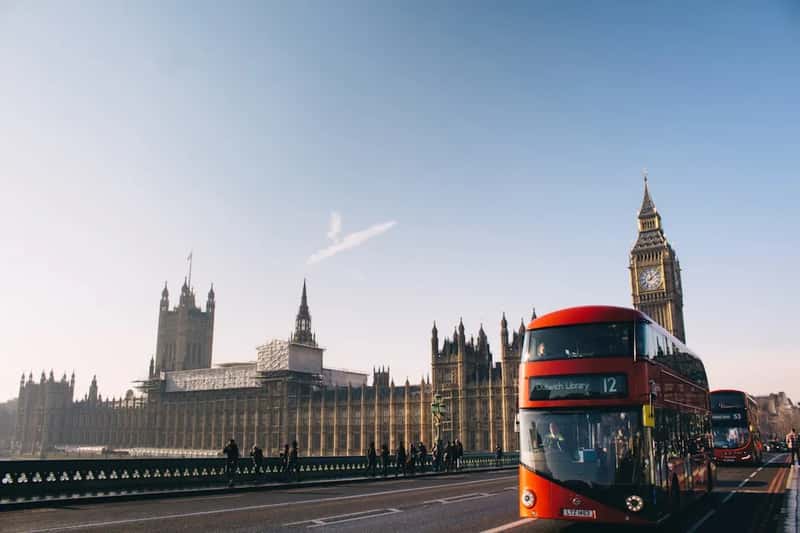
Of all the countries on this list, the United Kingdom might be the most surprising inclusion. It shares a language with the United States, appears constantly in American pop culture and news, and has been one of America’s closest allies for generations. Still, the 2002 National Geographic-Roper survey found that the United Kingdom’s location was a mystery to 69 percent of young Americans surveyed[10].
That figure held up in later reviews of the data as well, with follow-up reporting confirming that most respondents couldn’t find the United Kingdom on a world map[9] at all. Even a country as culturally intertwined with the United States as Britain wasn’t enough to guarantee a passing grade in basic geography.
France
France rounds out this list as another close, culturally familiar ally that nonetheless stumped a large share of American test-takers. The same 2002 survey found that France’s location was unknown to 65 percent of young U.S. respondents[10], a number nearly identical to the results for the U.K.
What makes this especially notable is that France is not exactly a small or obscure country. It’s one of the largest nations in Western Europe, a permanent member of the United Nations Security Council, and a country most Americans study in some form during school history lessons. Even so, the majority of young adults tested could not place it correctly on an unmarked map.
Why This Pattern Keeps Showing Up
Taken together, these results point to something more systemic than simple forgetfulness. Officials involved in the original National Geographic-Roper research argued that geographic illiteracy impacts economic well-being, relationships with other nations and the environment, and isolates people from the world[11]. Education researchers have echoed that concern, noting that when geography isn’t emphasized in school curricula, students naturally treat it as unimportant.
The more recent Ukraine-related polling suggests this isn’t purely a relic of the early 2000s, either. Even amid saturation coverage of an active European war, only about a third of Americans could correctly place Ukraine on a map in 2022, a gap that mirrors the same struggles seen with Iraq, Afghanistan, and Iran two decades earlier. Geography quizzes might seem like a lighthearted party trick, but the recurring results suggest a genuine blind spot, one that shapes how Americans understand and react to events happening well beyond their own borders.