Cancún was once the undisputed king of American beach vacations. Turquoise water, easy nonstop flights, all-inclusive resorts stacked up and down the hotel zone – for decades, it was the safe bet. But something has shifted, and the data tells a clear story. Repeat visitors who once booked the same resort year after year are quietly crossing Cancún off their list, and it’s not just one thing driving them away. It’s several, compounding on top of each other.
The Numbers Don’t Lie: American Arrivals Are Falling

Research conducted by the Sustainable Tourism Advanced Research Center (STARC) has unveiled a significant decline in American visitors to major Mexican beach destinations, particularly Cancún. In the first half of 2025, Cancún experienced a sharp decrease of 6.5%, with arrivals dropping to approximately 2.89 million from around 3.09 million the previous year. That’s a drop of roughly 200,000 American visitors in just twelve months – a figure that has rattled the local tourism industry. Riviera Maya hotel occupancy dropped to 44 percent, with the Tulum Times reporting this season is “one of the worst low seasons in years” as more than half of all hotel rooms sit idle.
Other popular locations are also seeing a similar trend, with Puerto Vallarta down by 5.5% and Los Cabos experiencing a 1% decrease. Furthermore, the inland city of Guadalajara also reported a 2.1% dip in American travelers. On a national level, the total U.S. tourist arrivals in Mexico fell by 2.2%, from 7.45 million to 7.29 million in early 2025. Yet, curiously, not every Mexican city is suffering. While Cancún and other coastal destinations have struggled, Mexico City has bucked this trend, welcoming approximately 943,952 U.S. travelers in the first half of 2025 – an impressive 8.1% increase from the 872,837 visitors during the same period in 2024. This suggests a growing interest among travelers who are opting for urban experiences over traditional beach vacations.
The Sargassum Crisis Is Getting Worse, Not Better
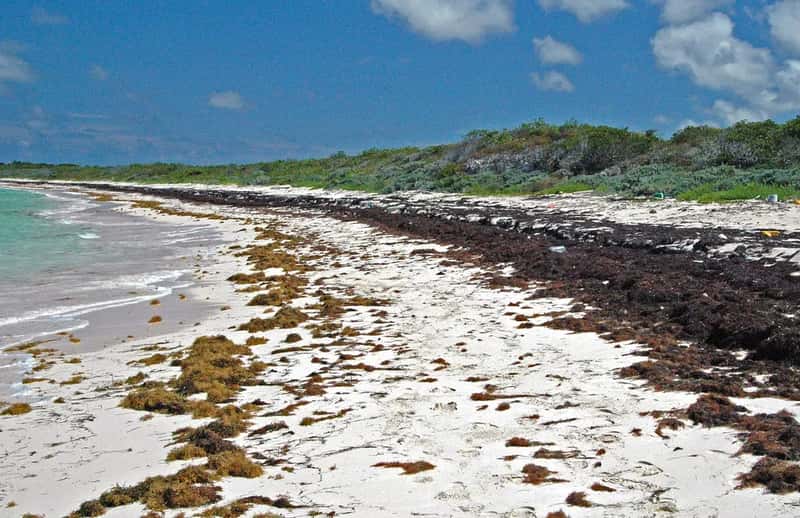
While sargassum seaweed is a natural phenomenon that has been occurring for centuries, the influx of sargassum in recent years has been larger, thicker, and more widespread. Various strategies – from raking it manually to using barriers – have been devised to try to deal with the unprecedented waves of seaweed that have engulfed regions of the Caribbean and Mexico in 2015, 2018, 2019, 2020, 2021, 2022, 2024, and 2025. The scale of the problem in 2025 alone was staggering. Although nearly 85,000 tonnes of the seaweed reached shore through last week – double the 40,000 tonnes that arrived in 2024 – the total fell far short of the more than 522,000 tonnes that invaded the region’s beaches in 2018.
The municipality closed the 2025 season with over 16,500 tons of sargassum collected, far higher than the 2024 level of 3,000 tons. The human and financial toll is enormous. In 2024, over 125 million pesos (approximately US$6.5 million) was spent and 300 naval personnel were mobilized to deal with sargassum clean-up in Quintana Roo alone. Airlines and travel agencies have noted similar trends – when news of a “seaweed invasion” hits headlines, bookings for Cancún and Playa del Carmen tend to dip. For repeat visitors who remember pristine shorelines from past trips, the gamble of arriving to a seaweed-covered beach feels like too great a risk.
Safety Perceptions Are Shaping Booking Decisions

On August 12, 2025, the U.S. released a new travel advisory for Mexico, urging U.S. citizens to “Exercise Increased Caution” (Level 2) when visiting due to terrorism, crime, and kidnapping. The state of Quintana Roo, home to the famous Cancún, was included in the Level 2 advisory. As of early 2026, the travel advisories remain in place. Only the Mexican states of Campeche and Yucatán remain on the Level 1 U.S. travel advisory. The advisory language matters, even when the reality on the ground is more nuanced.
This perception is influenced by multiple factors, including negative media coverage of incidents in Cancún, concerns about crime in certain areas, and discussions on social media. Though crime affects both destinations, reports of gang-related incidents in Cancún contribute to unease, even if they rarely impact tourists directly. In contrast, Punta Cana’s crime reports tend to focus more on petty theft, leading to a greater feeling of safety for many travelers. Social media amplifies every incident instantly. One shooting video goes viral, and suddenly your aunt is texting you asking if you’re sure about that Cancún trip. Fair or not, perception matters enormously in tourism. When travelers feel genuinely worried about their safety, they’ll find somewhere else to spend their money.
Rising Costs Are Eroding Cancún’s Value Proposition
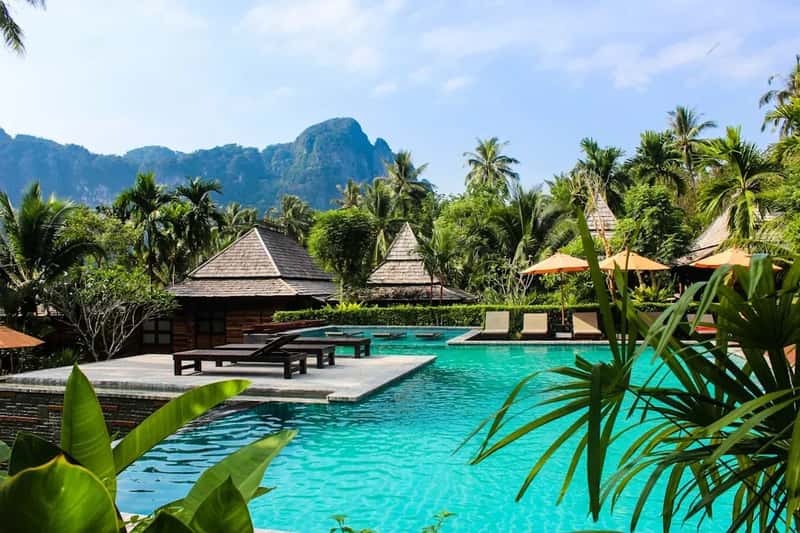
Operating a business in Cancún, particularly within the tourism sector, is becoming increasingly expensive. Inflation, both globally and within Mexico, is a major concern. The cost of goods and services, from food and beverages to cleaning supplies and transportation, has risen substantially. These increased expenses are inevitably passed on to consumers in the form of higher prices. The shift toward luxury is also deliberate. Cancún is actively repositioning itself as a luxury destination. This strategic shift involves attracting higher-spending tourists by offering more upscale accommodations, fine dining experiences, and exclusive amenities. This trend is evident in the development of new luxury resorts and the renovation of existing properties to cater to a more discerning clientele. While this benefits the local economy by generating higher revenue, it also contributes to the overall increase in prices, making Cancún less accessible to budget-conscious travelers.
All-inclusive deals often start around $300 per night minimum and can go way, way up – think $1,000 per night for five-star options – depending on resort amenities. The affordability of Punta Cana’s resort packages makes it an attractive alternative. Many travelers are finding that they can enjoy similar amenities at a lower price than in Cancún, making the Dominican Republic a competitive choice for vacationers looking for both value and security. When the price tag climbs but the experience no longer feels proportionately better, repeat visitors start doing the math differently.
Environmental Degradation Is Quietly Turning Away Eco-Conscious Travelers

Coral reefs that were vibrant twenty years ago are now bleached and dying. Snorkeling trips that once revealed underwater wonderlands now show depressing stretches of dead coral. Overfishing has depleted marine life in areas once teeming with tropical fish. Pollution from inadequate sewage treatment affects water quality in some areas. The mangroves that once protected coastlines and provided habitat have been destroyed to make room for more development. These aren’t abstract concerns anymore – they’re things visitors can see with their own eyes.
Experts cite three key global causes for the worsening sargassum situation: ocean warming due to climate change, which spurs faster growth and longer bloom seasons; nutrient pollution, especially from rivers like the Amazon; and changing winds and currents, which increasingly funnel sargassum toward the Caribbean. Environmentally conscious travelers – an increasingly large demographic – are choosing destinations with better conservation track records. When you’re paying premium prices for a beach vacation, you expect the environment to be pristine. Cancún can’t deliver that promise anymore. That last point is perhaps the most damaging of all, because it strikes at the very core of what Cancún has always sold: paradise.