U.S. Customs and Border Protection says it has removed 87 foreign crew members from cruise ships at the Port of Boston. The removals are part of “Operation Tidal Wave,” a multi-agency effort targeting possession and distribution of child abuse material and child exploitation material among cruise crew.[1] The number is striking, and the allegations are serious.
Still, the story has two sides. Federal officials describe a child protection effort, while migrant worker advocates say many seafarers were removed without charges, evidence or a chance to respond. This article lays out what’s confirmed, what’s disputed and what we still don’t know.
What CBP Announced in Boston
CBP said the Boston-area effort has run consistently through the summer, with 87 crew members removed from various vessels since mid-August.[1] The agency announced the milestone after its latest action on September 20. The Area Port of Boston plans to continue the effort through the rest of the fiscal year.[1]
An acting director of field operations framed the number as a warning. He said the removals should send a message that CBP will not accept this exploitation and will keep identifying and arresting those who take part.[2] It’s a strong statement, but the public release gives few case-by-case details beyond the most recent group.
How Operation Tidal Wave Works
Boston isn’t the first stop. Operation Tidal Wave is a multiagency initiative led by CBP that seeks to identify and apprehend cruise crew associated with the possession, production, procurement, distribution, or use of such material.[3] It is carried out by CBP’s Office of Field Operations in coordination with Homeland Security Investigations and the Internet Crimes Against Children Task Force.[4]
CBP’s own account lists earlier phases. Phase 1 in San Diego in April brought administrative enforcement actions against 27 crew members from six vessels. Phase 2 in San Juan, in June and July, led to 14 removals and federal prosecution for one person.[1] Notably, that’s only one prosecution mentioned across those earlier phases, which shows the operation relies mostly on immigration enforcement rather than criminal courts.
The Breakaway Case
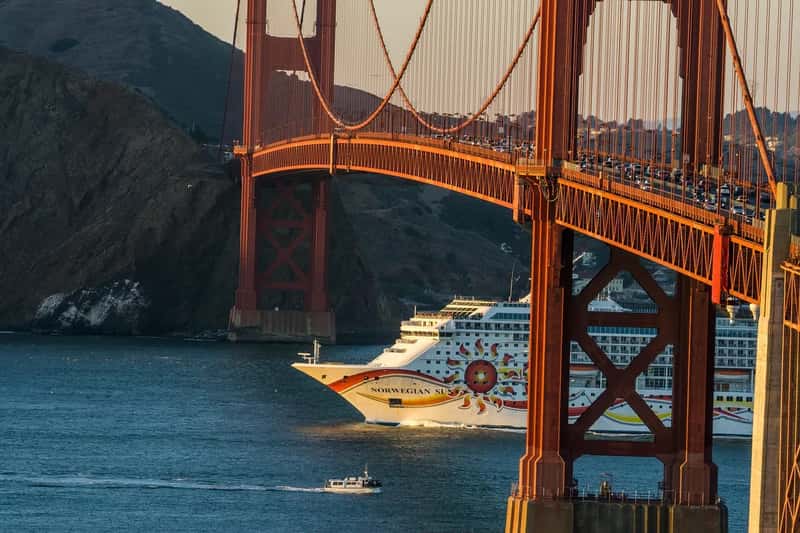
The most detailed recent case involves the Norwegian Cruise Line ship Breakaway. On September 20, CBP officers encountered six citizens of the Philippines aboard, and during secondary interviews at Boston Logan International Airport all six reportedly admitted to previously possessing CSEM or CSAM.[1] CBP also said it searched their living quarters and electronic devices.
The six were processed for removal of conditional landing under Section 212(a)(2)(A)(i)(I) of the Immigration and Nationality Act for crimes involving moral turpitude.[1] That’s an immigration finding, not a criminal conviction. The admissions come from CBP’s account, and independent confirmation isn’t available in the public record.
More Removals, Fewer Details
Reports of further removals followed. Seven more Filipino crew members were arrested by CBP after their vessels docked in Boston.[5] However, CBP hasn’t publicly identified them, disclosed their positions aboard, or revealed the specific reasons for their removal.[5]
Another report concerned eight crew members from the Majestic Princess. Cruisemapper noted that uncertainty can add pressure to crew on contracts far from home, particularly when the circumstances of individual cases are unclear.[6] With so little disclosed, it’s wise not to assume those cases match the Breakaway one.
A Pattern Beyond Boston
Other ports have seen similar incidents. In September 2025, CBP boarded the Carnival Pride in Baltimore based on intelligence that crew were in possession of child exploitation material.[7] The agency said that after interviewing four suspected crew members, officers confirmed they had received and viewed the material.[7] Advocacy groups said the workers, three Filipino and one Indonesian, were detained and deported without due process.[7]
That wasn’t the first flashpoint. Nearly 30 Carnival crew members were reportedly detained in Norfolk, Virginia, and a Southern California workers’ group said they were accused of possessing such material, which they denied, and weren’t charged.[8] Separately, criminal cases exist too.
The Due Process Dispute
Advocates argue the process is too thin. The Save Our Seafarers coalition, led by the Pilipino Workers Center and the Center for Migrant Advocacy, said the deportations lacked documented complaints or convictions and that seafarers couldn’t contest the allegations.[10] In Norfolk, the Pilipino Workers Center’s director said officers arrived with no evidence and no formal charges.[11]
CBP’s position is different. After the Virginia incident, it said it enforces immigration law in ongoing cruise vessel operations and that the crew members were found inadmissible and denied entry.[8] Both sides can be describing the same events, since an inadmissibility finding doesn’t require a criminal trial. The dispute is over whether the process is fair, not simply over what happened procedurally.
The Toll on Filipino Seafarers
The advocacy tallies are large. The Center for Migrant Advocacy’s director said a count of 294 Filipino seafarers deported likely captures only a fraction, since it covers workers who sought help from the center and the Pilipino Workers Center.[12] Those are advocate figures, not official government numbers, and they cover deportations since April 2025 across several ports and cruise lines.
The human cost is clear regardless of the dispute. Deported workers have faced loss of income and debt from training costs.[13] One senator said workers’ 10-year U.S. visas were revoked even though they weren’t formally charged.[12] The Philippine Senate has taken notice, and advocates are urging U.S. authorities to notify Philippine consular officials, provide legal counsel and compensate workers deported without due process.[14]