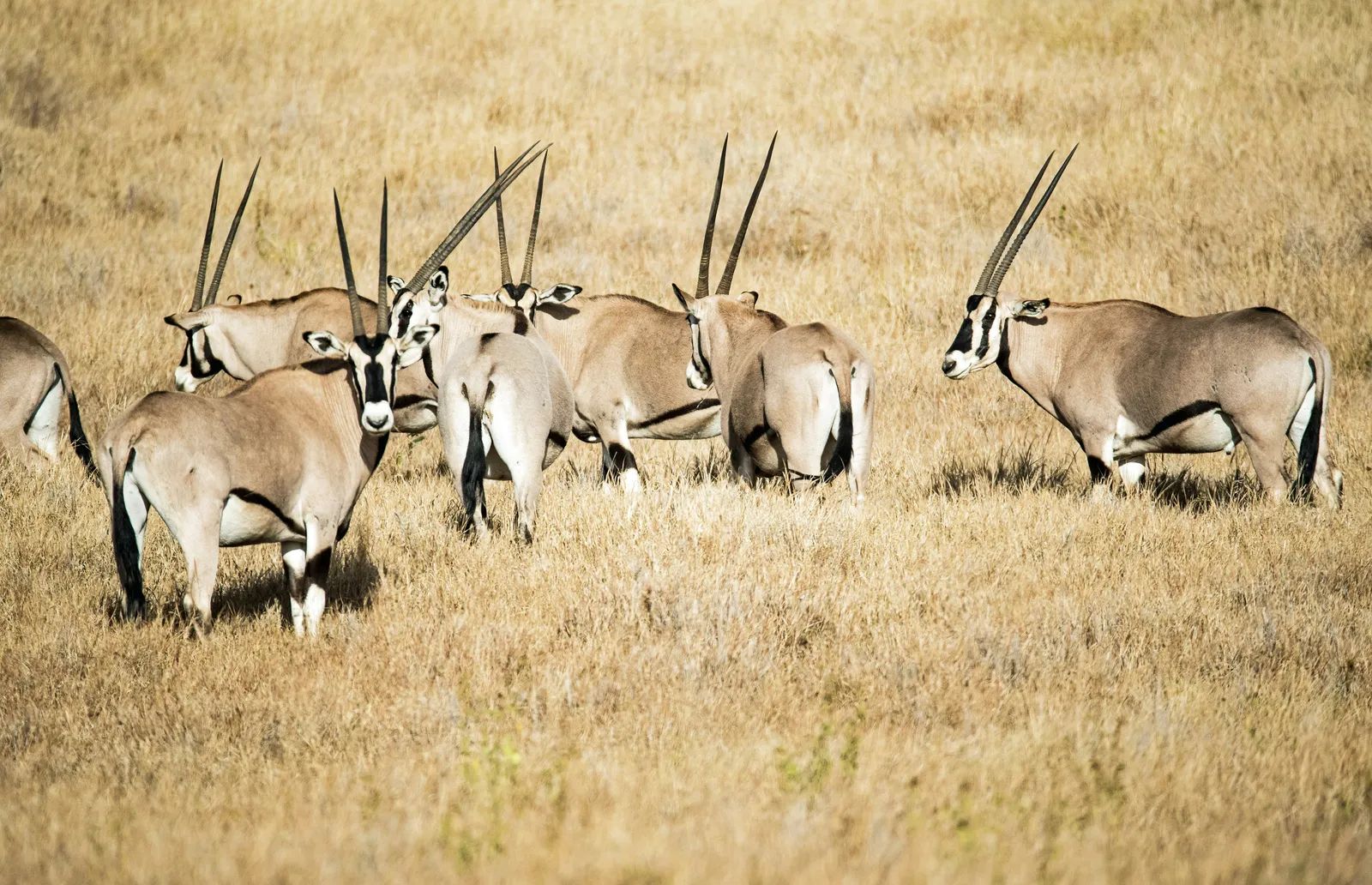
An antelope with long, sweeping horns has returned to the grasslands of Chad, where it had been absent for decades. According to a recent report from Mongabay ([1]), the scimitar-horned oryx now has an endangered rating instead of an extinct-in-the-wild listing, and its wild population has grown sharply since reintroduction began. The recovery offers a rare example of a species written off in the wild finding its way back. The animal is not out of danger, however, and its path forward depends on conditions that remain uncertain.
How the oryx vanished from the wild
The scimitar-horned oryx once spread across the northern and southern ranges of the Sahara Desert, according to a conservation account published by Earth.org ([5]). Its decline accelerated during the late twentieth century. The species had disappeared from Chad by the late 1980s, and the International Union for Conservation of Nature formally declared it extinct in the wild in 2000. Unregulated hunting was the main driver, according to the Smithsonian’s National Zoo ([4]).
The effort to bring the animal back began in 2016, when 25 oryx were flown from Abu Dhabi to Chad. The Smithsonian noted that it was the first time in about 30 years that any oryx had been in the country. The animals were released at the Ouadi Rimé-Ouadi Achim Game Reserve, and the program aimed to build a self-sustaining wild population of 500 oryx over five years.
A timeline of the comeback
The turnaround happened in a few distinct steps, each one tied to a different stage of the reintroduction effort.
| Year | Milestone |
|---|---|
| 2000 | Declared extinct in the wild by the IUCN |
| 2016 | First 25 oryx arrive in Chad from Abu Dhabi |
| 2023 | Status improved to endangered on the IUCN Red List |
| Today | Wild herd reported at several hundred animals, with estimates from 600 to 700 |
The downgrade of the threat category was announced in December 2023, and the Environment Agency Abu Dhabi said the program had succeeded in improving the species’ conservation status. Sahara Conservation reported that 510 oryx calves and 103 addax calves had been born in the wild in Chad since the project began ([2]).
A downlisting that few species achieve
Moving a species out of the extinct-in-the-wild category is uncommon. Earth.org describes the oryx as one of the first species classified as extinct in the wild to be downlisted on the IUCN Red List ([5]). Tim Woodfine, chief executive of Sahara Conservation, said that the downlisting of the scimitar-horned oryx is a testament to collaboration, linking the result to partnerships across several countries ([2]).
Sahara Conservation also argues that the oryx success could help other threatened animals in the region. The organization has pointed to the addax and the dama gazelle, both of which it says are benefiting from conservation work in Chad.
Why the population figures differ
The reported size of the wild herd varies from one source to another. Mongabay puts the Ouadi Rimé-Ouadi Achim population at 700 animals today, up from 25 in 2016, and says it is the largest herd in the world ([1]). Earth.org estimates the wild population at a minimum of 600 animals ([5]). Because these figures come from different reports and dates, the most accurate reading is that the herd numbers in the hundreds and continues to grow.
Related Stories From Travelbinger



Challenges that remain
Endangered is still a serious classification. Mongabay reports that the species continues to face climate-related pressures, including prolonged droughts and shifting conditions, along with competition from livestock for grazing land ([1]). Those pressures do not stop at the reserve boundary. Pastoral communities depend on the same grasslands, which is why the reintroduction team paid close attention to people from the start. In 2012, Sahara Conservation and its partners held a three-day meeting with government leaders, tribes and pastoral groups to explain the program ([6]).
Whether the herd can sustain itself through dry seasons and competing land use will shape the next chapter. For now, the oryx stands as a rare case of a species restored to the wild, with its future still very much in the balance.