Picture the biggest ocean ships, with several thousand passengers on board. Now picture a river ship with fewer than 200 guests, gliding past vineyards and castle towers. Both get called a cruise, but they are two very different vacations.
Some travelers book a river trip expecting pools, nightly shows and a buffet around every corner, and find none of it. Others book an ocean ship and never get the town-center dock they pictured. The surprises start small, and the last one is a problem no ticket, captain or cruise director can fix.
#13 – The Whole Ship Is Smaller Than You Think, and the Rivers Made It That Way
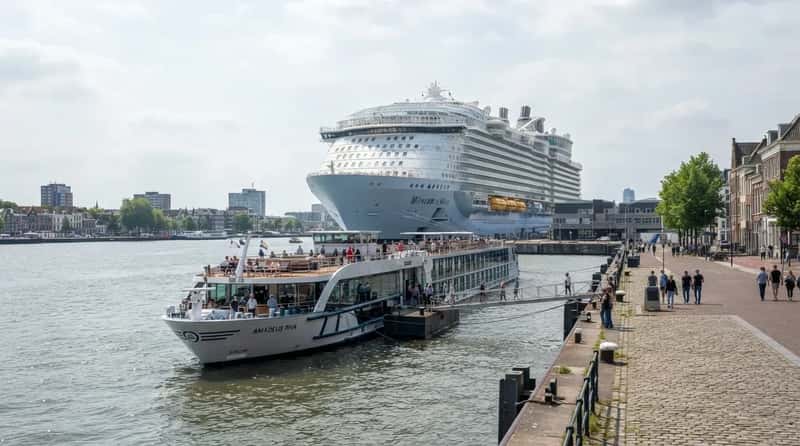
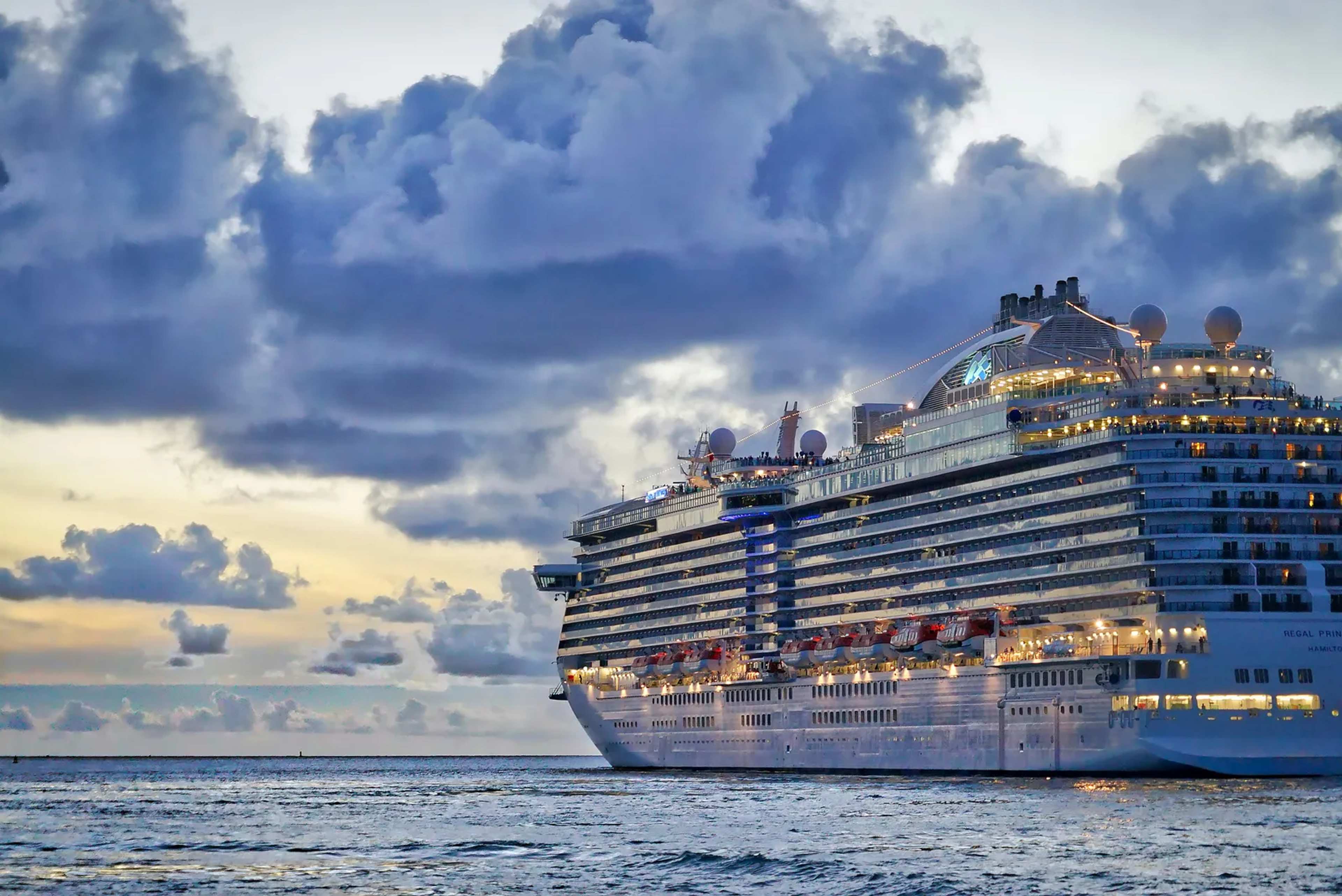
The first shock hits on the dock. A typical European river ship carries roughly 130 to 190 passengers and is about 135 meters long, which is well under half the length of a mega-ship. Ocean giants like Wonder of the Seas carry close to 7,000 guests, so the gap is hard to picture until you see both.
The rivers dictate the shape. European river vessels top out at 443 feet long and 37 feet wide so they can fit through locks that have been working for generations. Their profiles stay low to clear bridges. Your ship is built to fit the river, not the other way around.
Quick Compare
- River ship: roughly 130 to 190 passengers, about 135 meters long
- Ocean giant: Wonder of the Seas carries close to 7,000 guests
- Lock limit: European river vessels max out at 443 feet long and 37 feet wide
Size is only the start, and what it does to your nights is stranger. Wait until you see #12.
#12 – Seasickness Mostly Disappears, and So Do Sea Days
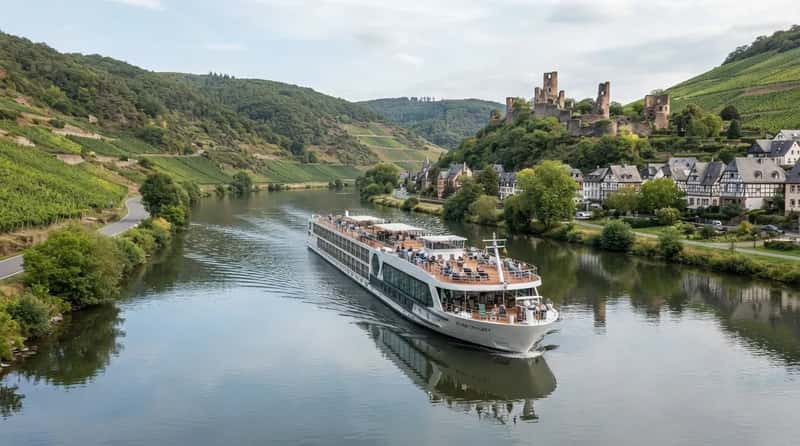
Rivers are sheltered and narrow, and they’re often controlled by locks, so there are no open-water swells to build. Movement on board is minimal. You don’t need to hunt for a midship cabin to dodge the rocking.
For anyone who gets queasy on big water, that’s a real reason to consider river cruising. The flip side is that river cruises have no true sea days, only stretches of scenic cruising. That means no lazy afternoon at the pool while the ocean rolls by. The river is the entertainment, and it never takes a day off.
Calm water isn’t the only thing changing, because where you tie up matters even more. See #11.
#11 – Your Ship Parks Steps From the Old Town
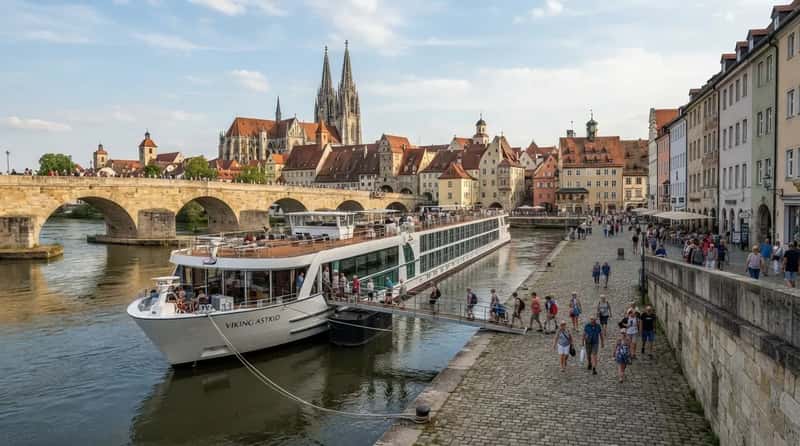
Ocean passengers often board a shuttle to reach a city. River passengers often step off the gangway and start walking. River itineraries dock in or near the heart of cities along the Danube and the Rhine, so the sights can be a short stroll away.
Massive ocean ships, meanwhile, often dock far from the city center, so you have to factor in transfer time. River cruises feel port-heavy for that reason. You can call at small towns and cultural hubs a mega-ship could never reach, sometimes more than one in a day. Some ports are simply too small for a big ship to enter at all.
Now picture where you’ll actually sleep, because the cabin is the next surprise. Check #10.
#10 – The Cheapest Cabin Has a Window Right at Water Level
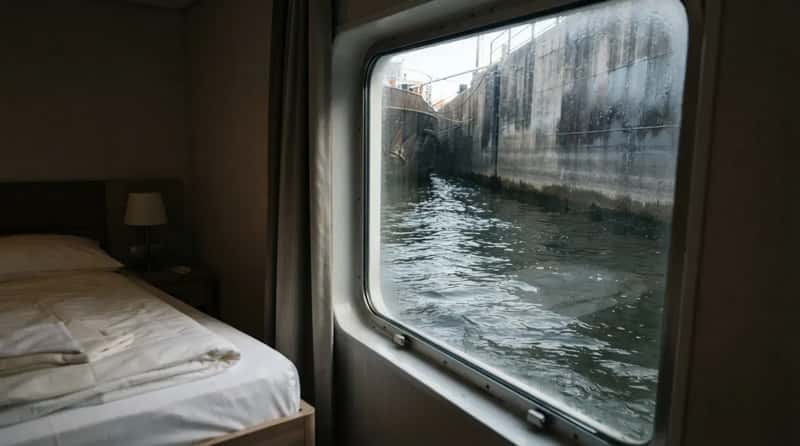
Cabin size is not the real catch. Many standard river cabins are comparable to entry-level ocean cabins, though exact sizes vary by line. The bigger difference is that river ships generally don’t have inside cabins at all.
The view is where the lowest deck can disappoint. Those cabins have small windows looking straight out over the water, they can be quite dark when you’re moored beside a bank, and the windows can’t be opened. Higher decks get larger windows, and newer ships add balconies and bigger suites. On the cheapest deck, you may be sleeping just above the waterline.
A dark cabin is mild compared with what’s waiting at the dinner table in #9.
#9 – Dinner Is One Restaurant, Not a Dozen
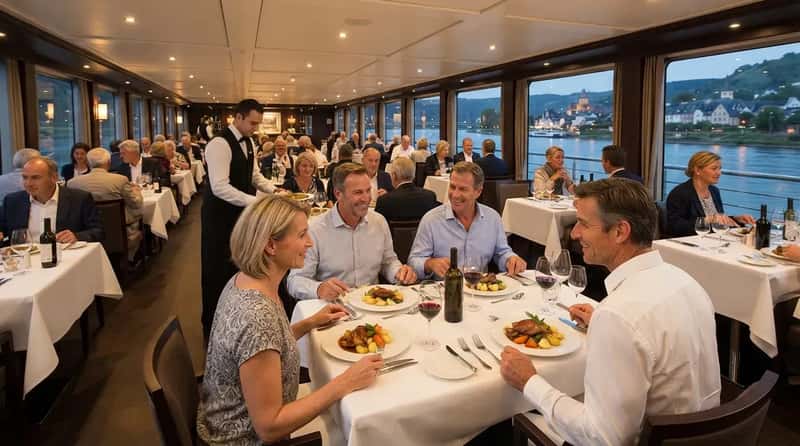
If you love picking a different restaurant every night, this is where a river ship lets you down. Dining is simpler: one main restaurant, buffet-style breakfasts and lunches, and few or no specialty venues. Larger ocean ships can boast over a dozen places to eat.
There are exceptions at the high end. A wider ship like AmaMagna offers several dining venues to choose from. The upside is a menu built around regional dishes and local ingredients, so what’s on your plate changes with the map. On most river ships, you eat where you sleep, and the food follows the river.
Worth Knowing
- Most river ships center dinner on one main restaurant.
- Breakfast and lunch are often buffet-style.
- Specialty venues are few or missing altogether.
- Menus lean on regional dishes and local ingredients.
Fewer restaurants also means fewer places to go after dinner, as #8 shows.
#8 – After Dark, You Get a Local Musician Instead of a Broadway Show

Ocean ships bring roller coasters, Broadway-style shows and rock climbing walls. River ships bring local musicians, historians and culinary experts. There are no big production shows, and that’s by design, given where and how often the ships dock.
Critics call it a snooze. Fans say the quiet evening is the whole point, since you’ve spent the day ashore on your feet. Bedtime on a river ship can arrive embarrassingly early.
The real jaw-dropper isn’t the entertainment, though. It’s the bill, so look at #7.
#7 – The Fare Quietly Includes What Ocean Lines Charge Extra For

The sticker price hides a trick, because many of the extras are already baked in. On many river lines, shore excursions, wine and beer with meals, and Wi-Fi are part of the fare. Ocean fares work differently, with drink packages, excursions, specialty dining, Wi-Fi and tips often sold as add-ons.
One analyst prices an ocean trip with a drinks package at $70 to $100 a day, excursions at $50 to $150 a person a day, and gratuities at $18 to $20 a day. Add that up and the gap narrows considerably, though it rarely closes. The “expensive” cruise can look a lot less expensive once the extras are counted.
Still, a bundled fare doesn’t make it cheap, as #6 reveals.
#6 – Even Bundled, the Daily Price Can Run Two or Three Times Higher
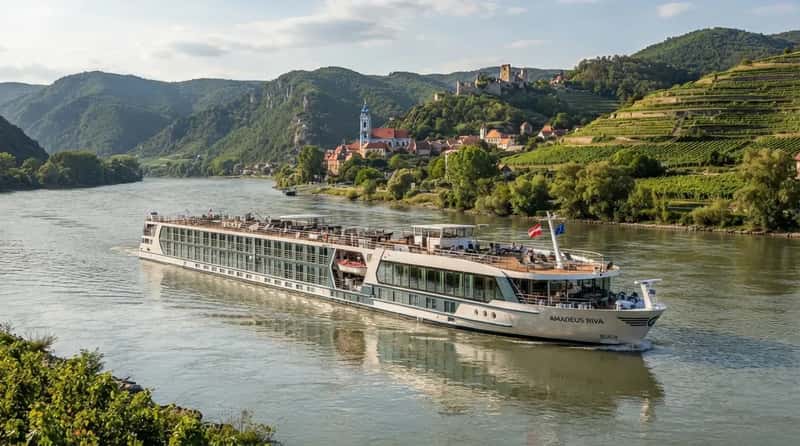
One source estimates $300 to $600 per person per day on a river cruise, compared with $100 to $250 on most mainstream ocean cruises. And the price is climbing. The average per diem was $529 per person in 2019, and the figure for 2025 departures jumped to $634.
For a couple on a seven-night trip, that’s a hefty jump before flights and extras. Some argue the all-inclusive pitch is overrated for budget travelers. Others say it’s the cleanest way to stop watching the bill. Both sides have a point.
At a Glance
- River cruise: about $300 to $600 per person per day
- Mainstream ocean: about $100 to $250 per person per day
- 2019 average per diem: $529, or around $7,400 for a couple over seven nights
- 2025 departures: $634, or closer to $8,900 for the same trip
Price aside, the biggest change may be who’s sitting next to you, which brings us to #5.
#5 – By Day Four, Everyone Knows Your Life Story
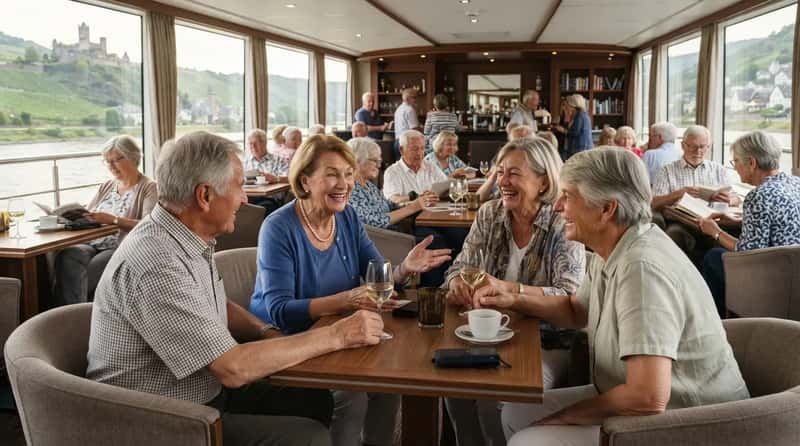
You can’t disappear into a crowd on a ship this size. With fewer guests, people start recognizing one another after only a few days. With fewer public spaces, you keep seeing the same faces in the lounge, the dining room and on excursions.
For some travelers, that’s the best part of the trip. For others, it’s a drawback, and those who prefer anonymity may feel more comfortable on a larger ocean ship. The crowd also skews older, since river cruises tend to suit older travelers. Small ships make friends fast, and they make hiding almost impossible.
But the faces matter less than the schedule they keep, and #4 is where it gets intense.
#4 – The “Relaxing” Itinerary Can Leave You Exhausted
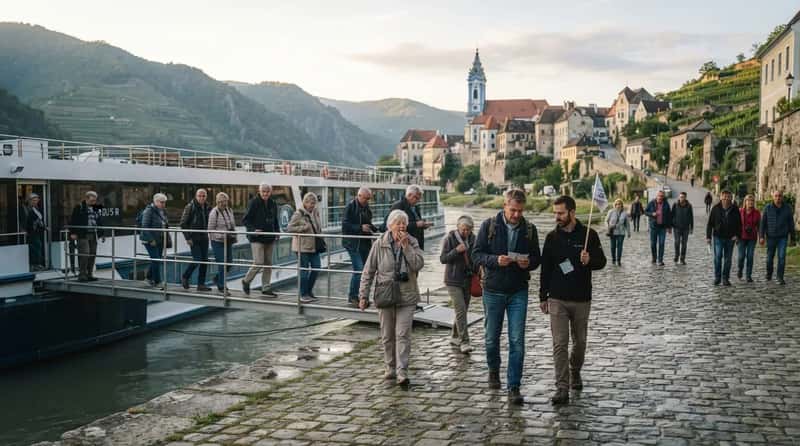
Many travelers expect to unwind and end up with an itinerary that feels like a tour. River schedules are port-intensive, so expect early starts, limited sea days and daily sightseeing that can wear you out. Most river ships cover the bulk of their distance at night, while you sleep.
That’s the opposite of an ocean sea day. A river cruise is less about the ship and more about the place, with fewer onboard activities but many more chances to step off and explore. The vessel is basically a floating hotel that moves while you rest.
Fast Facts
- Schedules are port-intensive, with sightseeing most days.
- Early starts are common.
- True sea days are limited.
- Most of the sailing happens overnight.
Now for a quirk almost nobody mentions, and it’s on top of the ship in #3.
#3 – The Sun Deck Can Close Without Warning
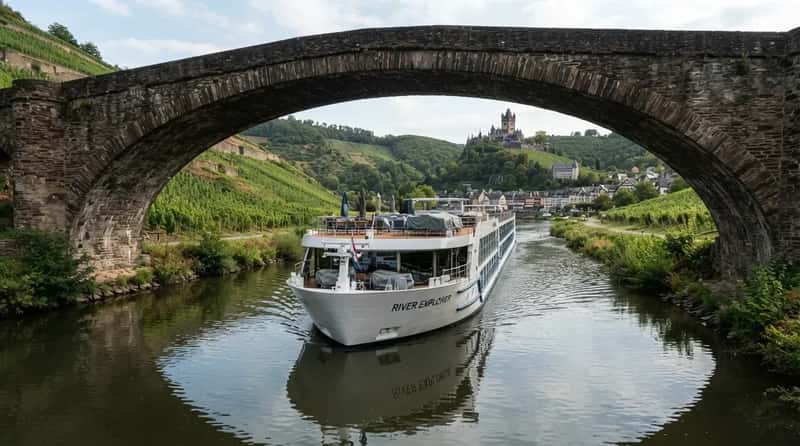
That deck-chair photo in the brochure doesn’t always show what you get. On smaller rivers like the Main and the Neckar, ships pass under very low bridges. The crew dismantles most sun deck structures, lowers the wheelhouse hydraulically, and the deck closes to passengers during the crossing.
High water makes it worse. One Fodor’s writer found the sun deck closed for much of the time on the Moselle because bridge clearance was too low. Another blogger notes that when river levels are high, the situation can last for days. You may pay for river views and spend part of the trip below deck.
A closed deck is a small problem compared with the one in #2.
#2 – Halfway Through the Trip, Your Ship Can Be Swapped for Another
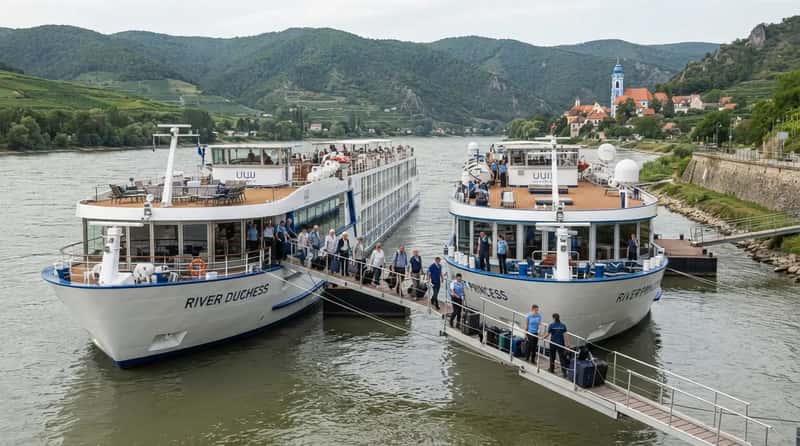
It sounds like a prank, but it’s an official backup plan. When part of a river can’t be sailed, lines can use “ship swaps.” Guests and luggage move to the same stateroom on an identical sister ship waiting on the other side of the blocked stretch.
Others use hotels and buses instead, and Uniworld has listed Budapest hotel stays and replacement ships at Basel and Vienna. Disruptions can also mean altered or canceled excursions, unexpected transfers and missed ports. A mega-ship can simply sail around trouble. On a river, your hotel is on the water, and the water decides.
But the swaps pale next to what rivers can do to a whole season, in #1.
#1 – The River Itself Can Rewrite Your Entire Itinerary
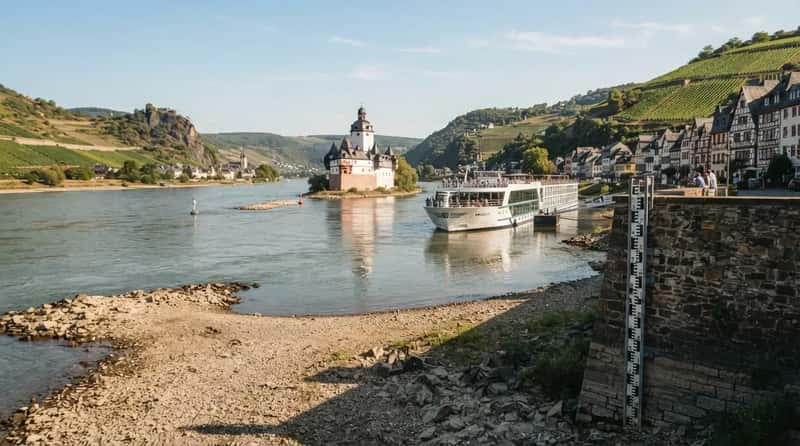
This is the difference no ocean cruise can match. In dry late-summer and early-fall stretches, the Rhine gauge at Kaub, the benchmark that river captains watch closely, can fall low enough to limit how heavily ships can sit in the water. When that happens, river-cruise operations get restricted.
Some lines have rerouted Rhine guests, with options that can include compensation, a future departure or a refund. Keep perspective, though. AmaWaterways estimates high or low water affects about 3.5 percent of its European departures in an average year. Most sailings run fine, but when the river says no, nothing you booked can overrule it.
A river cruise isn’t a smaller ocean cruise. You get fewer than 200 neighbors, a dock near the town center and a fare that bundles in more. You also get one restaurant, a quiet evening and a river that has the final say.
Ocean ships win on entertainment, variety and price per day. River ships win on access and simplicity. Neither is the wrong choice, only the wrong match for the trip you were picturing.