Travelbinger
TravelbingerTravel deals, guides and hacks
Travel News
Trip Planner
Sign In
Travel News
Share:

Find Out When Your Favorite Glacier Could Disappear

Expert reviewed
Matthias BinderKatherine Woodward Ramer

Author: Matthias Binder

·

Edited by Katherine Woodward Ramer

Cited 9 sourcesUpdated Nov 28, 2026· 4 min read
DetailsFull details

Cited Sources (9)

  1. Mongabay(news.mongabay.com)
  2. phys.org — 2026 09 glacier website users explore worldwide(phys.org)
  3. already know(backend.travelbinger.com)
  4. antarcticglaciers.org — Future global glacier extinction(antarcticglaciers.org)
  5. keep only(backend.travelbinger.com)
  6. glacierextinction.com(glacierextinction.com)
  7. United States(backend.travelbinger.com)
  8. nasa.gov — Nasa funded study half of glaciers vanish with 1 5 degrees of warming(nasa.gov)
  9. sciencedaily.com(sciencedaily.com)
Author:Matthias Binder

Travel Expert & VP of Operations

Matthias a curious globetrotter who collects moments from night markets, coastlines, and tiny mountain villages. Plans trips around local food, scenic trains, and the best views at golden hour.

Editor:Katherine Woodward Ramer

Editorial Specialist

Checks destination facts and source links before a story is published.

Published November 28, 2026 · Updated November 28, 2026 · 4 min readRead about how we research, editorial independence, and AI policy.
Find Out When Your Favorite Glacier Could Disappear
Add as a preferredsource on Google

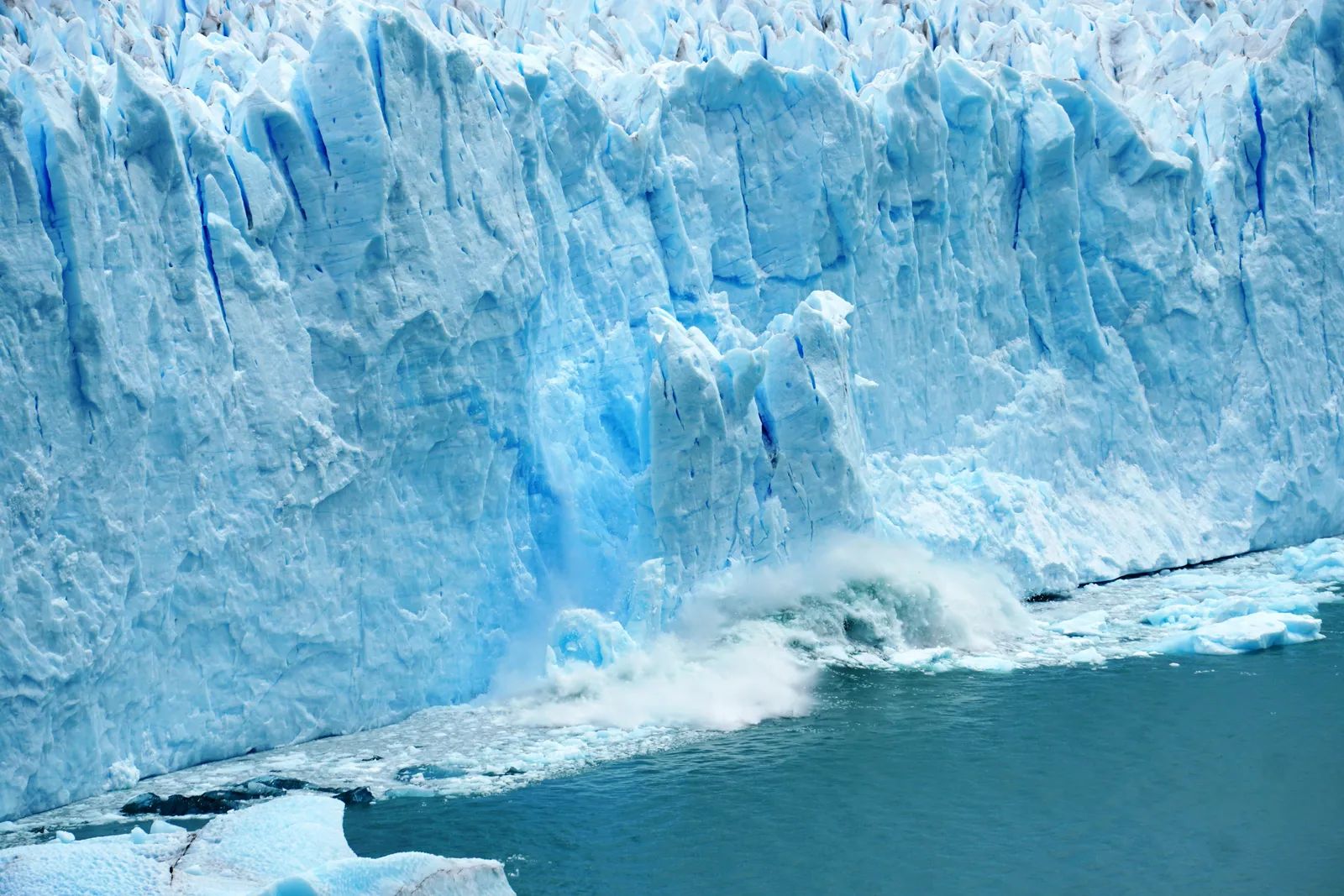
Earlier this autumn, Lander Van Tricht heard from a woman who had visited a glacier at age 10. A tool he helped build now projects that the same ice body could vanish in less than 40 years, according to the account in Mongabay ([1]). The exchange shows how a research project can reach people far beyond academic journals, which was Van Tricht’s aim from the start. The website, called the Global Glacier Extinction Explorer, is now open to the public.

From journal findings to a searchable map

The Global Glacier Extinction Explorer draws on a study published in the journal Nature Climate Change, which Van Tricht led as a postdoctoral researcher at ETH Zurich and Vrije Universiteit Brussel ([2]). Users can zoom in on any glacier, click on it, and see whether it is projected to disappear and in which year. Glaciers that are expected to persist beyond the end of the century are also flagged ([1]).

Van Tricht has said that global figures for glacier mass or area can feel distant. A local view changes that. Users can focus on a single valley or mountain range and compare what different warming levels could mean for the ice they already know ([2]). Van Tricht built the site with Kristof Van Tricht of VITO Remote Sensing, who handled the data pipeline and web application.

What the projections show

The most striking result is that half of Earth’s glaciers are projected to be lost even if warming stays at 1.5 degrees Celsius above pre-industrial levels. Van Tricht called this the best-case outcome and said the losses are already locked in ([1]). Under that scenario, the study projects that glacier extinctions peak in the middle of the century, with roughly 2,000 glaciers per year disappearing by 2040 ([3]).

The difference between warming levels is significant. In the Alps, Van Tricht estimated that a 1.5 degree scenario would preserve about 400 glaciers, while a 4 degree scenario would keep only 20 ([1]). He summed up the point in a short phrase: every fraction of a degree matters. The study also suggests that some glaciers it projects to vanish are already disappearing, which makes the issue more immediate than a distant end-of-century concern ([2]).

Reading the map with its limits in mind

The explorer carries several caveats that anyone using it should keep in mind. The model runs only through 2100, so a glacier shown as surviving has not crossed an extinction threshold by then. That does not mean it will last indefinitely, since retreat could continue for centuries ([4]). The tool also has specific methodological limits:

  • Extinction is measured against the original glacier outlines in the Randolph Glacier Inventory.
  • Glaciers that break into fragments during retreat are not tracked separately.
  • All remaining ice within the original footprint is treated as one glacier ([4]).

Coverage is broad. The explorer allows users to look at every individual glacier on Earth ([1]), which includes glaciers in the United States. The Mongabay interview does not single out specific American ice fields, so users looking for a particular U.S. glacier should check its entry directly. An earlier NASA-funded study found that at 2.7 degrees of warming, nearly all glaciers in western Canada and the United States would be lost ([5]).

What matters now: the projections are most useful as planning information. Van Tricht said communities and cities need to prepare for a future without some of their glaciers, and that limiting global warming remains the only way to save as many of them as possible.

Related Stories From Travelbinger
  • 16 Things Shore Excursion Staff Know About an American Port That Never Reaches Any Brochure
  • 15 Things Alaska Cruise Passengers Work Out About Glacier Bay Within the First Morning Aboard
  • 22 Things About a 1960s Catskills Resort Vacation That Would Shock Families Today

Why a single glacier carries weight

Losing a small glacier has a limited effect on global sea levels. Losing one entirely can still change a place. Van Tricht has pointed out that the disappearance of a glacier can seriously affect tourism in a valley ([6]). For visitors who return to a site they remember from childhood, that loss is personal, and for residents it can affect water, livelihoods, and identity.

The woman who wrote to Van Tricht reflected that personal weight. The explorer gives anyone the same chance to check what the future holds for a place they care about. Used with its limits in mind, it offers a clear starting point for that conversation, and for a visit that may be worth making sooner rather than later.


Did any of these feel familiar?

Living Brain Tissue From Surgery Is Helping Scientists Ask What Makes Us Human

Up Next

Living Brain Tissue From Surgery Is Helping Scientists Ask What Makes Us Human

Patients who undergo brain surgery for epilepsy or a tumor may never imagine that a small piece of their tissue could end up on a laboratory bench. Neuroscienti

Read next

🔥 Would you like to save this?

We’ll email this post to you, so you can come back to it later.

Matthias Binder
Author

Matthias Binder

Travel Expert & VP of Operations

Matthias a curious globetrotter who collects moments from night markets, coastlines, and tiny mountain villages. Plans trips around local food, scenic trains, and the best views at golden hour.

All stories by MatthiasHow we research & AI policy
Katherine Woodward Ramer

Edited & reviewed by Katherine Woodward Ramer — Editorial Specialist

Expert reviewed

Keep Reading

Pecan Pie on the Counter? Why the 2-Hour Rule Matters After Thanksgiving

Pecan Pie on the Counter? Why the 2-Hour Rule Matters After Thanksgiving

1 min read

BermudAir Adds 18 Routes and 10 New Cities for Caribbean Travel

BermudAir Adds 18 Routes and 10 New Cities for Caribbean Travel

1 min read

16 Embarkation Habits Repeat Cruisers Over 62 Finish Before the Muster Drill That First-Timers Never See

16 Embarkation Habits Repeat Cruisers Over 62 Finish Before the Muster Drill That First-Timers Never See

1 min read

18 Small Boarding Courtesies Travelers Over 62 Offer Cabin Crews That Get Remembered for the Whole Flight

18 Small Boarding Courtesies Travelers Over 62 Offer Cabin Crews That Get Remembered for the Whole Flight

1 min read

The Latest

Fresh stories from our travel desk

Find Out When Your Favorite Glacier Could Disappear

Find Out When Your Favorite Glacier Could Disappear

Matthias Binder·Nov 28
Living Brain Tissue From Surgery Is Helping Scientists Ask What Makes Us Human

Living Brain Tissue From Surgery Is Helping Scientists Ask What Makes Us Human

Matthias Binder·Nov 28
Pecan Pie on the Counter? Why the 2-Hour Rule Matters After Thanksgiving

Pecan Pie on the Counter? Why the 2-Hour Rule Matters After Thanksgiving

Matthias Binder·Nov 28
BermudAir Adds 18 Routes and 10 New Cities for Caribbean Travel

BermudAir Adds 18 Routes and 10 New Cities for Caribbean Travel

Matthias Binder·Nov 28
View All Stories

Stay Updated

Get the latest travel news delivered to your inbox

Stay Inspired

Get travel inspiration, guides, and exclusive deals delivered to your inbox.

Travelbinger
TravelbingerTRAVEL DEALS, GUIDES AND HACKS

Discover the world through the eyes of seasoned travel experts. From breaking news to hand-picked destination guides, we bring you the stories that matter. Join our community for exclusive member deals and authentic inspiration for your next journey.

Deals

  • All Deals
  • Beach Holidays
  • City Breaks
  • Luxury Hotels
  • Last Minute

Popular Destinations

  • Europe
  • Asia
  • North America
  • South America
  • Africa

Company

  • About Us
  • Travel News
  • Editorial Policy
  • Contact

Legal

  • Privacy Policy
  • Terms & Conditions

This website contains affiliate links to trusted partners.

© 2026 Travelbinger. All rights reserved.

Secure payment with:
Visa
MC
PayPal
Klarna