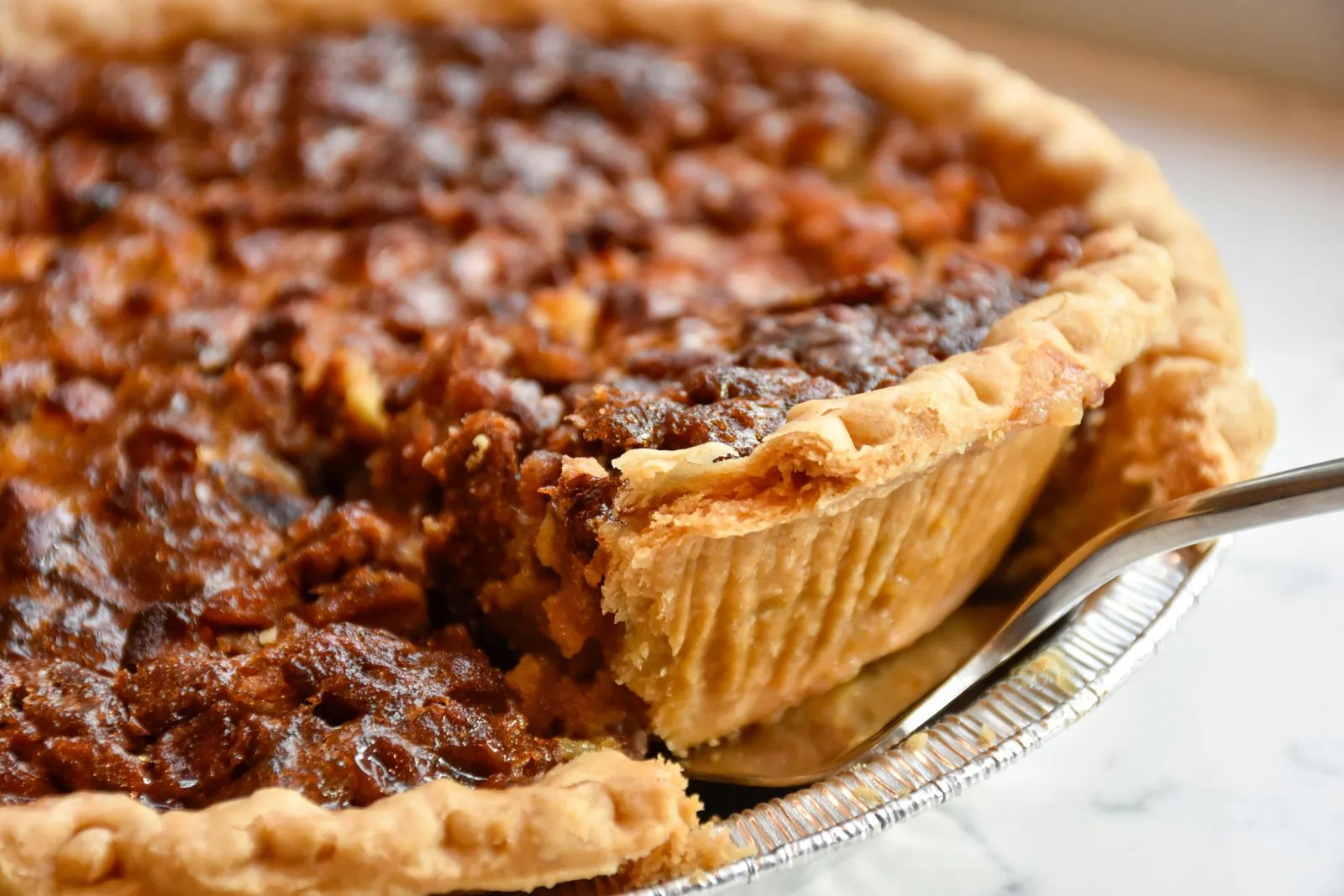
The main meal is over, the pie plate is half full, and nobody is sure how long the dessert has been sitting out. That moment is common in many homes this weekend, and it is where food-safety guidance becomes practical. Pecan pie does spoil, and the safe window is shorter than many people expect ([1]).
Why pecan pie belongs in the refrigerator
Pecan pie usually has an egg-based filling, and that is the main reason food-safety sources treat it differently from a pie that can wait on the counter. Iowa State Extension and LSU AgCenter both name pecan pie among the pies that should be refrigerated. Eggs and milk are high in protein and moisture, which gives bacteria a favorable environment when they are left at room temperature.
Iowa State describes the danger zone for a homemade pie as the range between 40°F and 140°F, where bacteria grow quickly. Keeping the pie cold, at 40°F or below, is the simplest way to slow that growth once the pie has cooled.
The clock starts when the pie leaves the oven
Two hours is the limit that most extension guidance uses for a pie containing eggs. USDA goes further, telling people to throw away perishable food left at room temperature for more than two hours, and it shortens that window to one hour when the temperature is above 90°F. A dining room near a heater or a dessert table in a sunny spot can reach that threshold faster than people expect.
A freshly baked pie does need time to cool before it goes in the fridge. Wisconsin Extension allows two to four hours for cooling, but Iowa State advises refrigerating a pie that has not cooled within two hours, uncovered, so it keeps cooling. Once the clock has run past the limit, putting the pie in the refrigerator the next morning does not undo the time it spent out.
- Out for about 90 minutes in a cool room, then refrigerated right away: still within the 2-hour limit.
- On a buffet for three hours: discard it.
- Left out overnight: discard it.
- Chilled promptly and kept at 40°F or below: use within the refrigerator window.
How long leftovers and frozen slices keep
FoodSafety.gov gives three to four days in the refrigerator after baking, and Iowa State and the University of Maine Extension say up to four days. Wisconsin Extension gives a wider range of two to six days, but this article uses the shorter figure because it is the more cautious one. The count starts on the day the pie was baked, not on the day someone last cut a slice.
Sugar-free pies have a shorter life. Maine advises eating a pie made with a sugar substitute within two days in the refrigerator, and Iowa State says within one to two days. Sugar in a standard pie does not extend the window either, since the sources reviewed do not treat it as an exemption for pecan pie.
The freezer offers more time. FoodSafety.gov lists one to two months for best quality, and Iowa State notes that a frozen pie remains safe beyond that if it is kept constantly frozen at 0°F. Freezing can change texture, so the filling may separate slightly and the crust may turn soggy. Those are quality issues rather than signs of danger.
Telling a spoiled pie from a safe one
Iowa State says a pie with an off smell or visible mold should be discarded. The USDA Food Safety and Inspection Service adds an important warning: do not sniff moldy food, because it can cause respiratory trouble. Its guidance also lists baked goods among foods to throw away when moldy, since porous foods can be contaminated below the surface, so cutting away the mold and keeping the rest is not advised.
The sources reviewed do not describe what spoiled pecan pie smells like, and none recommends tasting a pie to test it. A pie that seems fine may still have been out too long, so time and temperature should be checked first. Store-bought pies are a separate case. Iowa State says shelf-stable pies sold unrefrigerated typically do not need refrigeration until they are cut, and the label should guide the decision.
What matters now: pecan pie with eggs belongs in the refrigerator after it cools, and the two-hour clock is the first test. Refrigerated slices are generally safe for three to four days from baking, while frozen pie keeps its best quality for one to two months.
Related Stories From Travelbinger



Storing the leftovers the right way
Iowa State recommends cooling the pie fully, chilling it uncovered, and then wrapping it loosely in plastic or using a pie cover. Wrapping a warm pie traps moisture, which can make the crust soggy and create conditions that favor bacteria. Wisconsin Extension suggests covering the pie loosely with plastic wrap until serving.
LSU AgCenter advises slicing only the portions that will be eaten and returning the rest to the refrigerator. If leftovers will not be finished within three to four days, freezing is the better choice. Reheating follows a general rule: USDA says leftovers should reach 165°F, measured with a food thermometer, though the sources reviewed give no pie-specific reheating temperature.
Holiday pie rarely causes trouble when it is handled with a simple routine. Refrigerate it within two hours, keep track of the days, and when in doubt, let the clock decide.