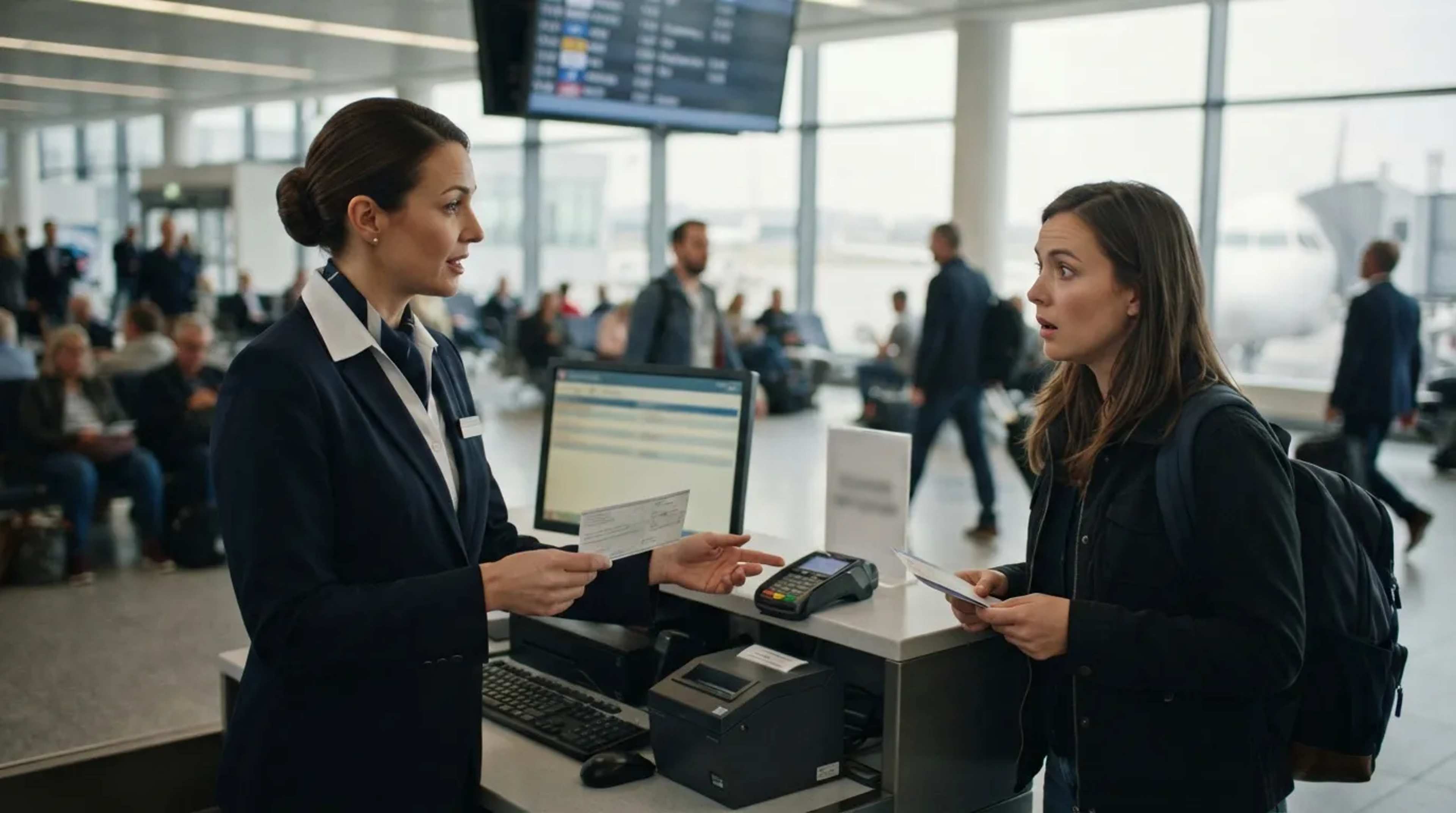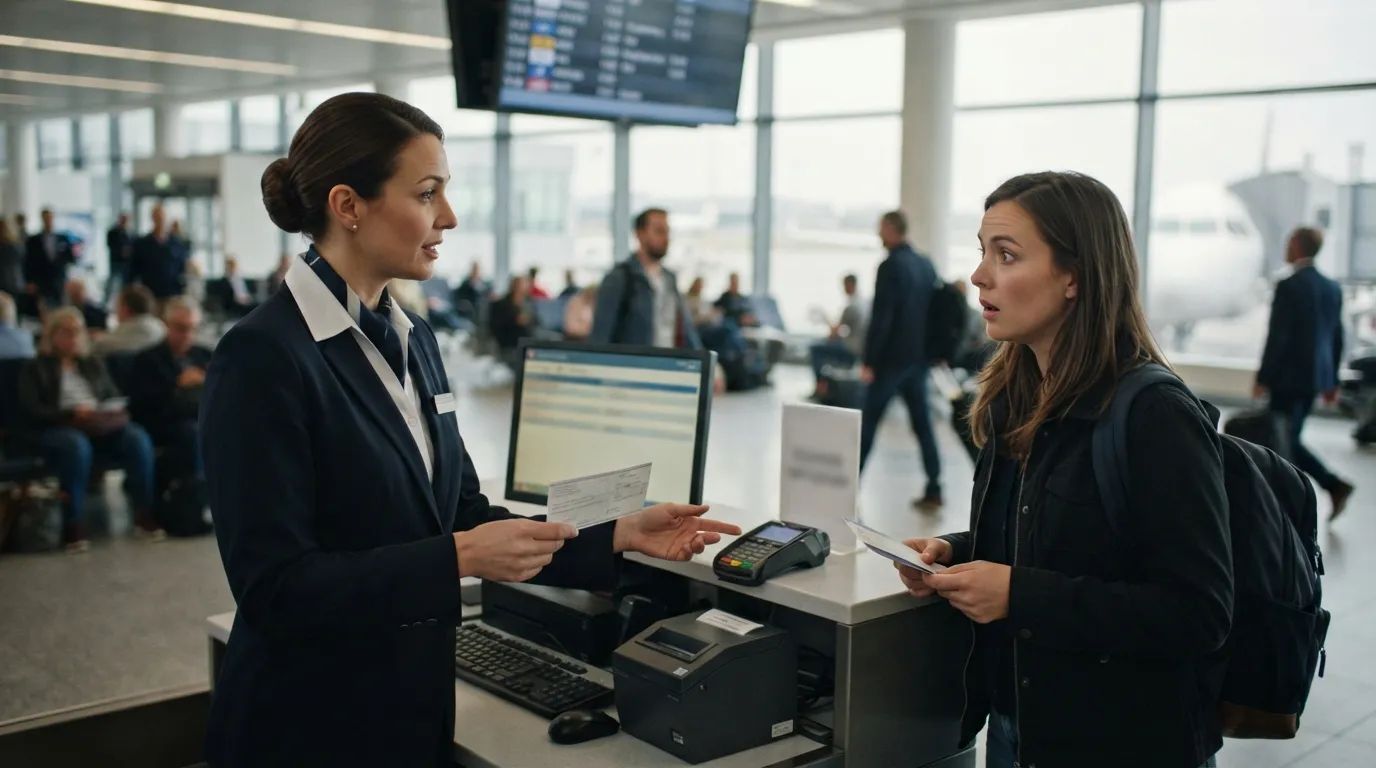
You picked 14C weeks ago. You screenshotted it, maybe even paid extra for it. Then you reach the gate and the screen shows a different seat, with no apology and no explanation. That’s the quiet side of air travel, and it happens far more often than most passengers realize.
Some of these changes are harmless. A few can cost you a window seat, a payout, or even your spot on the plane. Here are 17 of them, counted down, based on what airline rules and the work at the podium actually show. The last one is the only change that’s truly in your hands.
#17 – The Small-Plane Shuffle That Can Override Your Seat (and Your Payout)
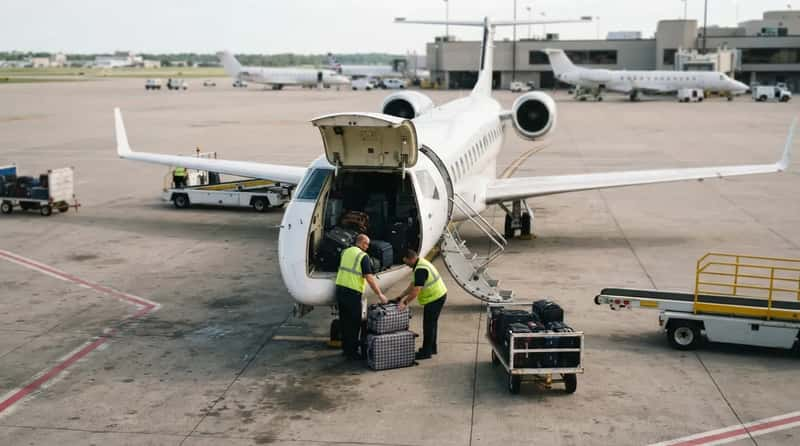
On a small regional jet, a few hundred pounds in the wrong place matters. When weight and balance get tight, someone may be moved, or taken off the flight entirely, before a single announcement is made.
Federal rules carve out an exception here. On aircraft with 60 or fewer seats, passengers denied boarding because of safety-related weight and balance limits aren’t owed denied boarding compensation. The same bump that pays out on a big jet can pay nothing on a regional one.
- It applies to smaller regional aircraft, not mainline jets.
- It only covers safety-related weight and balance limits.
The cabin-balancing move at #16 is much more common, and you’ve probably already lived it.
#16 – Why You Were Suddenly Moved Forward or Back
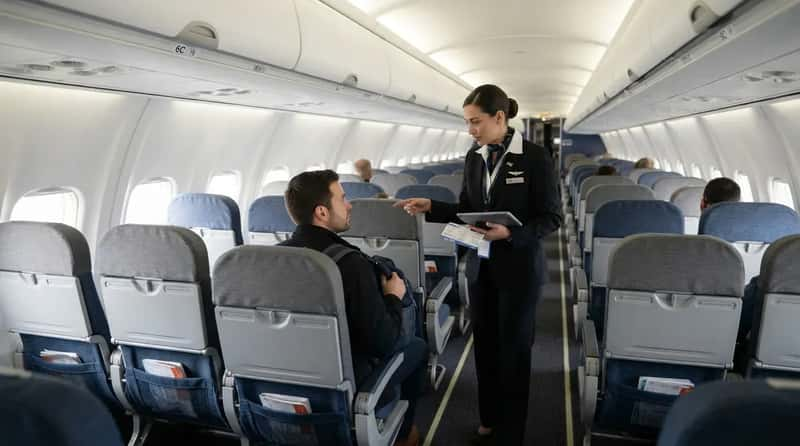
Ever get a new seat number with no explanation? One common reason is simple. The cabin has to be spread sensibly across the plane.
A lightly loaded flight can end up with passengers bunched on one side or in one section, and agents may quietly even things out. It’s most noticeable on smaller aircraft, where load matters more. A gate seat change usually isn’t a punishment. It’s arithmetic.
Under U.S. denied boarding rules, being moved to another seat isn’t a bump, because you’re still flying. That means no automatic payout, which is worth knowing before you argue at the podium.
The next quiet change involves a row that comes with a legal job description.
#15 – The Exit-Row Swap Nobody Tells You About
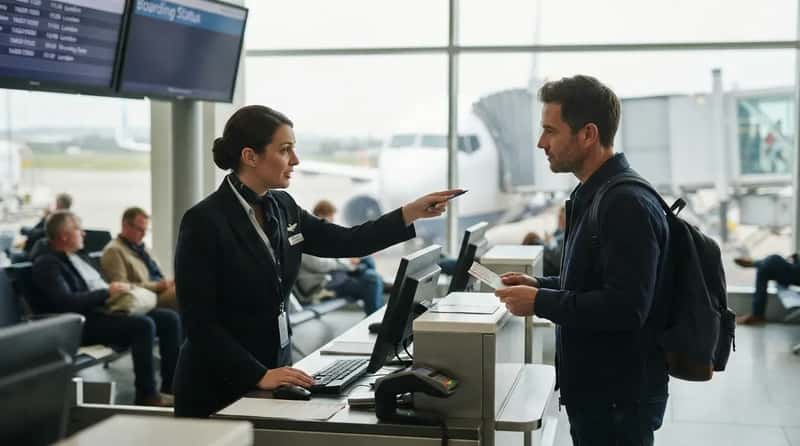
Exit rows aren’t just extra legroom. They come with duties, and an agent can reassign you if you can’t or won’t perform them.
Under FAA-based airline rules, exit-row passengers must be willing and able to help in an emergency. That’s why an agent sometimes asks a quick question at the gate. If you decline or don’t qualify, you can be moved on the spot.
Fast Facts
- Exit-row passengers generally must be at least 15 years old.
- You need to be able to open the exit and follow crew instructions.
- Anyone traveling with a person who needs their care generally can’t sit there.
- Saying you can’t or won’t help is enough to get you moved.
Here’s the part people argue about. Plenty of travelers rank the exit row as the best seat on the plane. Some frequent flyers say the extra legroom isn’t worth the responsibility, the chill from the door, or the armrests that don’t always lift. Pick your side.
Now for the seats you never even saw on the map.
#14 – The “Blocked” Seats That Mysteriously Open at the Gate
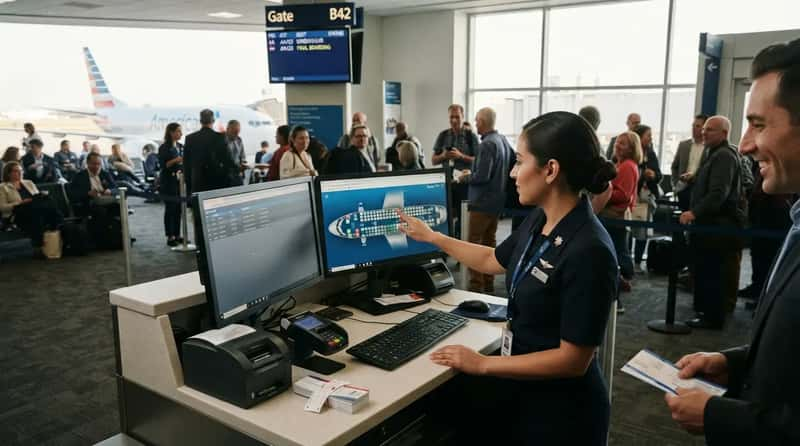
The seat map looked full. Then, at the gate, someone gets handed a prime seat. Airlines often hold certain seats back and release them closer to departure.
The reasons vary by airline and fare type. Seats can be held for upgrades, for passengers who need accommodations, or for operational flexibility. The “full” seat map isn’t always the whole truth.
That’s why agents sometimes have better options than your app does. A polite, specific request like “Is anything open on the aisle?” usually works better than a vague complaint.
Next up is a situation that tugs at the heartstrings of anyone who has ever flown with a small child.
#13 – The Child-Next-to-Adult Fix Agents Make Behind the Scenes
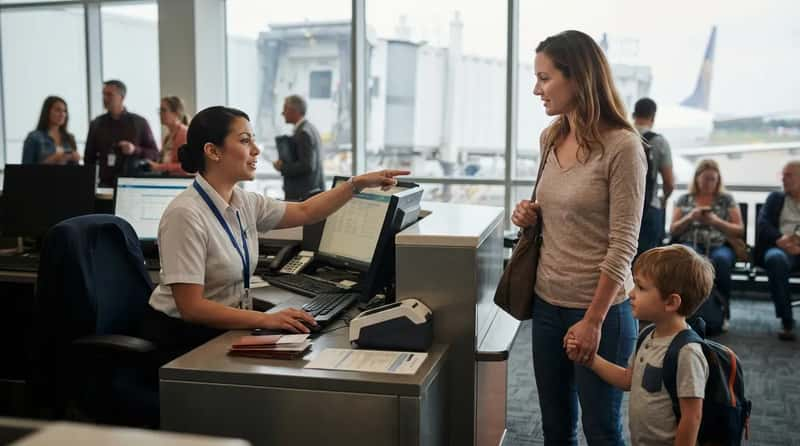
A parent boards and finds a four-year-old assigned six rows away. Agents see this constantly, and it’s one of the most common quiet repairs at the gate.
The surprising part is that no federal law currently guarantees family seating. The DOT proposed a rule in August 2024 to ban family seating fees for children 13 and under, but a proposal isn’t a requirement. Until a rule is finalized, it comes down to each airline’s own policy. Whether your child sits beside you can depend on which airline you picked.
- Alaska says children 13 and under sit with at least one parent or guardian at no extra charge.
- American says children 14 and under sit next to at least one adult.
The next change is one the airline would rather you didn’t think about.
#12 – The Seat Swaps Triggered by a Different Plane
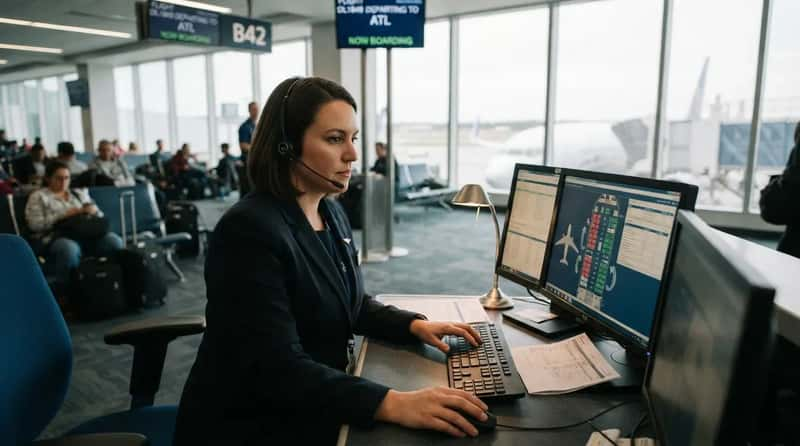
Sometimes the plane on the schedule isn’t the plane at the gate. When an aircraft gets swapped, your carefully chosen seat can vanish.
Seat maps differ between aircraft versions, so the system has to remap everyone. A window seat can turn into a blank wall. An exit row can disappear. Your “12A” may not even exist on the replacement plane.
Agents often work these reassignments in bulk, sometimes before you’re even through security. That’s why a changed seat can pop up in your app with no real explanation.
This next one can actually cost you money, and it hides in the fine print.
#11 – The Downgrade Nobody Announces (and What You’re Actually Owed)
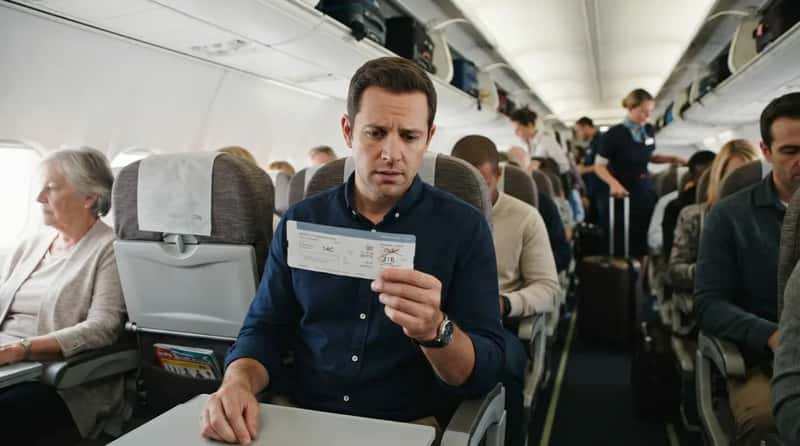
When a premium cabin is reduced or a plane is swapped, some passengers get moved to a lower class without ceremony. One minute you’re in the seat you paid for. The next you’re in a different cabin.
Here’s the catch. Under DOT rules, downgraded passengers are entitled to a refund of the price difference between the higher and lower class, not full compensation. You can be moved down and still only get the fare difference back.
Check your receipt and the fare difference before you leave the gate. If the number looks wrong, it’s far easier to fix there than weeks later.
What’s coming at #10 happens while you’re still standing in the boarding line.
#10 – The Duplicate-Seat Cleanup That Happens Before Boarding
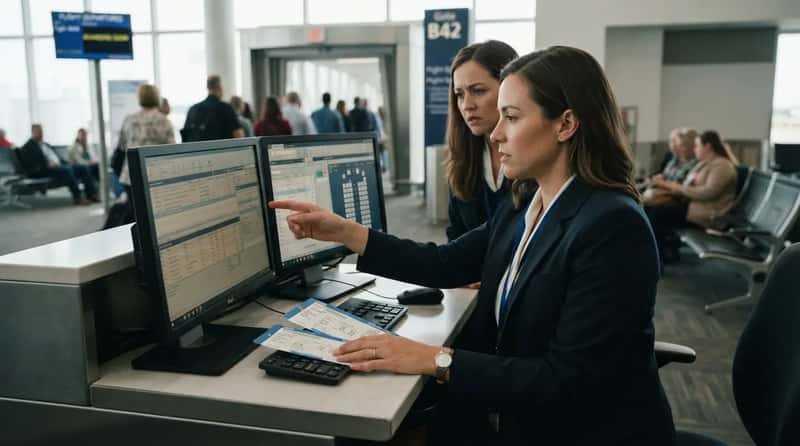
Two people, one seat. It sounds like a glitch from another decade, but it still happens, usually because of rebooking, standby, or a system sync problem.
Agents usually catch the conflict at the gate and fix it before anyone boards. Airlines set their own procedures for who gets moved. The “winner” isn’t always the passenger who showed up first.
If you find someone in your seat after boarding, flight attendants will step in. But the quiet fix at the gate is why that scene is rarer than you’d expect.
Up next is the “no seat yet” surprise that catches budget travelers again and again.
#9 – The Cheap-Fare Seat Lottery You Don’t See Coming
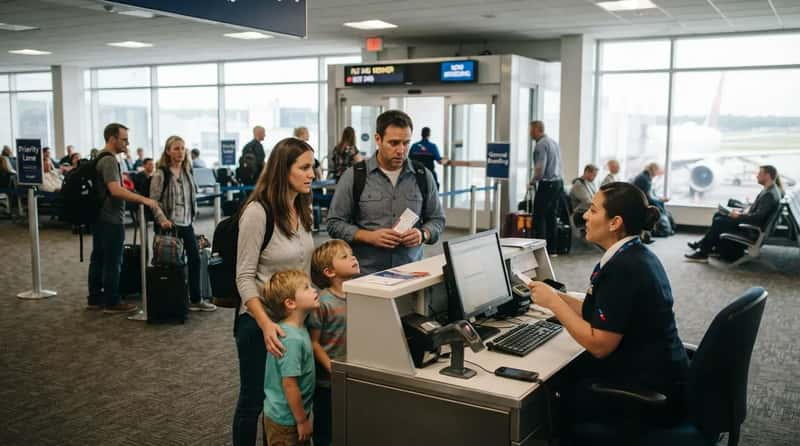
Basic fares often come with no advance seat choice. That doesn’t mean no seat. It means the airline picks for you, and often late.
Those assignments can land at the gate or right at boarding. Families and groups feel it most. Skipping the seat fee can mean your seat is whatever’s left.
Worth Knowing
- A basic fare still comes with a seat. You just don’t get to pick it early.
- Assignments can happen at check-in, at the gate, or right at boarding.
- Groups traveling together are the most likely to be split up.
- Checking in early gives you a better shot at what’s left.
This one splits the room. Many travelers happily pay for seat selection, while others argue that on a short flight it’s a poor use of money. Plenty will tell you never to gamble on a connecting trip. Where do you land?
The next one is about a reshuffle you’d never think to question.
#8 – The Accessibility Reassignments Made Without a Word
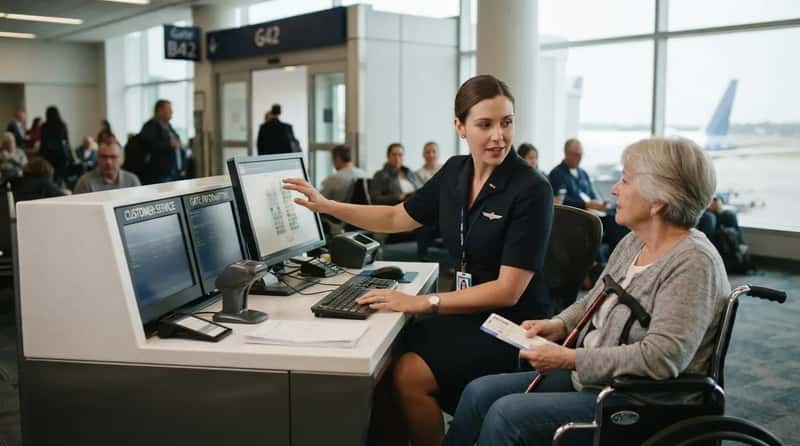
Some seat changes are about the law, not preference. Passengers with disabilities may need specific seats, and agents sometimes rearrange others to make it work.
Federal rules require airlines to provide certain seating accommodations for passengers with disabilities. That can mean an aisle seat, a bulkhead seat, or room for a service animal. When your seat moves, it may be because someone else’s need outranks your preference.
Most of this happens quietly, and agents rarely explain why. It’s one of the least dramatic reasons for a swap and one of the most justified.
What comes next puts your seat on the line in a very different way.
#7 – The Oversold-Flight Math Agents Run Before You Arrive
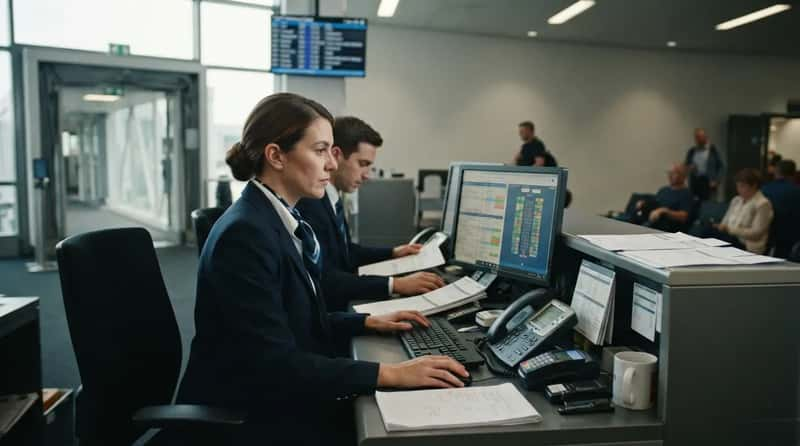
Airlines can sell more tickets than there are seats, and agents see the count long before the gate crowd does. While you’re grabbing a coffee, someone behind the podium may already be doing the math.
The rules set the order of operations. On an overbooked flight, no one can be denied a seat until airline personnel first ask for volunteers willing to give up their reservation in exchange for compensation. The quiet work of finding volunteers often starts well before boarding.
Quick Compare
- Volunteer: You accept the airline’s offer, and the amount is negotiable at the gate.
- Involuntary bump: Compensation follows DOT rules, and you’re owed a written explanation of your rights.
- Domestic involuntary bump: Generally 200% of your one-way fare for a 1-2 hour arrival delay and 400% beyond that, up to the caps.
Strategies differ by airline. Some carriers work hard to avoid involuntary bumps altogether, which is one reason volunteer offers can get more generous as departure nears.
And the money side of this is bigger than most people realize.
#6 – The Bump Payout Gate Staff Must Explain (But Often Don’t Lead With)
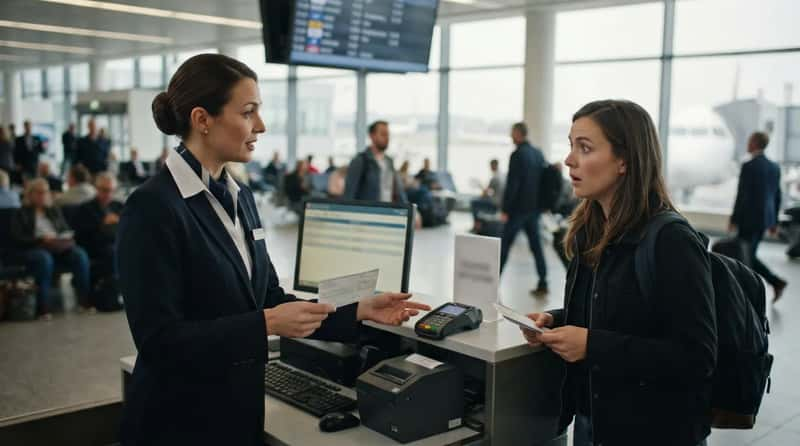
If you’re bumped against your will, you may be owed real money. Most travelers have no idea how much.
The headline numbers are large. Required involuntary bump payments are capped at $1,075 for certain domestic delays of one to two hours and $2,150 for longer ones. Those are the ceilings, not a flat sum.
- The amount depends on your ticket price and how late you arrive.
- Qualifying passengers are owed payment on the day and at the place the bump occurs, by cash or check.
There’s also a boarding-pass loophole at #5 that changes the whole picture.
#5 – The Moment You Become “Unbumpable”
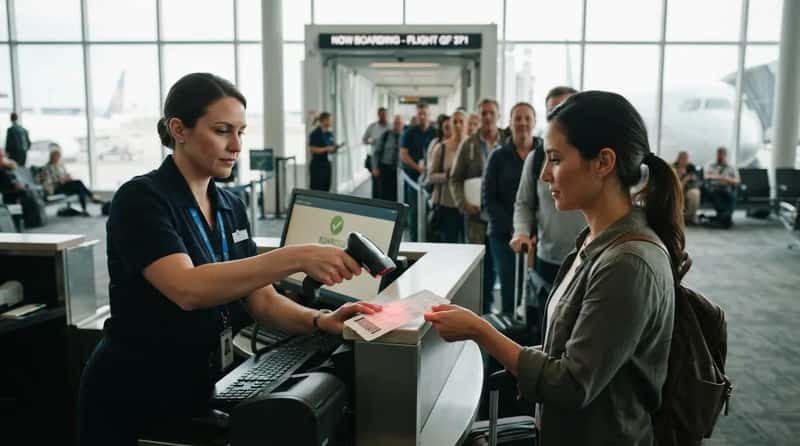
There’s a point where an airline can no longer pull you off for an oversold seat, and it’s simpler than you’d think.
According to travel-rights reporting, travelers who checked in on time and boarded after their pass was scanned can’t be involuntarily bumped. Once you’re scanned in, the oversold-flight bump is basically off the table.
That’s why agents often sort out oversales while people are still queued. The gate crowd is the danger zone, so being early and on time is your best protection.
Next comes a fix agents handle for travelers who never thought to ask.
#4 – The Broken-Seat Swap That Never Makes the Announcement
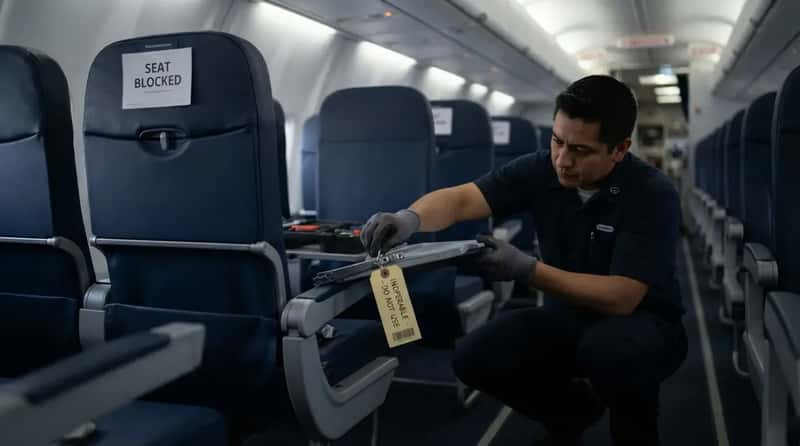
A tray that won’t latch. A seat that won’t recline. A seat flagged as inoperable. These problems get handled behind the scenes, and you only see the result as a new number.
When a seat has a maintenance flag, the system typically blocks it, and anyone assigned there gets quietly moved. A seat can be blocked on the map long before a passenger learns there was a problem.
It’s one of the better reasons for a last-minute change. You often end up in a seat that actually works, even if it isn’t the one you picked.
The next change involves the youngest travelers, flying completely alone.
#3 – The Quiet Seat Placement for Kids Flying Solo
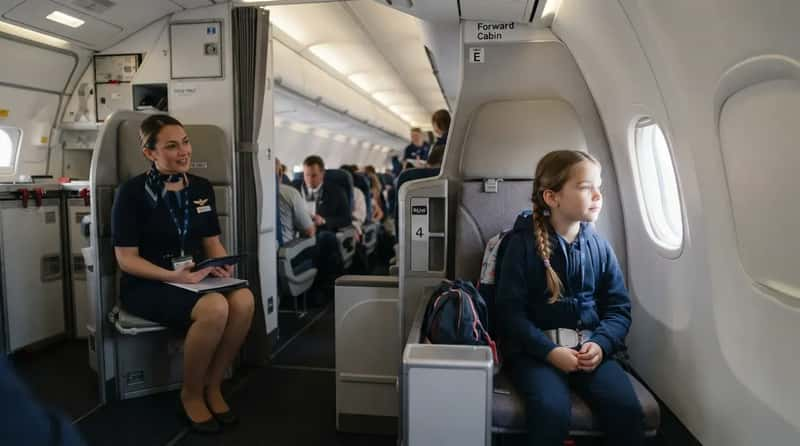
Children flying alone get extra attention, and seat placement is part of the plan. Many airlines place unaccompanied minors where crew can keep an eye on them.
That can mean a seat near the front or close to a flight attendant station. Policies vary by airline and by the child’s age. Which seat a child gets can be settled before the family even reaches the gate.
At a Glance
- Most major U.S. airlines don’t let children under 5 fly alone.
- Many airlines require unaccompanied-minor service for kids from about 5 to 14.
- Age cutoffs and fees differ from one carrier to the next.
- A parent or guardian typically stays until departure, and an authorized adult meets the child on arrival.
Parents should check the airline’s unaccompanied-minor rules directly. Age limits and fees differ from one carrier to the next.
The next one is a behind-the-podium shuffle that often goes unnoticed.
#2 – The Standby and Staff Shuffle Behind the Podium
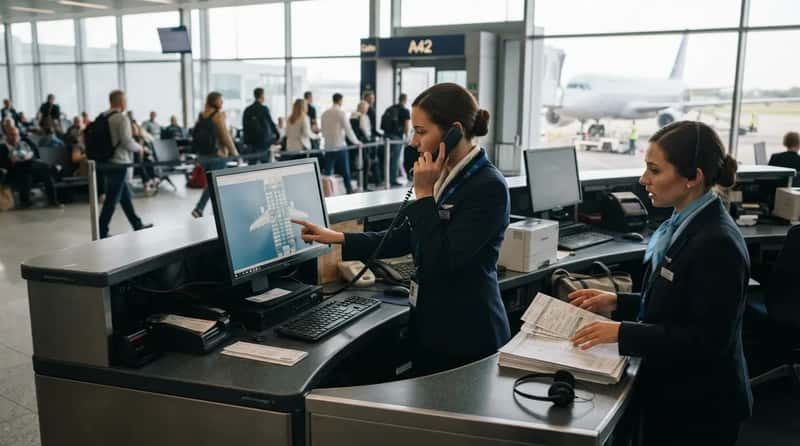
Standby passengers, rebooked travelers, and airline employees flying on passes all need seats. Agents place them using the same map you’re staring at.
When a flight is full, that can ripple into seat changes for everyone else. Cancellations and missed connections pile up fast. One cancelled flight can quietly rearrange the seat assignments on several others.
Gate work is constant triage. The seat you see at 9:00 isn’t always the seat that’s final at 9:40.
The most human change of all is #1, and it might not involve the airline’s computer at all.
#1 – The Polite Ask: “Would You Trade Seats So a Family Can Sit Together?”
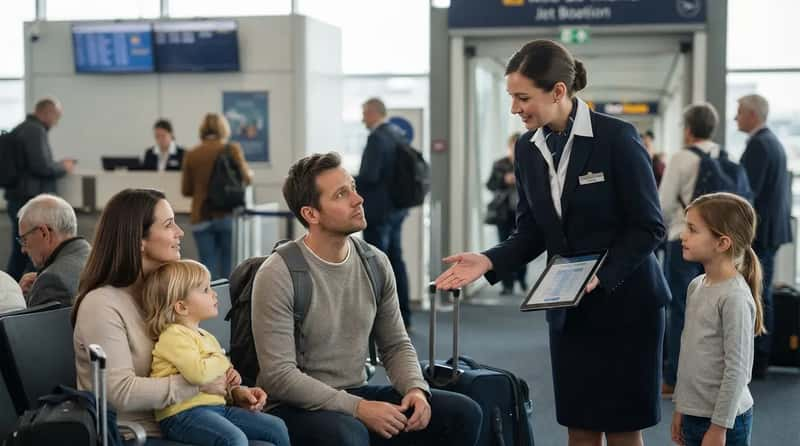
The most common quiet change isn’t a system move. It’s an agent or flight attendant turning to a stranger and asking for a favor.
When adjacent seats aren’t available, staff sometimes ask other passengers to swap. Travel guides advise families who aren’t seated together to ask a gate agent for help. Your seat can become the answer to someone else’s problem.
This one divides people. Some travelers see a swap as a small kindness. Others argue that if a family didn’t pay for seats, the airline should fix it, not strangers. Either way, you’re never required to say yes.
That’s the last of the quiet changes, and the one most within your control.
Your seat isn’t as fixed as it feels. Weight limits, plane swaps, exit-row rules, accessibility needs, and oversold flights can all change it long before anyone picks up a microphone. Some of those changes come with real money attached, up to $2,150 in a bump. Others, like a small-plane weight limit, come with nothing at all.
The next time your seat number changes, you’ll know it probably wasn’t random. Somebody behind that podium was solving a puzzle you couldn’t see.