You know the postcard version: a giant ship glides toward the dock, the captain waves, and ropes fly. Harbor pilots will tell you that picture skips the part that matters most. By the time the ship looks calm and graceful, the hardest calls were made long before. They covered everything from the thickness of a ladder rope to the question of who pulls the ship and how hard.
Some of these rules are brand new. Others sound far too small to matter, until you see what hangs on them. And the decision waiting at #1 is the one every other choice on this list depends on. Here’s what the pilots and their rulebooks actually say.
#26 – The Rope Ladder Is Measured to the Millimeter
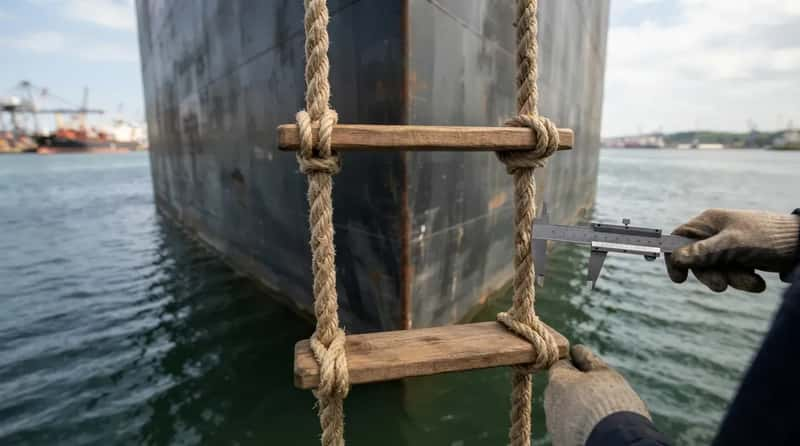
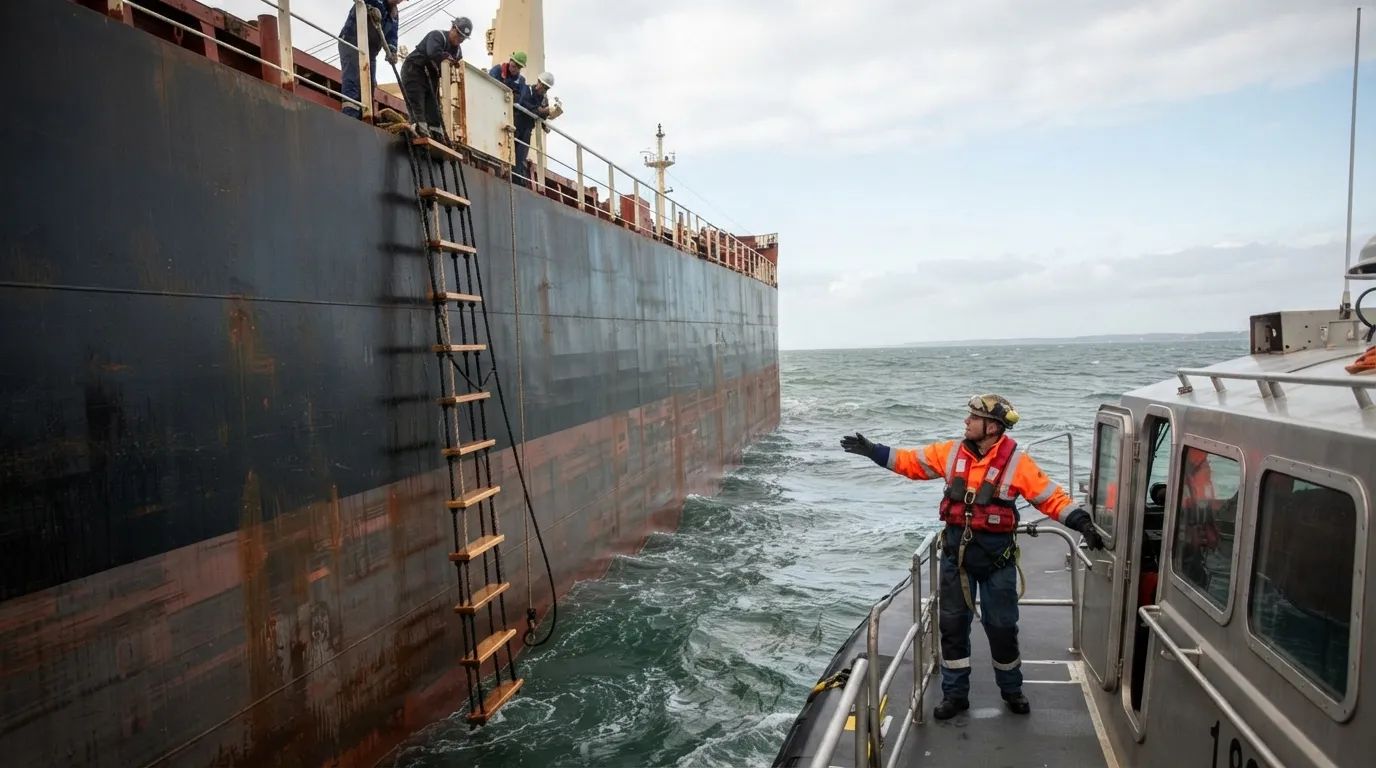
That swaying ladder on the hull is not just any rope. Under the revised guidance, the side ropes should be between 20 mm and 22 mm thick. The ladder should also be certified by its manufacturer as meeting SOLAS rules or ISO 799:2004.
That makes the ship’s rigging the very first call of the day. Older guidance allowed no more than two replacement steps secured by a different method from the original build. Even a swapped step can become a compliance problem. But the next rule is about how far a pilot will climb, and the numbers surprise people at #25…
#25 – The Climb Has a Strict Minimum and Maximum
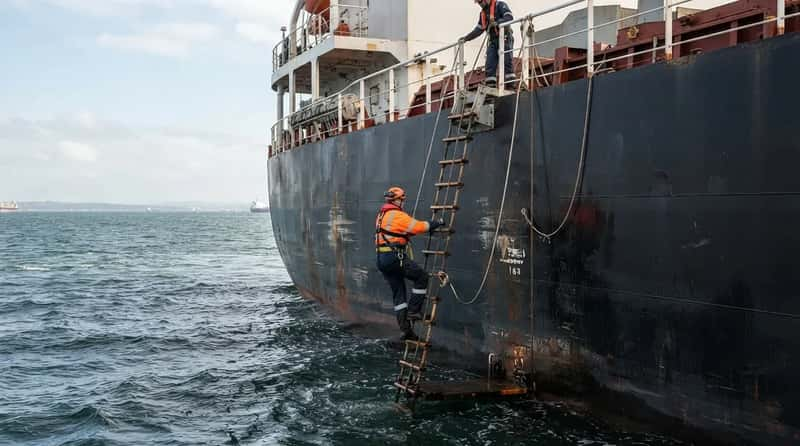
A pilot’s first climb comes with built-in limits. A pilot ladder must require a climb of at least 1.5 m and no more than 9 m above the water. Beyond 9 m, an accommodation ladder is used together with it, or another equally safe means.
Below 1.5 m, no pilot ladder is required, and a safer alternative is chosen after a risk assessment. A ship’s height above the water shifts as cargo comes and goes. So the setup can change from one visit to the next.
Wait until you hear how ladders are now being given an expiration date at #24…
#24 – Ladders Now Expire Like Milk
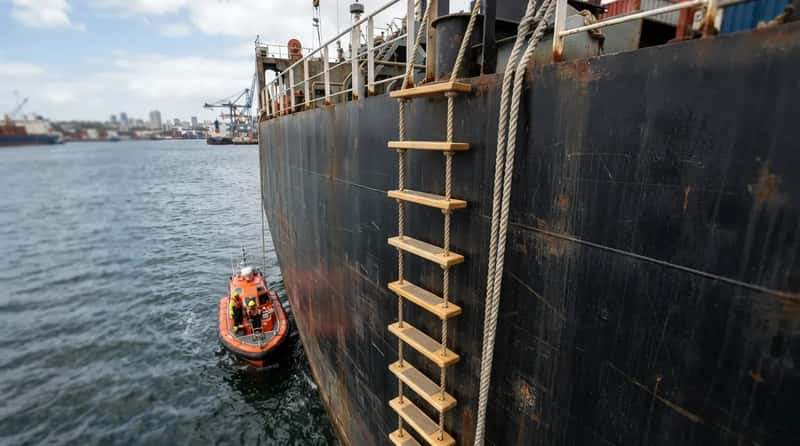
A big rule change is coming for pilot gear. Pilot ladders and manropes will become consumables, replaced no later than 36 months after manufacture. Manufacturers can no longer self-certify, because type approval is getting tighter.
The amendments take effect on 1 January 2028. Repairing or replacing steps onboard will be prohibited, and a spare set must be ready to move to either side of the ship. It’s a quiet change, but it hits a gear problem pilots have complained about for years.
Fast Facts
- Replacement deadline: no later than 36 months after manufacture
- Start date: 1 January 2028
- Onboard step repair or replacement: prohibited
- Spare set: must be ready for either side of the ship
Still, the pilot’s day starts even earlier than the ladder, as #23 shows…
#23 – The Ship Gets a Heads-Up Hours Before Boarding
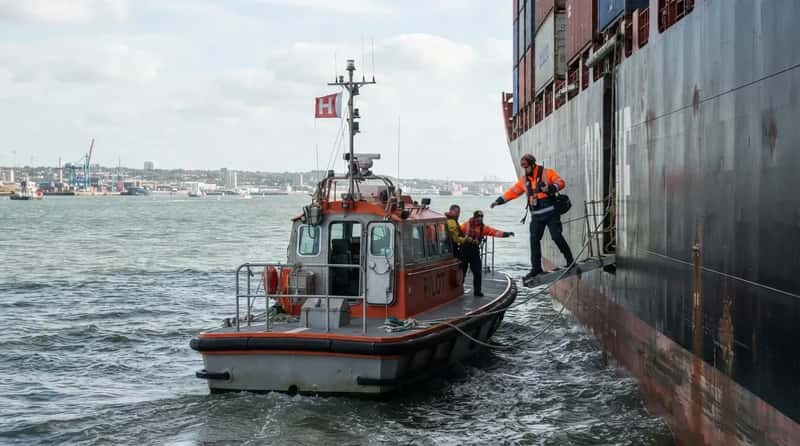
The first decision is about timing. The vessel notifies the pilot station several hours ahead that it is ready to take on a pilot. The pilot arrives on a designated pilot boat flying the international “H” flag.
Pilots carry a radio and often a portable pilot unit, then head straight to the bridge. Much of the choreography is settled before anyone climbs a rope. Once the pilot is aboard, the pilot boat goes back to its home dock.
But the walk from the deck to the bridge hides a rule most passengers never notice at #22…
#22 – Someone Is Assigned to Walk the Pilot to the Bridge
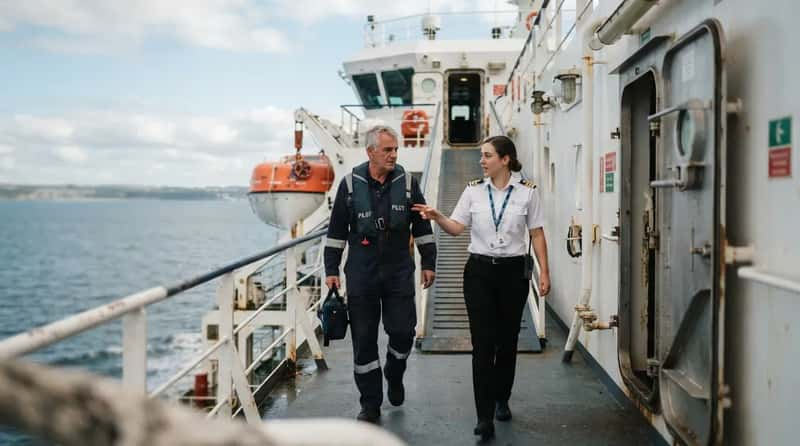
The pilot doesn’t wander through the ship alone. One of the ship’s officers conducts the pilot to the bridge, and one pilot’s account says that’s simply the rule. On a cruise ship, that’s generally a security crew member trained to observe the pilot boarding.
That means the ship’s own crew gets eyes on the ladder end. The escort is also a built-in safety check on the boarding. The greeting on the bridge often includes a hat or other ship’s swag, or at least a cup of coffee. And the briefing right after that coffee is where the real work begins at #21…
#21 – The Briefing Before Anyone Touches the Controls
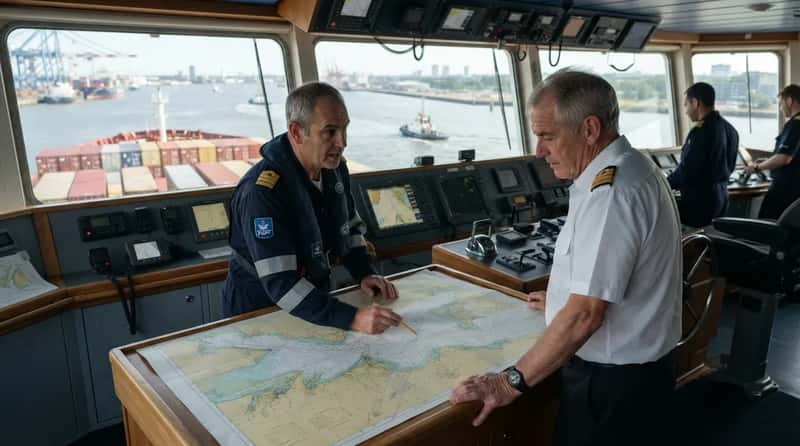
This is the pilot’s secret weapon. In the master-pilot exchange, the pilot presents the plan for the whole passage to the captain. It covers under-keel clearance, traffic, weather, and tugs.
One seafarer guide claims most pilotage accidents come from poor communication or failure to share critical information. That makes a ten-minute chat one of the most valuable parts of the trip. The guide’s point is that a clear exchange can prevent problems.
But critics ask whether the briefing can become a box-ticking routine, and #20 shows one country’s answer…
#20 – Japan’s Signed Sheet Makes Every Number Official
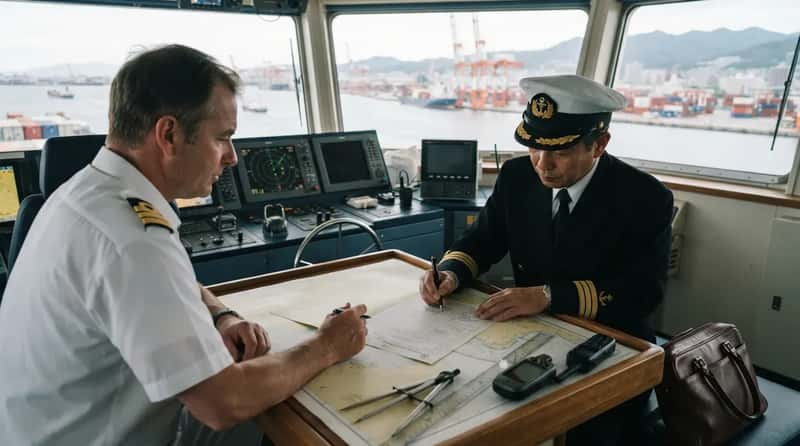
Some ports treat the briefing like a contract. Japan’s exchange sheet lists under-keel clearance, squat allowance, safe depth, and expected tide rise. Both master and pilot verify and sign it.
One account argues the contrast is stark. In most ports, pilots rely on familiarity rather than formal UKC or squat calculations. Some call a signed sheet overkill, while supporters call it overdue.
Quick Compare
- Japan’s sheet: clearance, squat, safe depth, and tide rise written down
- Sign-off: master and pilot both verify and sign
- Many other ports: local familiarity leads, with no formal UKC or squat math
It’s a debate worth having, and #19 shows why wording on the bridge matters just as much…
#19 – The Whole Passage Runs in One Language
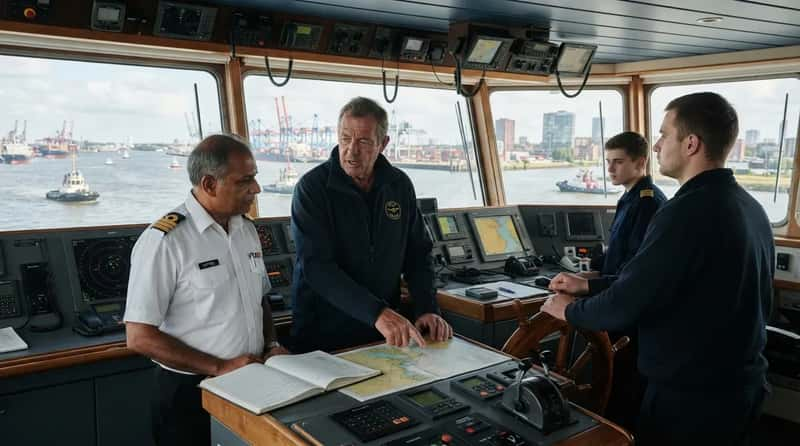
A bridge can have a crew from several countries. Even then, the whole pilotage is conducted in English. One pilot calls English the language of the sea.
During the exchange, the master also tells the pilot who is on the bridge and what their first language is. The pilot knows the crew’s language situation before the first order is given. But the next item is a number that has nothing to do with language, and it can stop a ship cold at #18…
#18 – Under-Keel Clearance Is the Number That Can’t Be Faked
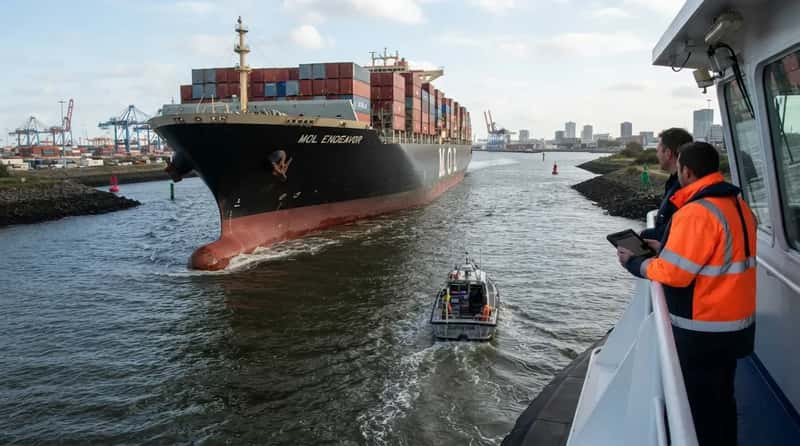
The gap under the hull is a simple idea with high stakes. The calculation includes tide height, the ship’s draught, squat, and a safety allowance. Pilots today face reduced turning basin clearance and very little under-keel clearance.
Under-keel clearance is one of at least nine separate criteria used to judge a planned track. Ships keep getting bigger, but the channels don’t grow to match. The next decision shows why speed is really a depth question at #17…
#17 – Squat: Ships Settle Lower the Faster They Go
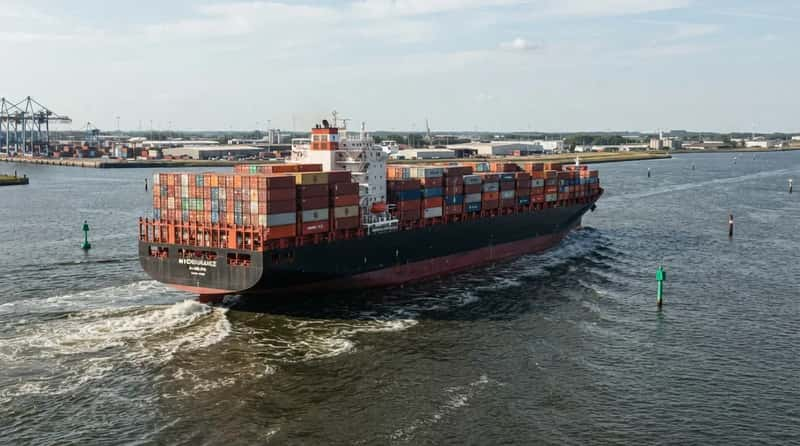
Going faster can quietly shrink the gap under a hull. That effect is called squat, and it’s why the Japanese sheet lists a squat allowance next to the tide figures. Pilots build it into the plan before the first turn.
The pilot directs the ship’s course and speed while it’s in the port area. Choosing a speed is also choosing how much water stays under the ship. In shallow channels, slowing down can be a safety move rather than a delay. But what about the water itself? #16 shows how the tide sets the clock…
#16 – The Tide Sets the Schedule, Not the Dock
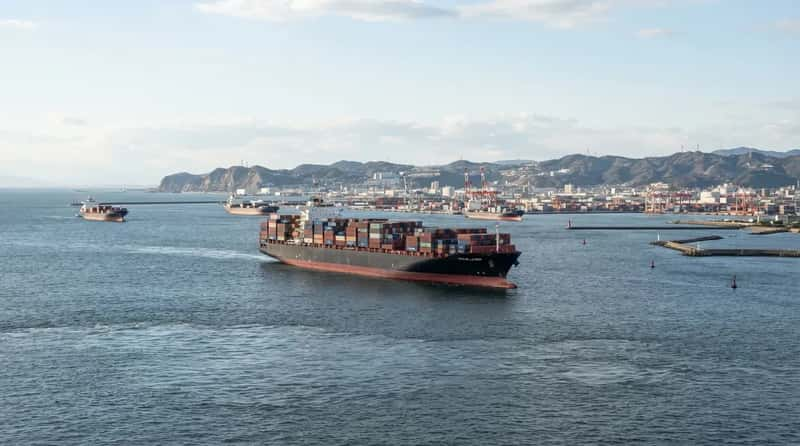
Time on the water isn’t flexible. The briefing covers timings, the route, and how much water is available at the state of the tide. Japan’s sheet even lists the expected tide rise.
That can leave a ship waiting for its window. Depth can decide when a ship goes in, no matter what the clock says. The following decision is about the machinery itself, and a small detail can change a plan at #15…
#15 – The Second Bow Thruster That Wasn’t Really Ready
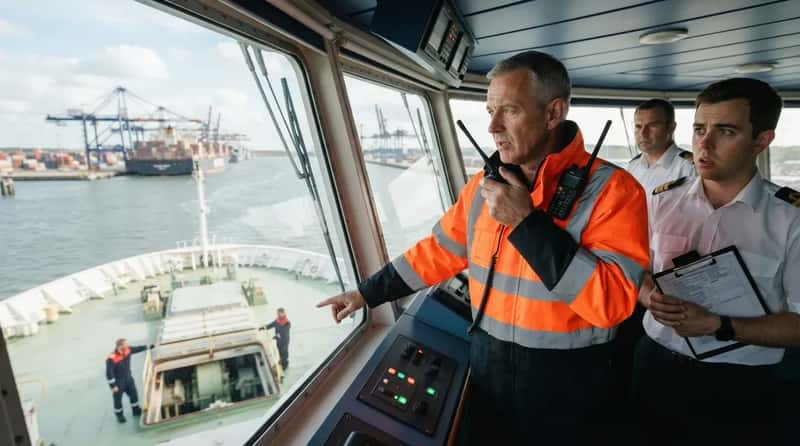
One training case shows how a small check can change everything. A pilot confirms two bow thrusters are available, but a follow-up reveals the second is on standby after maintenance.
The exchange also verifies maneuvering profile, thruster availability, steering and engine status, and gyro alignment. A thruster that exists on paper isn’t the same as one that’s ready. Pilots ask because the answer changes how many tugs they want. Speaking of surprises about the ship, the captain has a duty that can feel awkward at #14…
#14 – The Captain Has to Admit the Ship’s Quirks
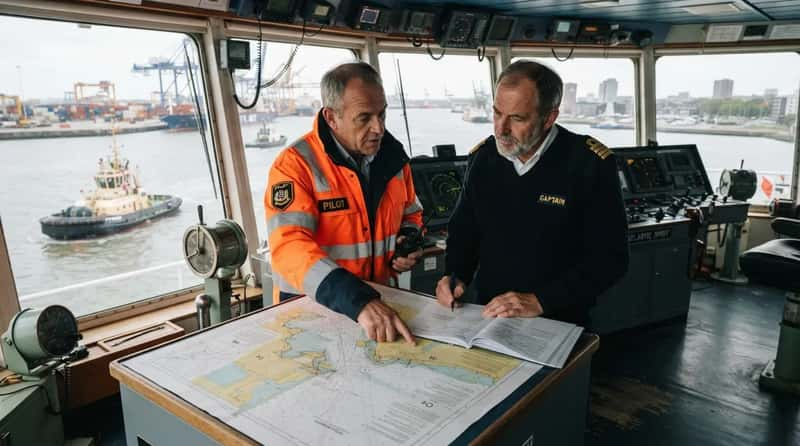
Every vessel handles a little differently. The master knows the ship’s handling and must share any limitations or strange characteristics. The pilot knows the port. The master knows the ship.
The docking pilot has the best knowledge of local conditions, tug limits, and available swinging room. Neither side can do this job alone. It only works if each shares what the other can’t see. But who is actually in charge during all this? #13 has a twist…
#13 – The Pilot Owns Course and Speed, but Not the Ship
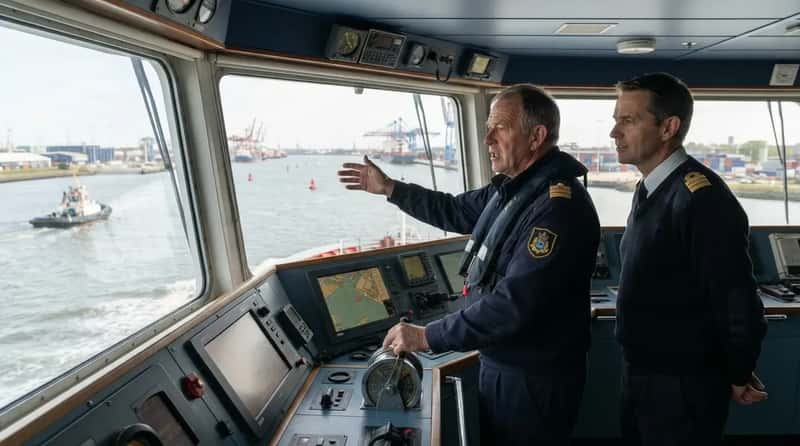
Here’s where the “just an adviser” label gets debated. One university Q&A calls pilots advisers and says the master keeps full responsibility. Another guide says the pilot gives the navigation orders and the crew obeys them as if they came from the master.
Many call pilots mere advisers, while others argue that label undersells a role where they direct the ship’s movement. The truth is that both are partly right, depending on the country and the setup. Next up is a gear question where most people guess wrong at #12…
#12 – Horsepower Is the Wrong Number for Picking Tugs
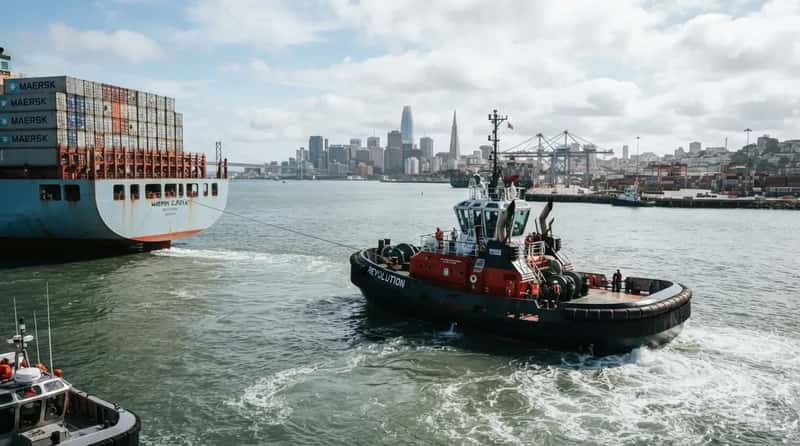
Experts don’t rate tugs the way car fans rate cars. San Francisco Bar Pilots’ guidelines sort tugs into classes by certified bollard pull. Bollard pull is used instead of horsepower.
Typical harbor tugs reach 30 to 50 metric tons of bollard pull. More horsepower doesn’t automatically mean more pulling force. Pilots also weigh wind, current, tide, and the berth itself. Now let’s talk about tugs that can do something no ship can at #11…
#11 – Tugs That Can Spin in Place Change the Plan
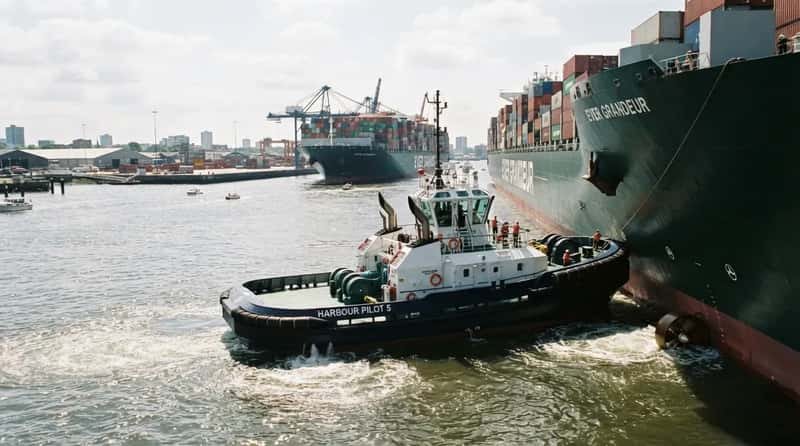
Tug design shapes the whole docking. An azimuth stern drive tug can move sideways, spin in place, and apply force at precise angles. A big ship can do none of that.
Large ships steer poorly at low speeds and can’t move sideways easily. Tugs supply the sideways motion a ship lacks. Propulsion type, like Z-drive or tractor, is weighed alongside horsepower and bollard pull.
Worth Knowing
- A big ship’s weak spot is low-speed steering and sideways movement
- An azimuth stern drive tug can push from almost any angle
- Z-drive and tractor designs are part of the pilot’s tug choice
But tug choice is only half the story. The style of escort is a bigger gamble at #10…
#10 – Riding Alongside or Tied On: The Escort Gamble
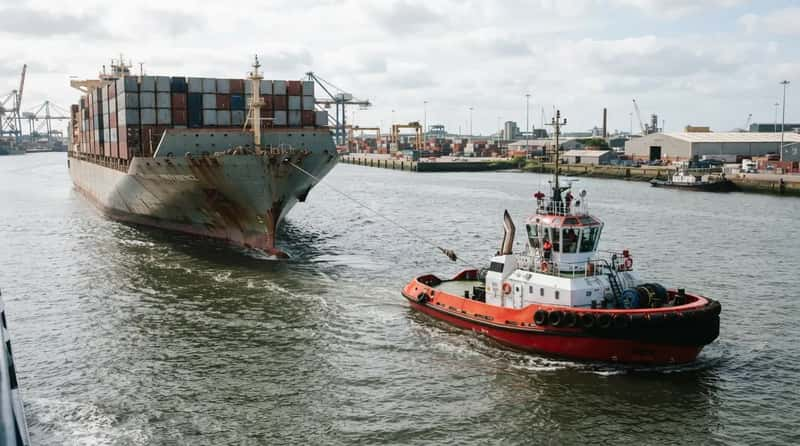
Not all escorts are the same. In a ship escort, the tug accompanies the ship at its pace and helps if needed. In a tethered escort, the tug can influence steering and braking in the channel.
A towing company’s written explanation to federal investigators called a tethered escort riskier. It recommends a docking master to oversee it. The extra control comes with extra risk. Minimum escort requirements may be set by the U.S. Coast Guard. Then the pilot must check something on the ship itself at #9…
#9 – The Ship’s Own Bollard Can Be the Weakest Link
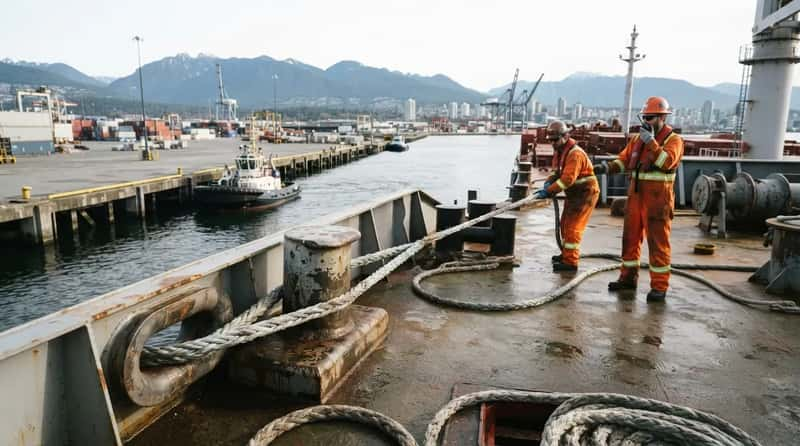
A tug can sometimes out-muscle the ship it’s helping. In one Vancouver account, the pilot cautioned that the ship’s forward bollard was certified for 60 tons and the fairlead for only 40.
Tug bollard pull and the strength of the ship’s mooring bitts are discussed to decide how much power is safe. The limit can be the ship’s hardware, not the tug’s engine. That’s why pilots ask about it before a line goes up. And in that same account, the weather made things trickier at #8…
#8 – Swell Quietly Changes What a Tug Can Pull
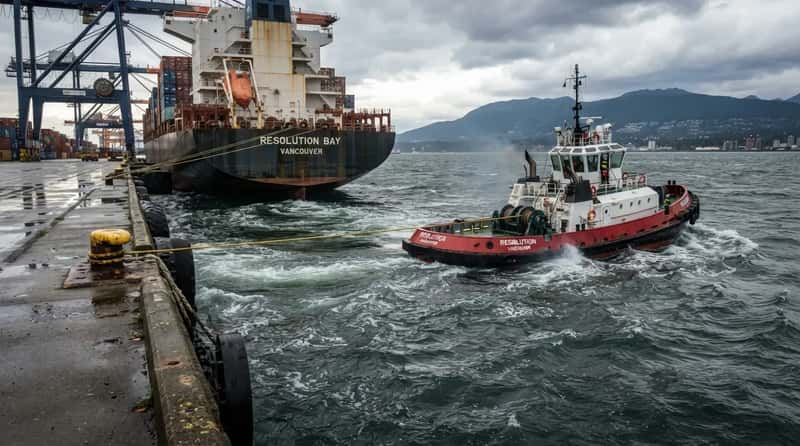
The same Vancouver story had another catch. The ship’s bollard could handle only 78 tons, very close to the maximum pull of the tug Resolution.
The tug captain explained that calm water and a straight pull off the dock made it manageable, but in heavy swell the bollard pull can vary. The same tug can pull differently on a rough day. Later, the pilot asked the tug to pull back. The next decision is about a rule that tells everyone to stop at #7…
#7 – The Stop Rule When Wind Fights the Current
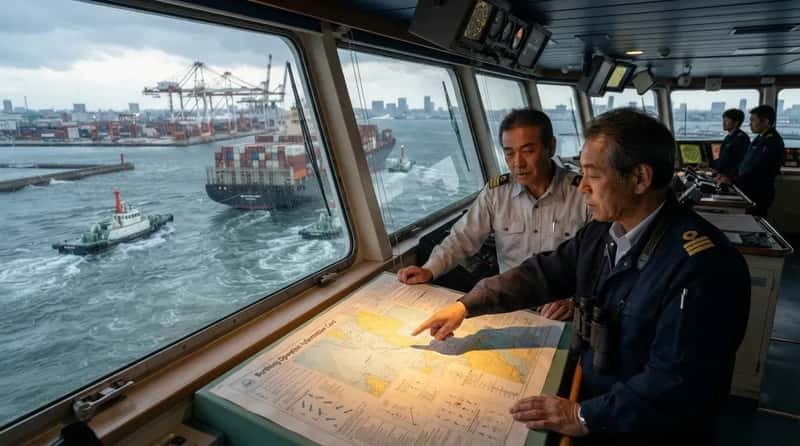
Some ports write the “no” down in advance. Japan’s Berthing Operation Information Card covers real-time currents at multiple depths, speed thresholds per ship class, and clear stop criteria when wind and current oppose each other.
The master, pilot, and shore team review it together. The limits are agreed before the pressure starts. That takes guesswork out of a stressful moment. But what if the tugs aren’t even free? #6 has the answer…
#6 – The Tugs Might Still Be Busy With the Last Ship
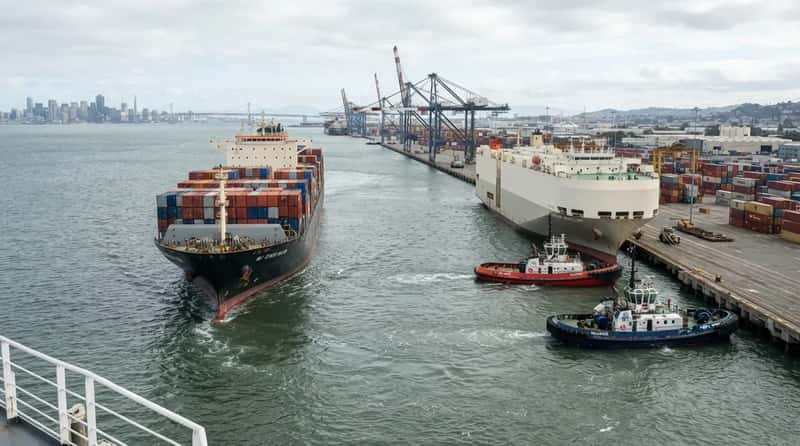
Even the best plan has a scheduling problem. At times, the ship reaches the berth and the tugs arrive late, because they weren’t free from their previous maneuver.
That makes tug timing part of the arrival plan. A port’s tug fleet is a shared resource, and ships queue for it. The pilot also needs to know the tug crew’s competence and the room available to swing the ship. Next is a challenge nobody can plan to the second at #5…
#5 – Nobody Can Schedule Passing Traffic
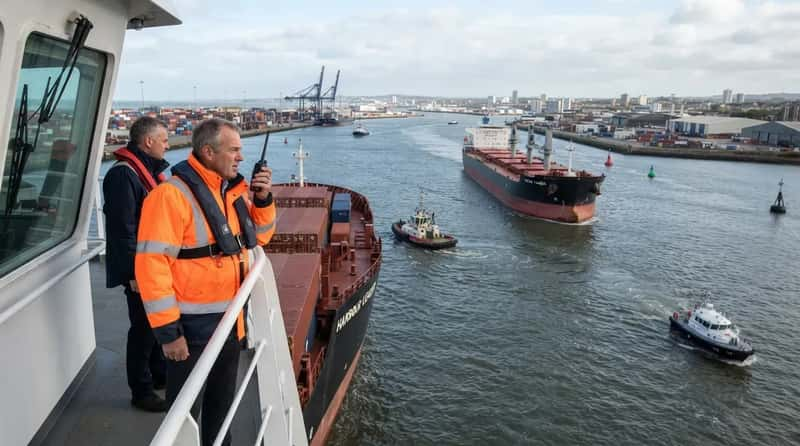
You can plan the tide. You can’t plan the other ships. Pilots can build around tide and wind, but they cannot predict passing traffic to the nearest second.
Pilots call the work dynamic: a plan is made and agreed, then adjusted. A good plan has to survive surprises. That’s why the briefing includes traffic at all.
At a Glance
- Can be built in: tide and wind
- Can’t be pinned down: passing traffic, to the nearest second
- The pilot’s answer: agree a plan, then adjust it as things change
The way pilots talk to their helpers is next, and it’s more intense than it sounds at #4…
#4 – Dozens of Radio Calls to the Tug Captains
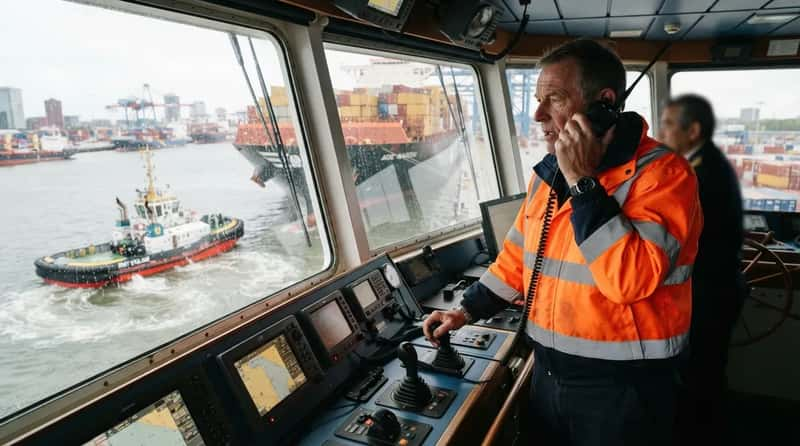
This is the part passengers never hear. Pilots talk to tug captains over VHF, using standardized commands and compass bearings to show where force should go and for how long.
The tug captain responds with short bursts of thrust measured in seconds. A multi-thousand-ton ship moves on commands that last seconds. And nobody leaves the water without a backup plan, which is the key to #3…
#3 – Plan B Is Written Before Plan A Begins
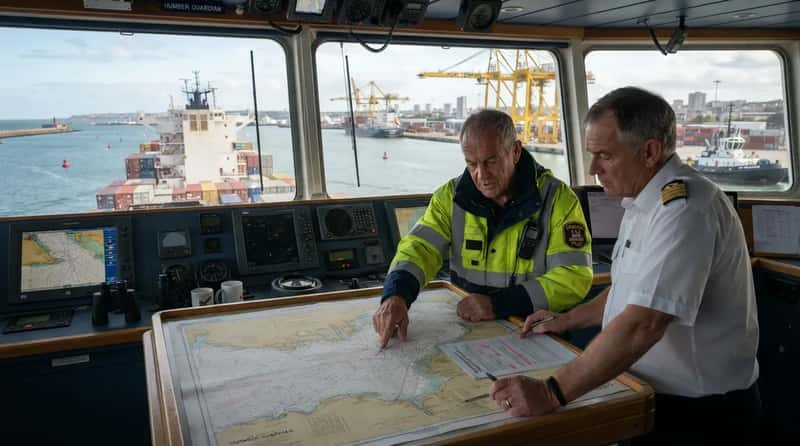
The passage plan runs berth to berth. It covers leaving the dock and harbor, the en route portion, the approach, and mooring. Among the criteria is having contingencies in case of an emergency.
The master-pilot exchange also includes contingency plans. Pilots plan for what goes wrong before anything does. Which brings us to a decision about who steps in, and the answer at #2 is rarer than you’d think…
#2 – The Captain Can Overrule, but Rarely Does
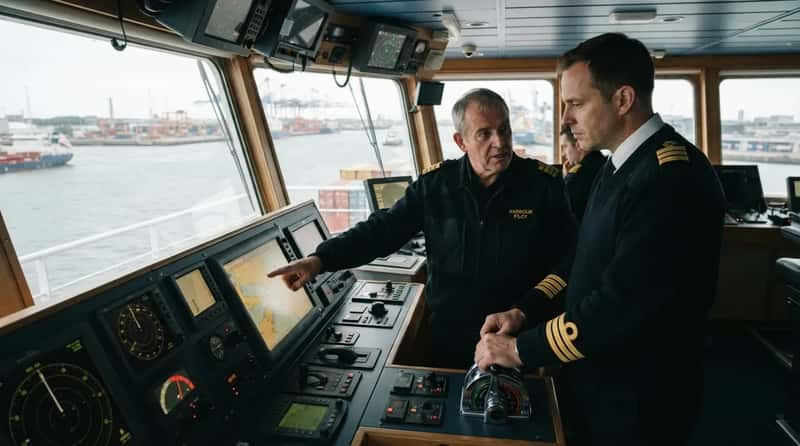
The master isn’t just along for the ride. The master monitors, assists, and intervenes only if the pilot’s actions are clearly dangerous, and then takes full command.
Why the restraint? Many pilots have to draw the local charts from memory when they take their exam. They also spend years learning under senior pilots. The captain defers because the pilot has spent years learning that water. But the biggest decision of all happens before any of this at #1…
#1 – The Call to Say “Not Safe” Before Anyone Climbs
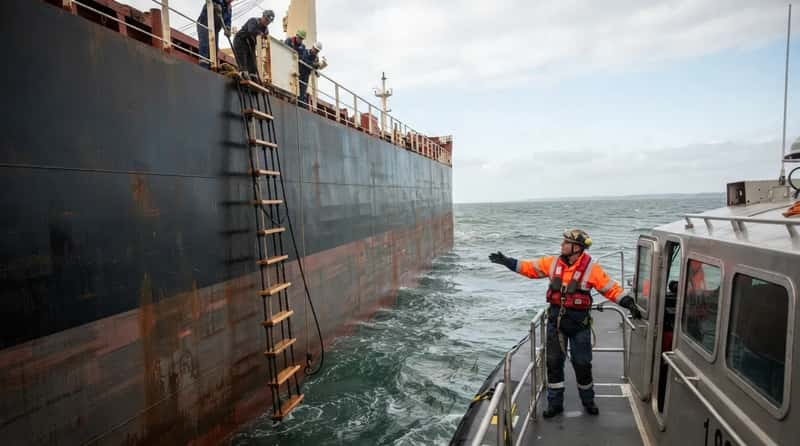
The riskiest decision comes first. Industry guidance says the decision to transfer to or from the pilot ladder is the pilot’s to make. Pilot transfer is described as one of the most critical, high-risk shipboard operations.
In January 2023, a pilot died on the River Humber while boarding via pilot ladder. It’s a sobering reminder that the climb itself is the most dangerous minute of the whole job. Every other choice on this list depends on this one going right.
So the real drama of docking is mostly decided before the ship ever slows down. A ladder rope has a diameter spec. A tug is judged by bollard pull, not horsepower. A ship’s own bollard can be the weakest link in the whole operation.
Next time you see a huge ship settle quietly against a pier, remember that the calm you’re watching was built from 26 decisions you never saw. Which one surprised you most?