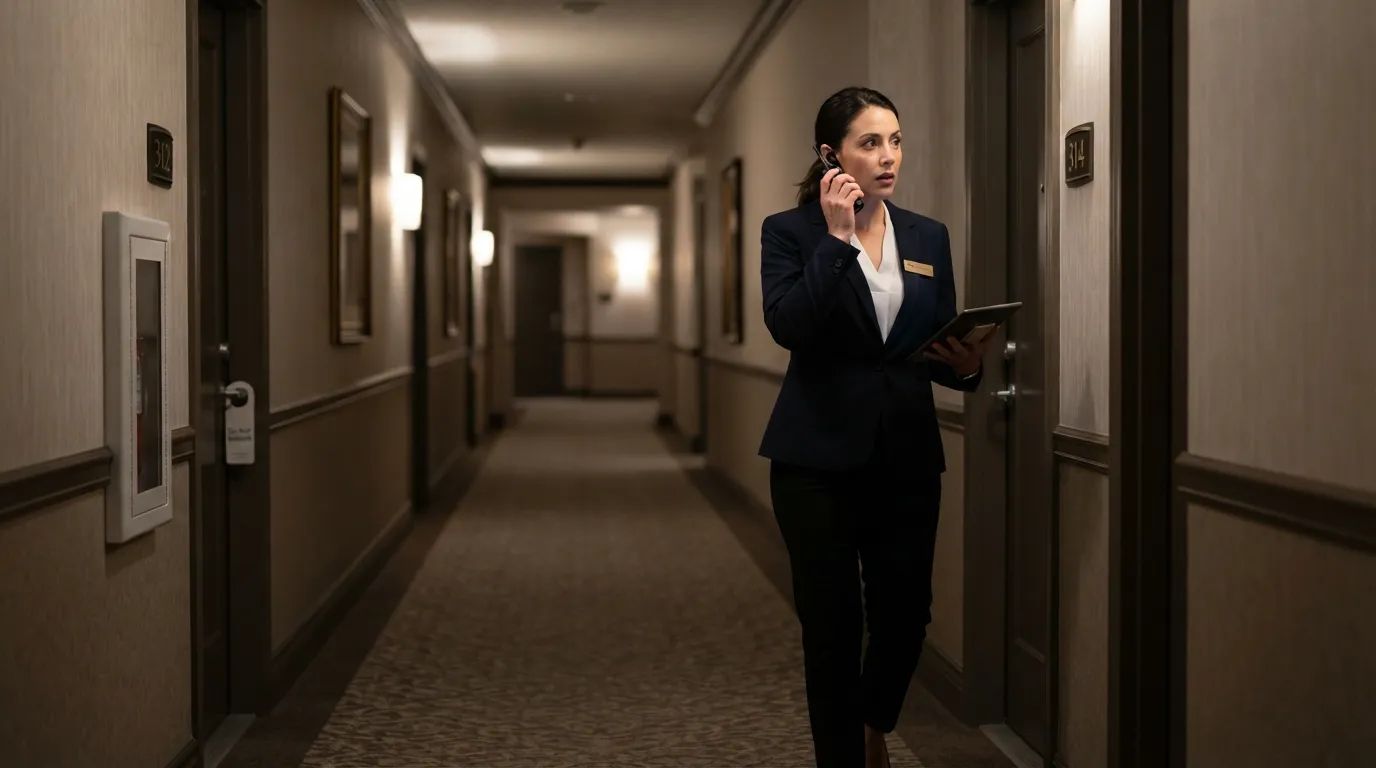
Most guests assume hotel staff only spring into action when things go truly catastrophic – a flood, a fire, maybe a brawl in the lobby. Turns out, hotel managers operate with a tightly prioritized triage list that most guests never see.
Even the best-run hotels rack up complaints – noisy rooms, missing amenities, reservations gone sideways. But what separates a five-star recovery from a one-star review is what happens in the next ten minutes – and hotel insiders just spilled the exact list.
#16 – The Check-In Wait That Stretches Beyond 10 Minutes
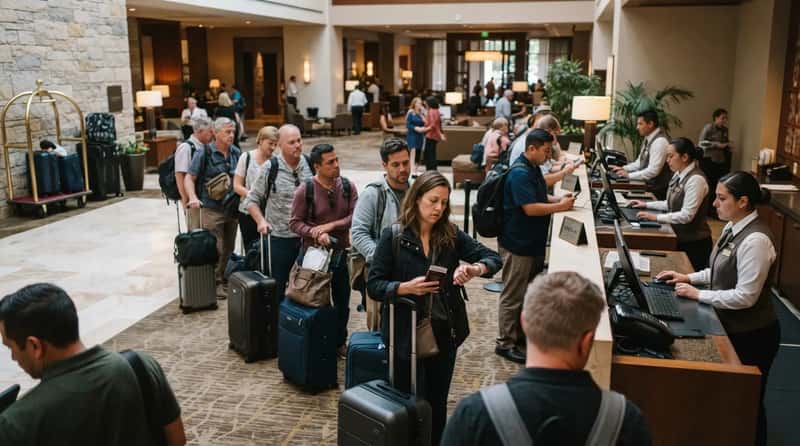
Nobody books a hotel room to stand in a lobby queue. Check-in delays are one of the fastest ways to poison a stay before it’s even begun.
Check-in delays, inaccurate reservations, and missing amenities top the list of most-reported complaints. Managers know a frustrated guest at the front desk is a problem every other arriving guest can see – and that public spectacle gets fixed without hesitation.
Poor guest service often stems from inefficiencies in process and communication. Whether guests are loitering in the lobby or waiting on a slow maintenance response, these moments create frustration and distrust fast.
Savvy managers pull extra staff to the desk within minutes or offer a mobile check-in workaround to move things along. The longer the queue, the worse the first impression – and first impressions are almost impossible to fix.
But a slow check-in is just the warm-up. Wait until you see what #15 does to a manager’s blood pressure…
#15 – Inaccurate Reservations and Room Type Mix-Ups

You booked a king bed with an ocean view – you got a double facing the parking garage. This complaint lands on the manager’s desk immediately, every time.
When an error occurs, the rule is simple: fix it immediately, and never make the guest feel like they have to prove it. Managers don’t debate – they verify, apologize, and act.
The best prevention is a well-integrated property management system that centralizes reservation data from booking through check-in. When guest information lives in one place, there are fewer chances for something to get lost or overwritten.
A mismatched reservation isn’t just an inconvenience – it’s a broken promise, and guests treat it exactly like that. Managers who drag their feet on this one are practically writing a bad review for the guest.
What comes next is even more personal – and managers know it…
#14 – Rooms That Smell of Smoke (in a Non-Smoking Property)

Walk into a hotel room that reeks of cigarette smoke when you booked a non-smoking floor, and you’ve stumbled on one of the fastest-escalating complaints in hospitality.
Managers treat this as a non-negotiable immediate fix.
They’ll ask if the guest wants another housekeeping sweep right away – or in severe cases, move them to a different room after double-checking it first.
The protocol is to relocate the guest to an inspected room right away, with no delays, a sincere apology, and a goodwill gesture – restaurant credit, an upgrade, or extra amenities.
Fast Facts
- (cite index=”8-1″>Most US hotels charge a smoking fee between $250 and $500 per violation in 2025 and 2026.
- (cite index=”7-11″>Cleaning up after a guest smokes in a non-smoking room can cost anywhere from $600 to $1,500, depending on the level of contamination and the materials affected.
- (cite index=”7-12″>Rooms must be taken out of circulation for extended cleaning and airing out, which means lost revenue.
- (cite index=”3-3″>Many hotels are now using in-room sensors to detect smoking or vaping in non-smoking rooms.
Smoke odor in a non-smoking room signals that the previous guest violated policy and that housekeeping missed it – a double failure. That combination is exactly why managers don’t just apologize; they move fast and compensate.
The next complaint sounds minor. It absolutely isn’t…
#13 – Housekeeping That Enters Without Knocking

Nothing rattles a guest more than a housekeeper walking in unannounced – especially mid-shower or mid-nap. This complaint triggers an immediate management response.
Privacy complaints are often the result of small oversights – housekeeping entering without knocking, thin window coverings, or rooms that feel exposed to neighboring buildings.
Hotel policy calls for handling this discreetly. Isolating the guest preserves their dignity and keeps the complaint from spreading to others, which can damage the property’s reputation fast.
An unannounced entry isn’t just embarrassing – it’s a breach of trust guests mention in every review they write.
The housekeeper gets addressed immediately, and the guest gets an apology plus a goodwill gesture.
Next up: a complaint that seems like a small tech problem but costs hotels far more than they admit…
#12 – Wi-Fi That Doesn’t Work (or Barely Does)

Slow or dead Wi-Fi is no longer a minor inconvenience. It’s a dealbreaker – especially for business travelers.
For business travelers, one of the highest-value segments in most urban hotels, internet quality matters as much as a clean room. An unstable connection can cost not just that one booking, but an entire corporate account.
The immediate response is to offer a personal router or hotspot while the issue gets resolved. If guests were charged a connectivity fee, hotels refund it without any hassle – charging for a service that didn’t work is the fastest way to earn a one-star review.
Managers also know that Wi-Fi complaints spike during events and weekends when many devices compete for the same signal – exactly the moments when the hotel is most full and most vulnerable to bad press.
Wait until you see what #11 reveals about the complaints that come in at 2 AM…
#11 – Noise Complaints (From Other Guests)
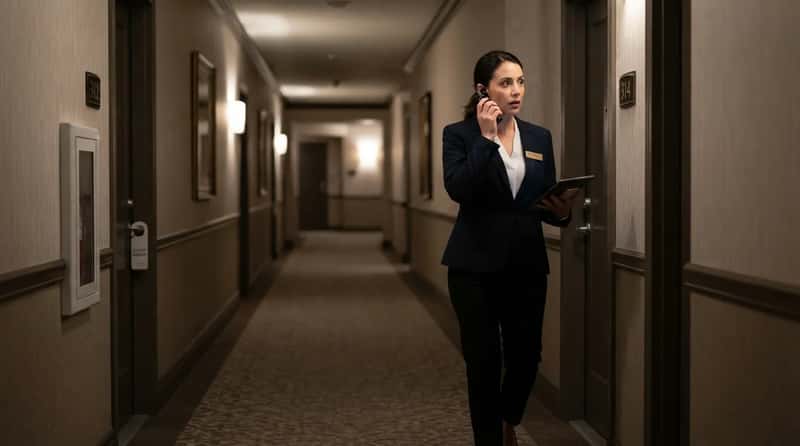
Noise is the single most reported disruption in hotels worldwide – and managers are trained to act on it within minutes, not hours.
The standard is to try resolving the issue with the responsible room within 10 minutes. If that fails, move the affected guest immediately and offer a sleep kit – earplugs, herbal tea, an eye mask.
Guests come to hotels to relax and recharge, so noise strikes at a core expectation. Common sources include noisy neighbors, street sounds, or late-night hallway chatter – and since it disrupts sleep for the whole stay, these complaints escalate fast.
Managers who delay on noise complaints don’t just lose that guest – they risk losing the guests in the surrounding rooms too. A noise problem that lands on TripAdvisor is a noise problem that costs the hotel bookings for months.
The next one on this list? It’s the complaint most managers privately say they dread…
#10 – Complaints About Rude or Dismissive Staff

A guest who feels disrespected by staff is not going to quietly check out and move on. This is one of the most emotionally charged complaints a manager handles.
The protocol: a senior manager personally takes over the conversation. A phone call or handwritten note from the general manager completely shifts the guest’s perception – it proves the complaint reached the right people.
At a Glance
- Root cause: usually a training gap, not a bad attitude.
- Common triggers: overloaded shifts and no clear protocol for handling requests.
- Fastest fix: pre-approved recovery tools staff can offer on the spot.
- Escalation point: a GM call or handwritten note within the day.
This happens because of a lack of empathy training, an overloaded team, or no clear protocol for handling guest requests. In many cases, the staff member didn’t act with bad intentions – they simply didn’t know what to do.
The most successful hotels give front-line staff pre-approved service recovery tools – a free drink, a room upgrade, a sincere handwritten note – so the fix doesn’t wait for a manager to arrive. Speed is everything here.
But what happens when the complaint involves a broken lock? That’s where things get serious fast…
#9 – Broken Door Locks or Faulty Room Security
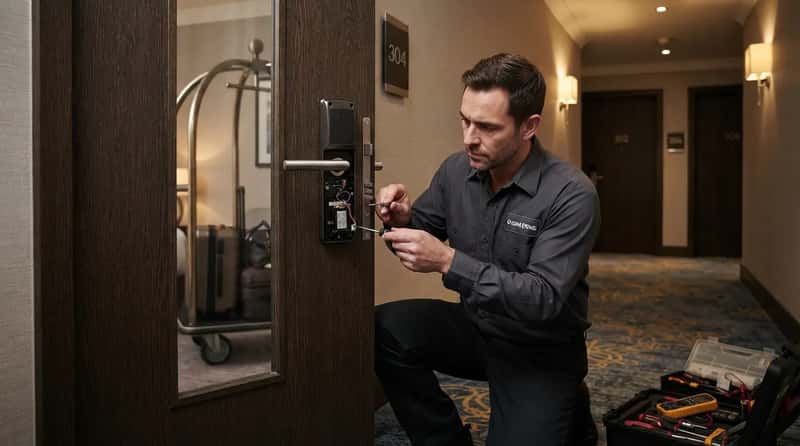
A guest who can’t lock their door isn’t just uncomfortable – they feel genuinely unsafe. This complaint jumps to the top of any hotel’s priority queue instantly.
When a safety concern is raised, hotels treat it as a priority regardless of how minor it seems. A guest who doesn’t feel safe won’t stay, and won’t return.
Same-shift resolution is required for issues like door lock malfunctions, a toilet that won’t flush, or a broken TV – these are classified as significant hits to guest comfort.
A broken lock is not a maintenance ticket – it’s a security incident, and managers treat it that way. Engineering is dispatched immediately, and if the lock can’t be fixed on the spot, the guest is moved before the conversation is over.
Next: the complaint that sounds trivial but has a huge ripple effect across the entire hotel…
#8 – Temperature Problems (AC or Heating Failures)

A room that’s sweltering in summer or freezing in winter is unlivable – and hotel managers classify it at their highest priority tier.
No heat in winter or no AC above 85°F gets ranked alongside flooding and elevator failure – an immediate safety threat requiring emergency engineering.
Quick Compare
- Emergency tier (same-hour fix): no AC above 85°F, no heat in freezing weather, broken locks, flooding.
- Same-shift tier: lock malfunctions, a toilet that won’t flush, a broken TV.
- Standard tier: minor light bulb outages, remote batteries, small cosmetic issues.
The general manager is automatically notified. There’s no “we’ll look at it in the morning” here.
Broken air conditioning in summer, faulty heaters in winter, leaking showers, or dead lights – these turn a good stay bad very quickly.
What most guests don’t realize is that temperature complaints filed at night trigger automatic escalation protocols – the same systems that handle flooding alerts. Managers don’t get to sleep through this one.
What’s coming at #7 might surprise you – it’s not what most guests expect to see on this list…
#7 – Uncomfortable or Unclean Beds

Guests don’t complain about the bed often. But when they do, it’s at full volume – and managers know it.
Nothing impacts guest satisfaction quite like cleanliness – dirty rooms top the complaint list because they affect health, not just comfort. Guests report unclean bathrooms, hair in the sheets, leftover items from the last guest, and poorly restocked amenities more than almost anything else.
A good night’s sleep is crucial, so complaints about uncomfortable beds hit hard. A lumpy mattress or stained linen isn’t just unpleasant – it signals the room wasn’t properly prepared, which raises questions about everything else in it.
Managers respond by offering an immediate re-clean or room change – no debate, no hesitation. The longer a guest sleeps on a bad bed, the angrier the checkout conversation becomes.
The next complaint is one that most guests feel too embarrassed to raise – but it’s far more common than you think…
#6 – Bad Odors in the Room
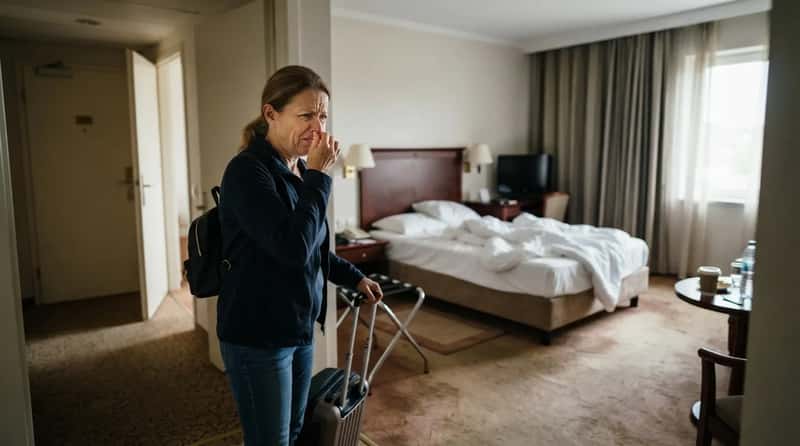
Mildew, stale cigarette smoke, old carpet, or something the previous guest left behind – bad odors are a legitimate dealbreaker and managers treat them with urgency.
Bad odors sit on the list of frequent hotel complaints alongside cleanliness and noise issues. They’re surprisingly hard to neutralize quickly, which is exactly why the standard response is a room move rather than an air freshener.
Cleanliness is the baseline expectation for any hotel stay – when it falls short, it’s one of the hardest complaints to recover from because it signals a systemic failure, not a one-off mistake.
A guest who raises an odor complaint has usually been tolerating it for longer than they should have – which means they’re already past frustrated. Managers act immediately and typically offer compensation on top of the fix.
Next is a complaint that every hotel dreads seeing at checkout time…
#5 – Billing Errors and Unexpected Charges

Surprise charges at checkout are one of the fastest ways to destroy a guest relationship that was otherwise going well – and managers know it.
Few things sour a great stay like ending it with a billing dispute. Clerical errors can erode guest trust and make people hesitant about future stays.
Unexpected charges – tourist tax, resort fees, extra-person fees – hit hardest at checkout, when guests see the final bill for the first time. The fix is simple: itemize every fee at booking and again in the pre-arrival confirmation, so transparency kills the complaint before it starts.
When a billing error is raised, the protocol is to fix it on the spot – no interrogating the guest, no making them prove it. Managers who argue about disputed charges in a public lobby are making a costly mistake in front of every guest within earshot.
But the next complaint? This is where managers say the real pressure kicks in…
#4 – Cleanliness Complaints Discovered at Check-In
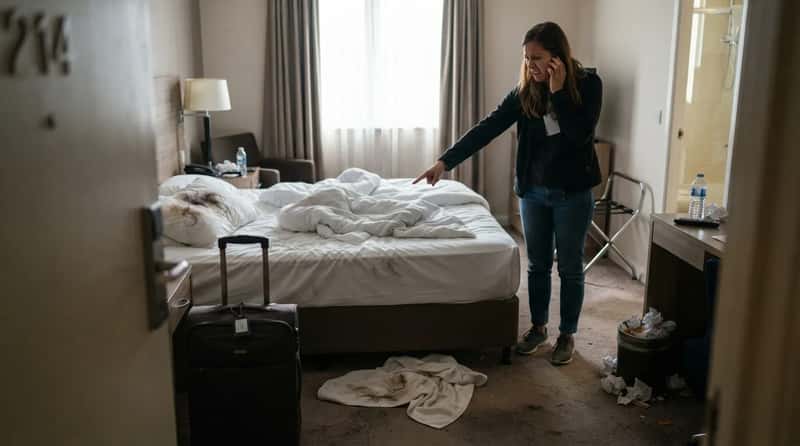
Finding a dirty room the moment you arrive is a gut punch – and it sets a negative tone that’s nearly impossible to recover from without immediate, dramatic action.
The standard response is to re-clean the room immediately, preferably with the guest present to confirm the standard is met. Anything less and the guest won’t believe the room is actually clean.
The backup plan: move the guest to a pre-inspected room right away, paired with a sincere apology and a goodwill gesture – no delays.
Managers who try to simply “freshen up” a seriously dirty room instead of moving the guest are gambling with a 1-star review. The smartest hotels offer the room move before the guest even asks for it.
The next complaint is one that keeps night managers on edge every single shift…
#3 – Safety and Security Concerns
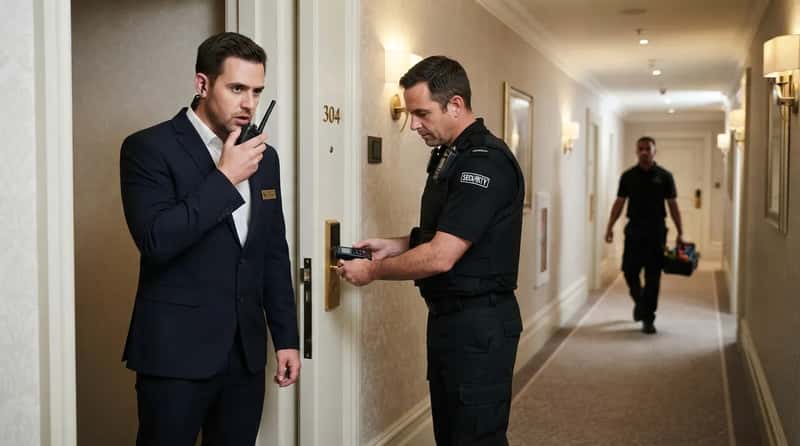
A guest who reports a safety issue – suspicious activity, feeling watched, a broken security latch, someone lurking on their floor – triggers an immediate, all-hands response.
If the issue is urgent – safety, flooding, electrical failure – the front desk escalates immediately to the duty manager and engineering.
There’s no queue for this one. It goes straight to the top.
Safety and security issues include broken locks, suspicious activity, or missing belongings – and all of them get the same response: immediate escalation, no exceptions.
A guest who doesn’t feel safe is a guest who will never come back – and will tell everyone they know.
A safety concern is categorized separately from every other complaint type and demands direct manager involvement at once.
Number 2 is the complaint hotel managers almost never talk about publicly – and it’s more common than you’d think…
#2 – Overbooking and “Walking” a Guest to Another Hotel
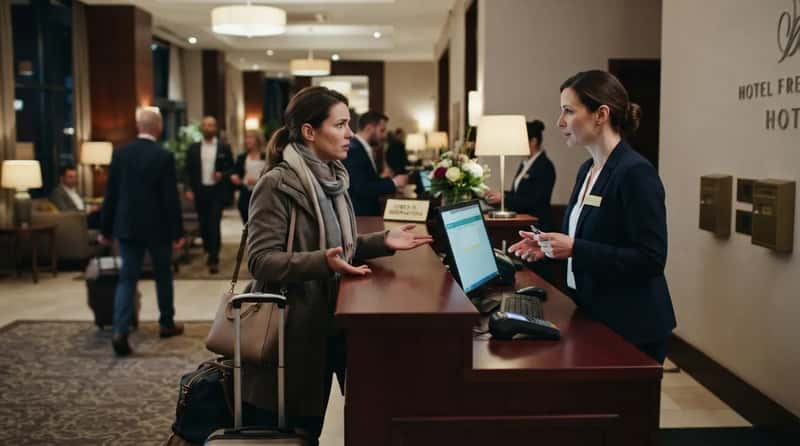
This is the complaint that puts managers in damage-control mode before it even happens. When a hotel is overbooked and a confirmed guest has no room, that’s a crisis – not an inconvenience.
Overbooking sits alongside cleanliness, noise, and billing errors as one of the most frequent and damaging complaints in hospitality. And unlike most complaints, this one can’t be fixed with a goodwill gesture inside the building – the guest has to leave.
Worth Knowing
- (cite index=”17-9″>Hotels routinely overbook by 5 to 15% because they know a percentage of guests won’t show up.
- (cite index=”16-5,16-6″>There is no federal law that protects hotel guests who get walked, since the US Department of Transportation regulates airlines, not hotels.
- (cite index=”13-1,13-2″>Industry standard is that the hotel should relocate you to a comparable alternative property and cover the cost of transportation to the new hotel.
- (cite index=”16-10″>Walked Bonvoy members at luxury brands can receive $200 cash plus 90,000 points.
The ideal is a pre-approved “recovery threshold” – a dollar amount or set of gestures, like free breakfast, late checkout, or restaurant credit, that any front desk employee can offer without escalating to management. This reduces wait times, lowers frustration, and shows the brand trusts its team.
When a walk happens, the minimum professional response is a full refund, a comparable room at a nearby hotel paid for by the property, and transport. Managers who offer less than that are handing that guest directly to a competitor – permanently.
And then there’s #1. This is the complaint hotel managers say hits hardest, escalates fastest, and is most likely to end up on the news if mishandled…
#1 – Repeat Complaints That Were Never Fixed

Here’s what most guests don’t know: the complaint that truly terrifies hotel managers isn’t noise, or a dirty room, or even an overbooking. It’s the complaint that was already raised once – and ignored.
Knowing the hotel is actively handling the situation resolves much of the frustration. Silence is what turns a minor inconvenience into a formal complaint.
Missing records cause miscommunication and repeated explanations, which only adds to the guest’s irritation. When a guest has to complain about the same problem twice, they’re no longer frustrated – they’re furious, and furious guests write long, detailed, damaging reviews.
Since a large majority of travelers now check review sites before booking, a public response shows every future guest exactly how a hotel handles problems.
A single unresolved repeat complaint can cost a hotel dozens of future bookings. Managers who track, document, and follow up on every complaint – not just the loudest ones – are the ones who keep their properties off the worst-of lists.
The Bottom Line

Hotel managers aren’t waiting for complaints to snowball. Responding fast is one of the most effective ways to protect a hotel’s reputation and its bottom line.
These 16 issues don’t get fixed immediately because managers are people-pleasers. They get fixed immediately because guests who experience great recovery often become more loyal than guests who never had a problem at all.
The real secret isn’t avoiding every mistake – it’s how fast and how well a team responds when something goes wrong.
Next time something’s off in your room, speak up. The managers worth their salt actually want to know before you check out, not after you post the review.
Bonus: The Exact Words That Get Any Complaint Fixed Faster

Front desk staff can only offer so much on their own – real speed comes from getting a duty manager involved right away, without sounding demanding.
Here’s the move insiders actually use:
- Ask calmly for “the manager on duty” instead of just telling the front desk agent about the problem – this routes you past the first tier and straight to someone with authority to act.
- Put the issue in writing too – a quick message through the hotel’s app or a follow-up email – so there’s a timestamped record if it isn’t resolved fast.
- Mention your loyalty program status or confirmation number up front; most property systems flag member accounts for priority handling.
- If nothing happens within 15-20 minutes, calmly ask for the issue to be logged in your reservation notes – staff know an unresolved, documented complaint reflects on their shift.
This combination works because it mirrors exactly what triggers a hotel’s own internal escalation protocols – it just puts the guest in control of when that trigger gets pulled.