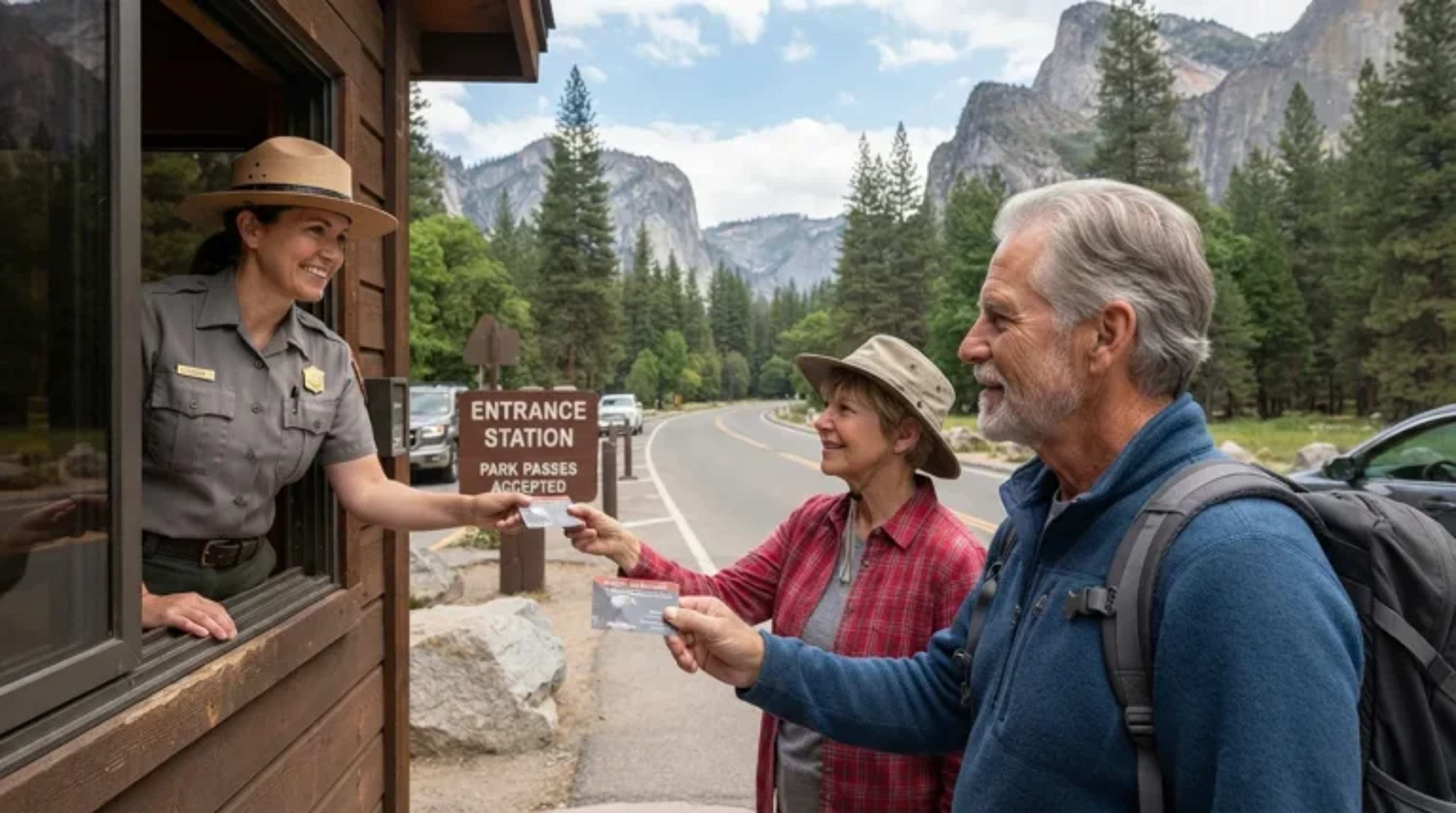
You’ve seen the photos. Aunt Carol in Santorini. Your old coworker posting from a river cruise in Portugal for the third time this year. It looks like every retiree in America suddenly won the lottery, and if you’re still working, it stings a little.
But when you actually ask retirees how they’re pulling it off, the answers aren’t what you’d expect. It’s rarely about being rich. It’s about a handful of strategies most people never hear about until they’re standing in an airport lounge next to someone who explains it over a free glass of wine.
They’re Traveling More Than Any Generation Before Them

This isn’t a vibe. It’s a measurable shift. A national poll of nearly 2,000 older adults found 70 percent are planning trips this year, up from 65 percent in 2024.
Here’s the number that really raised eyebrows inside the travel industry. For the first time in AARP’s tracking history, the number of trips actually taken in 2024 surpassed the average number of trips people had even planned to take. Retirees aren’t just talking about travel anymore. They’re outpacing their own predictions.
Fast Facts
- 70% of older adults surveyed are planning a trip this year, up from 65% in 2024.
- Nearly 2,000 older adults were surveyed nationwide.
- For the first time on record, actual trips taken outpaced the trips people had planned.
The Secret Weapon Nobody Talks About: Home Equity

Here’s the part nobody puts on a postcard. Homeowners aged 62 and over are sitting on a record $14.66 trillion in housing wealth, according to the National Reverse Mortgage Lenders Association index for the third quarter of 2025. That’s an almost unimaginable pile of untouched money.
Most retirees never connect that number to a plane ticket. But the ones who travel constantly usually did the math. They quietly downsized, refinanced, or tapped a small slice of that equity instead of leaving it all locked in the walls of a house they barely use anymore.
The “Grey Gap Year”: Free Rent in Exchange for a Dog and a Doorbell

This one sounds made up, but it isn’t. A growing group of recent retirees has coined the term “grey gap year” to describe a stretch of time spent exploring new places right after leaving the workforce. Instead of hotels, they’re staying in someone’s actual house.
The setup is simple and oddly wholesome. Travelers stay in a home for free in exchange for basic pet and property care while the owners are away. House-sitting used to skew younger, but it’s now common among people 50 and up. A retired couple can spend six weeks in a Tuscan farmhouse or a New Zealand cottage, and their only job is feeding a golden retriever twice a day.
They Fly Business Class Now – And They Don’t Feel Guilty About It

This is where retiree travel gets a little controversial. Plenty of people who spent decades wedged into economy seats have flipped the switch entirely, and they’re not apologizing for it.
One travel company founder who works with retirees put it bluntly: “Our median age is 69.5. It’s like you built up this nest egg your whole life. It’s time to enjoy it.” His clients still pinch pennies on plenty of things, he says, but not the flight itself. “At our age, we just fly business. It’s like too far and too long.” It’s a strange kind of retirement math: save hard on the small stuff, then splurge without hesitation on the seat that gets you there.
Points and Miles Became a Quiet Retirement Hobby

Somewhere along the way, credit card rewards stopped being a millennial obsession and turned into a full-blown retiree pastime. Travel hacking, stacking points, miles, and card perks to squeeze out free flights, has quietly become one of the most popular ways retirees stretch a travel budget. It’s the financial version of couponing, except the payoff is a trip to Rome instead of a discount on cereal.
It’s not always smooth sailing, though. Aggressive tactics can backfire, leading to account shutdowns, clawbacks, or flat-out denials from card issuers. The retirees who do this well tend to stick with one or two cards for years instead of chasing every sign-up bonus, because banks reward loyalty far more than they reward hustle.
Worth Knowing
- Travel hacking means stacking points, miles, and card perks for free or discounted flights.
- Chasing too many sign-up bonuses can trigger account shutdowns or bonus clawbacks.
- Retirees who succeed tend to stick with one or two cards for years instead of hopping between offers.
Slow Travel: Why a Week Turned Into a Month

Ask a retiree how long their last trip lasted and you might be surprised. Programs built specifically for retirees are seeing trip lengths stretch dramatically compared to a decade ago.
From my perspective, it does seem like trips are increasing in duration.
Founder of a month-long international living program for retirees
His company requires a minimum stay of one month, and the pattern held up across his client base. Instead of two rushed weeks in Italy, retirees are renting an apartment for thirty days, shopping at the local market, and living like a resident instead of racing through a checklist of landmarks.
The Senior Discounts Almost Nobody Actually Uses
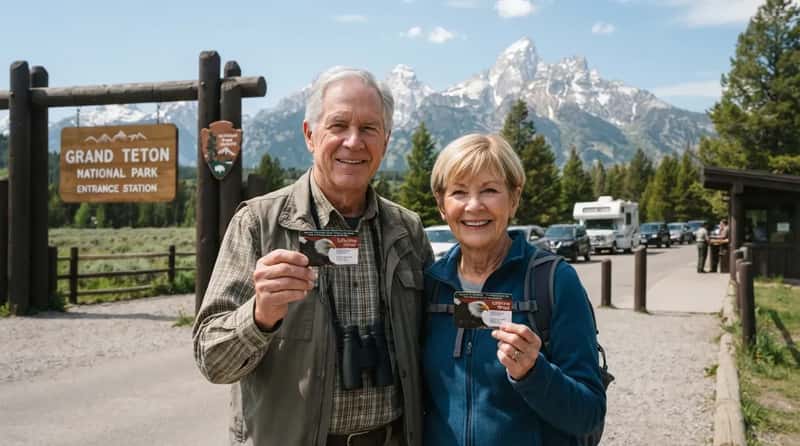
This is the part that makes younger travelers a little jealous. Some of the biggest savings in retiree travel aren’t secret at all. They’re just sitting there, unclaimed, because most people never bother to ask.
Amtrak gives seniors 10 percent off, and U.S. seniors can grab a lifetime National Parks pass for $80. An $80 pass that unlocks every national park for the rest of your life sounds like a typo. It isn’t, and most retirees who travel constantly bought theirs on day one of retirement.
Quick Compare
- Amtrak: 10% off most fares for riders 65 and older.
- National Parks lifetime senior pass: $80, covers every federal park and public land, forever.
- National Parks annual senior pass: $20 a year, for anyone not ready to commit to the lifetime version.
National Parks Quietly Became the New Bucket List

Forget Paris for a second. The most requested destination among retirees right now isn’t overseas at all, and that surprises almost everyone who assumes retirement travel means Europe or nothing.
North America’s national parks are the single most popular retiree travel destination, with 44.7 percent of seniors saying they want to explore these protected lands, from Yosemite and Yellowstone to Banff and Jasper. It’s cheaper than a European vacation, skips the passport hassle for most stops, and pairs perfectly with that $80 lifetime pass nobody talks about enough.
Grandparents Are Quietly Bankrolling the Family Vacation

Here’s an angle most people miss entirely. A huge share of “retiree travel” isn’t retirees traveling alone. It’s retirees footing the bill for everyone else.
Grandparents spent an average of $5,205 on multigenerational family travel in 2024, making it one of the biggest single travel categories in retirement. Those beach house photos with three generations crammed onto one dock? There’s a decent chance grandma paid for the rental.
The Ones You Never See: The Quiet Majority Left Behind

Here’s the part social media conveniently skips. For every retiree posting from Portugal, there’s a much larger group who wanted to go and simply couldn’t make the math work.
Cost is the biggest barrier to travel for 45 percent of retirees, followed by health and weather concerns. Retiree households led by someone 65 or older spent an average of $61,432 in 2024, and with housing, healthcare, and food already eating most of that budget, travel is often the first thing to get squeezed out. The travel boom is real, but it’s concentrated among a specific slice of retirees, not the whole generation.
At a Glance
- 45% of retirees say cost is the single biggest barrier to travel.
- Health concerns and weather round out the next most common obstacles.
- Average retiree household spending sits at $61,432 a year, mostly absorbed by housing, healthcare, and food.
The Real Difference Isn’t Money – It’s Confidence

This is the twist that surprised even the researchers. When you compare retirees who travel constantly to those who don’t, the gap isn’t primarily about bank balance. It’s about whether they ever actually sat down and planned for it.
Among people who intentionally built travel into their retirement plan, 89 percent went on to travel, compared with just 58 percent of the national comparison group. More than a third of that broader group are either guessing at their travel budget or haven’t thought about it at all. The retirees who seem to travel effortlessly usually aren’t secretly wealthier. They just stopped treating travel as an afterthought years before they actually retired.
So the mystery isn’t really a mystery. It’s home equity nobody taps, points nobody redeems, discounts nobody asks for, and a plan nobody bothered to write down. The retirees jetting off every month simply figured that out first. Everyone else is still waiting for permission they never needed.