Most people assume a hotel room’s price is fixed the moment it’s listed, like a sticker on a shelf.
The truth is stranger: that number is the output of an aggressive, data-hungry machine that recalculates constantly, sometimes by the hour, and most guests never notice it happening.
The hospitality industry has quietly built one of the most sophisticated perishable-pricing systems on earth, and it treats every unbooked room as an emergency, not an inconvenience.
Here’s exactly how that machine decides what an empty room is worth – and why the price on your screen can shift before you even finish reading it.
#18: The Room That Expired at Midnight

A hotel room is perishable. The instant midnight passes on an unsold night, that revenue is gone forever – there’s no warehouse, no markdown rack, no next-day clearance sale.
That single fact shapes every pricing, forecasting, and distribution decision a hotel makes, because nothing about an empty room can be fixed later.
Time is always running out, and everything else in this article builds from that one pressure.
So why not just slash prices to zero and fill every room instantly? The real answer is far more calculated, and it starts with what a room costs just to sit there, empty.
#17: Fixed Costs Don’t Sleep
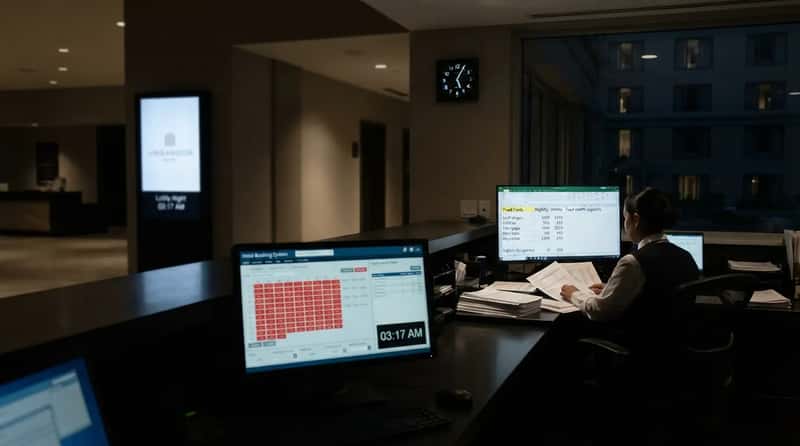
A hotel room that goes unsold on any given night still carries the exact same fixed costs as a room sold at full price – it just brings in nothing.
Hotels can’t scale supply up or down the way most businesses do when demand spikes or dries up. Staff wages, utilities, insurance, and mortgage or lease payments arrive no matter whether occupancy sits at 20% or 100%.
That’s why selling a room for almost nothing usually still beats leaving it dark. Almost.
That one word is what turns pricing an unbooked room into an art form instead of a fire sale – and finding the floor takes real data, not guesswork.
#16: The Revenue Management Revolution

Revenue management is the science of pricing the right room for the right guest at the right time, through the best channel available. It leans on historical data and real-time conditions, including a hotel’s online reputation, to make that call correctly.
It blends demand forecasting, pricing strategy, and inventory control to squeeze the maximum revenue possible out of a fixed number of rooms.
Fast Facts
- Airlines pioneered revenue management in the 1970s and 1980s.
- Hotels adopted the discipline in the 1990s and never looked back.
- It combines demand forecasting, pricing strategy, and inventory control.
- Today it’s a core function at hotels of every size, not just major chains.
The metrics behind it are specific and unforgiving, and one number matters more than all the rest combined.
#15: RevPAR – The Number Hotels Obsess Over

RevPAR measures the revenue generated by one room, whether it sold or not. You can calculate it two ways: divide total room revenue by total available rooms, or multiply ADR by the occupancy rate.
Unlike ADR alone, RevPAR accounts for every empty room too, which makes it the more honest number. Every hotelier’s real job is pushing this single figure upward.
RevPAR is the scorecard, and it punishes both extremes equally – rooms priced so high they sit empty, and rooms priced so low they fill but barely turn a profit.
Revenue managers spend entire careers hunting for the narrow sweet spot between those two failure modes, and the real-world numbers show exactly how hard that balance is to hold.
#14: What the 2025 Numbers Actually Showed

Fresh CoStar data shows 2025 marked the first full-year decline in both U.S. hotel occupancy and RevPAR since 2020, at the height of the pandemic’s disruption to travel. Occupancy slipped to 62.3% (down 1.2% year-over-year), and RevPAR fell to $100.02 (down 0.3%), even as ADR crept up to $160.54 (up 0.9%).
Global hotel occupancy is projected to hold steady or dip slightly. U.S. occupancy is forecast at roughly 63% for the year, while global occupancy is expected to land in the high-60s, around 68-70%, as new supply growth balances out cooling leisure demand.
Translate that into plain terms: on an average night, more than one in three U.S. hotel rooms sits completely empty. That’s an enormous pool of perishable inventory in motion, every single day, across the entire country.
Cities, however, tell wildly different stories – and the gap between the best and worst performers reveals exactly why pricing strategy matters so much.
#13: The Market-to-Market Divide

Among CoStar’s top 25 markets, New York City posted the highest numbers across the board: 84.1% occupancy, a $333.71 average daily rate, and $280.71 RevPAR.
Las Vegas told the opposite story. ADR fell 4.3% year-over-year to $199.79, while RevPAR dropped 10.9% to $149.13, as the city weathered a tourism slump tied to shifting traveler behavior.
Quick Compare: 2025 Market Performance
- New York City: 84.1% occupancy, $333.71 ADR, $280.71 RevPAR – the strongest market in the country.
- San Francisco: RevPAR jumped 11.8% to $155.84, the biggest gain of any major U.S. market.
- Las Vegas: RevPAR fell 10.9% to $149.13 as leisure demand cooled.
- Houston: Occupancy dropped 8.6% to 58.9%, the steepest decline nationwide.
Both New York and Las Vegas are massive, globally recognized hotel markets, yet their 2025 outcomes look nothing alike. New York’s structural demand – business travel, tight short-term rental supply – kept it packed, while Las Vegas’s dependence on leisure volume left it exposed.
That structural gap is exactly what forces hotels in softer markets to get creative with pricing. And creativity in hotel pricing has a very particular set of tools.
#12: Dynamic Pricing – The Algorithm at the Core

Dynamic pricing is a data-driven approach that adjusts room rates in real time based on demand, booking behavior, competitor pricing, and market trends.
Those changes can happen daily, hourly, or even minute to minute, depending on how fast conditions shift underneath a market.
That’s why refreshing the same hotel search twice in one hour can return two completely different prices. The algorithm isn’t glitching – it detected something: a competitor sold out, a room block just opened up, or search volume spiked in the last fifteen minutes.
The system is fast, but it isn’t infallible. Its biggest vulnerability is soft demand – stretches when even the algorithm can’t find a buyer at any profitable price, and that’s exactly when hotels deploy a second layer of tactics.
#11: Booking Windows and the Waiting Game

Room rates get adjusted continuously based on live data instead of being set once and forgotten. Hotels weigh demand, booking pace, occupancy, competitor pricing, seasonality, and lead time – how many days sit between the search and the arrival date.
As check-in approaches, hotels flip their strategy for any rooms still sitting empty. Prices get lowered to catch spontaneous bookings, but if demand is high and rooms are scarce, hotels raise last-minute prices instead.
The booking window is one of the most powerful signals a hotel has. A search made 90 days out gets treated completely differently than one made 18 hours out.
In the first case, the hotel is competing for a planned trip. In the second, it’s competing for a stranded traveler who needs a bed tonight – and each scenario calls for a different price, often through a different channel entirely.
#10: Supply and Demand in the Local Market

When a market has more rooms than travelers want on a given night, rates soften to fill beds. When demand outstrips supply – a conference, a holiday weekend, a sold-out stadium event – rates climb fast, because every unsold room represents revenue that can never be recovered later.
Hotels build pricing calendars around predictable seasonal rhythms: ski season in the mountains, spring break in Florida, summer along the coast. Revenue managers layer in recurring events too – trade shows, festivals, graduation weekends, sports schedules that repeat year after year and create reliable demand bumps.
A convention-city hotel might hit 95% occupancy one week and crash to 40% the next, purely because the conference left town. Pricing teams track those event calendars years in advance, and rates for a big event climb almost immediately, often long before the rooms come close to filling.
Not every demand spike is predictable, though. That’s where modern AI tools are changing the entire game.
#9: How AI Changed the Forecast

Hotels that switch to revenue management software see RevPAR climb by an average of 7% to 20%. That improvement comes from spotting demand spikes manual pricing would miss – a local event, a conference, a surge in bookings that historical patterns never predicted.
The same technology also discounts strategically during dead periods, filling rooms that would otherwise sit empty for nothing. Automated forecasting, pricing, and upselling let hotels lift occupancy, increase guest spending, and squeeze more revenue from every room they’ve got.
At a Glance: What AI Actually Tracks
- RevPAR gains of 7% to 20% after adopting revenue management software.
- Competitor rates and OTA availability, updated in real time.
- Flight search volume and local event listings.
- Weather forecasts that can shift last-minute travel demand.
A model might notice a concert was just announced and flight searches to the city jumped 40% in six hours, then move rates before a human revenue manager even opens a laptop. But technology has a shadow side: it trains travelers to behave differently, and that shift is now reshaping the entire pricing game.
#8: The Discount That Backfires

Dropping prices as the stay date nears boosts visibility and catches late demand. It works, but it also cuts into margin, and it can quietly train guests to wait for a discount instead of booking early.
Good pricing balances short-term revenue capture against long-term rate integrity. Consistent underpricing erodes brand perception, while overpricing reduces occupancy and market share.
This is the central tension in pricing unsold rooms. Slash the rate and you fill the bed, but you also teach every future guest that patience pays off.
Some revenue managers call this “training your guests to never book early,” and they consider it one of the costliest mistakes in the business. That’s exactly why sophisticated hotels would rather sell an empty room through a channel no one can see than put a visible discount on Booking.com.
#7: The Secret of Opaque Channels

Hotels also lean on opaque distribution channels like Hotwire or Priceline, where guests book a room without knowing the brand until after they’ve paid.
The rate stays hidden from the public market, so the brand’s published price integrity holds steady even while the room fills at a deep, invisible discount.
It’s a quiet workaround to one of hotel pricing’s biggest contradictions: you need to fill the room, but you can’t let your loyal, full-price guests watch you give it away. Opaque channels let hotels sell distressed inventory without the brand damage a visible fire sale would cause.
But channels are only one piece of the puzzle. What you bundle with the room can be just as powerful as the price itself.
#6: Bundling to Protect Rate Perception

Another strategy is packaging unsold rooms with meals, spa access, or tickets to local attractions. Bundling protects perceived value while still shifting occupancy, especially during slow shoulder periods.
A room that goes empty doesn’t just lose its own rate value – it also loses the secondary spending a guest might have dropped in the restaurant, on parking, or at the bar.
A package feels psychologically different from a discount. Guests see a $200 room-plus-breakfast deal as good value, while a $200 room that used to list at $280 feels like a warning sign that something’s wrong with the hotel.
Bundling hides the price cut inside added value, and it captures ancillary spending an empty room would generate none of. But bundling is reactive – the sharpest hotels try never to need it, which requires forecasting demand correctly in the first place.
#5: Misforecasting – The Root Cause of Empty Rooms

Unsold rooms stem from two preventable problems: demand misforecasting, and cancellation policies that fail to protect revenue once a booking is locked in. Retail solved a version of this years ago with predictive analytics and flexible return policies; hospitality is only beginning to catch up.
Seasonal swings in travel demand sound predictable on paper but are brutal to plan around in practice. A beach property in Florida might run 85% occupancy in July and struggle to crack 45% in January.
Forecasting errors don’t just leave rooms empty – they cause hotels to price incorrectly weeks or months in advance. A hotel that predicts strong demand and holds rates high may arrive at check-in with a third of its rooms dark, while one that underestimates demand and discounts early fills up but leaves real money behind.
Getting the forecast right is worth more than any downstream pricing trick. And one of the most aggressive tools hotels use to hedge against a bad forecast is one that most travelers find infuriating when it goes wrong.
#4: Overbooking Is a Pricing Strategy, Not a Mistake
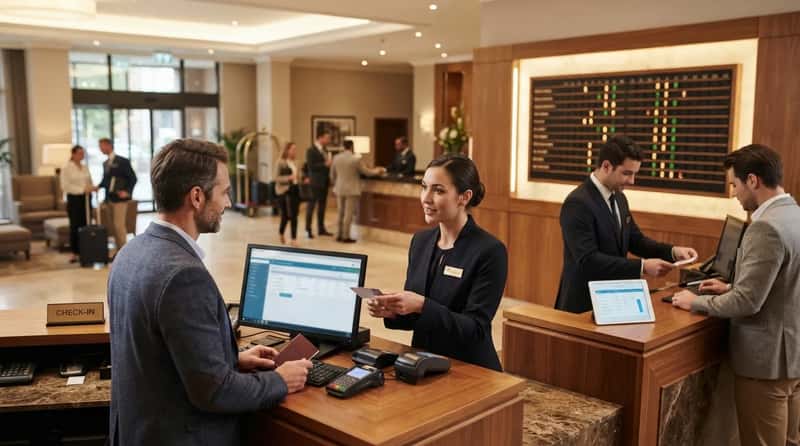
Overbooking to offset expected cancellations is a standard revenue management practice – not an accident, and not a failure of operations.
It shows up most clearly during periods of demand volatility, which is exactly what revenue management exists to handle. A local event might drive a sudden spike that a static rate card would completely miss, while a shoulder period might reward strategic discounting that drives just enough extra occupancy to beat a flat rate.
Overbooking is essentially a calculated bet against cancellations. Hotels track historical cancellation rates by segment, day of week, and lead time – if 12% of Tuesday-in-February reservations typically cancel, the hotel books to 112% and expects to land near 100%.
When the model is right, it’s invisible. When it’s wrong, a guest gets walked to another property with the hotel covering the cost, and that financial exposure is exactly what keeps overbooking disciplined rather than reckless.
#3: Length-of-Stay Controls You Didn’t Know Existed

Dynamic pricing, same-day offers, length-of-stay promotions, and carefully managed distribution channels all work together to fill vacant inventory without sacrificing long-term rate value.
By adjusting rates in real time against demand, competitor moves, seasonality, and booking behavior, hotels fill soft periods and still capture higher margins during spikes.
Length-of-stay restrictions are a lever most guests never notice. A hotel might require a three-night minimum over a high-demand weekend, not to turn away two-night guests, but because a two-night stay arriving Thursday creates an orphan gap – a single unsellable Wednesday night sitting dark and earning nothing. The minimum stay requirement erases that gap entirely.
Flip it around midweek, and a hotel with soft Monday-Tuesday demand might offer a steep discount specifically to guests who extend a weekend stay into those nights, turning a perishable gap into occupied revenue. These controls run quietly in the background, shaping what you see – and what you don’t – every time you search.
#2: The Real Cost of Leaving a Room Empty
Every unsold room represents permanently lost revenue, which is exactly why hotels need a real plan for managing vacancies. A clear strategy protects profit, smooths out demand swings, and squeezes value out of every sellable night.
HotStats’ 2025 data shows global RevPAR has grown 19% since 2019 – but distribution costs per available room have surged 25% in that same stretch.
Worth Knowing
- Global RevPAR has grown 19% since 2019.
- Distribution costs per available room have surged 25% over the same period.
- In the Americas, only about 18 cents of every extra revenue dollar reached profit in 2025.
- That’s down sharply from a historical flow-through average near 50 cents.
That surge is the hidden pressure behind modern hotel pricing. Every channel a hotel uses to sell a room – an OTA, a GDS, a metasearch engine – takes a commission, and as distribution costs rise faster than RevPAR, filling an empty room through a third party gets less and less profitable.
A room sold at a discount on an OTA can net a hotel almost nothing after commission. That math is pushing more properties toward direct-booking incentives, loyalty programs, and yes, letting some rooms go dark rather than sell them at a net loss – which brings us to the single most counterintuitive truth in hotel pricing.
#1: Sometimes the Smartest Price Is No Sale at All

In softer periods, flexible policies can stimulate bookings and improve conversion without relying solely on price cuts. Effective pricing always balances short-term revenue capture with long-term rate integrity.
When a hotel is nearly full, it charges a premium – what’s known as the “last room rate.” When it’s empty, it discounts strategically through direct channels only, avoiding the OTA discounting that damages rate perception.
The most sophisticated revenue managers sometimes make a deliberate call not to sell a room at all, rather than sell it at a price that damages the hotel’s long-term rate position. If a room sells for $49 on a discount OTA, every future guest anchors their price expectation at $49 – and the short-term gain can cost far more than the one lost night.
Rate integrity – protecting your published price floor – is the long game separating hotels with sustainable margins from those perpetually chasing occupancy at the expense of profitability. That’s the pressure that makes every empty room a live decision, not a leftover.
The Bottom Line

Hotel room pricing was never a number plucked from a spreadsheet. It’s a live, real-time calculation that weighs fixed costs, local demand, booking pace, competitor availability, cancellation risk, distribution commissions, and long-term brand value – sometimes recalculated by the minute.
U.S. occupancy is running around 63% right now, which means on a typical night, more than one in three rooms sits completely empty. Every one of those rooms is a permanent loss that no markdown can recover once midnight passes.
The industry’s answer to that reality is some of the most sophisticated perishable-goods pricing on the planet: opaque channels, length-of-stay controls, AI-driven forecasts, calculated overbooking, and the deliberate choice to let a room go dark rather than poison the price pool for every guest who comes after.
Next time you watch a hotel’s rate change while you’re still sitting on the booking page, you’ll know exactly what you’re looking at – a machine, quietly deciding what your patience is worth.
Bonus: The Free-Cancellation Rebooking Trick

Here’s the move revenue managers rarely mention out loud: always book the fully refundable direct-with-the-hotel rate, then keep watching the price after you book.
Because dynamic pricing moves constantly, the same room often gets cheaper as the stay date approaches, and a free-cancellation reservation lets you capture every drop without any penalty.
- Book directly on the hotel’s own website using the “fully refundable” or “flexible rate” option, not a prepaid or OTA rate.
- Set a calendar reminder to re-check that exact room and date every 5-7 days.
- If the price drops, cancel the old reservation and immediately rebook at the lower rate – you keep the same room type with zero fee.
- Do this right up until the free-cancellation deadline listed on your confirmation, usually 24 to 72 hours before arrival, since that’s the window when hotels get most aggressive about filling remaining inventory.
This works precisely because of everything above: hotels would rather quietly rebook you at a lower direct rate than let that room sit empty at midnight or lose you to a discounted OTA listing.
You’re not gaming the system – you’re simply riding the same real-time repricing engine the hotel built for itself, just from the guest’s side of the screen.