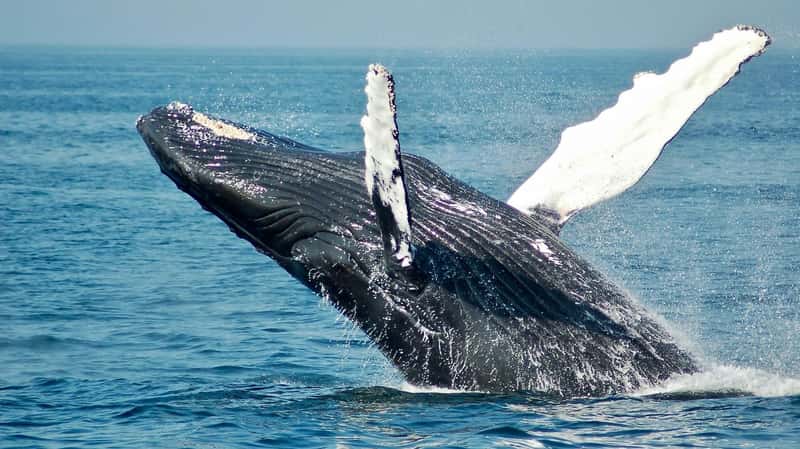
Sightings of humpback whales surge in Rio de Janeiro, fueling demand for whale-watching trips – Image for illustrative purposes only (Image credits: Unsplash)
Rio de Janeiro – Humpback whales are appearing with growing regularity in the waters off this city, a visible sign of the species’ recovery after decades of protection. Their presence in Guanabara Bay and along the nearby coast has drawn renewed attention from residents and visitors alike. The change reflects both ecological progress and a fresh opportunity for people to witness these animals during their seasonal travels.
Population Numbers Climb Sharply
Decades of commercial whaling had reduced humpback numbers in the region to roughly 2,000 individuals. Today the population stands near 35,000, a level close to pre-whaling estimates. The rebound unfolded over about 40 years under international safeguards that halted large-scale hunting.
Enrico Marcovaldi, co-founder of the Humpback Whale Project, described the trend in straightforward terms. “It’s wonderful,” he said. “It shows that the whales are making a recovery, are healthy and thriving, and hopefully they’ll continue to do so.” The 1982 decision by the International Whaling Commission to pause commercial whaling from the 1985/1986 season onward played a central role in the turnaround.
Sightings Become More Common
Observers now report whales in areas where they had been scarce for generations. The animals follow long migration routes that take them across oceans, often retracing paths learned from their mothers. In Rio’s waters the sightings coincide with the annual northward movement that brings the whales closer to shore.
The increase has been steady rather than sudden, yet the difference is noticeable to those who spend time on the water. Local accounts describe more frequent surface activity and clearer views of the distinctive tail flukes and blows. This pattern aligns with the broader recovery documented by researchers monitoring the South Atlantic population.
Operators Launch New Excursions
Tourism businesses have moved quickly to meet rising interest. Louise Raulais, who runs the Rio Ocean Club with partner Theo Andrade, began offering small-group sailboat trips this year. The outings carry between five and 10 passengers and always include a biologist who explains the animals’ behavior and habitat needs.
Raulais noted the emotional pull these encounters can create. “These animals are so iconic and charismatic that they have the power to transform people, to change the way they see the world,” she said. The trips combine observation with education, aiming to foster greater awareness of ocean conservation. Demand has grown as word spreads among travelers seeking wildlife experiences that feel both accessible and meaningful.
Early reports indicate the excursions fill steadily during peak migration periods. Participants often return with a stronger sense of connection to marine life, according to those running the programs. The format keeps groups small to limit disturbance while maximizing the chance of close yet respectful encounters.
What the Trend Means Going Forward
The combination of ecological recovery and new viewing options creates a rare alignment for coastal tourism. Whales that once faced near-elimination now offer a living example of successful protection measures. Continued monitoring will show whether the population stabilizes or grows further.
For now, the surge in sightings gives both scientists and the public a tangible measure of progress. The animals’ return to familiar waters near Rio underscores how long-term policy decisions can reshape natural landscapes in visible ways. Observers expect the pattern to continue as long as migration routes remain open and protections stay in place.