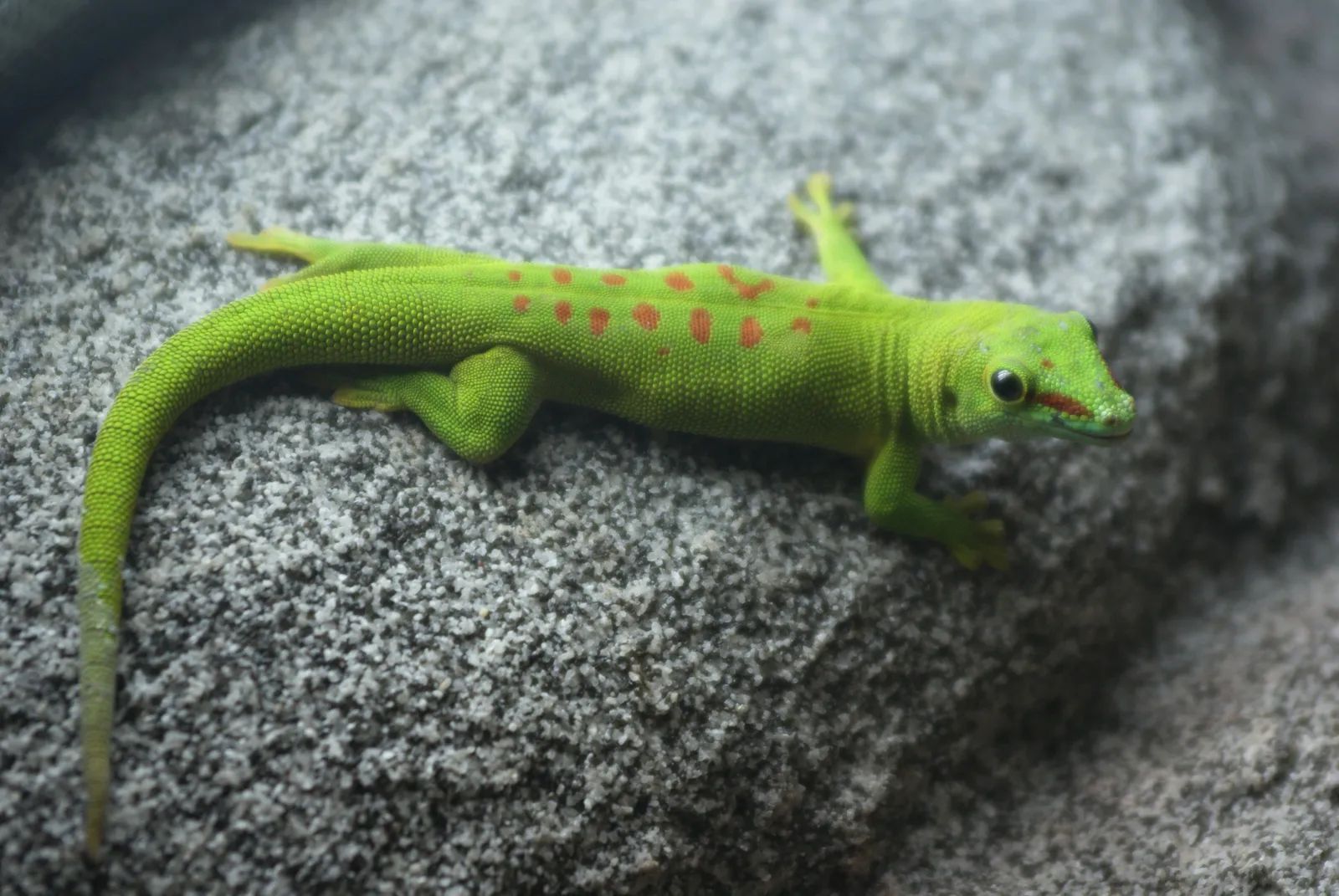
Lizards, snakes, and worm lizards are easy to picture in forests and deserts, but a large share of them spends its days on stone. A recent study found that more than a quarter of the world’s land reptiles rely on rocky habitats such as cliffs, rock outcrops, and karst systems. Those places receive relatively little attention in conservation efforts. ([1])
Why stone matters to reptiles
Reptiles depend on outside sources of heat, and sun-warmed rock gives them a place to bask before they hunt or move on. The same boulders and ledges offer cover from predators, with cracks and crevices serving as refuges. Rocky ground can also be a place to find food, meet other animals, and raise young, according to the study’s account. ([1])
Until now, scientists had no reliable global count of how many reptile species use rocky terrain or how many of them face danger. The reptile order studied covers all lizards, snakes, and worm lizards, which means the findings span a wide range of body shapes and landscapes.
Counting the species that live on stone
To close that gap, the researchers reviewed 9,729 terrestrial species in the order Squamata. For each one, they consulted the IUCN Red List, which records conservation status, habitat needs, and threats. The team’s analysis identified 2,479 species, more than a quarter of those reviewed, that use rocky habitats.
Of those, 1,022 species, about 10.5 percent of the group studied, depended almost entirely on rocks for breeding, shelter, and temperature control. The research team has described the work as the first study to measure the global importance of rocky habitats for reptiles. ([2])
Worth knowing: The pink-tailed worm-lizard, a legless species, is one of the rock-using reptiles highlighted in the research team’s account. ([2])Its inclusion shows that the reliance on rock extends well beyond the lizards most people picture.
A threat that is easy to overlook
Rock use does not guarantee safety. Nearly 30 percent of the species that use rocks, or 676 species, are classified as threatened on the IUCN Red List. Species that depend entirely on rocky habitats were 51 percent more likely to be critically endangered than those that use rocks only occasionally.
Several of the critically endangered rock-dependent reptiles are small and geographically restricted. The rough-bellied round-eyed gecko is native to India’s Western Ghats and Sri Lanka, while the Emirati leaf-toed gecko is the United Arab Emirates’ only endemic vertebrate. ([1])
Why rocks slip through the net
Rocks often appear more durable than forests or other living habitats, and the researchers suggest that impression may explain why they draw less attention. Some rocky areas are protected by accident, since they sit within rugged terrain that falls inside protected zones. Rocky habitats are rarely given formal protection or managed as habitats in their own right, the researchers wrote. ([1])
Related Stories From Travelbinger


Several questions remain open. The study maps how many reptiles use rocks and how threatened they are, but the available reporting does not describe whether management designed specifically for rock habitats would help these species. Protecting the rocks may prove as important as protecting the surrounding forests, yet that remains a question for future research and policy.
For a group of animals that often goes unnoticed, the study offers a clear message. A rock outcrop may look like scenery, but for one land reptile in four, it is home.