The cabin door seals with a mechanical thud.
You feel it before you hear it.
A tightening. Not in the aircraft. In you.
And yet – you’re calm. Because you chose the aisle. You always choose the aisle. You tell people it’s the legroom. You tell people it’s the bladder. You laugh it off, self-deprecating and breezy, because the real answer lives somewhere deeper and darker and far less socially acceptable at 30,000 feet.
The real answer is this: you need to know you can leave.
We are a civilization of people who have learned to wear their coping mechanisms like carry-on luggage – compact, practiced, always within reach. We perform freedom while quietly, obsessively engineering it. We book the aisle. We sit near the exit at restaurants. We park facing out. We keep one foot hovering, always, just over the threshold of escape.
The identity gap lives right there. In that hover. Between the person who says “I just like the aisle” and the person who knows – knows – that the wrong seat assignment could unravel the whole carefully constructed fiction of being fine.
1. The Autonomous Exit
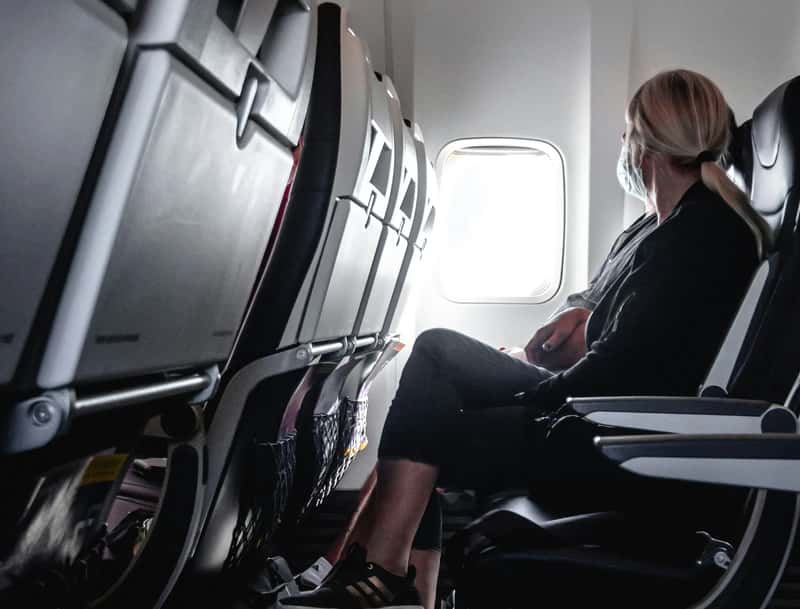
One concept psychologists use to explain the aisle-seat compulsion is “autonomous exit” – in simple terms, the need to maintain the ability to leave a situation freely, without asking permission or navigating obstacles.
It sounds clinical. It isn’t.
It’s the lived sensation of knowing that if everything goes sideways – emotionally, physically, existentially – you have a lane out. The aisle seat represents an escape route. Even if you have no intention of leaving, just knowing you could provides immense psychological comfort.
This isn’t weakness. It’s wiring. Ancient, adaptive, deeply intelligent wiring that helped your ancestors survive.
The problem is your ancestors weren’t crammed into a pressurized aluminum tube hurtling over the Atlantic at 550 miles per hour. The threat response is the same. The threat is not.
The aisle seat isn’t about convenience – it’s about the quiet, learned certainty that you might need to leave, and nobody should be able to stop you. That sentence deserves to sit in the silence for a moment.
2. The Control Architecture
You are not a control freak. You are a person operating inside an environment designed to strip you of control at every turn.
Seat selection is, in the words of psychologist and University of Washington professor Jonathan Bricker, Ph.D., “a rare opportunity to have some control over your environment when traveling” – and he calls that “very significant for the traveler.”
Significant is doing heavy lifting in that sentence.
What it really means is this: in a world where the altitude, the speed, the turbulence, the delay, the stranger’s elbow, the recycled air – none of it is yours to govern – you found one lever. One small, moveable lever of agency. And you pulled it.
Performance psychology specialist Sam Wones confirms this pattern runs deeper than seat preference, describing it as a reflection of “a need for control in environments where individuals feel they lack it.”
You are not controlling the plane. You are controlling your nervous system’s relationship to the plane. That is a completely different, and entirely reasonable, act of self-preservation.
3. The Introvert’s Perimeter
There is a spatial grammar to how introverts move through the world. Edges. Peripheries. Positions that offer sight lines and buffer zones.
When stuck in a large group of people for hours, introverts feel physically uncomfortable and tend to want to stay on the periphery, maintaining an easy escape route – even if it’s just in their heads – avoiding being surrounded by people or objects on all sides. The aisle seat checks those boxes more than any other.
The middle seat is a kind of sensory imprisonment for the introvert. Two bodies. No exit. Nowhere for the energy to go but inward, where it ricochets and builds.
The aisle offers a psychological membrane. A thin but crucial one. For some, the aisle seat minimizes social discomfort – it offers a way to avoid the need for excessive social interaction that can come with being sandwiched between two passengers.
The traveler in seat 14C isn’t being antisocial. They’re being precise.
4. The Power Position
Not all aisle-seat psychology is about fear. Some of it is quietly, unapologetically about dominance.
In a very real sense, the aisle-seat passenger controls their seatmates – window and middle passengers need to ask permission to use the bathroom – and can set the tone for the entire row’s interaction. They are, in effect, the de facto dictator of the row.
Read that again. Dictator. Even the language is revealing.
Social psychologist Chris Lipp at Tulane University, who studies power dynamics, notes that seat rituals expose how confident we feel in public spaces, explaining that “people who feel more powerful are less sensitive to sitting next to someone” – they’re comfortable with less interpersonal space and less worried about others encroaching.
The aisle-seat chooser who operates from a place of power isn’t anxious. They’re territorial. Same seat, different psychology. Same need – to not be hemmed in – wearing a completely different coat.
5. The Self-Determination Frequency
I need to tell you something personal here.
I once booked a middle seat on purpose. A deliberate experiment in what it felt like to surrender the perimeter. Forty-five minutes into the flight, somewhere over the dark middle of the ocean, I realized my jaw had been clenched since takeoff. Not from fear. From a low, constant hum of wrongness. The sensation that I was not where I was supposed to be. That I had violated some unspoken contract I had made with myself about how I move through the world.
It turns out that contract has a name.
Self-Determination Theory identifies three basic psychological needs for human wellbeing: autonomy, competence, and relatedness. Of the three, autonomy is the one the aisle seat speaks to most directly – the need to feel that your actions are your own and that you are moving through the world under your own direction.
When that feeling is thwarted, things go sideways in measurable ways. A meta-analysis of 51 studies involving more than 11,000 participants found a large and consistent negative correlation between perceived control and both trait anxiety and specific anxiety disorders. The less control people feel they have over their environment, the more anxious they tend to be.
My clenched jaw was data.
6. The Claustrophobic Undercurrent
We don’t always name it correctly.
We say “I don’t like being cramped.” We say “I need space.” We don’t say: I experience a measurable physiological panic response when I cannot identify a clear path to an exit.
But that is precisely what is happening for a significant slice of aisle-seat loyalists. Claustrophobic people are not frightened of enclosed spaces per se, but of what could happen in the enclosed space. A subjective sense of being trapped features in the accounts of most claustrophobic people.
One study indicates that anywhere from five to ten percent of the world population is affected by severe claustrophobia, but only a small percentage of these people receive any kind of treatment for the disorder.
Which means the rest of us are self-medicating with seat selection.
Many experts who have studied claustrophobia claim it consists of two separable components: fear of suffocation and fear of restriction. Both of those fears are answered – quieted, soothed, temporarily resolved – the moment you lower yourself into an aisle seat and feel the open corridor beside you like a door left deliberately ajar.
7. The Cover Story
We are very good at translating our real feelings into something more palatable.
“We rarely tell people the real reason we need the aisle seat. ‘I have a small bladder’ is socially acceptable. ‘My nervous system requires the knowledge that I can exit this metal tube at a moment’s notice’ tends to derail the conversation.”
And so we perform the smaller story.
The cover story is comfortable. The cover story doesn’t require anyone to sit with the weight of your anxiety over airport coffee. The cover story gets you the seat without the conversation.
But cover stories carry a cost. Every time the preference is explained as a bladder issue, there’s a participation in the same minimization that has always made real feelings invisible.
The aisle seat is a truth told sideways. And the sideways truths are the ones that accumulate. That calcify. That eventually define the architecture of an entire interior life built around the appearance of being fine.
8. The Exit Strategy in Relationships
Here is where it gets uncomfortable.
The psychology of the aisle seat does not stay on the plane. This need for autonomy often extends way beyond airplane seats – manifesting in preferences for jobs where one can set their own schedule, frustration when group projects slow things down, and irritability when plans change without input.
And in relationships.
The same pattern shows up in how people choose restaurants – near the door, please – where they park – easy exit preferred – and even in relationships, where they might keep one foot out the door “just in case.”
There is a thin line between protecting your autonomy and building a life where no one can reach you. Many people have walked that line for years.
The question that surfaces, quietly, is whether the exit strategy is a coping mechanism or a way of life. Whether the need to know you aren’t trapped has quietly trapped you – inside a radius of controlled distances, managed attachments, and seats that always, always face the door.
9. The Strategic Planner Persona
Not all of this is shadow work. Some of it is genuinely admirable.
Performance psychology specialist Sam Wones describes aisle-preferring travelers as “strategic planners” who are highly conscientious and prefer control. That’s the flattering version. And it’s not wrong.
The aisle-seat chooser is often the person who has already scanned the room for the nearest exit – not from fear, but from the habit of preparedness that has served them well across a lifetime of being the most competent person in an emergency.
Research into everyday behaviors suggests that small choices can reflect underlying personality traits and coping strategies. The choice to always be positioned for departure is also the choice to always be ready. Ready for the flight delay. Ready for the changing plan. Ready for the thing nobody else saw coming.
The line is when exit-readiness stops being a useful preference and starts becoming a way of never fully arriving. That is the razor’s edge. The perpetually-ready traveler who never quite lands anywhere.
10. The Weight of Knowing You Could Leave
This is the heaviest one.
The aisle seat is not just a seat. It is a philosophy. It is a quietly desperate answer to the question: what happens if I need to leave and I can’t?
While autonomy is an important psychological need, researchers also note that extreme independence can sometimes create distance in relationships. When individuals prioritize self-sufficiency above connection, they may unintentionally limit closeness with others.
Psychology has a useful name for the phenomenon underlying all of this: autonomous exit – the psychological certainty that you can move whenever your body needs to, without asking permission, without negotiation, without stepping over someone’s sleeping legs. It is a self-regulation strategy dressed up as convenience.
And underneath the self-regulation is a fear. Not always a pathological one. Sometimes a reasonable, earned, human one. The fear of being held. Of being required. Of being in a place – physical, emotional, relational – from which there is no clean exit.
The aisle seat is the answer to a question you have been asking, quietly, your entire life.
Here is what nobody tells you about always knowing where the exit is: it doesn’t actually make you free. It makes you exit-aware. Those are not the same thing. Freedom would be the ability to choose the window seat and not feel it like a small act of self-betrayal.
But here is what is also true. The awareness itself – the moment you recognize that the seat choice is not about legroom, never was about legroom – is the beginning of something. Not a cure. Not a transformation. Just a clearing. A small, airy space between the reflex and the response, where you can stand for a second and ask: am I choosing this, or is this choosing me?
The plane descends. The cabin fills with the sounds of seatbelts clicking open before the wheels have even touched the tarmac. Everyone lunging forward, everyone eager to reclaim the illusion of autonomy after hours of enforced stillness. And you, in your aisle seat, with your first unobstructed path to the door – you wonder, just briefly, if all of this movement, all this perpetual readiness to go, has ever actually brought you somewhere you intended to stay.