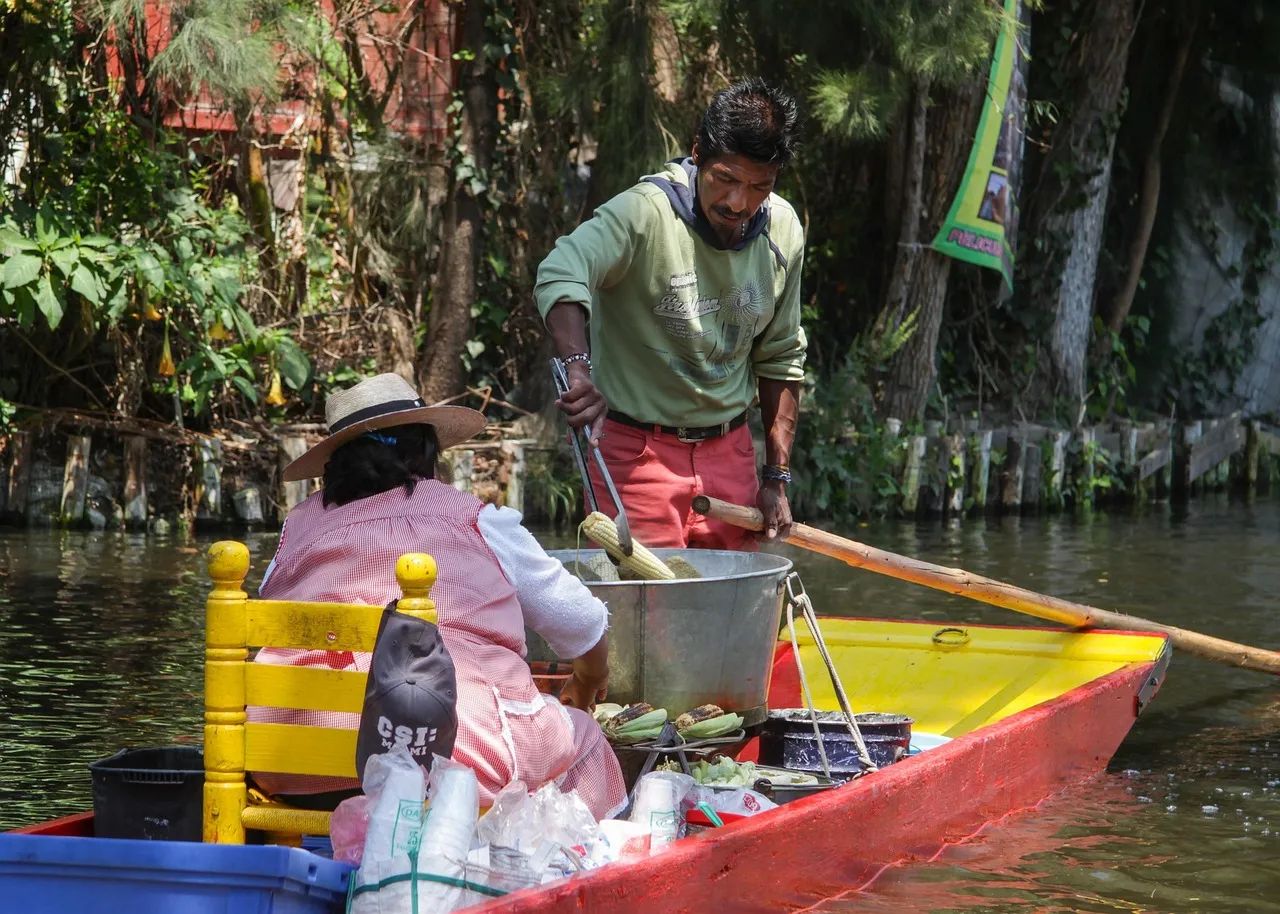
Long before the Aztecs built their capital, farmers in the wetlands south of Mexico City were raising crops on small plots of land shaped by human hands. Those plots, known as chinampas, still produce food today. This year, the work behind them earned international recognition when Lucio Usobiaga of Mexico won the 2026 Basque Culinary World Prize for Arca Tierra, a project that supports the farmers who keep the system going ([1]). The prize is often called the “Nobel Prize of Gastronomy.”
A Network Built Around Growers
Arca Tierra is less a single farm than a network. It links growers with the culinary community in Mexico, aiming to keep the chinampas productive and visible. The project works with 50 farming families across Xochimilco, Puebla, Hidalgo, and the State of Mexico. Within the chinampas, it cultivates about 6 hectares, or roughly 15 acres.
The farms supply about 60 restaurants in Mexico City with fresh produce. That arrangement ties the livelihoods of growers in the canals to the menus and kitchens of one of the largest urban food scenes in the Americas. For families who grow on narrow plots, a steady buyer base can matter as much as recognition.
Ancient Fields in Modern Canals
The chinampas are artificial islands built in the wetlands of Xochimilco, in the southern valley of Mexico City. They predate the Aztecs, and they are sometimes described as floating gardens, though the plots are anchored in the shallow lake waters rather than drifting freely. Traditional farmers, called chinamperos, still work them. They grow flowers, maize, legumes, and several kinds of vegetables.
The Basque Culinary World Prize was created in 2016 by the government of the Basque autonomous region in Spain and the Basque Culinary Center. It awards 100,000 euros, about $110,000, to a project chosen by the winner. The money therefore supports work the laureate selects, which gives the award a practical role beyond the honor itself.
Flavor Shaped by the Lake Bed
According to Food & Wine magazine, the soil in the chinampas holds a high level of organic matter from lake sediments, and that richness gives the produce a distinct taste. Usobiaga described the difference in terms that any diner can picture. “I can tell, like from the first bite, when I’m eating a beet from the chinampas,” he told the magazine.
That claim reflects a broader point about how food from a place reflects its ground and water. For Usobiaga, the flavor is also a reason to protect the land that produces it.
Work That Has Gone Largely Unseen
Usobiaga told Mongabay by email that he wants people to understand how long the chinampero farmers have lived and worked on these plots. Their role in the city’s food supply has mostly gone unnoticed, he said. The award puts that work in front of a wider audience, though recognition alone does not guarantee stable income or land security for growers.
The people most affected by the recognition include:
Related Stories From Travelbinger



- Farming families in Xochimilco, Puebla, Hidalgo, and the State of Mexico, who grow the produce
- Restaurants in Mexico City that depend on local supply
- Diners and visitors who eat the food or tour the canals of Xochimilco
- Younger residents who may decide whether the farming tradition continues
Mongabay’s earlier reporting on the chinampas described the same traditional farming, and Usobiaga’s comments suggest the central challenge has not changed. The chinampas have survived for centuries, but their future depends on whether the people who work them can keep farming them.
The award shines a light on a system that many residents of Mexico City pass by without a second thought. Whether that attention turns into lasting support for the families who tend those canals remains an open question.