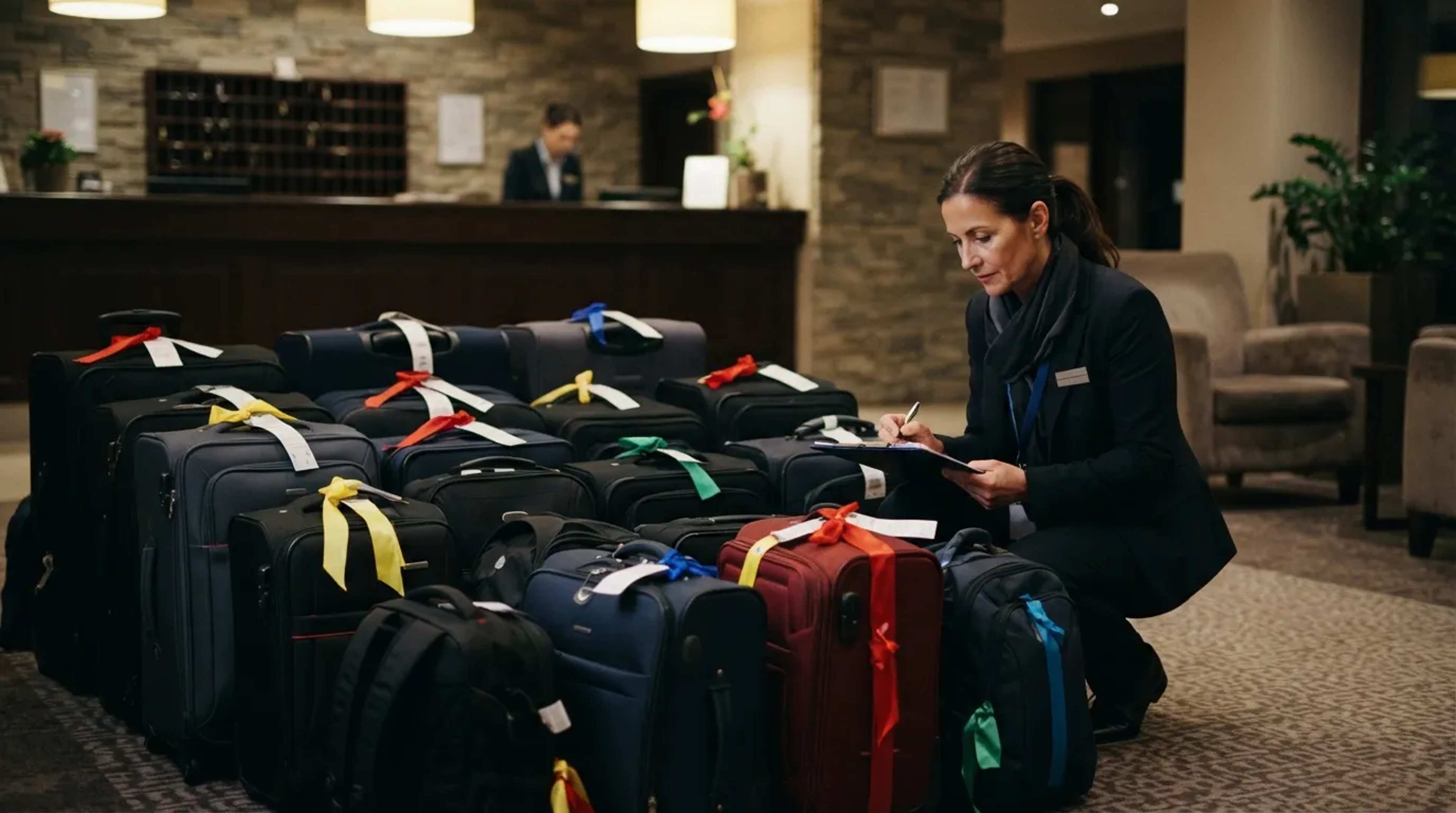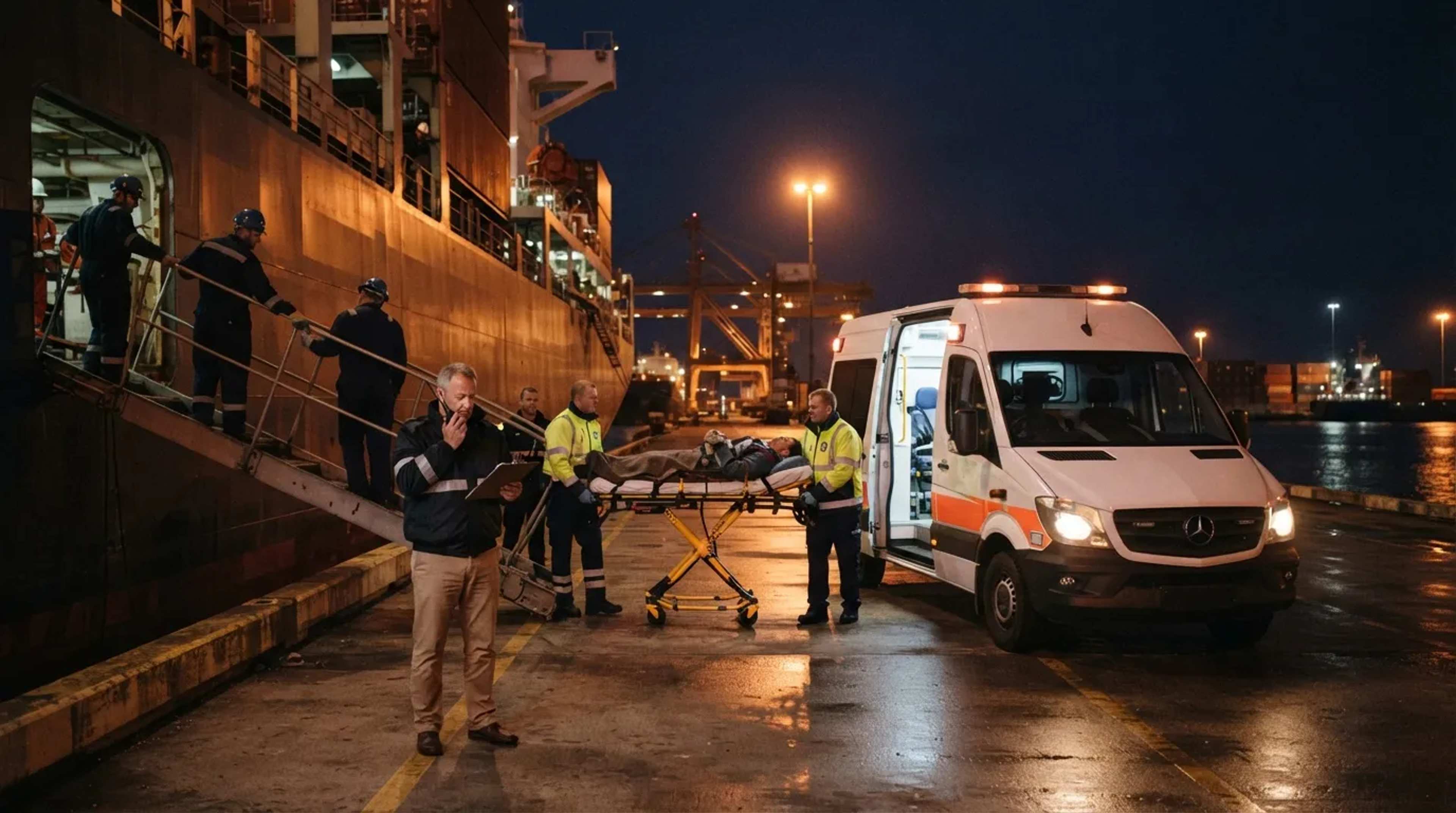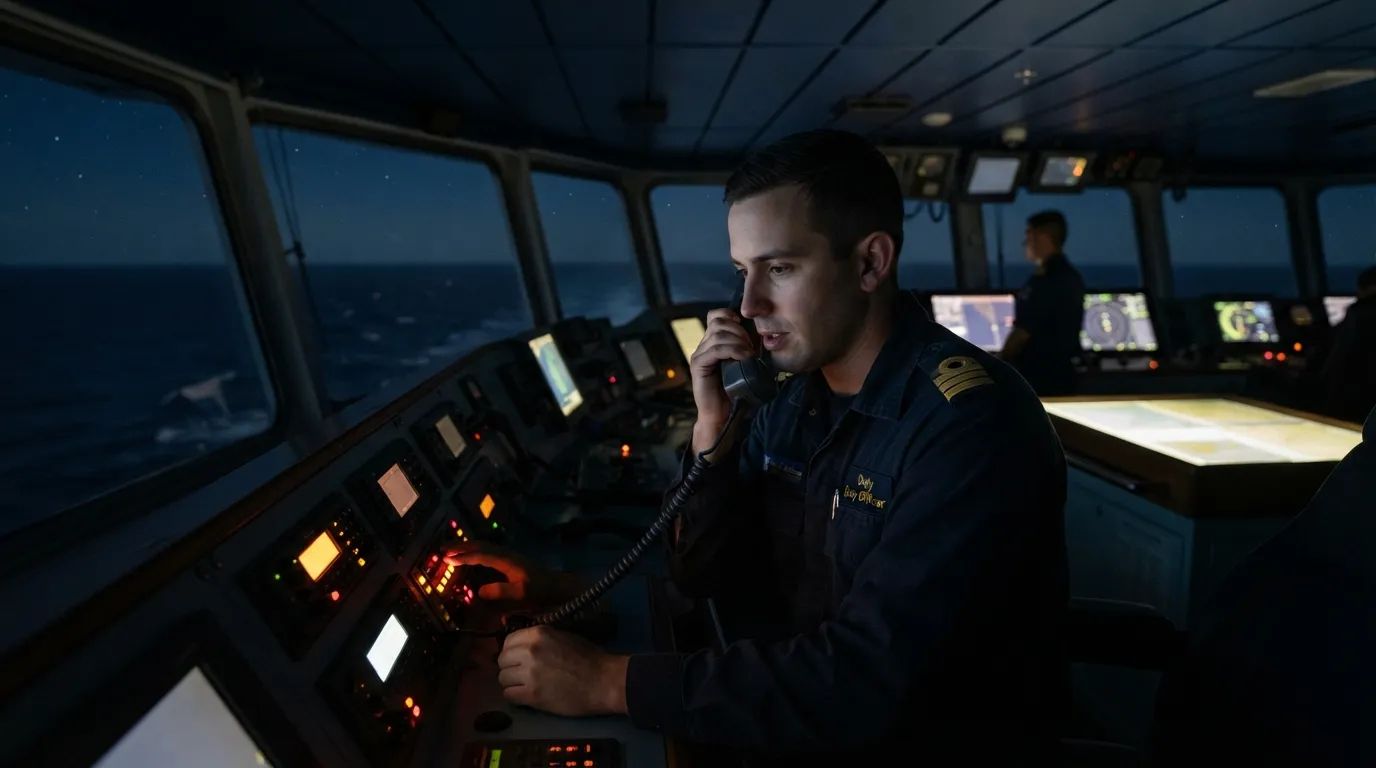
At 3 a.m., a cruise ship looks like the quietest place on earth. The hallways are hushed, the pools are empty, and thousands of people are tucked into their cabins. But between two and five in the morning, the ship is running one of its most tightly scripted shifts of the day. Officers, guards, engineers and cleaners are all on the clock while you dream.
The picture most of us carry is a dark bridge, a glowing autopilot and maybe one sleepy person staring at the horizon. The reality is stranger, more human and a lot more protective. One of these safeguards exists specifically to catch a tired person, and another explains the locked deck door you’ve probably grumbled about. Start at the bottom of the list, because the surprises are stacked.
#15 – A “Dead Man” Alarm Keeps the Officer Awake All Night
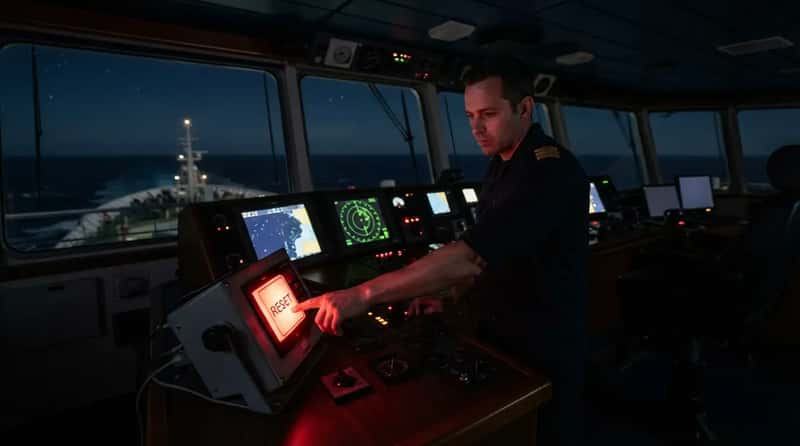
The officer on the bridge is being quizzed by a machine for the entire shift. A bridge navigational watch alarm system is designed to sound off if the watch officer falls asleep, is incapacitated, or is away too long. While the autopilot is on, the officer has to signal presence every 3 to 12 minutes in response to a flashing light. Many in the industry call it the “dead man alarm.”
If the officer misses the prompt, the alarm escalates in stages. It begins on the bridge, then reaches the backup officer or the captain, and it can keep climbing to other crew. Passengers never imagine this, because the whole system exists to catch the most ordinary human problem at sea: exhaustion at 3 a.m. But the bridge has another surprise waiting at #14…
#14 – The Night Bridge Is a Working Control Room, Not a Sleepy Cockpit
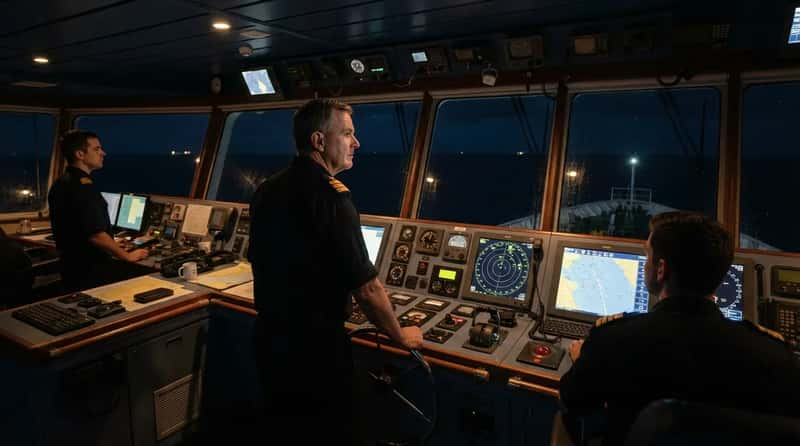
Forget the dark, silent room from the movies. Radar and AIS keep running all night, and screens track other vessels, the ship’s position and the planned route. Officers constantly compare what the screens say with what they can see through the windows. It’s less “coasting” and more “air traffic control, but wet.”
Quick Compare
- Radar: bounces radio waves off objects, so it can flag a target even if that target is silent.
- AIS: vessels broadcast their identity, position and course, but only if their transponder is on.
- Eyes at the window: can catch the faint light or small boat that either system might miss.
That matters because of a popular myth. Many passengers believe automation has basically replaced human judgment after dark. It hasn’t. Equipment makers describe alarms as a safety net, not the primary method of keeping watch. And the bridge isn’t the only place with eyes on the dark water, as #13 shows…
#13 – Someone Is Posted for One Job: Just Looking Outside
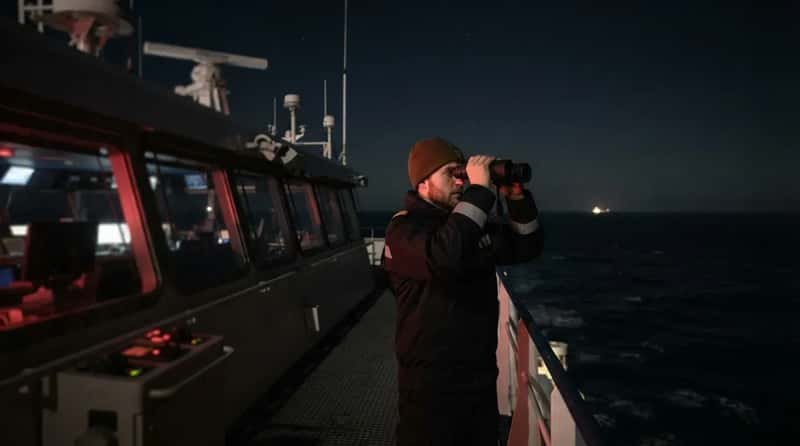
Screens don’t catch everything, so somebody’s entire job is to look. A proper lookout is a basic rule of safe navigation at sea. At night, that means a person watching for lights, small boats, fishing gear and anything radar can miss.
Security staff add another layer. Their job descriptions include serving as an additional lookout around the vessel and reporting unusual incidents. So the ship’s “eyes” aren’t limited to the bridge. Next up is a routine so regular you could set a watch by it, at #12…
#12 – Hourly Rounds Take Someone to Places You’ll Never See
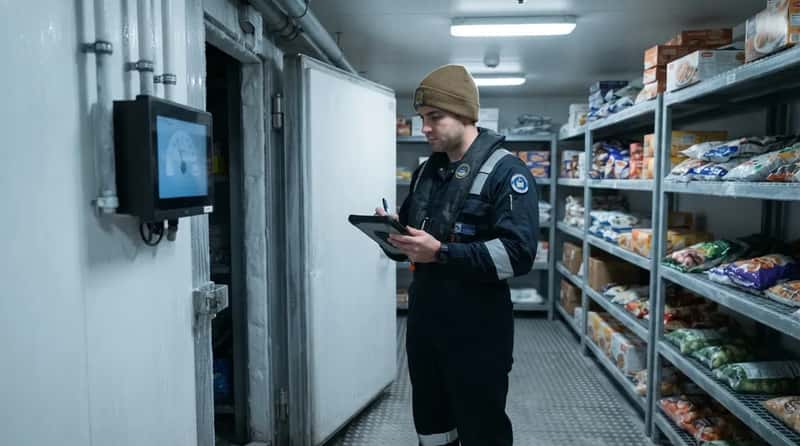
While you sleep, somebody is walking a checklist. One nightwatch job listing describes hourly safety rounds of designated checkpoints. Those rounds include engine rooms, freezers and fridges, with readings recorded in logbooks. That means a stranger may be checking a walk-in freezer at 3 a.m. while you’re sound asleep two decks above.
The point is to catch small problems early. Crew members walk fire and safety rounds throughout the day and night. A warm machine, a propped door or a failing cooler is far easier to deal with at 3 a.m. than at noon with a full dining room waiting. And whatever those walkers find ends up on paper, as #11 explains…
#11 – Security Writes a Night Report Nobody Ever Posts
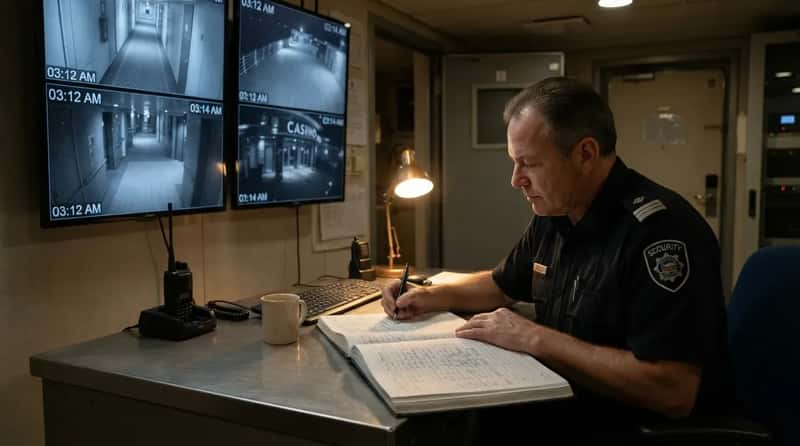
Every night produces a written record that passengers never see. Guards prepare a nightly activity log, and the Security Officer compiles the Night Report. It covers what was seen, what was handled and who was involved. It isn’t marketing material, and cruise lines rarely publicize it.
Cameras do part of the watching. Ships use extensive CCTV across hallways, elevators, casinos and public decks. Monitoring matters more at night, when visibility drops and alcohol consumption tends to rise. Whatever happens at 3 a.m. leaves a paper trail by breakfast. The front of the ship has its own overnight cast, as #10 reveals…
#10 – A Night Watch Person Guards the Door Until Morning
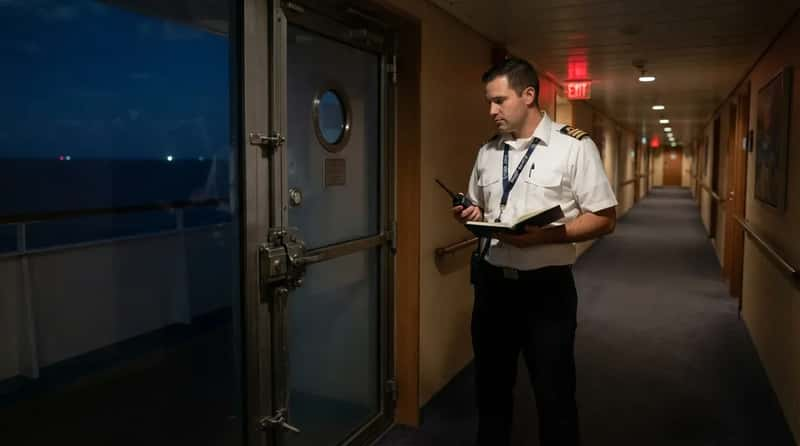
Some ships post a dedicated night watch person who represents management until morning. One job listing gives the shift as 10 p.m. to 8 a.m. Duties include locking entrance doors when the ship sits stationary overnight. The person also makes sure no visitors come aboard during the night.
The role is also part referee. The staffer enforces crew-only rules in the mess room and crew bar. It’s an odd mix of hotel clerk and hall monitor, and it runs all night. While one person watches the door, a different team is quietly repairing the ship, as #9 shows…
#9 – Engineers and Repair Crews Fix the Ship While Guests Sleep
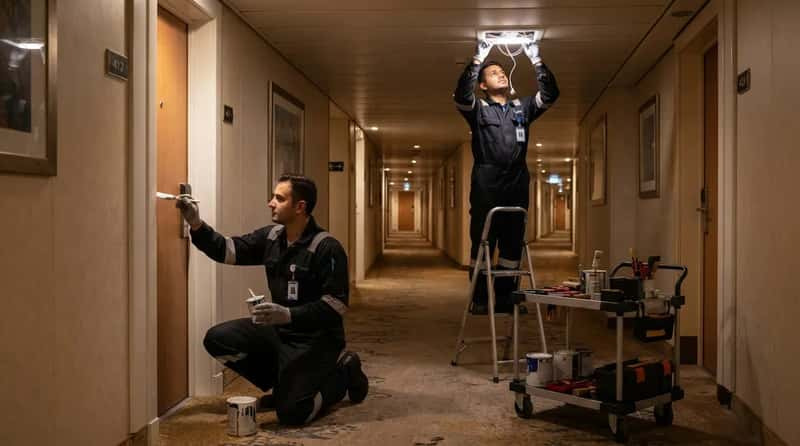
A cruise ship wears down faster than most travelers realize. It’s under constant strain from salt air, vibration, humidity and heavy foot traffic. Overnight teams handle paint touch-ups, plumbing repairs, lighting swaps and door adjustments while guest areas are mostly empty. The goal is that nobody ever notices the work happened.
Engineers are on watch too. Officers log their duty periods carefully, especially during overnight bridge watches and engine room supervision. Handling mechanical concerns at night means fewer daytime inconveniences for guests. That’s the quiet trade: you get the silence, they get the work. The galley is next, and it never really shuts down, at #8…
#8 – The Kitchens Get Scrubbed Before Breakfast Even Exists
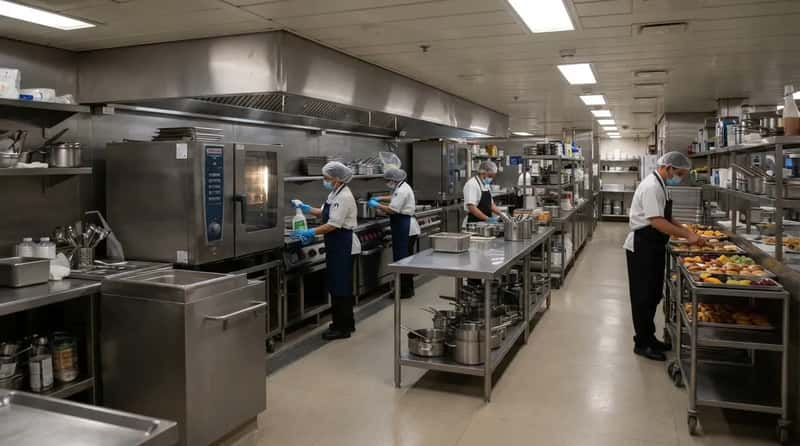
The buffet you wander into at 7 a.m. was built while you slept. Overnight teams deep-clean kitchens, sanitize public spaces, restock bars and prepare breakfast service before dawn. That hidden shift is why the coffee is hot and the counters gleam by morning. Much of breakfast is staged before most guests wake.
At a Glance
- Galley: deep-cleaned before the first guest arrives.
- Public spaces: sanitized while they’re empty.
- Bars: restocked for the day ahead.
- Breakfast: prepared and staged before dawn.
Housekeeping works nights too. One listing describes housekeepers maintaining cabins, public areas and crew accommodations during nighttime hours. The work is deliberately invisible, and the best version of it is the one you never witness. Next is a department so big it rarely gets credit, at #7…
#7 – A Mountain of Towels Is Being Washed Right Now

The laundry never gets its moment, but it keeps the whole ship functioning. Cruise passengers go through huge volumes of towels, sheets, napkins, uniforms and table linens every day. Somebody has to wash, dry, fold and deliver all of it. Overnight is when the carts keep moving.
Scale is the real story here. Every sheet and napkin is part of a cycle that runs around the clock, and guests only see the finished result on a bed or a table. But the ship also has to deal with what it leaves behind, as #6 reveals…
#6 – The Least Glamorous Work on Board Happens After Midnight
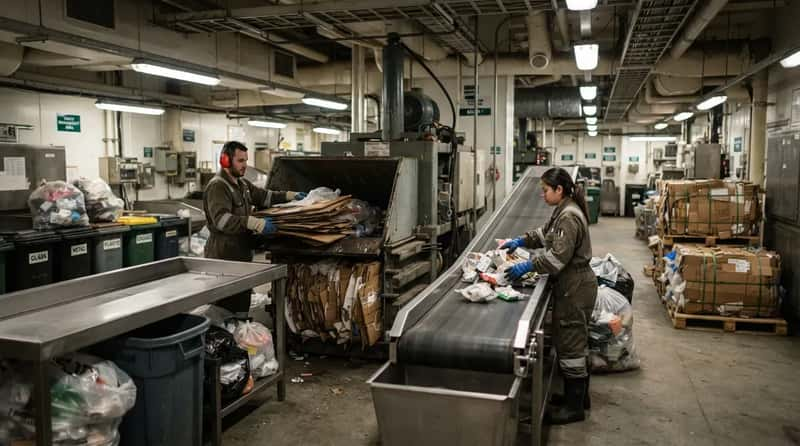
A cruise ship is a floating town, and a town produces a lot of waste. While passengers sleep, the ship’s environmental systems are often working hardest. Heavy processing is scheduled overnight to minimize disruption. Think sorting, handling and treating trash and wastewater for thousands of people.
Worth Knowing
- Under the international MARPOL rules, ships cannot dump plastic into the sea.
- Ground-up food waste generally has to be at least 3 nautical miles from land before it can go overboard.
- Food waste that isn’t ground up generally has to be at least 12 nautical miles out.
- Some regions, such as Alaska, add stricter local limits on top of the global rules.
It’s methodical work. International rules limit what a ship can discharge and where, so crews follow set procedures because mistakes here have real consequences. You’d never know any of it was happening from your cabin, which is exactly the idea. Meanwhile, the ship may already be steering toward land, as #5 shows…
#5 – An Early Arrival Turns the Night Into a Sprint
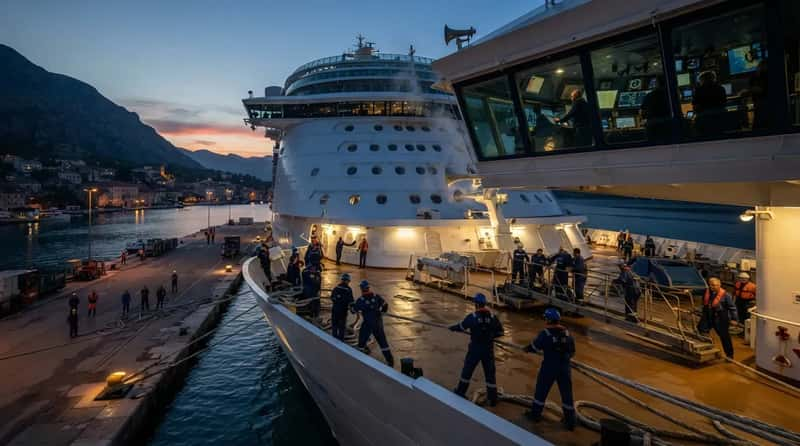
If the ship docks at dawn, the quiet hours don’t stay quiet for long. When a ship is due into port early, work ramps up overnight. The bridge prepares for arrival, and deck crews get ready for lines and gangway. Many passengers sleep right through the busiest part of the night.
Security gets ready as well. In port, guards operate at the gangway, and at anchor they work at the tender docking stations. By the time you’re on deck with coffee, the choreography is already done. But not every overnight change involves land. Some happen on the clock itself, at #4…
#4 – Your Ship May Quietly Change the Clock While You Sleep
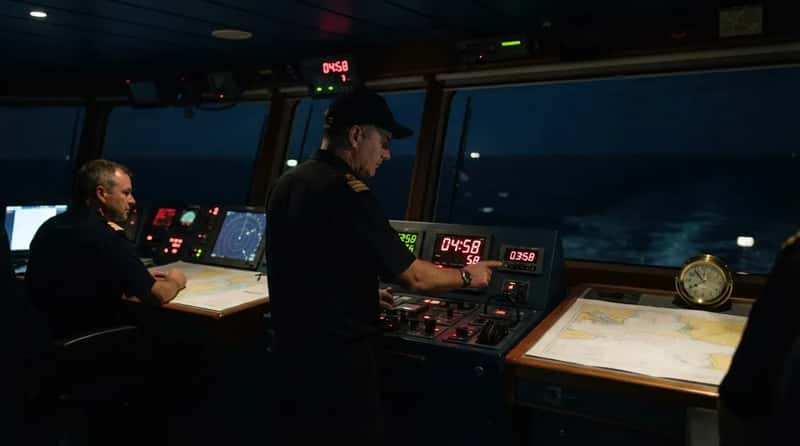
On many itineraries, the ship’s clocks change overnight. Most travelers only discover it when the cabin TV and their phone disagree. Crews handle the switch so the schedule stays consistent. Meal times, shows and port calls all have to line up with the new time.
Fast Facts
- International seafarer rules call for at least 10 hours of rest in any 24-hour period.
- They also call for at least 77 hours of rest in any 7-day period.
- Rest can be split into no more than two blocks, and one block must be at least 6 hours.
- Limited exceptions exist for emergencies, which is why rotating the late shifts matters.
The watch system itself runs on a clock, too. It lets the crew operate the ship 24 hours a day while giving individuals adequate time for rest. Some systems rotate who works the late hours, while others keep teams on the same schedule. Time is a work roster here, not just a number on the wall. And the biggest decisions of the night are about the sea itself, at #3…
#3 – The Bridge Decides Which Decks Are Too Dangerous to Open
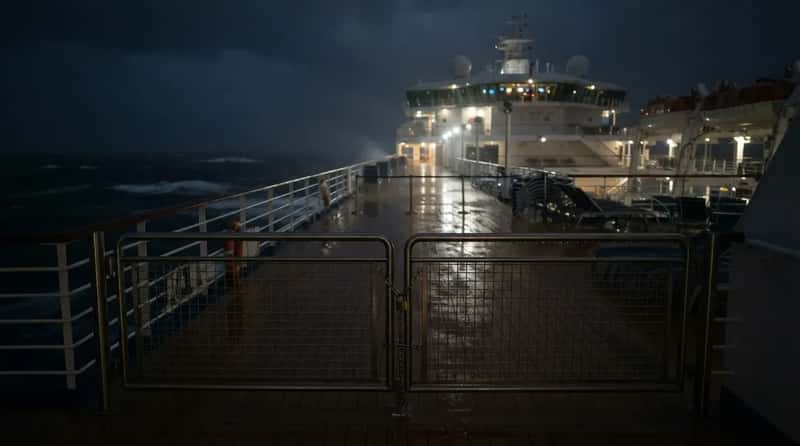
Wind and waves don’t wait for daylight. The bridge decides when wind and sea make open decks unsafe, watching wind speed and ship motion. Officers can close doors, pools and promenade sections. If you wake up to a locked outer deck, that’s usually why.
It’s a judgment call, not a button. Officers weigh conditions against how the ship is actually moving. That’s the human part automation doesn’t replace. And above the watch officer sits one more person who is never truly off, at #2…
#2 – The Captain Is Asleep, But Never Really Off Duty
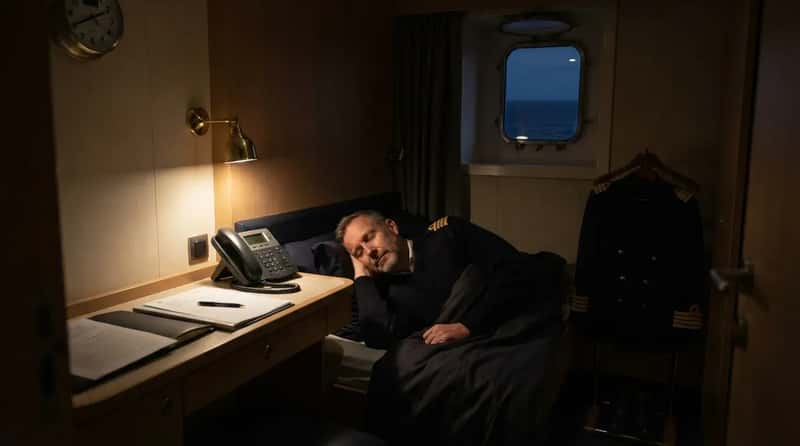
The captain is rarely the one standing on the bridge at 3 a.m. Still, captains are never fully off duty. Deck officers are trained to know precisely when a situation is serious enough to interrupt that sleep. Knowing when to wake the boss is part of the job.
The chain of command works in layers. Supervisors rotate watch schedules to reduce burnout and keep people alert. So there’s always someone with authority within reach, even when the corridors are silent. All of it is built for one scenario nobody wants, which brings us to #1…
#1 – When Something Goes Wrong, the Ship Whispers
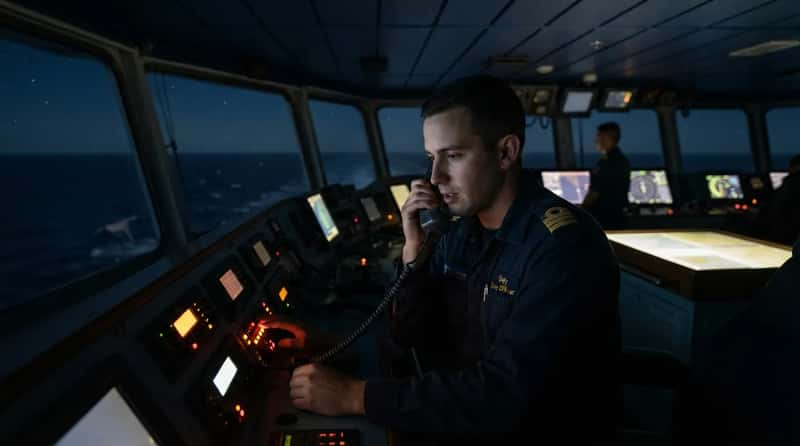
The most important thing a cruise ship does after midnight is stay ready for an emergency. If a guard finds a problem on rounds, the first move is to tell the bridge. Job listings say guards must immediately inform the Duty Officer on the Bridge and other concerned officers of any incidents. They’re also expected to act as first responders until help arrives.
A Royal Caribbean Group listing even references procedures for “Alpha Alpha Alpha” events, one example of how crew communicate quietly. You’ll likely never hear a thing. That’s the point.
Next time you wake at 3 a.m. and the ship feels perfectly still, remember it isn’t. Someone is resetting an alarm, checking a freezer and watching the dark water. You get to sleep because they don’t.