Everyone is laughing.
You are not laughing.
You are framing the shot.
You are three feet behind the moment, technically present, emotionally offshore. You have a role. A function. A reason to stand slightly apart. And somehow, that feels like the safest place in the world. This is the chasm between who we perform ourselves to be and who we actually are when the lights come on and the vulnerability asks for a seat at the table. The group photographer has found one of civilization’s most elegant workarounds. They are there. They are useful. They are doing something that looks, from every conceivable angle, like participation.
But they are not participating. Not really.
1. The Useful Disappearance
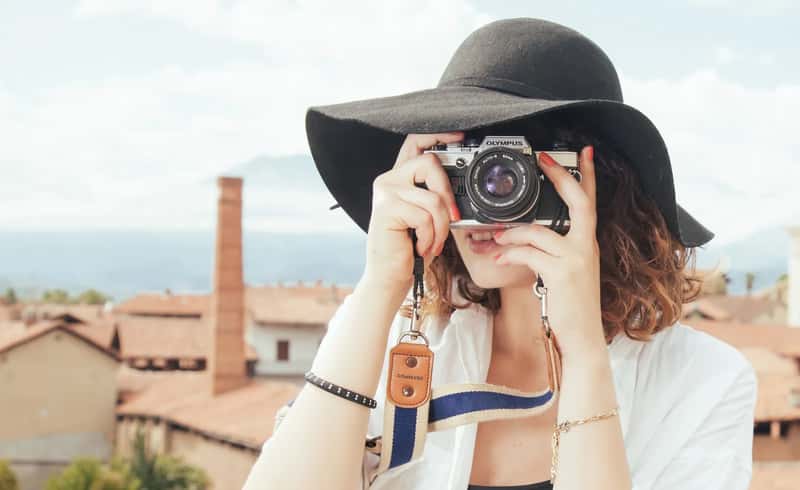
There is a quiet genius to volunteering for the camera.
It requires no explanation. It asks for no apology. It generates immediate social goodwill – you are doing the group a service. You are the one who will preserve this memory for everyone. What a generous, selfless act.
Except that isn’t why you picked up the camera.
The lens of a camera doesn’t just point outward – it also provides a way to look within. When you take a photograph, your perspective, focus, and choice of subject reveal aspects of your personality and your inner self. And what the compulsive group photographer often reveals, without intending to, is a preference for observation over immersion. A need to manage, from a controlled distance, the noise and heat of collective intimacy.
The camera is not the hobby.
The camera is the exit strategy that doesn’t look like an exit.
2. The Observer Identity
Psychology has a language for this. According to the cognitive model of social anxiety, a core maintaining factor is self-focused attention – characterized by heightened awareness of one’s own thoughts, physical states, and emotions. When a social situation arises that is perceived as threatening, individuals tend to shift their focus inwards and to engage in detailed self-monitoring. The self is consequently perceived from an “observer perspective.”
The camera formalizes this instinct.
It turns the observer perspective into a job title. Suddenly, the watching is not a symptom. It is the whole point. You aren’t anxiously scanning the room from the outside in. You are the photographer. You are supposed to stand apart. You are supposed to look, not feel.
The role is costume and armor simultaneously.
And it fits so well most people never notice you put it on.
3. The Avoidant Architecture
The behavior traces back further than the last dinner party. It traces back to the very first rooms where closeness felt unsafe.
Avoidant attachment style is a pattern of behavior in relationships where individuals avoid intimacy and emotional closeness. This attachment style develops early in life, typically as a response to caregivers who are emotionally unavailable or dismissive. The child learned a hard, clean lesson: closeness costs something. Vulnerability is a debt that gets collected at the worst possible moment.
So the child grew up.
And found other ways to be in the room without being in the room.
People with an avoidant attachment style tend to cope with challenging relationship situations by pulling away or distancing themselves emotionally and physically. These behaviors are known as deactivating strategies, and they essentially help maintain a comfortable buffer between the avoidant person and others. At their core, these strategies protect individuals from hurt and disappointment experienced in past relationships.
The camera is a deactivating strategy with a lens cap.
4. The Permission Structure
Here is what the camera gives you that nothing else does so cleanly.
Permission to look. Permission to be nearby without being in it. Permission to care about the people in the frame from a measured, manageable distance. You can love your friends through the viewfinder. You can feel warmth, even tenderness, at f/2.8. But the glass between you and them is doing real psychological work.
Being recorded removes a sense of control over one’s image and narrative. Individuals fear how they will be portrayed or perceived by others, leading to apprehension and reluctance. The person behind the camera has inverted this dynamic entirely. They control what is captured. They control the frame. They are the eye that sees but is never fully seen.
Control is the currency of people who grew up without enough safety.
The camera is a way of buying it back, one shutter click at a time.
5. The Memory You Traded Away
Here is the cruelest irony of the shield.
I remember a hiking trip, years ago, with a small group of people I loved very much. I spent most of it three steps behind, framing, adjusting, documenting. I came home with 340 photographs. The trip lasted four days. I remember almost none of it – not the texture of it, not the specific weight of the afternoon light, not what anyone said around the fire. I have the photographs. I do not have the memory.
Psychology has a clinical name for this. Researcher Linda Henkel calls it the “photo-taking impairment effect”: “When people rely on technology to remember for them – counting on the camera to record the event and thus not needing to attend to it fully themselves – it can have a negative impact on how well they remember their experiences.”
The mechanism is called cognitive offloading. When you take a photo, the brain essentially files the moment under “handled.” The camera’s got it, so the brain stops doing the work of actually encoding it.
You thought you were preserving the memory. You were trading the experience for a file.
6. The Social Armor Effect
The group photographer is also, quietly, managing something else.
The social contract of intimacy requires reciprocity. Someone laughs. You laugh back. Someone says something tender. You are expected to receive it – and offer something tender in return. This exchange, this warm, unscripted vulnerability loop, is precisely what the lens interrupts.
The spotlight effect describes the feeling of being the focus of others’ attention. It has been linked to social anxiety – the fear of negative social evaluation and scrutiny. For someone calibrated to that fear, the camera is not just a tool. It is a way of redirecting the spotlight. Aim it outward aggressively enough and it can’t point back at you.
Behind the lens, no one asks you to dance.
No one asks you how you’re doing.
You are busy. You are essential. You are untouchable.
7. The Identity Outsourced to Function
There is a broader pattern here, one that extends well beyond cameras and birthday dinners.
Some people build their entire social identity around being useful. The one who drives. The one who plans. The one who takes the photographs. Avoidant attachment in adults may, from the outside, look like self-confidence and self-sufficiency. This is because the avoidant attachment style causes a low tolerance for emotional or physical intimacy.
Function is a disguise that reads as virtue.
You are not hiding. You are contributing. And no one – least of all yourself – questions a contribution. Denying personal weaknesses or vulnerabilities to maintain a sense of control, and blocking or suppressing memories and thoughts that evoke distress or vulnerability – these are the quieter costs embedded in the role.
The camera doesn’t just frame others.
It frames you, too. As someone who doesn’t need to be held.
8. The Presence Paradox
The painful truth about the group photographer is that they often want, desperately, to be part of what they are documenting.
They want to be in the laughing photograph. They want their face in the memory. They want to feel the pull of belonging, the effortless warmth of being known and claimed by a group of people who love them.
But wanting it and being able to receive it are two entirely different nervous system events.
Attachment avoidance may lead to preferential use of response-focused emotion regulation through suppression, which can reduce overt emotional reactions, but is not very efficient in regulating emotion elicitation itself. Moreover, suppression may work up to a certain point only, after which this protective mechanism will break down.
The camera is a pressure valve.
It lets out just enough feeling to keep the rest from overwhelming the circuitry.
9. The Invisible Price Tag
What does this cost, over a lifetime?
Count the dinners. Count the weddings, the road trips, the New Year’s Eves. Count every moment you stood three feet outside the warmth of it, pointing the lens inward at the people who were simply, fully, messily there. When you’re fully in a moment rather than managing it through a screen, the brain gets more to work with. More sensory input, more emotional signal to actually draw on later. The ones most people carry with them for decades are usually the ones that weren’t photographed. When there’s no photo, it usually means the person was actually there.
The photographs are beautiful.
The albums are full.
The body remembers almost none of it – because the body was never fully allowed to arrive.
Over time, the inability to form deep connections can lead to loneliness and dissatisfaction. That loneliness tends to arrive quietly, at 2 a.m., surrounded by people who love you but cannot quite reach you through the glass.
10. The Frame You Can Finally Step Into
The heaviest truth is also the most merciful one.
The camera is not the problem. The camera is a symptom – a beautifully sophisticated, socially applauded symptom of a self that learned, somewhere early and formative, that being fully present in the warmth of others came with consequences it couldn’t afford.
Avoidant attachment often stems from early childhood experiences. When caregivers consistently fail to respond to a child’s emotional needs, the child learns to suppress their feelings to avoid disappointment and rejection. The photographer learned to suppress. And then they found a tool that made suppression look like generosity.
But attachment styles are not a life sentence: if you have an avoidant attachment style, it is always possible to heal and grow.
That growth begins not with putting the camera down – it begins with noticing why you pick it up. Noticing the specific, quiet relief that settles in the chest the moment you have a role, a function, a reason to stand at the edge of the warmth rather than walk into it. The awareness itself is the first act of participation.
There is a photograph that exists of almost every meaningful moment in your life. You are not in most of them. You are the eye behind them – present as evidence, absent as a body that could be touched, known, reached.
The people in those photographs were having an experience. You were curating one. The difference is not small. It is the difference between a life that is documented and a life that is lived – between watching the current from the bank and letting it carry you, briefly, terrifyingly, completely.
Somewhere in the archive of your photographs is a version of yourself that never got to show up. Not the composed, useful, technically gifted self with the perfect eye for light. The other one. The one who wanted to spill their drink laughing. The one who wanted to be held in the frame by the people who would have gladly held them, if only you had set down the one thing that kept them, forever, just an arm’s length away.
The camera will be there when you get back.