The drawer is never just a drawer.
It smells like old paper and possibility.
Inside it: a boarding pass. Gate B12. A Tuesday in November. A version of you that existed somewhere else, if only for a long weekend.
You kept it. You don’t know why. You just couldn’t throw it away.
There is a specific kind of person who collects boarding passes the way other people collect regrets – quietly, privately, without ever explaining themselves. They don’t pin them to a corkboard. They don’t post them. They just slip them into a drawer and close it again. And every time that drawer opens, something ancient stirs. A gate number. A departure time. The ghost of a self who was, for exactly the duration of that flight, completely untraceable.
Psychology has a name for this. It has several. But the most honest name for it is this: proof. The boarding pass is not the story. The boarding pass is the proof that the story happened. Without the physical object, the doubt creeps in. Did I actually go? Did I actually become someone different there, even briefly? The pass answers back: yes. You were there. You got out.
The Proof of Departure
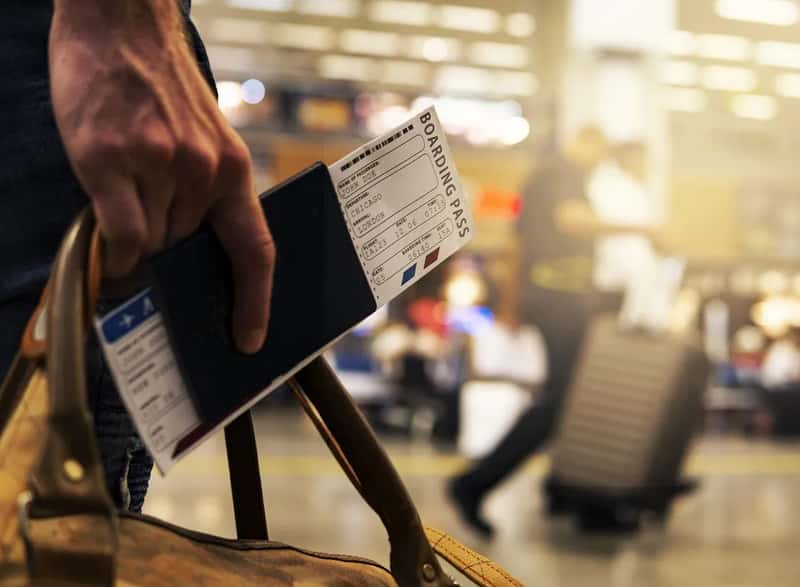
The souvenir – the boarding pass, the stub, the printed gate number – is an important component of the tourist experience, with most travelers bringing back mementos as evidence. People like to be reminded of special moments in their lives and to hold evidence of those special moments.
But a boarding pass is different from a snow globe.
A snow globe is decorative. A boarding pass is a document. It has your name on it. It has a seat number – the exact coordinates of your body in the sky on a specific date. It is not a souvenir. It is a record of a successful exit.
The drawer full of passes isn’t nostalgia. It is a dossier. It is quiet, accumulated evidence that you have done it before. That when the walls came in too close and the routines began to feel like a slow erosion of self, you found your way to a gate. You sat in a seat. You went somewhere. The paper proves it. The paper is the alibi. And without the alibi, the fear creeps in – that maybe the person who left was never real at all.
The Symbolic Consumption
Psychologists have a clinical name for what happens when we assign deep meaning to objects that have no functional use.
They call it symbolic consumption.
One aspect of souvenir psychology is the concept of “symbolic consumption.” People keep these objects not just for their functional use but also for the symbolic meanings they represent. They can serve as a tangible reminder of a meaningful experience and help people relive the positive emotions associated with it.
A boarding pass with no functional value – expired, un-scannable, already used – becomes, the moment it is slipped into a drawer, one of the most loaded objects a person can own. It is not useful. It is something far more important than useful. It is meaningful. It is the physical residue of a decision you made. The decision to go. The decision to leave. The decision, however temporary, to be somewhere else entirely.
That is a decision worth keeping evidence of.
The External Memory Cue
Your brain is not a perfect archive. It edits. It softens edges. It makes deals with the past.
This is why you need the paper.
Psychologists call souvenirs “external memory cues” – physical items that trigger vivid, sensory memories, like the smell of a café in Paris or the sound of waves in Maui. According to psychologist Dr. Susan Krauss Whitbourne, souvenirs help us solidify life experiences.
The boarding pass does something subtler than a photograph. A photograph shows you what you saw. A boarding pass reminds you of what you felt – the specific terror and relief of departure. The moment the wheels left the ground and your ordinary life could no longer reach you. That sensation lives in the paper in a way it doesn’t live in a filtered image. The pass carries the texture of the moment. The gate number alone can bring it back: the fluorescent light, the recycled air, the person beside you reading something you could not see, the precise feeling of being between one version of yourself and another.
The Identity Activation
Here is the part no one talks about.
The boarding pass doesn’t just remind you of who you were on the trip.
It reactivates that person.
According to identity theory, identity activation occurs when cues make a particular self-concept accessible in working memory. Importantly, a bulk of psychology research illustrates that this activation does not require being physically present in the context where the identity is typically enacted. Instead, imagining oneself in a role or retrieving identity-related memories can heighten the salience of that identity.
Open the drawer. Hold the pass. Feel it. The traveler in you wakes up. Not metaphorically. Neurologically. The self that boards planes and navigates foreign streets and eats alone in restaurants in cities where no one knows your name – that self becomes briefly, electrically present. The paper is a key. The drawer is the door. Most people keep it closed because they aren’t sure they’re ready to be that person again. But they keep the key. Just in case.
The Alternative Identity
I have a boarding pass from a city I went to alone, for no particular reason, during a year that was trying its best to finish me off.
I booked the flight at midnight. I told almost no one.
I spent four days being a version of myself that had no history in that city. No reputation. No accumulated weight of other people’s expectations. I walked around. I ate things I couldn’t name. I sat in a square and watched strangers move through their lives and felt, for the first time in months, genuinely curious about being alive.
The boarding pass from that trip is still in a drawer. I don’t look at it often. But I know it’s there. And knowing it’s there does something to the quality of the bad days. It reminds me that the exit has been found before. It can be found again.
Holidays present opportunities to be versions of ourselves that don’t get to shine during our “normal” lives. We can be more relaxed, more adventurous, more gregarious. Souvenirs can become symbols that represent these alternative identities and our relationships with a particular time, place, or culture.
The boarding pass is a symbol of the most alternative identity of all: the one that chose to leave.
The Neurological Reset
The reason the escape felt so different isn’t poetic. It’s biological.
Stepping into a new place does more than change your surroundings – it can reshape your mind. The psychology of travel shows that exploring unfamiliar environments, meeting new people, and embracing different cultures can spark powerful shifts in your brain. These fresh experiences activate neural pathways linked to creativity, resilience, and emotional well-being.
The boarding pass is the receipt for that neurological event. You don’t keep it because you are sentimental. You keep it because some part of your nervous system remembers what it cost to get on that plane and what it felt like to land somewhere new. The paper is evidence of the reset. Evidence that the hard wiring can be temporarily rewired. Evidence that the version of you who feels permanently installed in a life that doesn’t quite fit is not the only version available. There is another one. Gate B12. Departure 6:40 AM. She was there.
The Private Act of Resistance
Nobody told you to save it.
Nobody will ever reward you for it.
No algorithm will surface it. No follower will double-tap it. It lives in a drawer, in the dark, seen only by you – which is exactly why it matters as much as it does.
In an age of curated identity, where every experience is half-performed for an audience, the private act of keeping a boarding pass is quietly radical. Nobody asked you to keep it. Nobody will ever see it. The algorithm will not reward you for the drawer full of evidence.
This is not hoarding. This is not sentimentality in the pejorative sense. This is a person refusing to let a real thing dissolve into the general noise of a life lived for other people. The pass is yours. The trip was yours. The escape – however brief, however incomplete – was entirely, privately, stubbornly yours. Keeping the evidence of it is an act of psychological self-preservation. It says: I was more than this desk, this apartment, this version of myself. I have proof.
The Attachment to the Exit
There is something underneath the nostalgia that is harder to name.
It is not grief for the place. It is grief for the feeling of departure itself.
The boarding pass also represents an exit. A door that was once open. The possibility of being elsewhere – of being anyone – that still exists, technically, if you were willing to get on the plane.
The traveler who saves boarding passes is not living in the past. They are maintaining access to a door. The pass says: this exit exists. I have used it before. The door did not seal behind me. Sentimental objects act as anchors in our personal history, reassuring us of our past experiences and providing a tangible connection to earlier versions of ourselves. Behavioral science shows that objects can become extensions of our identity, and letting go of them can feel like losing a piece of ourselves. Throwing away the boarding pass feels like losing the door. So you keep the paper. You keep the coordinates. You keep the way out.
The Collection as Accountability
Look at the drawer honestly.
Count the passes if you can bring yourself to do it.
Collections have a special place in human psychology. Collecting souvenirs from different cities brings a sense of order and continuity. But it also brings something darker: accountability. The collection forces you to admit how many times you left. How many times you came back. How many times you were a different person in between.
This is the part that sits heaviest. Not the departures. The returns. Every boarding pass in that drawer represents a round trip – an escape that was, ultimately, temporary. You went. You became someone slightly freer, slightly less defined. And then you came back. The fact that you kept the pass might be less about commemorating the trip and more about acknowledging the return. Proof that you went and came back. Proof that you are still here, in this life, but that you have been other places too. The drawer holds both facts in tension. It does not resolve them.
The Quiet Radicalism of Not Performing the Escape
The most interesting thing about the drawer is what it is not.
It is not an Instagram post. It is not a travel blog. It is not a story told at a dinner party to signal that you are the kind of person who goes places. It is a private archive. A secret museum with an audience of one.
Escapism in the form of self-expansion stems from motives to gain positive experiences through the activity and to discover new dimensions of self. The boarding pass collector understands this instinctively, even if they cannot articulate it. The escape was not performed for an audience. It was not a content strategy. It was a genuine, unwitnessed attempt to find a version of themselves that breathed more easily. The fact that the evidence is hidden – tucked in a drawer, not framed on a wall – is the most important detail. Escapism, freedom, and learning through challenge are identified as important themes surrounding the search for self, as travelers describe varying degrees of success in escaping their home societies and finding increased free space and time to learn about and challenge their ideas of self. The drawer is where that learning lives. It does not need to be announced. It just needs to be kept.
There is a particular quality of light that exists only in airports before dawn. Cold. Blue. Specific. The cleaning machines move across the floor with a sound like a slow exhalation. The departure boards flicker. The gates are quiet. And somewhere in that stillness, a person is sitting with a boarding pass in their hand, and they are not thinking about where they are going. They are thinking about the fact that they are going at all. That they found the will to buy the ticket. To pack the bag. To come here, to this in-between place, to this threshold between the life they live and the life they briefly inhabit when nobody who knows them can see them.
That person will keep the pass. They will not know exactly why. They will slip it into a pocket, and then a bag, and then eventually a drawer that already holds others like it – each one a small, crumpled monument to the times they chose themselves over the routine. The times they voted, with their feet and a seat assignment, for the possibility of being someone slightly different in a place that did not yet know their name.
Years from now, when the drawer opens and the passes spill out, there will be a moment – just a moment – when all the exits are visible at once. All the gates. All the departures. All the versions. And the only question that will matter, sitting there with a handful of expired boarding passes and the specific weight of a life fully lived, is the same one that was asked at every gate, in every terminal, in every city where the light was different and the air smelled like somewhere else entirely: was it real? The paper says yes. It always says yes.