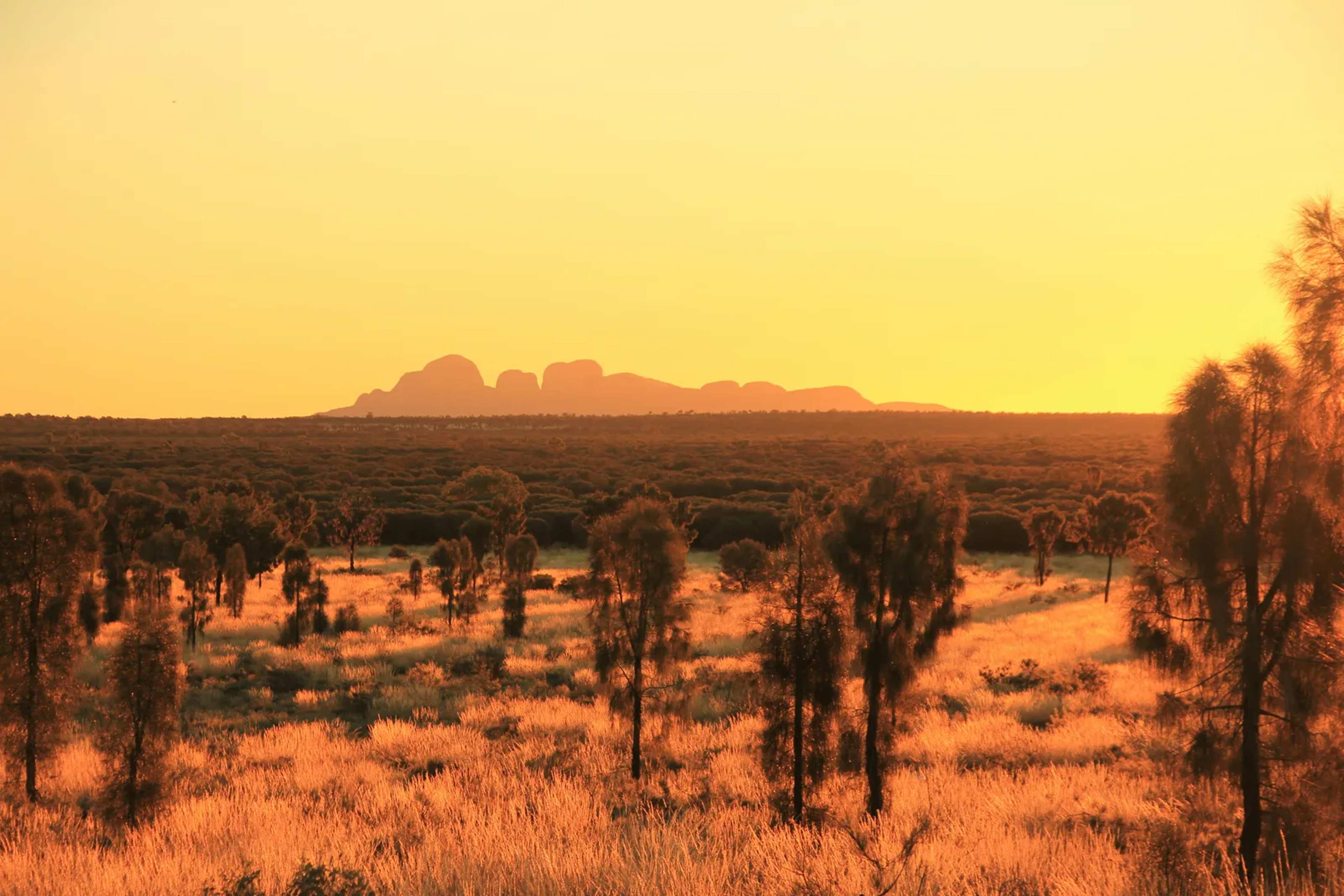
The desert doesn’t ask you anything.
The tundra doesn’t need your story.
An empty salt flat at dawn will hold your silence without flinching.
That’s why you go there.
Not for the photograph. Not for the itinerary. For the permission to finally put something down.
There is a gap – a significant, aching gap – between who you perform yourself to be in the daily noise of your life and who you quietly sense you are when there is nothing left to react to. Every notification, every obligation, every room packed with inherited furniture and inherited expectation widens that gap. The person on the passport and the person staring at a horizon of cracked earth are barely on speaking terms. Every piece of emotional clutter you were handed in childhood – the anxiety that wasn’t yours, the grief you witnessed and absorbed, the conflict you tried to neutralize, the joy you shrunk to avoid standing out – all of it lives in the body. All of it shows up in the preference for empty, minimalist destinations.
1. The Overloaded Archive
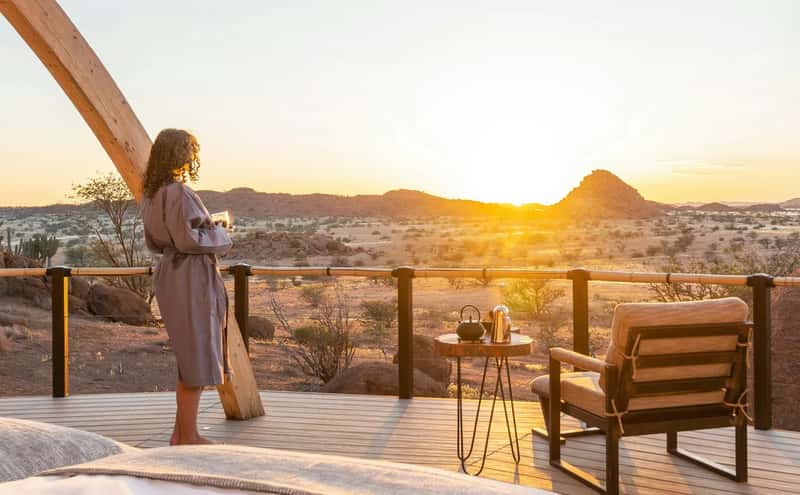
It starts before you had language for it.
While some people are born with heightened sensitivity, others develop it through early nervous system stress. Birth trauma, prenatal stress, and difficult early childhood experiences can create nervous system dysregulation that amplifies sensory sensitivity.
The child in a chaotic household learns to carry the weather of every room they walk into. They read the silence between their parents before they can read words. They catalogue emotional data at a volume most nervous systems aren’t designed to sustain.
That child becomes the adult who books a flight to Iceland.
To the empty basalt fields. To the lava plains where nothing grows. Not because they’re running away. Because their internal archive has been overloaded since childhood, and somewhere in their body, they remember that focusing on experiences rather than things can lead to greater mental clarity and peace, and a state of mind where you feel less burdened and more in tune with your surroundings.
The landscape isn’t a distraction. It’s a prescription.
2. The Weight of Other People’s Noise
You didn’t ask to become the family emotional processor.
But you were good at it. Too good. Highly sensitive people pick up on subtleties in their environment. They notice little details that others might miss, from the way the sunlight looks on an early autumn morning to the anger emanating from a pair of strangers having a fight. Noticing these subtleties enriches life, often making people highly creative. But when you notice every little thing, it can add up fast.
And it did add up. For years.
The minimalist destination – the Finnish lake house with a single wooden chair, the Mongolian steppe where the nearest human is three hours by horse – isn’t a luxury vacation. It’s a controlled decompression chamber.
What you’re decompressing isn’t the last two weeks of work emails. You’re decompressing decades of ambient noise you absorbed without anyone’s permission or acknowledgment. The vast, indifferent landscape finally gives you something other people’s emotions never did: silence that isn’t loaded.
3. The Cluttered Mind Has Cluttered Origins
The mental and the physical mirror each other with brutal precision.
Clutter can be yet another symptom of trauma, alongside depression, anxiety, and isolation. Trauma affects people neurologically – the brain, physiology, feelings, and behavior. Trauma can make people compulsive and fill their minds with stressful thoughts.
The restless mind that cannot land. The one that runs background processes even during dinner conversations. The one that can’t watch a movie without solving something. That isn’t a personality quirk. That is a nervous system that was trained never to stand down.
Early childhood stressors and environmental factors can further contribute to overstimulation. Exposure to toxins, chaotic or unpredictable environments, and adverse childhood experiences can all impact a child’s developing nervous system and make them more prone to sensory overload.
The empty landscape – the one with no stimuli competing for cognitive bandwidth – is the first environment in decades where that nervous system is allowed to exhale.
That is why people come back from stark places looking younger. Not rested. Younger. Something ancient finally let go.
4. The Temporary Identity
Travel does something therapy sometimes cannot.
It removes the social architecture that holds your constructed identity in place.
We often split off from the experience of difficulty so we don’t have to live with it, and we identify instead with a way of coping that gives us a sense of “personality.” But perhaps that personality is more like an identity than a definition of who you really are.
In a remote destination, no one knows you as the reliable one. The funny one. The one who always handles it. You are simply a person standing in a field of ice. That is an extraordinarily powerful reset.
The minimalist destination strips the social costume. There are no props, no familiar mirrors, no people who hold the agreed-upon version of you in place. You are left with the raw material. Most people find that material surprisingly manageable. Surprisingly quiet. Surprisingly theirs.
The temporary identity that travel allows is often the most honest one you’ve worn in years.
5. The Exit Strategy
I need to tell you something personal here.
The first time I understood what minimalist travel was actually doing for me psychologically, I was standing at the edge of the Bardenas Reales – a semi-desert in northern Spain so lunar it barely feels like Earth. I had spent three days speaking to almost no one. No agenda. No performance. By the second evening, I noticed something disturbing and clarifying in equal measure: I didn’t know what I actually liked. Not really. I had spent so long curating preferences for other people’s approval that my own genuine responses had gone underground.
The empty landscape handed me the question I’d been avoiding: Who are you when there is nothing to react to?
By choosing to live with less, individuals are exercising their autonomy and taking control of their lives. They are making a conscious decision to live in a way that aligns with their values, rather than conforming to societal expectations. Travel to sparse, uncrowded places makes this same declaration in three dimensions. You are not escaping your life. You are auditing it.
And for those of us who were trained early to hold everyone else’s emotional inventory, that audit is long overdue.
6. The Nervous System Knows First
Your body books the flight before your mind articulates why.
Overstimulation occurs when your brain receives more sensory information than it can effectively process, leading to physical symptoms, emotional overwhelm, and difficulty focusing.
For someone with a childhood-calibrated nervous system – one tuned to high-frequency environmental scanning – the default urban environment is a constant low-grade emergency. The noise. The visual density. The relentless social signaling.
The body starts craving contrast.
Not calm, exactly. Contrast. The utter blankness of a Patagonian plateau. The bone-dry air of the Atacama. The frozen silence of northern Norway in February. Living with less physical and mental clutter can reduce stress and anxiety levels. Minimalists experience fewer distractions, leading to a more peaceful and focused state of mind.
The nervous system isn’t being indulgent. It’s doing what it was never given the conditions to do in childhood: regulate without threat. The stark landscape is the first truly neutral environment many of these travelers have ever inhabited.
7. The False Self Needs a Lot of Scenery
Loud, busy destinations cater to performance.
The packed itinerary. The Instagram moment. The story you tell at dinner parties. Chaotic, stimulating travel is, for many people, just the home environment transported to a new postcode.
A person may live into a false sense of self that is not at all who they really are. This false self is a coping mechanism, usually formed unconsciously and meant to protect the true Self.
The false self needs props. It needs noise. It needs the social friction of a crowded place to know where it ends and the world begins.
The true self – the one formed before the household trained you to be something safer – needs almost nothing. A horizon. Wind. The sound of your own breathing. Our baggage can be physical or mental. We might have something weighing heavily on our mind that we’re more focused on during a trip, or maybe we’re simply in a bad headspace when we finally board that plane. The minimalist destination is the place where you finally notice which baggage was never yours to begin with.
8. The Permission Structure of Emptiness
A crowded place makes demands.
It asks you to navigate, to engage, to perform basic social competence in a foreign language, to absorb stimuli, to have opinions about what you see. For someone who spent childhood being the designated absorber of everyone else’s chaos, this is just Tuesday.
But an empty place gives something radical: permission to not perform.
There is a link between our homes and self-image. Possession of clutter harms psychological home and perceived well-being. We need a psychological home because that safe refuge offers a place to create our identity separate from society.
The vast, depopulated landscape becomes that psychological home. The place where identity is not under negotiation. Where no one needs you to be any particular version of yourself. Where your presence requires nothing more than presence.
For some travelers, standing in an empty field is the first time in their adult lives they have existed without being needed. The feeling is devastating and magnificent in equal measure. Most of them book a return trip before they’re even home.
9. The Childhood Room You Never Had
Many people who grew up in emotionally dense households never had a room of their own in the truest sense.
The physical room might have existed. But a room that was genuinely quiet – emotionally, energetically, psychologically – often did not. When we grow up in a home with unresolved trauma, it’s very likely that our basic needs were not met. Our parents’ needs were not met growing up, and they themselves were unsure how to meet theirs and ours.
The child learned to remain alert even in stillness. Stillness was never safe. Stillness was the pause before something happened.
The minimalist destination is the first place where stillness is the entire point. Where nothing is about to happen. The connection between our physical surroundings and our mental wellbeing is deeper than we might think. The spare, uncluttered landscape – the Icelandic moss field, the Saharan dunes at midday, the empty Japanese temple garden – finally makes good on the promise that silence never kept in childhood.
It says: nothing is coming. You can stop watching the door.
10. The Long Walk Home to Yourself
Here is the hardest truth about people who seek out stark, minimalist places.
They are not escaping complexity. They are trying to locate the self that existed before complexity was assigned to them. When we grow up, we have experiences that form the way we think, believe, and behave. We learn behaviors from our parents and caregivers that we bring into adulthood. These behaviors affect how we deal with finances, our addictions, cleaning habits, life clutter, how we love, and how we act in relationships.
Hoarding isn’t just about the physical clutter – it’s a symptom of deeper emotional struggles. Research shows that these patterns are often linked to complex trauma, a condition that arises from prolonged exposure to stressful or traumatic events, particularly during childhood. The inverse is equally true. The radical need for emptiness – the one that draws a person to book a cabin with no WiFi on a windswept coast, to fly toward the most depopulated corner of a country, to stand in places so quiet you can hear your own pulse – that need is also a message from an old wound.
The message is simple: I need to know what I sound like when no one else is in the room.
The stark destination is not a destination at all, really. It is a method. A technology of self-retrieval that the mind reaches for when it has spent too long under the management of other people’s noise. The empty landscape doesn’t heal the wound. But it creates the conditions – perhaps for the first time – under which the wound can be acknowledged without immediately having to perform recovery from it.
That distinction matters more than it sounds. In a crowded world, healing is expected to be productive, efficient, visible. But the kind of untangling that happens when a person stands alone in a vast, indifferent landscape is none of those things. It is slow. It is private. It doesn’t make for a good story at parties. And that is precisely why it works – because for once, nothing about the experience is for anyone else.
Maybe the real journey was never about the destination on the map. Maybe it was always about finding the single quiet room inside yourself that no one else was ever supposed to occupy – the one you somehow lost access to around age seven, when the world got loud and you got useful. The one that was always there, waiting, just below the noise. Somewhere between the boarding gate and the open horizon, between who you packed and who arrives, you will find the door is still unlocked.