The alarm goes off at 3:47 AM.
You are already awake.
Your bag is packed. Has been for two days.
The house is quiet in the way that feels like judgment.
You close the door softly – not for them. For you. Because slamming it would mean admitting something.
There is a name for the person who lives more vividly in motion than in stillness. Psychology doesn’t have a clean diagnostic code for it. But therapists recognize the pattern: the individual who feels most like themselves when the context around them is temporary – when the hotel room is anonymous, when the trail has no memory of them, when the finish line is the only thing on the calendar that feels real.
The reckoning runs beside the solo sports traveler whether they acknowledge it or not. It is there at dawn at the start line, in the smell of pine and cold dirt. It is there at the aid station when someone hands them broth and they feel, briefly, entirely without context – no role, no history, no accumulated disappointments. Just a body in a landscape, trying.
1. The Temporary Identity
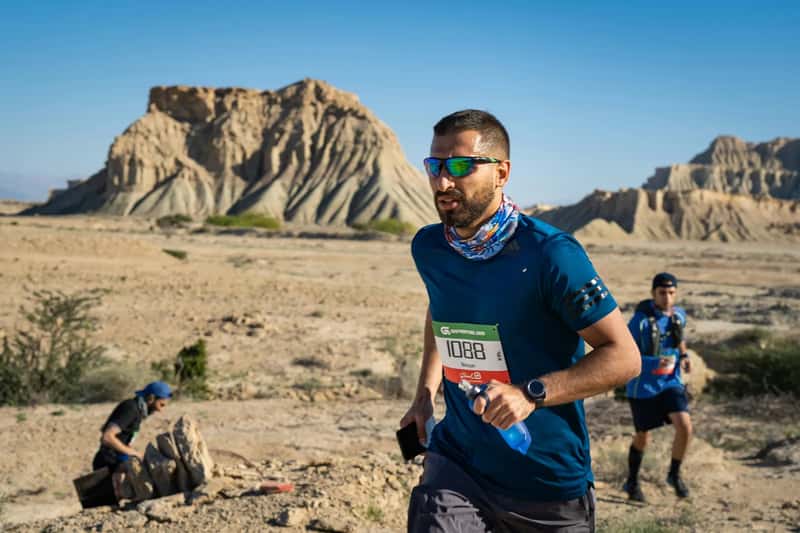
Research exploring the long-term journeys of ultra-endurance athletes found that many athletes adopted their sport not just as a hobby but as “an identity and a lifestyle” – a full adoption that reshaped who they understood themselves to be.
This is the seduction of temporary identity. Away from home, you become the runner. The finisher. The person in the starting corral at dawn, breath visible in the cold mountain air, calf muscles already humming with quiet electricity.
At home, you are something more complicated.
You are the partner who doesn’t say enough. The professional who stopped believing in the work. The adult who looks at the calendar and sees only repetition stretched out like a flat highway to nowhere.
The temporary identity is not fake. It is, in many ways, the truest version. Experienced ultramarathon runners frequently perceive running as a fundamental aspect of identity and way of life, characterized by a strong dedication and desire for accomplishment.
The tragedy is that the identity expires at baggage claim.
2. The Exit Strategy
Escape theory fundamentally diverges from positive explanations of travel, assuming a “negative” driver: people sometimes travel at least partly because they want to be away from a given place, preferring not to be able to quickly return to daily life.
The solo sports traveler has refined this into an art form with a finish time.
They don’t book a trip to the coast. They don’t browse Airbnbs in Tuscany. They enter a race in a mountain range they’ve never visited, pay the entry fee before they can talk themselves out of it, and call it training.
It is not training. It is architecture. They are building a reason to leave that no one can argue with.
“I have a race.” It is socially acceptable armor.
The desire to escape a given place can be due to a number of factors associated with that place – the people who are there, the activities conducted there, or personal and social situations, such as a heavy workload or a constraining environment.
The solo sports traveler knows this. They just call it a training block.
3. The Stagnation That Feels Like Drowning
Domestic stagnation is not dramatic. That’s what makes it lethal.
It doesn’t announce itself. It accumulates. It is the Sunday night feeling that starts earlier and earlier each week. It is the commute where you realize you’ve been on autopilot for so long you genuinely cannot remember the last three exits. It is the dinner conversation that covers the same four topics it covered last month and the month before that.
Chronic reliance on escapism to avoid responsibilities or emotions may worsen anxiety, depression, or feelings of emptiness. But the person who books the race isn’t running from emptiness. They are running from fullness – from a life so densely packed with the expectations of others that there is no oxygen left for a self.
Lack of fulfillment – escaping into fantasy when real life feels disappointing – is one of the core psychological drivers of escapist behavior.
The fantasy here is fifty miles of dirt trail and the sound of your own breathing.
That is not nothing. That is everything.
4. The Body as Proof of Existence
There is a specific psychological transaction that happens when you push a body past what it thought possible.
It becomes evidence.
Ultra-running is associated with a psychological drive to explore physical and mental limits. This is not a small thing. When your domestic life has become a series of soft negotiations and invisible concessions, the body’s refusal to quit at mile thirty-eight becomes a declaration.
I am still here. I am still capable. I am not yet finished.
The solo sports traveler is not a masochist. They are a cartographer mapping the borders of a self they’ve been told to make smaller. Among the endurance community it is commonly said that it takes “90% mind and 10% body” to complete an ultramarathon. What they don’t say is that the mind being tested is not the athletic mind. It’s the part that decided to show up at all.
Every blister is a receipt. Proof of purchase. A life, temporarily and completely, lived.
5. The Mirror at Mile Twenty-Two
I remember the moment I understood this.
It was not at the finish line. It was at mile twenty-two of a trail run through a coastal range I’d traveled to alone. My quads were failing politely. The light was going amber through the tree line. And I had a thought so clear it startled me: I am not running away from anything. I am running toward the only version of my day where I am not managing someone else’s comfort.
That thought lasted approximately four seconds before the climb started again.
But it was enough. Because clarity, out there, doesn’t need to last. It just needs to arrive.
Peak racing experiences were central to understanding the psychology of ultra-endurance athletes, with stories focused on intense emotions, bodily experiences, self-discovery, and encounters with nature. What the research doesn’t say – what it can’t say – is that sometimes the most profound encounter with nature is the encounter with a version of yourself that the living room never gets to meet.
6. The Obsessive Planner as Symptom
Watch how a solo sports traveler plans their trip. Study it.
They research the elevation profile of the race at 11 PM on a Tuesday. They have three spreadsheet tabs: gear, nutrition, and split times. They have read every race report from the last four years. They know which aid station is at mile thirty-one and what they will eat when they get there.
This is not preparation. This is displacement activity.
Unhealthy escapism often masks underlying issues such as low self-esteem, unaddressed mental health conditions, or unresolved personal conflicts, and can exacerbate these problems over time. The obsessive planning of the solo sports trip functions as a controlled narrative. In a life where too much feels out of their hands, the race is something they can study, prepare for, and ultimately – if they train correctly – conquer.
The job does not have an elevation profile you can memorize. The relationship does not have defined aid stations. There is no finish tape in the living room.
But there is one at mile fifty. And that is a kind of sanity.
7. The Exercise Addiction Question
It is worth asking the uncomfortable question.
Where does motivation end and compulsion begin? The line is thinner than the trail tape on a ridge at midnight.
One study found that 20% of ultramarathoners screened positive for exercise addiction concerns, compared to 0.5% for the general population and 3% for habitual exercisers. That is not a small number. That is one in five people at the starting line carrying something heavier than their pack.
A high percentage of ultramarathoners would not stop training even if they learned it was not good for their physical health, as it appears to serve their personal achievement and psychological motivations, suggesting they perceive enhanced positive effects worth retaining at the risk of their health.
The solo sports traveler who books another race the morning after finishing the last one is worth watching closely. Not with judgment. With recognition.
Because the compulsion to keep moving is sometimes the only language available for a pain that has no other words.
8. The Identity Fusion Problem
At some point, the race becomes the self.
Not a hobby. Not a passion. The entire architecture of meaning.
This is the moment when ultra-endurance enters self-identity, and athletes start defining themselves through their sport. For the solo sports traveler trying to outrun domestic stagnation, this fusion is both rescue and risk. Rescue, because they have found something that makes them feel alive in a life that had begun to feel like a waiting room. Risk, because when the body eventually refuses – and it will – they are left not just with an injury but with an identity crisis.
Who are you when you can’t run?
That question, unanswered in a house that feels like a slow verdict, is the one they were never quite willing to sit with.
The race was the answer they gave themselves instead.
9. The Return Problem
Nobody talks about the return flight.
The race is finished. The medal is in the bag. The body is destroyed in the specific, satisfying way that only fifty miles of mountain terrain can accomplish. You are sitting in the departure lounge, compression socks on, a coffee going cold, and somewhere in the back of your chest – beneath the accomplishment, beneath the pride – something is already beginning to close again.
Relying on travel to reset the brain or escape everyday stress can prevent developing emotional resilience and problem-solving skills. In the long run, life’s stressors will continue to build, and running away from them through constant travel can lead to deeper dissatisfaction.
The stagnation will be there at arrivals. Patient. Familiar. Unchanged.
The solo sports traveler knows this. They knew it when they booked the ticket. And they booked it anyway, because a temporary reprieve from a slow death is still, technically, living. And they are right. But only if the return flight also carries a question they are willing to answer when they land.
10. The Reckoning That Runs Beside You
Here is what the research almost says but stops just short of saying.
Ultramarathoners have different motivations than marathon runners, having more robust relationships with the meaning of life while not worrying about their body as much as other runners – implicating ultrarunners’ desire to compete for the sake of self-fulfillment.
Self-fulfillment is a polite word for something rawer. It is the hunger that accumulates in a person who has spent years being competent in a life that does not fit them. The hunger to do something that is only theirs. To suffer in a way they chose. To succeed in a language that nobody else in the house speaks.
The key question to ask of any escapism is whether it is an excuse to avoid the necessary self-reflection. For the solo sports traveler, the answer is more complicated than yes or no. The run itself is often where the reflection finally happens – stripped of distractions, humbled by terrain, alone with a mind that can no longer scroll or schedule its way past the truth.
The fifty miles do not solve the stagnation. Nothing solved by running is ever really solved. But somewhere between mile thirty and the last climb, the problem changes shape. It becomes smaller than the mountain. And that – the recalibration of scale – is not nothing. It is, for many of them, the only form of therapy they’ve ever trusted enough to let work.
What the research captures in clinical language and what the trail confirms in blisters and altitude is the same thing: the solo sports traveler is not broken. They are a person who found the one context in which the distance between who they are and who they are supposed to be finally closes to zero.
The tragedy is not that they run. The tragedy is that the gap still exists when they stop. And the quiet courage – the one nobody at the finish line sees – is that they go home anyway. Back to the living room. Back to the calendar. Back to the life that will require, eventually, not more miles but more honesty than a race registration form can hold.
The question that waits at the door when they return – the one the race prepared them for, whether they know it or not – is the one that actually needs a finish line.