

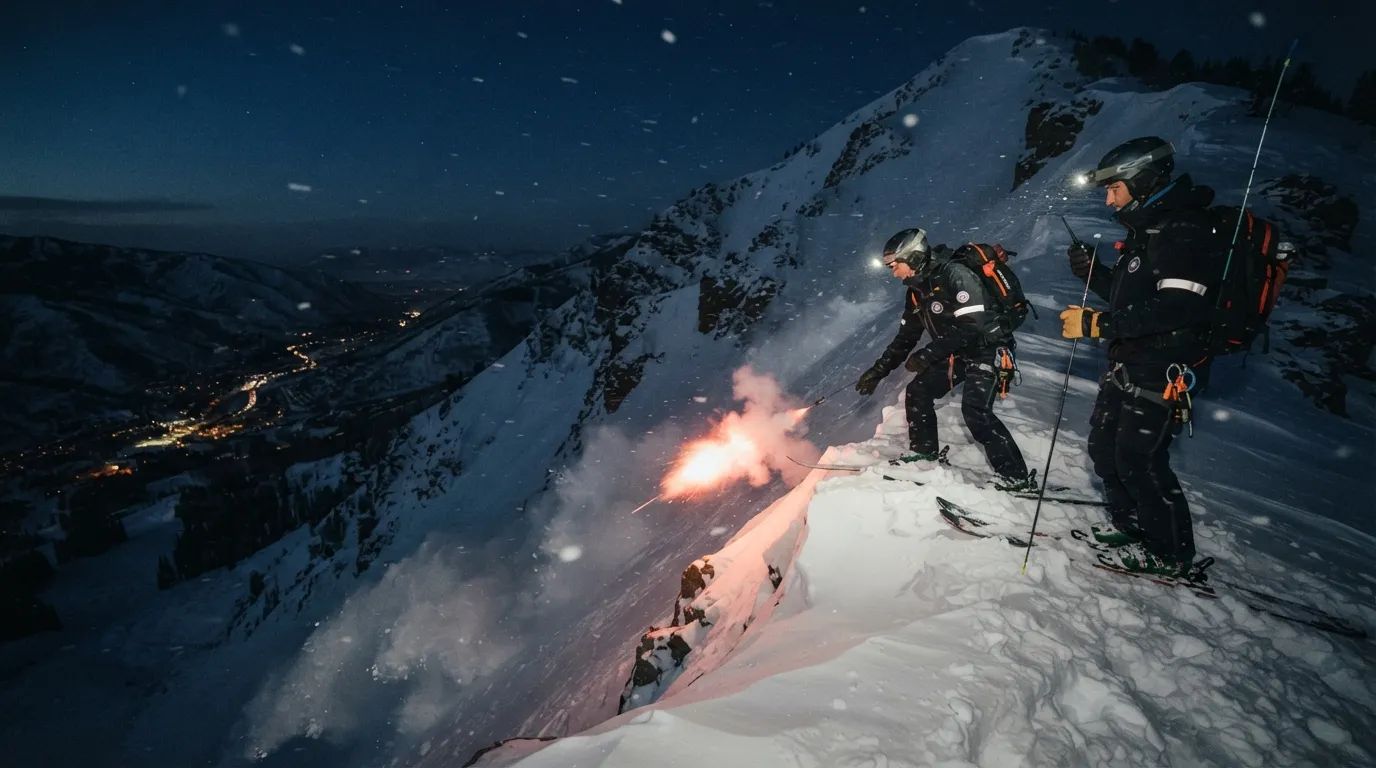
You see the finished product: ruler-straight corduroy, a lift turning right on time, a slope that looks like nobody has touched it. Nobody sleeps through that part. At Deer Valley, snowcats run in two shifts, 4 p.m. to midnight and midnight to 8 a.m., according to the Deseret News,1 and the corduroy you ski at nine o’clock is made in those hours.
Grooming is only one of the night jobs. Snowmakers, lift mechanics and avalanche crews keep their own clocks, and one crew starts around 3 a.m., decides whether the lifts open, and sets off slides on purpose. It all begins with a handoff at midnight, so that is where we start counting down.
#12 – The Midnight Handoff Between Two Grooming Crews
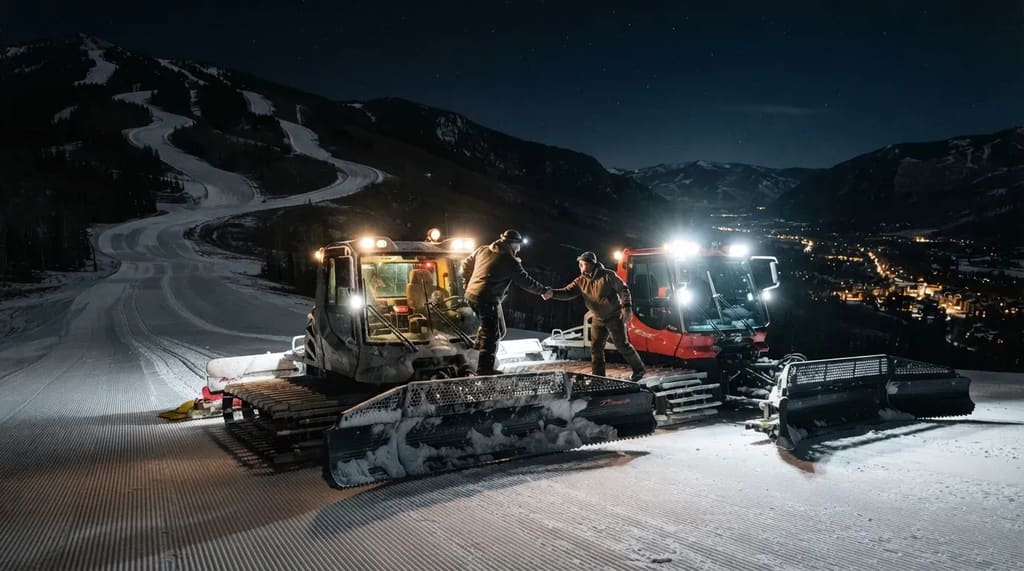
Grooming does not take place during normal operating hours at Crested Butte, so the work has to fit between closing and opening.2 Resorts solve that by splitting the night between two crews, and the changeover usually lands near midnight.
At Deer Valley, the first shift knocks down moguls and regrades the runs, and the second shift puts on the finishing touches.1 The crew working closest to dawn is finishing a surface somebody else already roughed out.
- Deer Valley: 4 p.m. to midnight, then midnight to 8 a.m.
- Jackson Hole: a swing shift from 4 p.m. to midnight, then a graveyard crew until the lifts open
- Lake Louise: anywhere from 4 to 8 cats on each shift
Between its two shifts, Crested Butte grooms more than 500 acres a night, mostly green and blue terrain plus a few black diamond runs.2 On a mountain that size, a clean handoff matters a great deal, and neither crew improvises. Every shift begins with a pre-shift meeting where operators receive the day’s grooming lineup.
#11 – The Pre-Shift Meeting That Decides Which Runs Get Polished
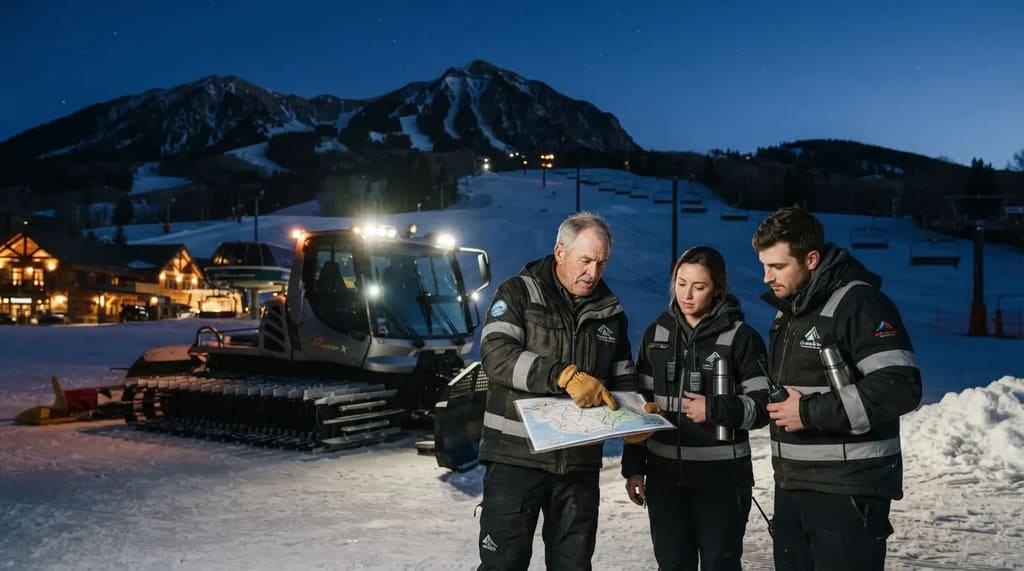
At Crested Butte, the lineup may include special projects such as grooming lift line areas and smoothing out lift load and unload spots. Those are the places every skier passes through, so they get attention before the open trail does.
Popular Science described how this works at Snowbasin. The boss talks with the snowmaking department about where snow is needed, and decides which of the resort’s 60 runs get priority.
Priorities follow traffic. Lake Louise puts more grooming effort into beginner terrain and the runs that see the most traffic, and Crested Butte’s nightly work covers most of its green and blue terrain and only a few black runs.
At a Glance
- Lift lines and load and unload spots get early attention at Crested Butte
- Snowbasin’s boss sets priorities across 60 runs after talking with snowmaking
- Lake Louise leans on beginner terrain and its busiest runs
- Crested Butte covers mostly green and blue terrain, with only a few black runs
So the trail with the scariest name is often not the one with the most polish, and the gentle run near the base probably is. The plan can also change daily with the weather, and a lineup is only paper until someone climbs into a machine that does not steer like anything in a driveway.
#10 – The Snowcat Cab With No Steering Wheel and No Pedals
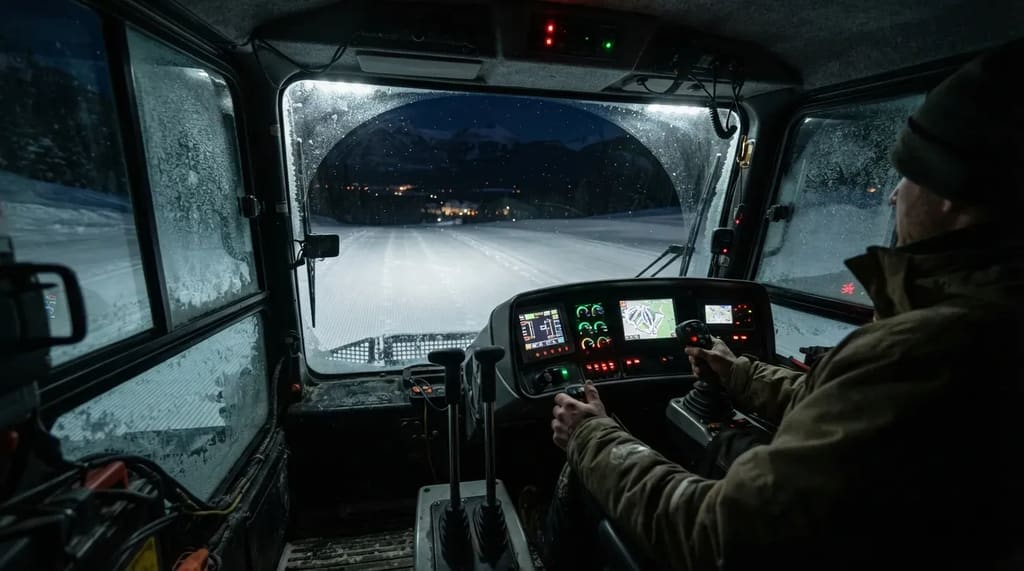
Lake Louise’s grooming supervisor described the cab plainly. There is no steering wheel, and no gas or brake pedal. The driver steers with two levers under the left hand, each controlling one track, and runs almost everything else with a joystick in the right.
Before leaving the shop, operators go through a series of checks to make sure the machine is ready. Then they drive their assigned runs, likely alone, for the bulk of the shift.
A Maine magazine’s account of Sugarloaf’s night crews noted that each operator drives an 11,000-pound machine by himself. When some of the crew came off the hill, they were loud and boisterous after six hours in solitude.
#9 – The Blade and Tiller That Draw Corduroy Into the Snow
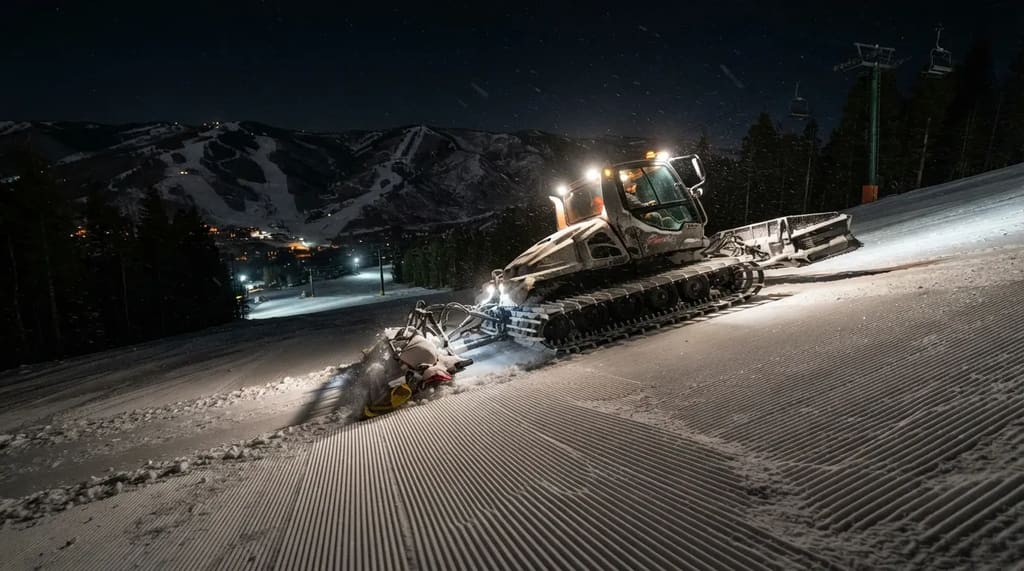
The front of the machine carries a blade and the back carries a tiller. The blade mows down moguls and churns up crud, and the tiller erases the cat’s tracks, leaving lightly lined snow that looks like corduroy fabric.
Park City Mountain’s grooming manager told Ski Utah that dozens of techniques are used, varying with snow conditions and terrain. The operator constantly adjusts the blade and the tiller to shave the snow along the natural shape of the hill.
Skiers undo some of this as they go. When skiers ski a run, they push snow off to the sides, and moving it back is part of a cat’s job. The perfect surface you see at nine o’clock has a short life, and by lunch it is drifting toward the edges again.
Quick Compare
- Front blade: mows down moguls and churns up crud
- Rear tiller: erases the cat’s tracks and leaves the corduroy lines
- Skiers: push snow toward the edges, which the cat has to move back
Jackson Hole’s longest-tenured groomer, Earl Shane Ward, summed up the value: “People pay a lot for that corduroy.” All of that assumes there is snow to move, and when the sky does not supply it, a different crew has to.
#8 – The 27.5-Degree Number Snowmakers Wait For
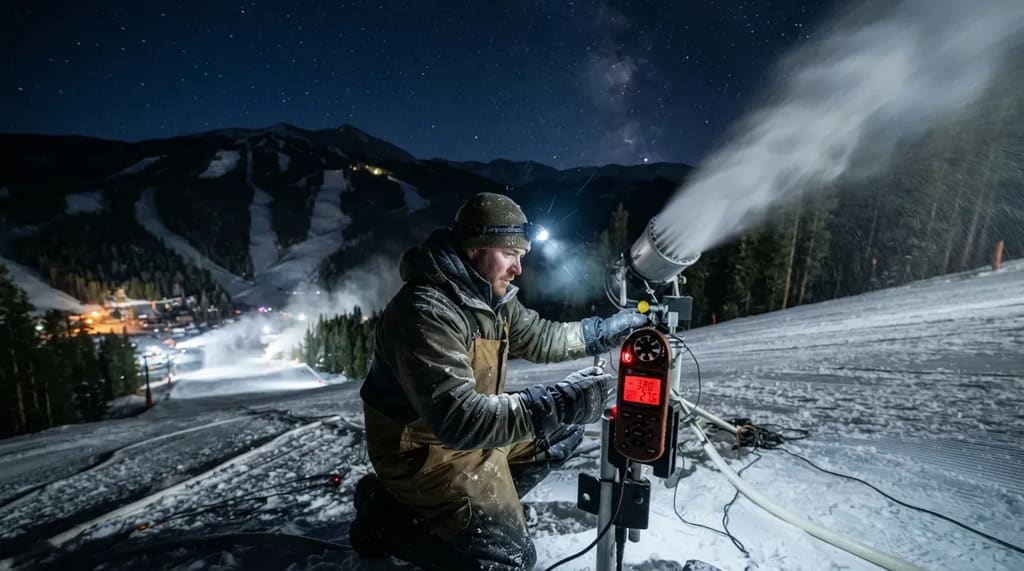
Snowmakers are waiting for a specific figure, the wet-bulb temperature. Colorado Public Radio reported that the ideal snowmaking wet bulb temperature is 27.5 degrees Fahrenheit, and that because of the typical timing of the right conditions, snow gun teams work overnight, starting at 6 p.m.3
Wet bulb combines air temperature and humidity. When air is dry, water droplets evaporate faster, cooling them enough to freeze into snow. The ratings run like this:
- 26°F wet bulb or lower: excellent, high-output snowmaking
- 27 to 30°F: fair production
- Above 30°F: poor conditions, and the guns often shut down
Humidity can ruin a cold night. A dry temperature of 32°F with 90 percent humidity equals a wet-bulb temperature of 30.9°F, which lands in the poor range.3 The number on your phone’s weather app is a weak guide to whether the guns are running.
#7 – The Snow Gun Walkers Hiking Trails in the Dark
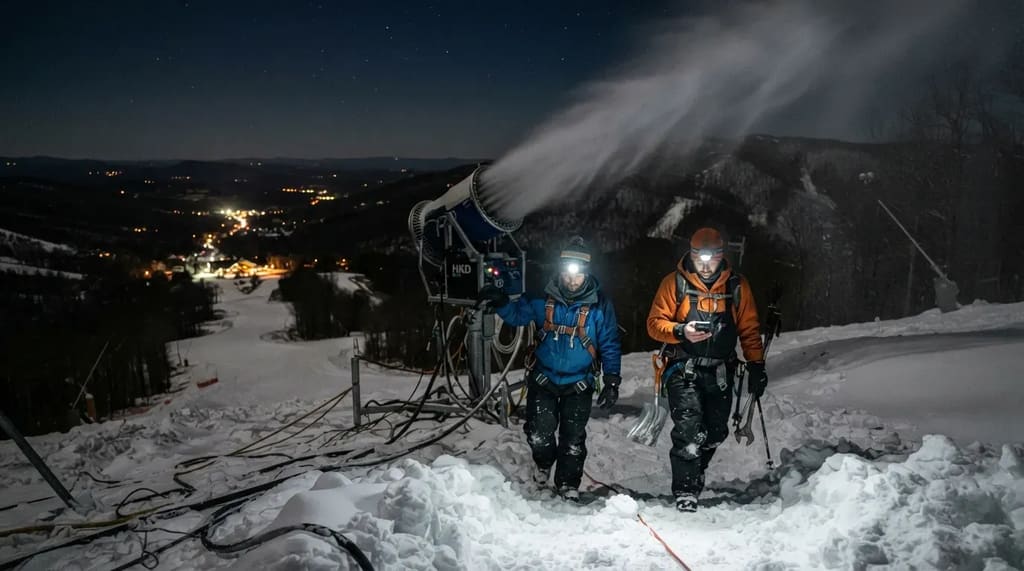
Snowmakers travel in pairs around the mountain, turning high-powered guns on and off and monitoring the quality and depth of the snow. At Massanutten in Virginia, the crew hikes the trails in the middle of the night, adjusting the guns. The work mostly happens after dark, when the cold is deepest.
Some resorts automate the first step. Liberty Mountain in Pennsylvania describes a computerized system that starts the guns once temperature and humidity reach the right levels, then fine-tunes each gun from weather stations along the trails. With 350 guns, that is a lot of adjusting to do by hand.
The result is not an even blanket. Guns on towers create snow drifts which are then smoothed out by bulldozer, which is where the grooming crew picks the work back up.
#6 – The Steel Cable Holding a Groomer on the Steepest Runs
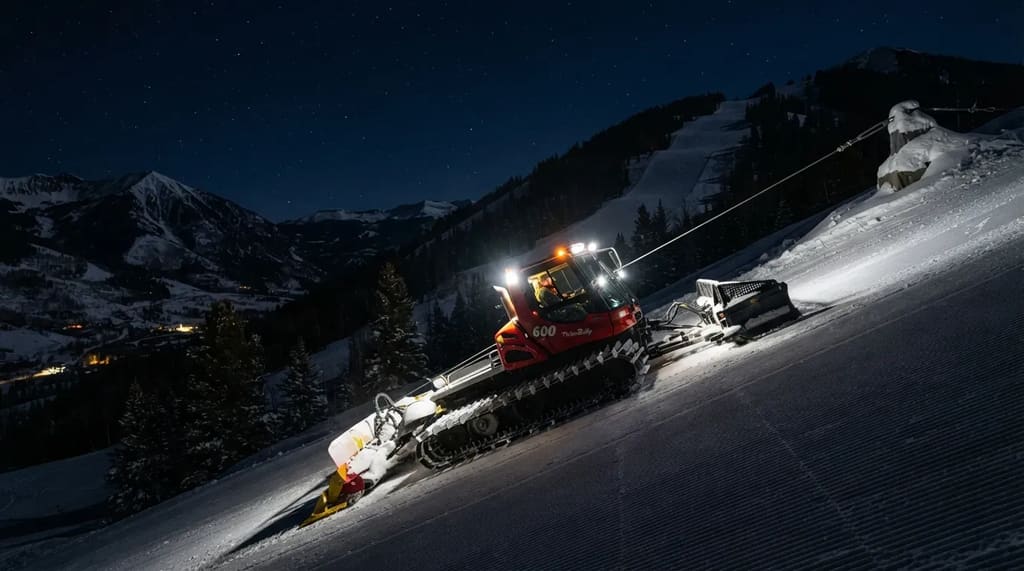
Some trails are too steep for a regular cat. At Crested Butte, a few trails, namely International and Keystone, require a winch cat because of their slope angles.2 Deer Valley notes that with winch cats, expert or black diamond runs can be smoothed.
The method is simple to describe. A high-tension cable runs from the snowcat to an anchor buried at the top of the slope, extending down the full length of the run.2
At Jackson Hole, the steep pitches make winches essential, and over a shift, groomers with winches tend to dirty their windshields with grease from the cables.
It is solitary work, too. A winch cat cannot fleet groom or pair groom, so the operator spends the night alone, talking with other groomers so they stay clear of the cable.
#5 – The Nights a Run Is Left Untouched on Purpose
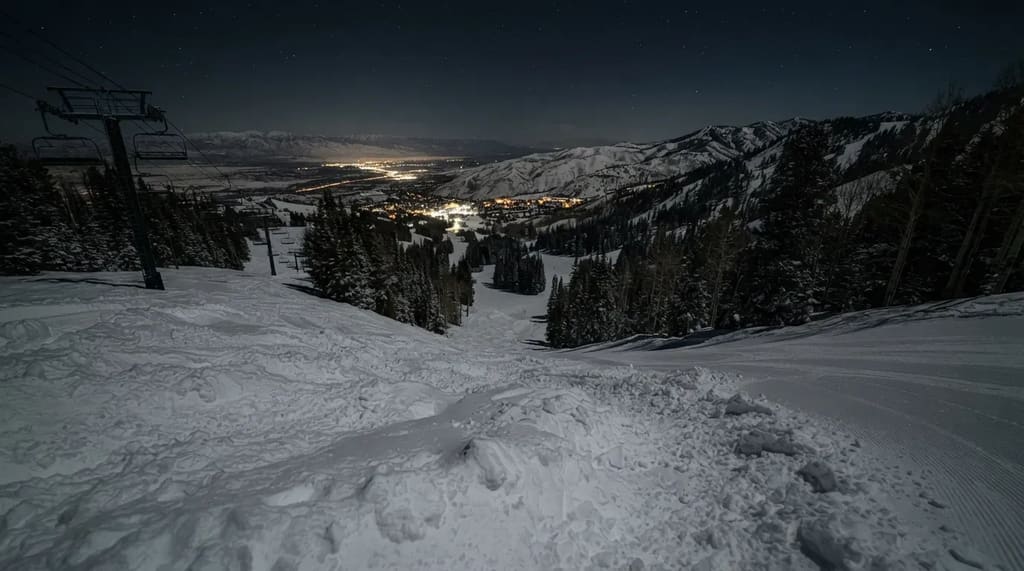
At Snowbasin, groomers work in shifts from about 4 p.m. to 9 a.m. On a quiet night, the team may tackle all 60 runs, but if a few inches of fresh snow fall, plans change quickly. The weather rewrites the lineup.
Sometimes the best decision is to skip a run. The groomer boss sometimes leaves runs untouched so they stay coated in the light, fluffy, dry snow Utah is known for, and powder hounds love it.
If you have ever seen an ungroomed trail after a storm and assumed the crew missed it, the Snowbasin account suggests it may have been a choice. The night crews also work no matter the conditions, blizzard or bluebird.
#4 – The Resort That Grooms 120 Runs on Most Winter Nights
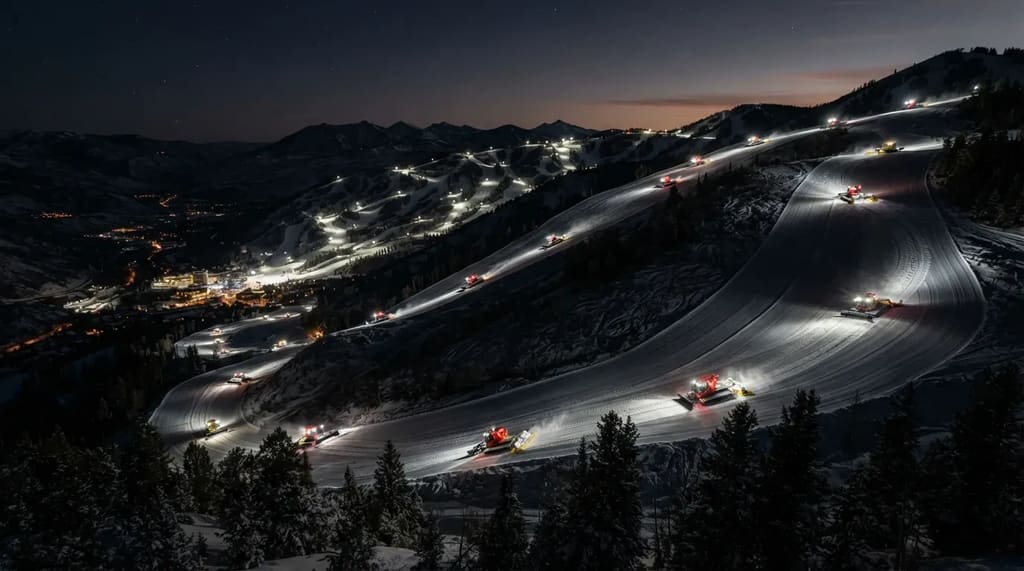
In an older Ski Utah tally, Park City led the state: 120 of its 300-plus runs are groomed most nights of the winter season, on a 7,300-acre resort. Ski Utah called it the most overnight grooming at any single resort in the Western Hemisphere. Other Utah numbers from the same post:
- Solitude: 49 of 77 runs, about 625 acres
- Sundance: 23 of 45 runs
The share matters more than the total. Sundance is far smaller than Park City, yet it still grooms about half its runs every night. Crested Butte’s 500-plus acres a night puts it in the same neighborhood as Solitude’s 625.
The people behind the numbers keep odd hours. At Snowbasin the graveyard shift starts around 11 p.m., and after a sleepless night, most crew members ski the next day, then sleep around 3 p.m. to start again. At Sugarloaf, at least one night worker admitted to staying up all night and grabbing first chair.
#3 – The Lift Mechanics Who Wake the Machines Before Dawn
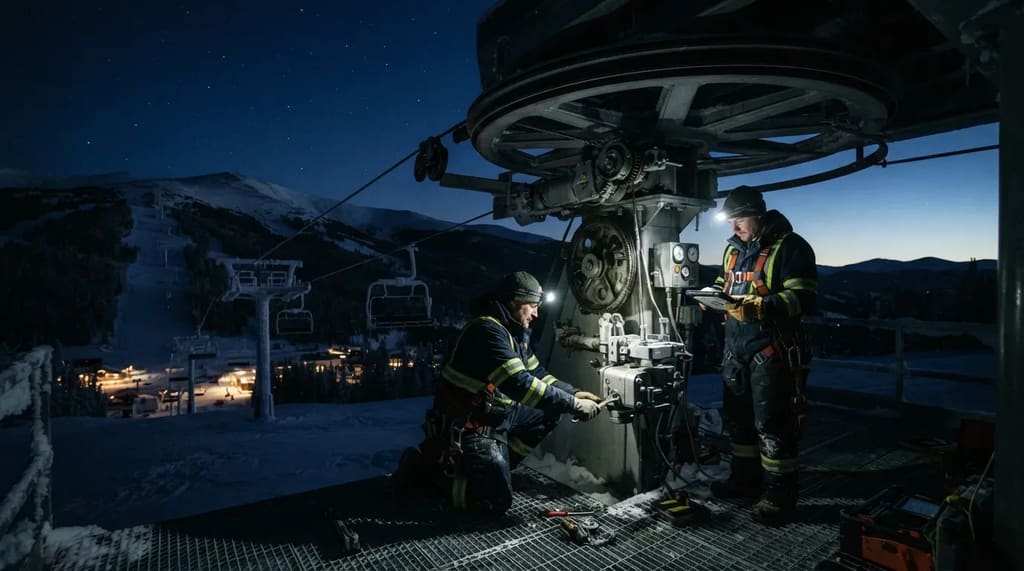
A lift mechanic described winter mornings in SnowBrains: they wake as early as 4 a.m. to reach the mountain by 5. Sometimes they even stay overnight to make sure the lifts are running for the following day.
They also arrive early because other departments depend on them. Lift maintenance employees get to the resort before many other departments, and they open the lifts so ski patrol and the public can reach the mountain. In summer, the focus is on completing state inspection requirements to make sure the lifts are safe for the next season.
Cold nights are the hard part. At Winter Park, an operations executive explained that lifts are exposed to extreme weather, especially overnight, and in the cold they can be “a little grumpy” in the morning. It is not unusual to have to work through a series of electronic signals and check them out.
Related Stories From Travelbinger


Worth Knowing
- Wake-up calls can come as early as 4 a.m., with arrival at the mountain by 5
- Some mechanics stay overnight so the next day’s lifts are ready
- Lift maintenance gets in before many departments so patrol and the public can reach the mountain
- Summer work centers on state inspection requirements
Once a mechanic has the machinery turning, Colorado’s rules require someone to ride the lift before the public does.
#2 – The Required Test Ride Before the First Chair Loads
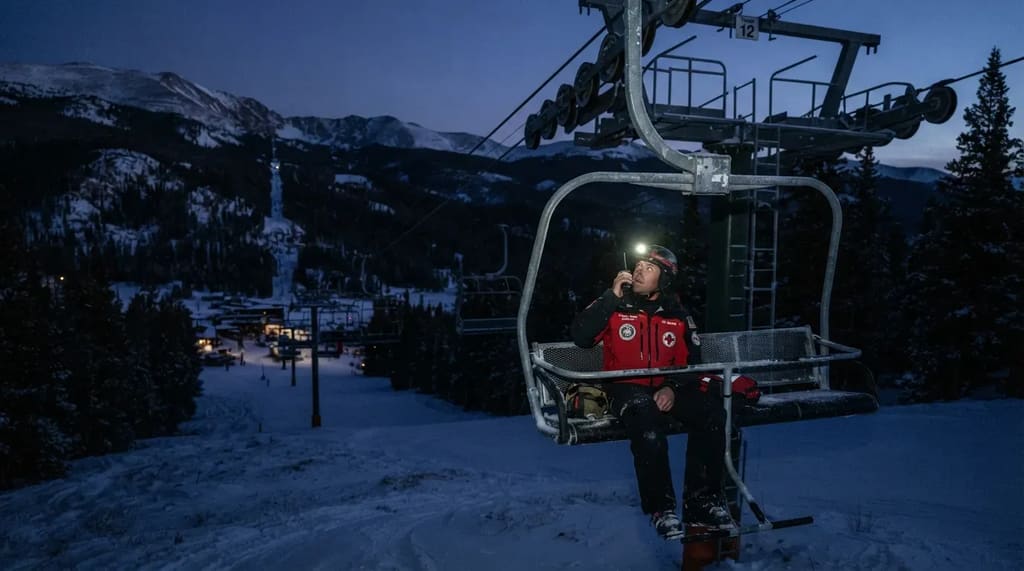
At Winter Park, an executive said a mandated early-morning preoperational inspection occurs on every single lift before it opens to the public.4 Staff check specific parts, as he listed them:
- The sheave trains, which they look at and listen to
- The communication and signal wire down the middle
- The haul rope
Under Colorado’s rules, an area employee connected to opening the lift, such as ski patrol, lift maintenance or a lift operator, conducts the inspection ride.5 If the line is inspected from the chair, the first rider stays in constant communication with the operator.
That is why a lift that opens late after a cold night, like the ones the mechanics fought with earlier, is a better sign than a rushed one. A delay of that kind means the inspection ran its course.
#1 – The 3 a.m. Crew That Triggers Avalanches on Purpose
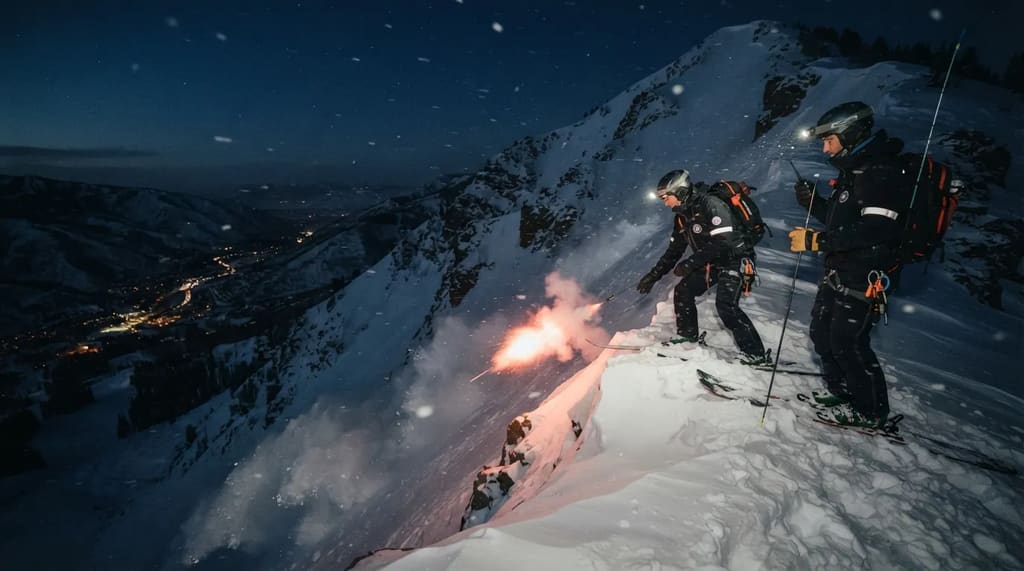
Park City Mountain’s snow safety crews begin showing up right around 3 a.m. or 3:30 a.m., gathering snow and weather information, making a plan and assembling explosives, KPCW reported. They go out in groups of two or three, carrying explosives in their backpacks.
Deer Valley does its explosives work early so it is finished by the time first chair rolls around, and it also uses ski cutting. The Park Record described a March 2023 morning when avalanche danger was rated considerable, patrollers added a fuse cord to each explosive canister, and one used a stopwatch to time the detonation.6
Results can be dramatic. In February 2025, Big Sky said an avalanche was intentionally triggered with explosives before the mountain opened around 8:30 a.m. as routine mitigation work. The slide damaged a chairlift building, and seven resort employees on the lift needed a rope evacuation, though no one was buried or injured.7
Fast Facts
- Start time: around 3 to 3:30 a.m. at Park City Mountain
- Team size: groups of two or three, with explosives in backpacks
- Deadline: Deer Valley aims to finish before first chair
- Big Sky, February 2025: seven employees evacuated by rope, no one buried or injured
The danger reaches the crews, too. In 2017, CNN reported that a 42-year-old patroller working before opening hours at Squaw Valley was killed after a charge detonated. At Tignes in France, the resort says such operations can sometimes delay the opening of ski lifts in certain sectors, so a late first chair after a storm is often this crew finishing the job.
Next time a lift opens a few minutes late or a steep run looks flawless at sunrise, it is fair to assume a crew spent the night earning it. The snow under your skis arrives with a shift schedule behind it, and most of that schedule ran in the dark.
Have you ever stood at a base lodge before opening and heard blasts on the hill above, and what did you think was happening?
- Deseret News Snowcat Grooming: https://www.deseret.com/2007/3/15/20007283/grooming-151-while-skiers-sleep-snowcats-get-to-work/
- Crested Butte Snowcat Operator: https://www.skicb.com/blog/a-day-in-the-life-of-a-snowcat-operator.aspx
- CPR Snowmaking Conditions: https://www.cpr.org/2024/10/11/conditions-colorado-ski-resorts-need-to-make-snow/
- Denver7 Daily Lift Inspections: https://www.denver7.com/news/local-news/state-law-requires-ski-lifts-to-be-inspected-every-morning-prior-to-skier-and-snowboarder-use
- Colorado Aerial Tramway Rules: https://www.law.cornell.edu/regulations/colorado/3-CCR-718-1-2
- Park Record Avalanche Mitigation: https://www.parkrecord.com/2023/04/03/this-winter-is-going-out-with-a-big-bang/
- Big Sky Avalanche Report: https://nbcmontana.com/news/local/big-sky-resort-opens-one-of-two-ski-lifts-affected-following-avalanche