Most of us pass dozens of cameras a day without registering a single one. They sit above shop doors, on traffic poles and inside train carriages. Some belong to police, and many don’t.
Counting them is harder than it sounds, and the numbers vary a lot depending on who is counting and what counts as public. The picture below leans on Comparitech’s 2025 city survey, supported by other research on facial recognition and privacy law. It starts with the places where the lens is most present and ends with three places that push back.
China: The Benchmark Nobody Else Matches
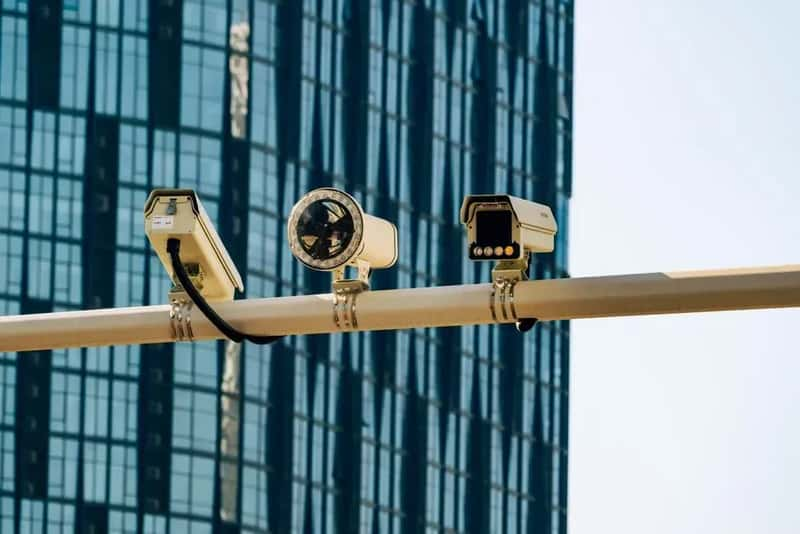
China is estimated to operate around 700 million cameras under its nationwide SkyNet project.[1] Spread across roughly 1.42 billion people, that works out to about 494 cameras per 1,000, nearly one for every two citizens.[1] No other country comes close on raw density.
Cameras are only part of it. On Comparitech’s facial recognition index, China scores 5 out of 40, the most invasive result, where a lower score means more pervasive use.[2] One caveat applies: the study counts cities rather than nations, with China quoted separately as a national figure.[3]
India: Hyderabad and the Rise of the Safe City
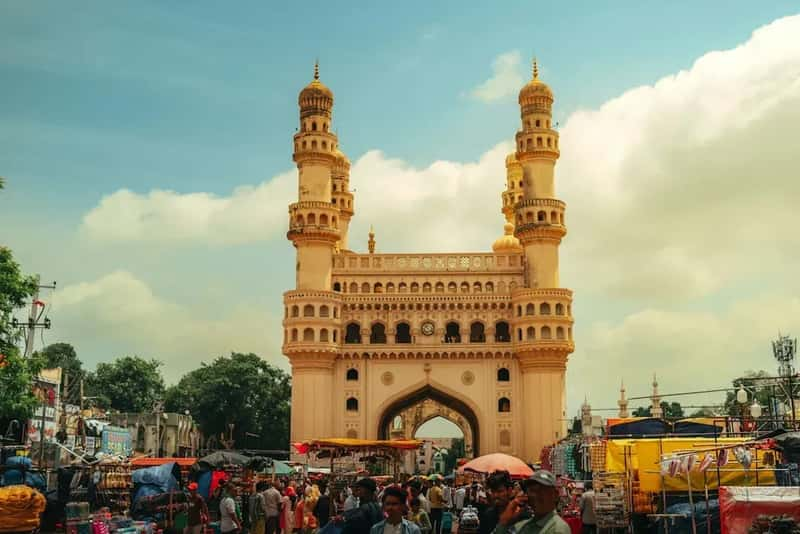
Hyderabad has about 900,000 cameras watching roughly 11.3 million people, or about 79 per 1,000.[4] That makes it the most surveilled city outside China. Telangana, the state around it, is India’s most surveilled at 36 cameras per 1,000 people.[5]
Delhi is pushing in the same direction. Its “safe city” project, introduced in 2025, invests heavily in AI enabled CCTV that can also flag what it classes as abnormal activity.[5] India also runs Aadhaar, the world’s largest biometric database, which covers 1.3 billion people.[6]
Pakistan: A Network Built Largely by Private Hands

Lahore has about 410,000 cameras watching roughly 14.8 million people, at about 28 per 1,000. Most of those cameras are private.[4] Comparitech ranks the city fourth globally for camera density.[1]
The public and private line is blurry here. Comparitech notes that a worrying number of cities are connecting private cameras to police networks, which inflates the count of “public” cameras.[7] Lahore’s figure is a useful reminder that a camera total can describe a policy choice as much as a purchase.
South Korea: Seoul’s Dense Urban Grid
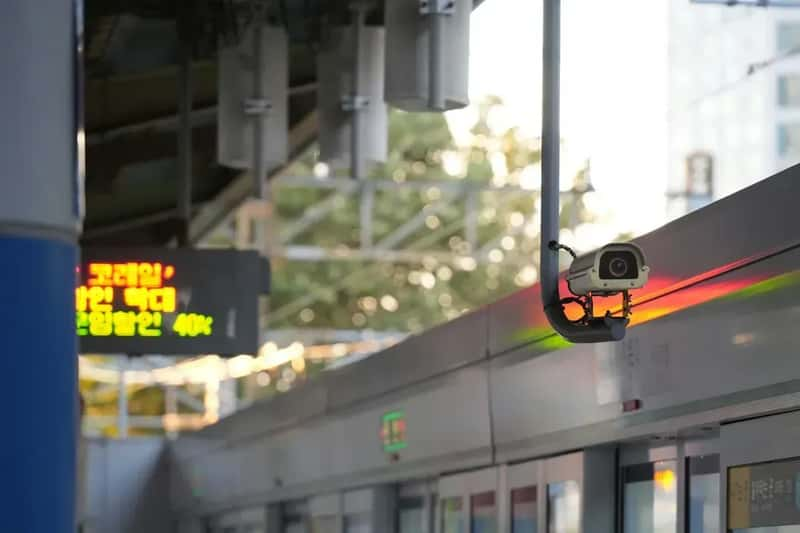
In Seoul, about 243,000 cameras watch over roughly 10 million people, or about 24 per 1,000.[4] That is noticeably more than Moscow’s roughly 19.6.[6] Seoul sits well ahead of London and Los Angeles.
The raw figures need care, though. Comparitech built its dataset from government reports, police websites and news articles.[7] That makes it a solid estimate, not an audit.
Russia: Moscow, St. Petersburg and Facial Recognition
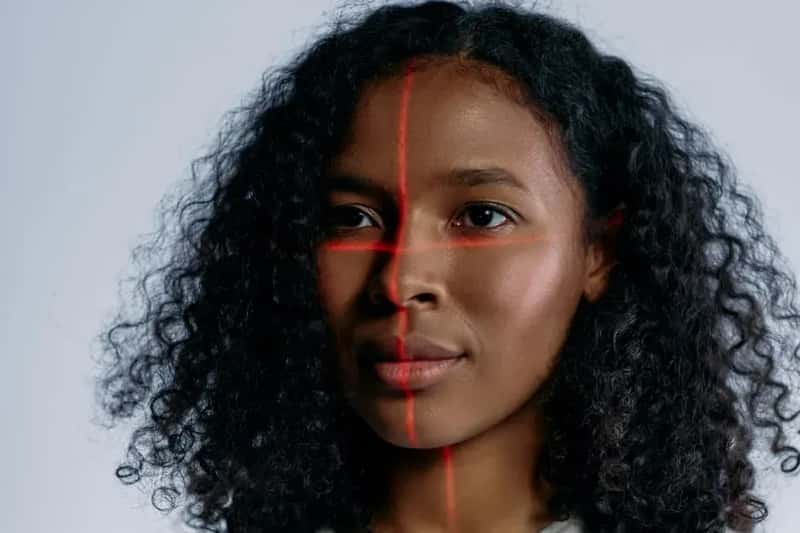
Moscow has 250,000 cameras for about 12.7 million people, around 19.6 per 1,000.[7] St. Petersburg has about 102,000 cameras watching roughly 5.6 million people.[4] Together they put Russia firmly in the global top tier.
The software matters as much as the hardware. On Comparitech’s facial recognition index, Russia scores 8, second only to China, with the United Arab Emirates close behind at 9.[2] Activists have worried that the technology could become a tool of oppression given the country’s human rights record.[8]
Afghanistan: Kabul’s Newly Expanded Network

Kabul has about 90,000 cameras, a figure that comes from the Taliban police, working out to roughly 18 per 1,000.[4] The expansion was reported by the BBC in February 2025.[4] It is one of the more recent additions to the top ten.
The ranking is fragile. Comparitech uses a population of about 4.9 million, while the BBC described Kabul as a city of 6 million, and dividing by the larger number drops Kabul out of the top ten.[4] It’s a good example of how much a single assumption can move a league table.
Singapore: One City, One Country
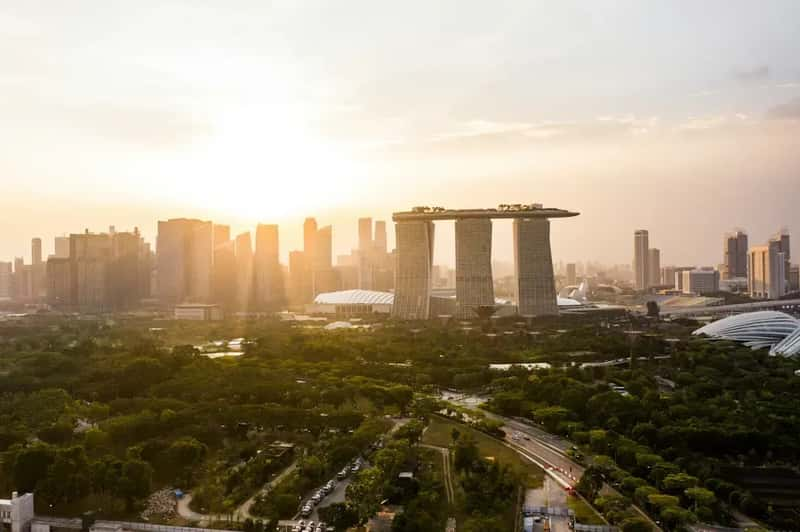
Singapore is treated as a city state in the data, with about 18 cameras per 1,000 people.[3] It appears among the top surveilled places outside China, alongside Hyderabad, Seoul, Moscow and Baghdad.[9] Because city and country are the same thing here, the comparison is cleaner than for larger nations.
Comparitech says it focused primarily on public CCTV, meaning cameras used by government entities such as law enforcement.[7] Singapore’s figure therefore reflects state deployment more than private shopfront cameras. Density this high in such a compact place means it is hard to walk far without crossing a lens.
Iraq: Baghdad’s Quiet Place in the Top Ten
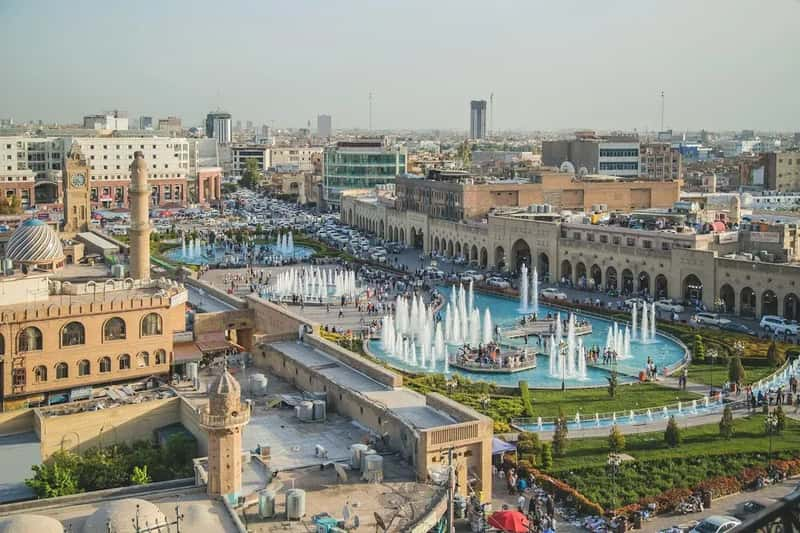
Baghdad ranks tenth in Visual Capitalist’s chart of Comparitech data, with around 120,000 cameras and roughly 15 per 1,000 people.[10] Comparitech lists it among the top ten most surveilled cities outside China.[7] It rarely gets mentioned next to Beijing or London, yet the numbers put it there.
Different tallies disagree slightly, which is common in this field. Older editions of the data put the figure a touch higher, at around 16 per 1,000. The broad takeaway holds across versions: a very large city with a substantial camera network.
United Kingdom: London’s Reputation Versus the Numbers
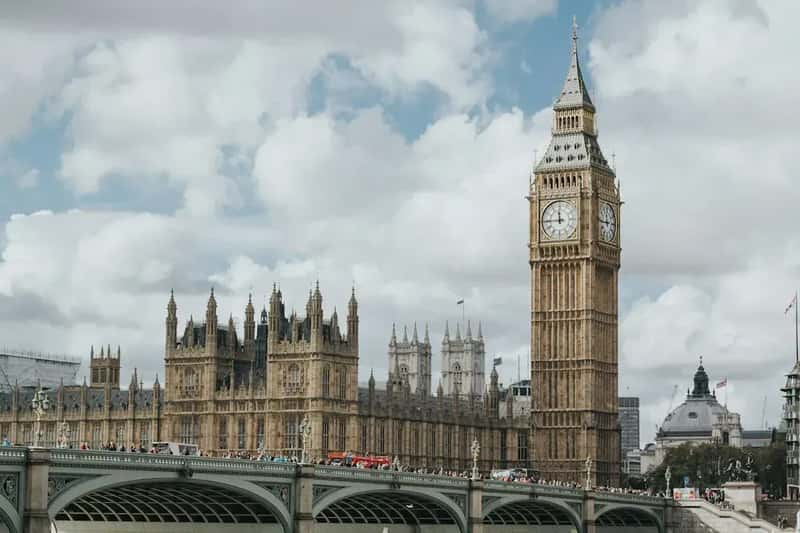
London sits at about 13.4 cameras per 1,000, barely ahead of Los Angeles at 12.4, despite Britain’s reputation as the most camera covered country in the West.[3] That is a smaller gap than most people assume. The reputation is older than the data.
Facial recognition adds another layer. Both the United States and the United Kingdom score inside the top five of Comparitech’s facial recognition index, despite frequent public debate over the technology at home.[2] Public argument and public rollout, it seems, can run in parallel.
United States: A Patchwork, Mostly Private
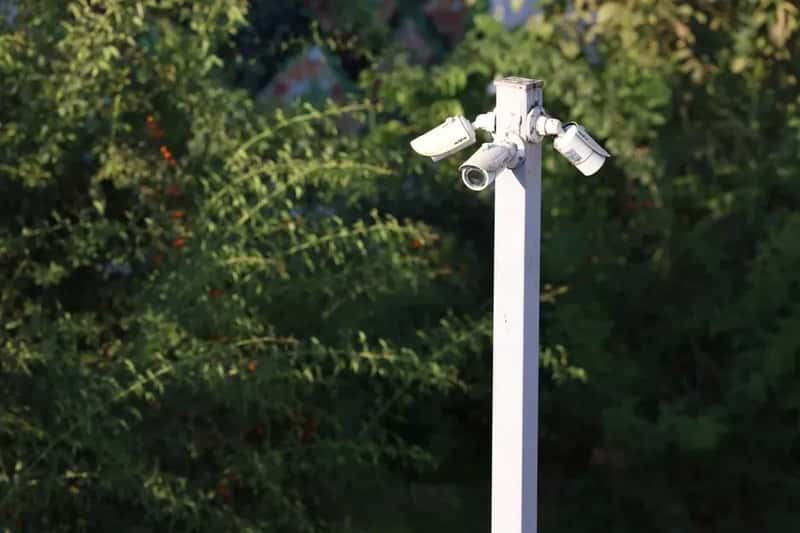
Los Angeles has 46,766 cameras, equal to 12.4 per 1,000 people.[9] The city also installed AI cameras for wildfire monitoring and a registry that lets police locate thousands of cameras.[9] It reads less like one network than many.
Industry estimates go much bigger. One estimate puts the national total at around 50 million cameras, the vast majority belonging to businesses, transport services and homes rather than the government.[1] On facial recognition, the United States ties with Brazil, Chile, India and Japan at a score of 12.[2]
Switzerland: Privacy Written Into the Constitution

Article 13 of the Swiss constitution guarantees citizens a right to privacy, backed by strict federal laws.[11] The Federal Data Protection Act prohibits processing personal data unless the subject or the law authorizes it.[11] People and companies are both covered.[11]
Rankings in this space are subjective, so treat the praise with some care. One 2026 review calls Switzerland probably the best place to be for privacy.[11] That is an opinion, though a well grounded one, given the legal framework behind it.
Iceland: Small Island, Strong Safeguards

Iceland’s parliament passed Act 80/2018, the Data Protection Act, in July 2018 to implement the GDPR.[11] Its Data Protection Authority supervises companies’ compliance and looks for weaknesses in data policies.[11] The country also has an unusual press tradition.
In 2010, the International Modern Media Institute changed Icelandic law to protect freedom of speech and information, with WikiLeaks involved, giving protection to journalists and whistleblowers.[11] The Global Peace Index 2025 also lists Iceland as the most peaceful country, a position it has held since 2008.[12] Low crime may be part of why heavy surveillance has found little foothold there.
Luxembourg: A Rare Formal Ban on Facial Recognition

Comparitech’s country by country review found evidence of facial recognition use in 97 of the 100 most populated countries.[2] Just two countries, Belgium and Luxembourg, have a formal ban, according to Comparitech’s tracking.[2] That makes Luxembourg a genuine outlier.
The ban applies to facial recognition, not to cameras in general. Luxembourg is also a small country, so the data on it is thinner than for the giants above. It does appear in one 2025 list of countries with strong legal frameworks for protecting privacy.[13]