Tap-to-pay gets most of the attention these days. Still, a fair number of wealthy, well-connected countries haven’t moved as far from banknotes as you might expect. The gap between what people say about digital payments and what they do at the till can be surprisingly wide.
The picture also depends on what you measure. Some studies count transactions, others count money spent, and a few ask what people would like to do. The seven countries below show up repeatedly in recent research from central banks and government agencies, covering 2024 to 2026.
Slovenia

Slovenia sits near the top of the euro area for cash use. In Slovenia, Malta, Austria and Italy, the share of cash payments at the point of sale is still over 60%[1], according to the ECB’s 2024 survey as summarised by the Dutch central bank. Across the whole euro area, more than half of all point of sale transactions were paid in cash in 2024[1], so Slovenia sits well above that average.
Cash also matters in everyday exchanges between people. The ECB found that cash was used most often for person to person payments in Germany, Italy, and then Cyprus, Slovenia and Slovakia[2]. Slovenia’s own central bank noted that consumers there still use cash most, though its level of use is declining[3], and that larger purchases tend to go on electronic payments.
Malta

Malta had the highest cash share at the till in the ECB’s 2022 survey. Cash prevailed in 77% of point of sale transactions there[4], ahead of Slovenia, Austria and Italy. By value, cash also led in Malta at 65%[4], which suggests it wasn’t just used for coffee and bus fares.
The 2024 data shows Malta still among the countries above the 60 percent mark, though the direction of travel is downward. There’s an interesting twist on the business side. Only 9% of small and medium sized businesses in Malta said they preferred being paid in cash[5], one of the lowest figures in the euro area. Consumers use cash often, but shopkeepers aren’t necessarily asking for it.
Austria
Austria is the standout when it comes to businesses. The ECB’s 2024 company survey found that Austria stands out with a cash preference of 54% among small and medium sized firms[5]. That’s well above Croatia, Italy and Slovenia, and far above Finland.
Consumers follow a similar pattern. Back in 2022, cash was used in 70% of point of sale transactions in Austria[4], and the 2024 figures still put it over 60 percent. Austrians are also among those most likely to say they need help with digital payments: around one in ten in Austria said they needed assistance with online, card or mobile payments[2].
Italy
Italy tells a familiar Mediterranean story of small shops, cafés and markets where a banknote is the quickest option. In 2022, cash was used in 69% of point of sale payments in Italy[4], and the ECB’s 2024 round kept it above 60 percent. Cash is also common in person to person payments, where Italy recorded 44%[2].
Businesses are more mixed. Among small and medium sized companies, 37% of Italian firms preferred to be paid in cash[5], which is well behind Austria but clearly ahead of the northern euro countries. Some households are also paid in cash: 6 to 7 percent of people in Italy, Austria and a few other countries said they received up to a quarter of their regular income in cash in 2022[4].
Germany
Germany has long been the poster child for cash loyalty, and 2025 marked a turning point. The Bundesbank reported that people used cashless means of payment more frequently than cash for day to day purchases for the first time[6]. The split was 55 percent of recorded purchases without cash[6], which still leaves notes and coins in a little under half of them.
By value, cash was still a heavyweight, since cash and credit transfers each accounted for 23 percent of turnover[6]. The attachment is emotional as well as practical, with eight in ten Germans still saying they want to keep the option to pay with notes and coins[7]. Acceptance is nearly universal too: a summer 2025 test found that 99.4 percent of the sales outlets visited accept cash[8].
Japan
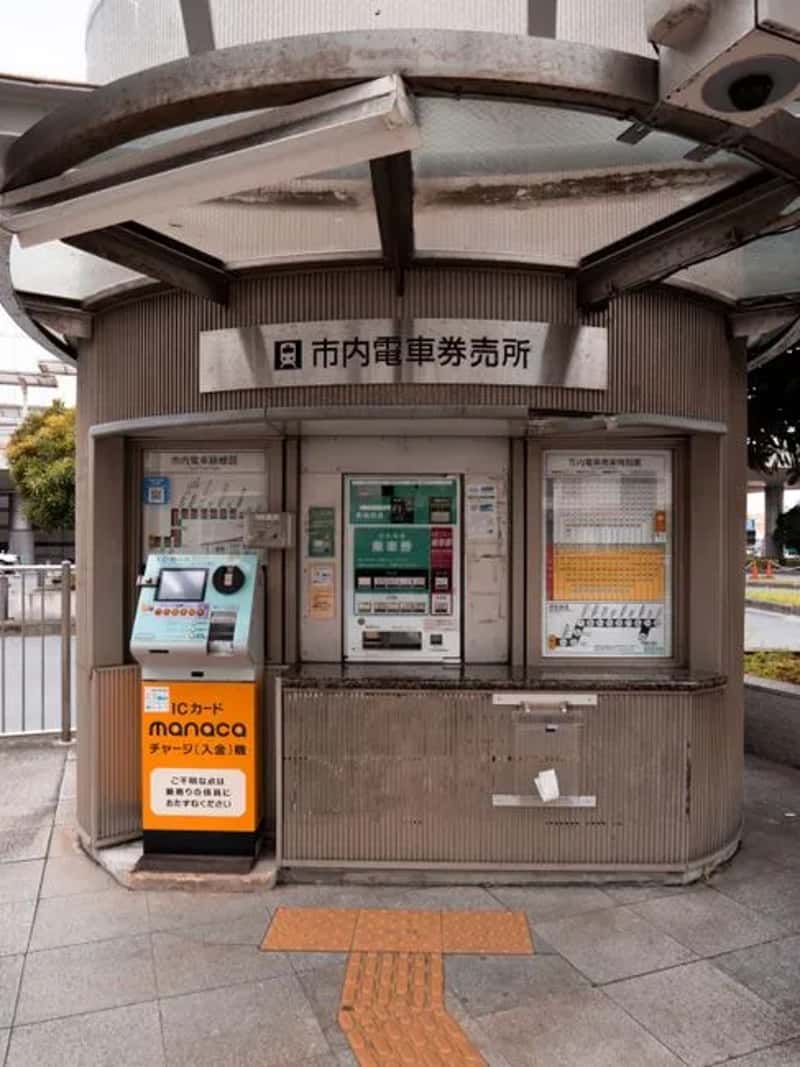
Japan is a high-tech country with a stubborn cash habit, although it’s changing quickly. According to the Ministry of Economy, Trade and Industry, the cashless payment ratio rose to 58.0 percent in 2025[9]. That’s nearly double the roughly 30 percent recorded in 2021[10].
Cash hasn’t gone away, though. One travel guide points out that more than four out of every ten yen spent is still cash[11], and that it clusters in shrine offerings, owner run small shops and diners, traditional markets and festival stalls[11]. There’s also a measurement caveat: reporting on the ministry’s methodology says that under the older calculation, the 2025 ratio would be lower, at approximately 46.3%[12].
Egypt

Egypt’s reliance on cash is tied to the size of its informal economy. The US State Department estimates that the informal economy accounts for roughly 40 to 60 percent of gross domestic product[13], and it describes a cash based culture that is a barrier to banking service providers, although this is gradually changing[13].
The shift is real, but it’s from a low base. Financial inclusion reached 74.8 percent at the end of 2024, up from 70.7 percent in December 2023[13], and mobile wallets are growing fast, with transaction value up 72 percent year on year in the second quarter of 2025[14]. A 2025 Boston Consulting Group study found that cash remains a preferred payment method for more than a third of consumers in the Middle East and Africa[15], a region that now includes Egypt in its analysis.
Where This Leaves Cash
Across all seven countries, cash is declining, but at very different speeds. In the euro area, cash was the most frequently used payment method at points of sale in 14 out of 20 countries in 2024[1]. Germany crossed the cashless line in 2025, Japan is moving toward a government target of 65 percent by 2030, and Egypt is building its digital rails from a much lower starting point.
The ECB’s next consumer payment survey is expected to be released in 2026[3], and it will show how far these numbers have shifted since 2024.