
Ask a dozen American travelers how long they can stay in Europe, and most will say “90 days.” That’s roughly right, but the details are where trips go wrong. People treat the number like a per-country allowance, a per-trip allowance, or a clock that resets when they cross a border.
The rule hasn’t changed, but the way it’s enforced has. Since 2025, Europe has been replacing passport stamps with a digital record. Here’s what the rule actually says, what’s new, and the mistakes that still catch people out.
It’s 90 Days in Any 180, Not 90 Days Per Trip

The actual rule is 90 days within any rolling 180-day period[1]. The EU’s own FAQ confirms that these short stay rules are harmonised in the Schengen Borders Code and allow stays of 90 days in any 180 days[2]. A trip isn’t the unit of measurement. Your total days are.
That means two separate three-month vacations can collide if they fall too close together. On any given day, you look back over the previous 180 days and count how many you spent inside the zone. If the answer is 90, you’re done until older days drop out of the window.
The 90 Days Are Shared Across Countries
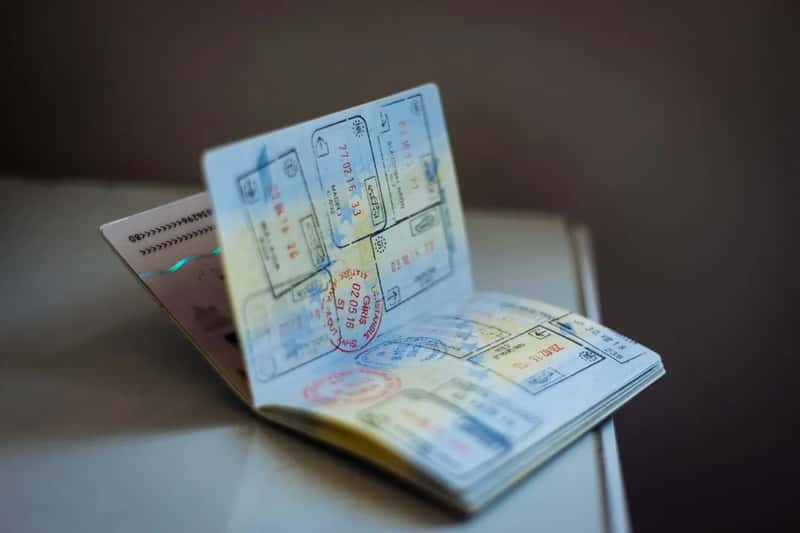
One of the most common misunderstandings is that each country gives you its own 90 days. It doesn’t. It is not 90 days per country, and it is not 90 days per trip.[1] Instead, two weeks in Spain, a month in France and six weeks in Italy all draw from the same 90-day allowance[3].
The EU’s current figure is 29 participating countries. The State Department notes that Americans now pass through the EU’s Entry and Exit System when traveling to 29 European countries.[4] So a slow trip through several of them still adds up to one shared tally.
The Window Is Rolling, Not a Calendar Reset
Many travelers imagine the clock restarting on a fixed date, like a new quarter. That isn’t how it works. It’s not calendar-based, it’s a rolling 180-day window that resets daily.[5] Each morning, the window slides forward by one day and the oldest day falls off the back.
This is why “just leave for a week and come back” rarely works as a trick. Another guide puts it plainly: only days spent outside the whole Schengen area stop the count[3]. Whether you’ve got room left depends on the specific dates in your history, so a calculator or a careful spreadsheet beats guesswork.
Entry and Exit Days Both Count

A smaller trap involves partial days. A legal guide on the rule reminds travelers that both your entry and exit days count as days spent in the Schengen Area[6]. Landing at 11 p.m. or leaving at 6 a.m. still uses up a day.
That matters most for people planning to the last day. If you book a flight home for day 90, you’ve left no margin for a cancelled flight or a strike. Building in a buffer of several days is cheap insurance.
Ireland, the UK and Cyprus Don’t Use Up Your Days

Not every European country is in the Schengen Area. According to one rule guide, the UK and Ireland are not in Schengen, so days there do not count[3]. Another source lists Ireland and Cyprus among the places whose days do not count toward your Schengen 90[7]. That’s why some long-stay travelers split their time between Schengen and non-Schengen countries.
Still, those countries run their own entry rules. The UK, for one, requires a UK ETA, already live for US citizens since January 2025[1]. Treat each non-Schengen stop as its own legal question rather than a free pass.