Somewhere north of mainland Europe, past the last ferry route and beyond where most maps stop labeling things, there’s a stretch of the planet where clocks lose their usual meaning. Locals joke about forgetting whether it’s 3 a.m. or 3 p.m. because the light outside looks identical either way. It sounds like an exaggeration until you actually check the sunrise and sunset tables for the place people are talking about, and realize the numbers barely make sense to anyone living at normal latitudes.
Norway and the archipelago that makes the claim true
The country most associated with months of unbroken daylight is Norway, though the real headline belongs to a remote Norwegian territory rather than the mainland. Svalbard is a Norwegian archipelago between mainland Norway and the North Pole with around 2,500 people inhabiting the islands.[1] It sits so far north that its northern reach begins to blur into the Arctic Ocean itself.
Svalbard is so far north that it feels closer to the North Pole than to mainland Europe.[2] That geography is exactly why the archipelago produces the longest midnight sun season anywhere in the country, and why it keeps showing up in articles about places where the sun refuses to behave normally.
Why the sun stops setting at all
The mechanism isn’t mysterious once you picture the Earth tilted on its axis rather than standing straight up. Since Earth tilts about 23.5 degrees on its axis, regions inside the Arctic and Antarctic Circles experience extreme seasons of light.[2] During the months when the North Pole leans toward the sun, that tilt keeps the sun above the horizon continuously rather than letting it dip down for a proper night.
In summer, the sun can stay above the horizon for weeks or months, and in winter, it disappears entirely in what scientists call polar night.[2] It’s a straightforward trade, six bright months balanced against a dark counterpart, though the exact length depends heavily on how close to the pole a given spot actually sits.
How close Svalbard gets to a true six months
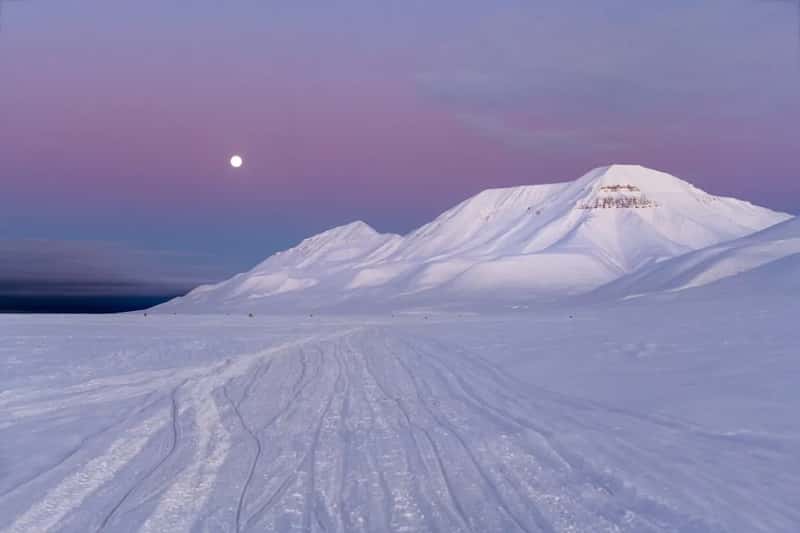
The “six months” framing is popular online, but the real figures are a touch more nuanced. In Longyearbyen, midnight sun lasts from 20 April until 23 August, and polar night lasts from 26 October until 15 February.[3] That puts the sunless summer stretch at roughly four months rather than a full six.
The true half year of unbroken daylight is reserved for the poles themselves. The North Pole has midnight sun for about 6 months, from approximately 18 March to 24 September, while the South Pole in Antarctica experiences the same phenomenon from approximately 20 September to 23 March.[4] Svalbard gets close enough to that extreme to earn the popular reputation, even if its calendar runs a bit shorter than the poles’ full six-month cycle.
Longyearbyen, the town living the endless day
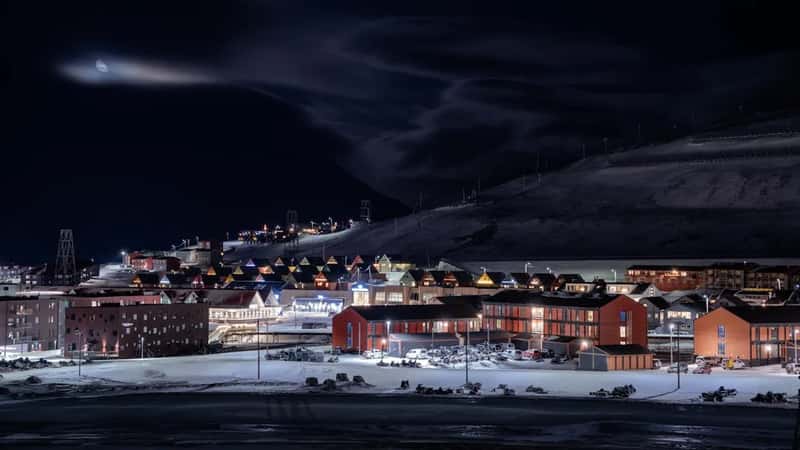
Most of Svalbard’s population lives in one town, and it happens to be the best window into what continuous daylight actually feels like day to day. Svalbard is home to about 2650 people, and most of these live in Longyearbyen, the administration centre for the archipelago.[5] Restaurants stay open at odd hours, hiking groups head out at what would be midnight anywhere else, and the town’s rhythm shifts to match the light rather than the clock.
From the modern town Longyearbyen, which offers a wide range of cultural activities, restaurants, and bars, you can venture into the wild (always with an armed guide) to explore the islands’ Arctic nature, rich wildlife, and old mining towns.[6] That last detail, the armed guide, isn’t a tourism gimmick either. Polar bears are a genuine presence on the islands, and leaving town without protection is generally discouraged for good reason.
What the midnight sun actually looks like
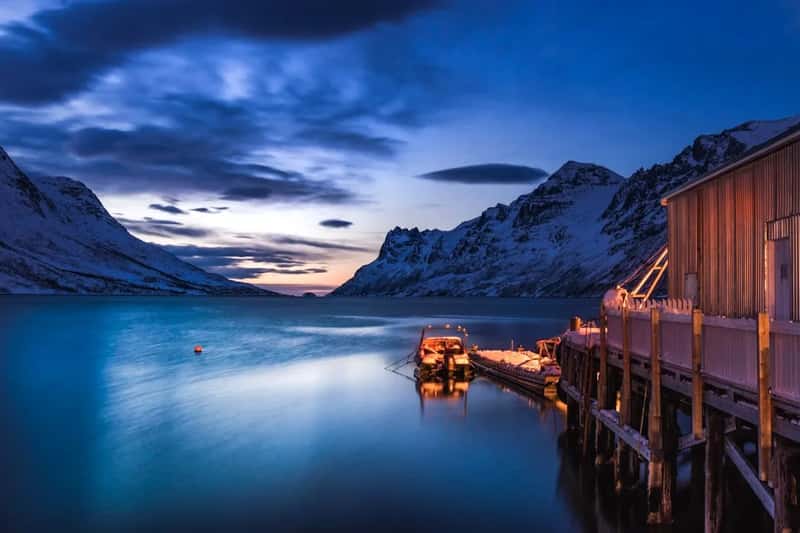
People expect the midnight sun to look like a permanent noon, but the reality is stranger and quieter than that. Halfway between mainland Norway and the North Pole, you’ll find the Svalbard Islands where the polar bears reside, and here you can really talk about an endless day, the sun patrolling the sky in almost uniform circles all summer.[6] Rather than sitting overhead, the sun tracks a slow, low loop around the horizon, never climbing high but never dropping out of sight either.
The light itself has a particular character that photographers chase deliberately. The golden glow is what many people remember most about their midnight sun experiences, and it tends to accentuate colours and elongate shadows, providing plenty of scope for dramatic and expressive photography.[6] It’s less a blinding glare and more a soft, constant amber that makes ordinary landscapes look slightly unreal.
The other half of the year: total darkness
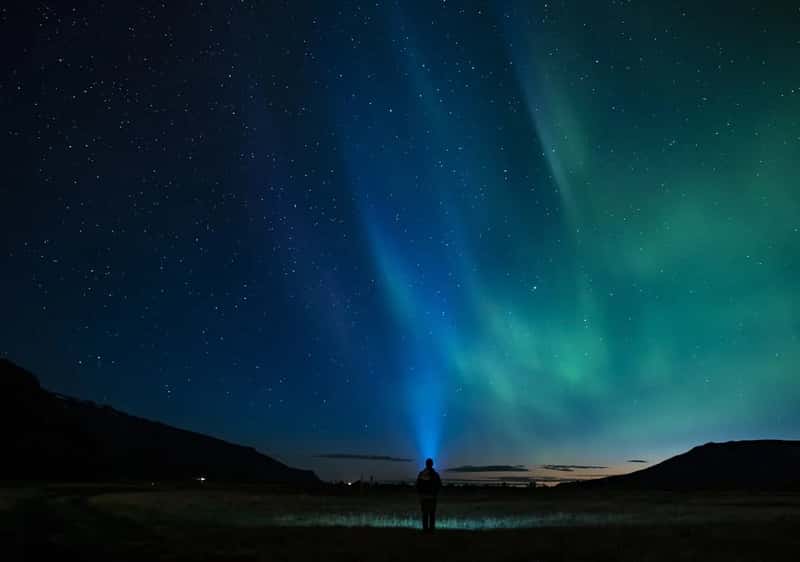
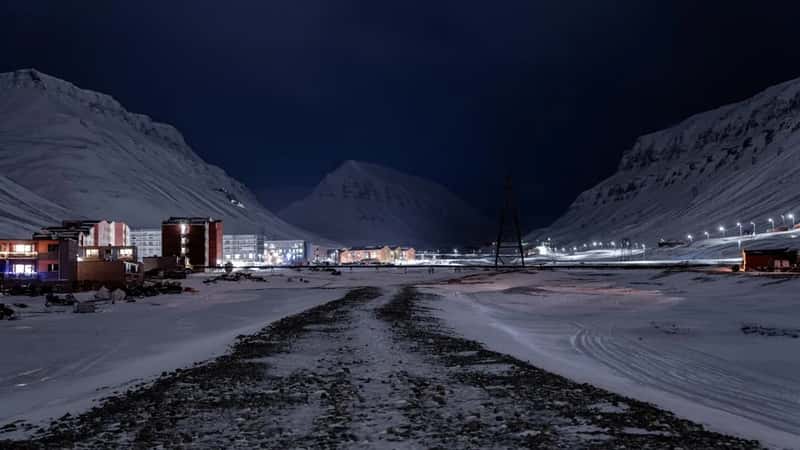
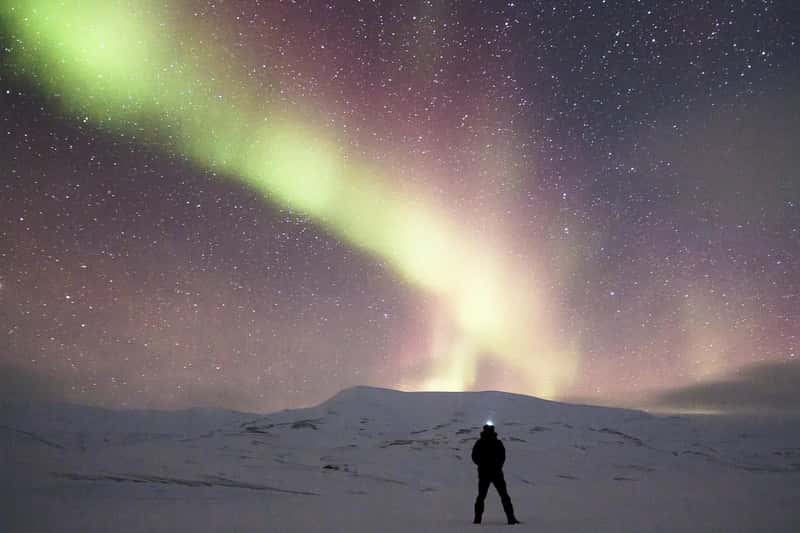
For every sunless summer, there’s an equally extreme winter waiting on the other side of the calendar. On Svalbard, people wear headlamps day and night for two-and-a-half months of the year, because it’s Polar Night, the period where the sun doesn’t rise above the horizon in the Arctic.[5] Streetlights stay on around the clock, and getting anywhere on foot without a headlamp becomes genuinely impractical.
The darkness isn’t absolute in the way people often picture it either. In Svalbard, the Polar Night lasts from around November 14th to January 29th and is defined as a Civil Polar Night, meaning that despite the seemingly never-ending darkness, there are still small glimpses of twilight on the horizon.[7] Locals describe a strange blue-hour quality to the middle of the day, a dim glow rather than pure black.
Nature’s response to nonstop daylight
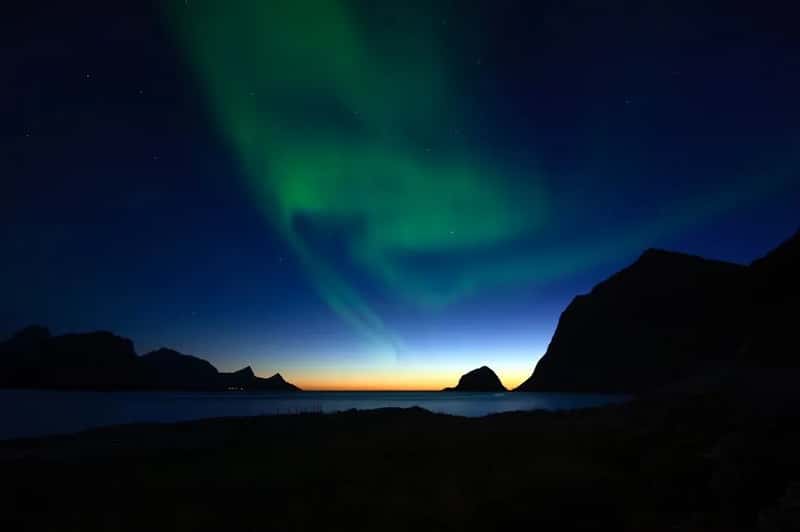
Continuous sunlight doesn’t just change human schedules, it reshapes the entire ecosystem for a few months a year. The archipelago is invaded by birds which migrate here in vast numbers to nest.[8] Millions of seabirds time their arrival precisely to take advantage of the round-the-clock feeding window the midnight sun provides.
Plant life reacts just as dramatically once the snow retreats. In the summertime an abundance of plants and fungi emerge under the warming rays of the Midnight Sun, creating colourful specks of life on the otherwise inhospitable tundra, with most of these plants especially adapted to the harsh conditions of the High Arctic.[8] Some of those species exist nowhere else on the planet, having evolved specifically around this odd light cycle.
The seed vault hiding beneath the midnight sun
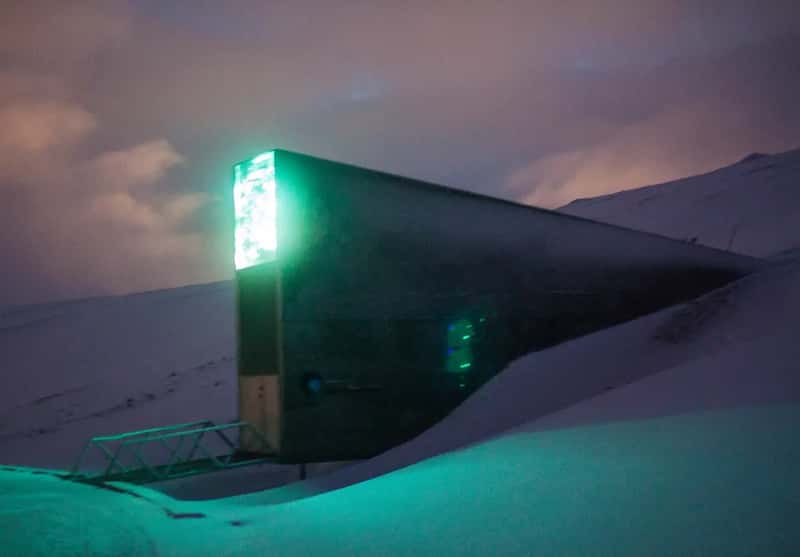
Svalbard’s extreme light cycle has made it useful for reasons that have nothing to do with tourism. The famous Svalbard Global Seed Vault, buried deep inside a mountain, stores backup copies of seeds from around the world in case global crops are ever threatened.[2] Cold, stable permafrost and a location far from most geopolitical risk made the archipelago an obvious choice for the project.
Scientific work on Svalbard tends to run on a different clock than everywhere else, largely because the light allows it to. Researchers here study climate change, polar ecosystems, and atmospheric conditions, and when the sun circles overhead for months in summer, field researchers work almost around the clock.[2] Fieldwork that would be limited to a few daylight hours elsewhere can stretch across an entire twenty four hour cycle here.
Sleep, routine, and living without a real sunset
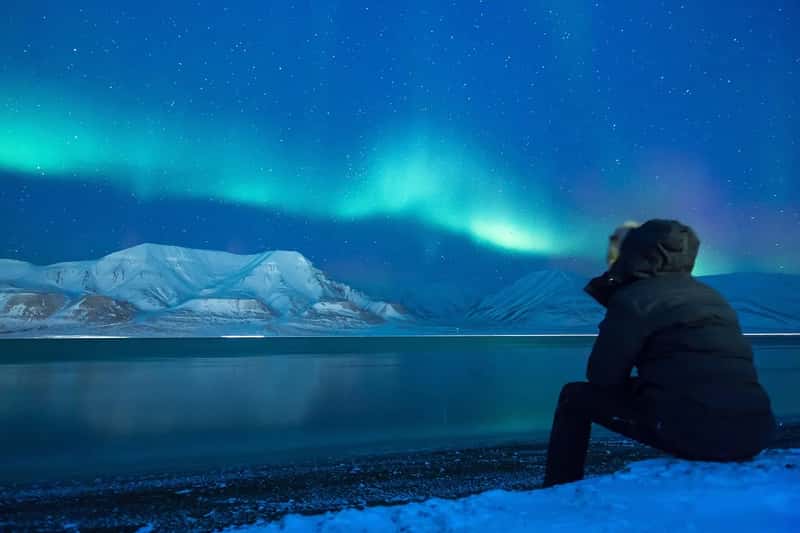
Round the clock daylight sounds appealing until you consider what it does to a person’s internal clock. The four months of the Midnight Sun affects the circadian or biological clock of humans and animals alike, and it’s easy for both two and four-legged to lose track of time during this magical time of year.[8] Curtains in Longyearbyen tend to be heavier than average for a reason, and many residents rely on blackout blinds just to convince their bodies it’s actually bedtime.
Elsewhere in northern Norway, a similar push toward abandoning conventional schedules has surfaced during the midnight sun months. Residents of a Norwegian island where the sun doesn’t set for 69 days of the year have pushed to go time-free, wanting more flexible school and working hours to make the most of their long summer days.[9] It’s a small, practical illustration of how disruptive constant daylight can be to ordinary routines, even for people who’ve lived with it their whole lives.
Visiting during the light season
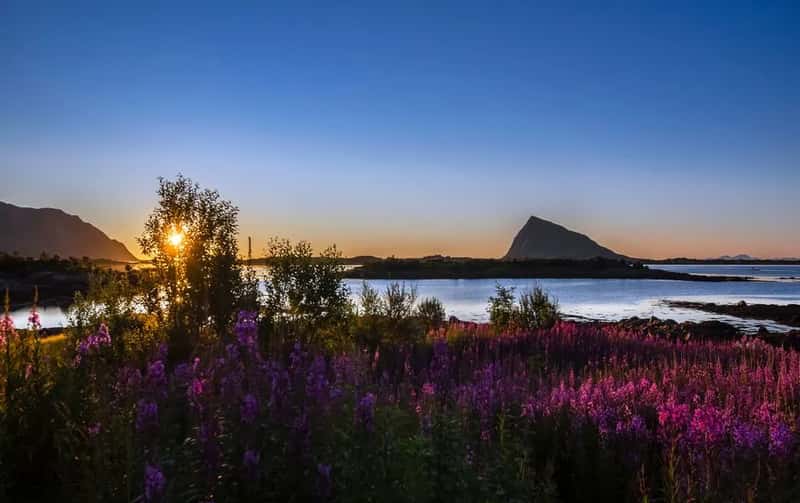
Timing a trip around the midnight sun requires a bit more planning than a typical vacation, mostly because the season itself is narrow and specific. The midnight sun shines 24 hours a day from mid-May to the end of August on Svalbard.[10] Outside that stretch, visitors are more likely to catch a partial version of the phenomenon rather than the full uninterrupted daylight.
The activities on offer lean into the strangeness of the light rather than working around it. If you travel to the Arctic islands of Svalbard, the sun stays up from April to late August, and you can do a midnight hike on a glacier or watch the reddish sky from a moving dog sledge in the unique climate and nature near the North Pole.[6] Boat trips out to calving glaciers are also common, taking advantage of the fact that there’s no darkness to cut the excursion short.
Final thoughts on a place where daylight doesn’t quit
Svalbard’s relationship with the sun isn’t quite the tidy six months the popular claim suggests, but it comes close enough to make the exaggeration understandable. Four months of unbroken daylight followed by a long, dim winter is still an experience most of the world never encounters firsthand. It’s less about a technicality and more about how strange it must feel to live somewhere the sky simply refuses to follow the rules everyone else takes for granted.