Travelbinger
TravelbingerTravel deals, guides and hacks
Travel News
Trip Planner
Sign In
Travel News
Share:

The Sacred Quetzal Is Losing Ground in Its Cloud Forests

Expert reviewed
Matthias BinderKatherine Woodward Ramer

Author: Matthias Binder

·

Edited by Katherine Woodward Ramer

Cited 4 sourcesUpdated Nov 25, 2026· 4 min read
DetailsFull details

Cited Sources (4)

  1. Central America(backend.travelbinger.com)
  2. news.mongabay.com — A stunning colorful bird losing ground to deforestation and climate chan(news.mongabay.com)
  3. cambridge.org — DCB1E72AB8B727B8D076D51A56EEFD77(cambridge.org)
  4. Costa Rica(backend.travelbinger.com)
Author:Matthias Binder

Travel Expert & VP of Operations

Matthias a curious globetrotter who collects moments from night markets, coastlines, and tiny mountain villages. Plans trips around local food, scenic trains, and the best views at golden hour.

Editor:Katherine Woodward Ramer

Editorial Specialist

Checks destination facts and source links before a story is published.

Published November 25, 2026 · Updated November 25, 2026 · 4 min readRead about how we research, editorial independence, and AI policy.
The Sacred Quetzal Is Losing Ground in Its Cloud Forests
Add as a preferredsource on Google

The resplendent quetzal, an emblematic bird with a range spanning Mexico and Central America, has lost more than 360,000 hectares of habitat since 1990, a recent study shows. ([1]) The bird was long revered by the Maya and Aztecs, and its name now appears on Guatemala’s currency. Its survival depends on misty highland forests that stretch from Mexico to Panama, and those forests are under pressure from farming and a changing climate.

A bird that often looks unreal

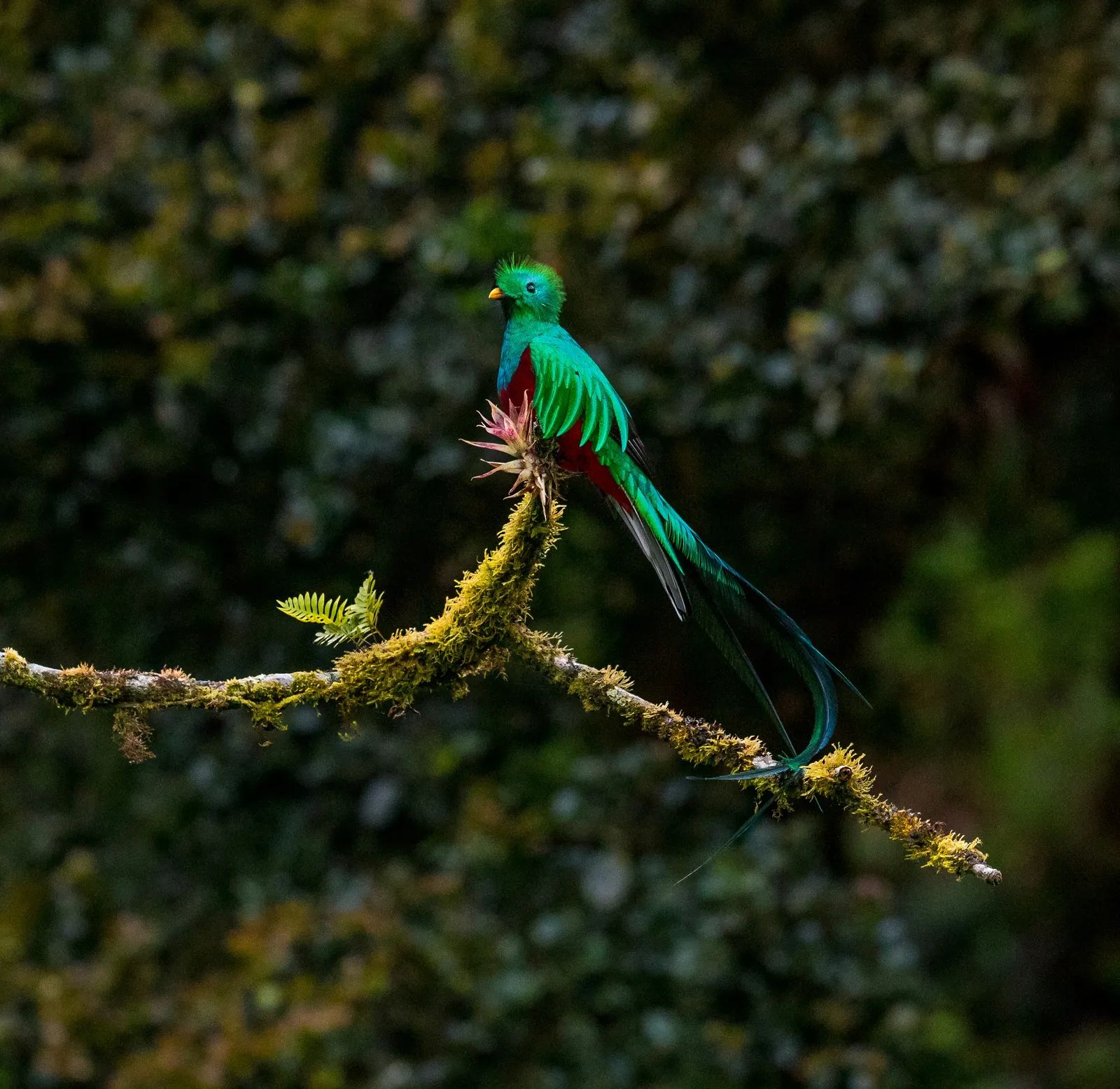
Males are striking even among tropical birds. Their bodies are green, their breasts shade toward red and purple, and their beaks are yellow. The tail feathers, which are emerald green, can stretch beyond a meter in length. The paper’s lead author, Edward Backus, an independent researcher, says many people refuse to believe the bird is real when they first see a photograph of it.

That fragility is what makes the new findings matter. The bird is closely tied to cloud forest, a small and richly biodiverse ecosystem that is easy to lose. When the forest thins, the quetzal has fewer places to nest and feed.

Two subspecies, two very different fates

The quetzal is split into two subspecies, and the study found that they have not fared the same way. Researchers highlight that the two different subspecies of resplendent quetzal have been affected differently, with the northern subspecies losing more than half its habitat, far more than its southern counterpart. ([1])

The publication in Bird Conservation International offers the clearest breakdown. The authors modeled the loss of potential breeding habitat between 1,200 and 1,500 meters from 1990 to 2021, and the gap between the two groups is stark. More striking is the difference in habitat losses between the two subspecies of Resplendent Quetzal over the entire period of the study 1990 to 2021. ([2])

Farms, drier air and a rising cloud line

The main pressure is simple to describe, even if it is hard to reverse. Clearing forest for farmland has broken up the habitat over decades. Within the ecological pressures of climate change, the main threat to populations of Resplendent Quetzal is the loss of habitat, principally by converting forest into agricultural areas. ([2])

Climate change adds a second, slower layer of stress. Agriculture has consistently fragmented the cloud forest, a richly biodiverse, yet small ecosystem that makes the quetzal’s habitat, while climate change has brought drier conditions and less moisture for the forests, the research points out. ([1]) Warming also lifts the base of the clouds, which can push the usable zone further up slopes. The study’s authors point to the Monteverde Cloud Forest Preserve in Costa Rica as an example of how climate change is already affecting these habitats.

What the study does and does not settle

The findings are alarming, but they do not place the bird in the highest threat category. Rob Martin, Red List manager at BirdLife International, said the data suggest the quetzal is getting closer but doesn’t yet cross the threshold to gain vulnerable status. The authors also say more ecological work is needed, and the study itself notes that immediate conservation of remaining cloud forest habitat and reduction of deforestation are the most urgent priorities. ([2])

The table below separates what the study shows from what remains uncertain and what the authors recommend.

Related Stories From Travelbinger

  • Why Countries Near Costa Rica Are Seeing More American Tourists
  • Here Are Which Central American Countries Are Actually Backpacker Budget Friendly (And Which Are Not)
  • I Retired Abroad on Social Security. Here’s the Country I Chose
Area What the study shows What remains open
Habitat loss More than 360,000 hectares lost since 1990 Ecological effects of each loss are not fully measured
Subspecies The northern group lost far more habitat Long-term recovery potential is unclear
Conservation Protecting remaining cloud forest is urgent Climate change is harder to slow locally

Where protection may matter most

Backus said the most practical steps are local. “Aside from climate change, which is hard to combat, looking at deforestation along the edges of these large patches of habitat in Guatemala, in particular, would be a priority,” Backus said. ([1]) The argument is that intact patches can still be defended, even as the wider climate shifts.

For travelers, the message is less about a single trip and more about the places themselves. The quetzal’s presence signals healthy cloud forest, and that forest depends on decisions made far from the trails. Seeing one of these birds in the wild may become more meaningful if the forests that sustain it remain intact.

Did any of these feel familiar?

China Lost Nearly 70% of Its Mangroves, Then Bird Species Rose From 148 to 397

Up Next

China Lost Nearly 70% of Its Mangroves, Then Bird Species Rose From 148 to 397

China's coastal mangrove forests spent decades in retreat, which makes a new reversal worth attention. Findings published in The Innovation show that mangrove c

Read next

🔥 Would you like to save this?

We’ll email this post to you, so you can come back to it later.

Matthias Binder
Author

Matthias Binder

Travel Expert & VP of Operations

Matthias a curious globetrotter who collects moments from night markets, coastlines, and tiny mountain villages. Plans trips around local food, scenic trains, and the best views at golden hour.

All stories by MatthiasHow we research & AI policy
Katherine Woodward Ramer

Edited & reviewed by Katherine Woodward Ramer — Editorial Specialist

Expert reviewed

Keep Reading

MSC World Asia Ranks Tenth Among Largest Cruise Ships Ever Built

MSC World Asia Ranks Tenth Among Largest Cruise Ships Ever Built

1 min read

13 Stops on the I-95 Drive From New York to Florida That Snowbirds Never Skip

13 Stops on the I-95 Drive From New York to Florida That Snowbirds Never Skip

1 min read

12 Mistakes Travelers Over 60 Make at Denver International Airport

12 Mistakes Travelers Over 60 Make at Denver International Airport

1 min read

14 Things First-Time Cruisers Should Know Before Sailing From Galveston

14 Things First-Time Cruisers Should Know Before Sailing From Galveston

1 min read

The Latest

Fresh stories from our travel desk

The Sacred Quetzal Is Losing Ground in Its Cloud Forests

The Sacred Quetzal Is Losing Ground in Its Cloud Forests

Matthias Binder·Nov 25
13 Things Nobody Tells You About Sailing From Port Everglades

13 Things Nobody Tells You About Sailing From Port Everglades

Stefan Brand·Nov 25
12 Things First-Time Cruisers Should Know Before Sailing From New Orleans

12 Things First-Time Cruisers Should Know Before Sailing From New Orleans

Samanta Brown·Nov 25
14 Things Customs Officers Quietly Tell Returning Travelers Over 60 That the Arrival Signs Never Mention

14 Things Customs Officers Quietly Tell Returning Travelers Over 60 That the Arrival Signs Never Mention

Samanta Brown·Nov 25
View All Stories

Stay Updated

Get the latest travel news delivered to your inbox

Stay Inspired

Get travel inspiration, guides, and exclusive deals delivered to your inbox.

Travelbinger
TravelbingerTRAVEL DEALS, GUIDES AND HACKS

Discover the world through the eyes of seasoned travel experts. From breaking news to hand-picked destination guides, we bring you the stories that matter. Join our community for exclusive member deals and authentic inspiration for your next journey.

Deals

  • All Deals
  • Beach Holidays
  • City Breaks
  • Luxury Hotels
  • Last Minute

Popular Destinations

  • Europe
  • Asia
  • North America
  • South America
  • Africa

Company

  • About Us
  • Travel News
  • Editorial Policy
  • Contact

Legal

  • Privacy Policy
  • Terms & Conditions

This website contains affiliate links to trusted partners.

© 2026 Travelbinger. All rights reserved.

Secure payment with:
Visa
MC
PayPal
Klarna