Ask most people to name a country that has swapped its official title more than once, and they will probably mention Persia becoming Iran, or Burma becoming Myanmar. Those are famous examples, but they are also single, one time events. There is another nation, tucked into the heart of Southeast Asia, that has rewritten its own name so many times in less than a century that a person born in the 1930s would have lived through nearly a dozen different official versions of the country they call home.
That country is Cambodia, and its naming history is less a footnote and more a running record of war, revolution, foreign occupation, and eventual peace. Each new title tells you almost everything you need to know about who was in charge at the time, and why.
An ancient name older than the modern map
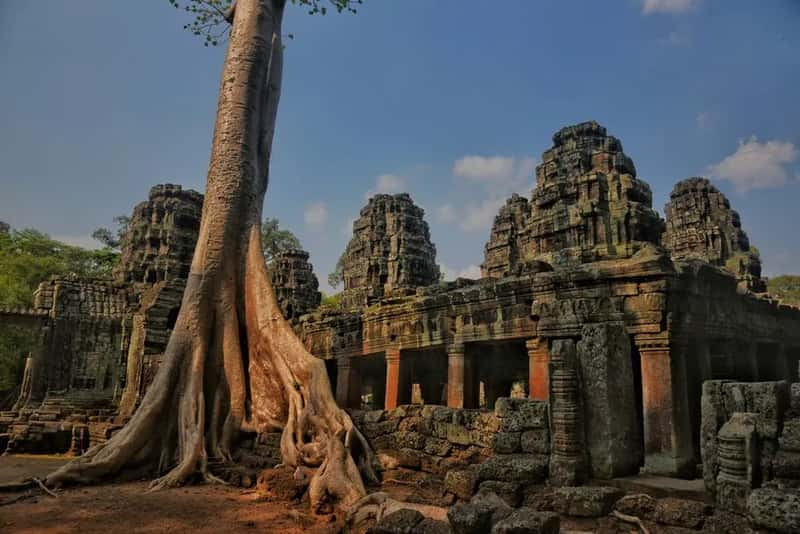
Long before Cambodia appeared on any European chart, the region already carried a name rooted in Sanskrit. The name Cambodia traces back to the Mon-Khmer linguistic family, with early references appearing in ancient Indian texts like the Mahabharata, where it was called Kambuja.[1] That term was eventually absorbed into local usage and softened into something closer to what Khmer speakers still say today.
This Sanskritized term was later adopted by the Funan Kingdom, one of Southeast Asia’s earliest polities centered in modern-day Cambodia.[1] By the time the Angkor empire rose to power centuries later, the word had evolved again. It became part of the name Kambujadesa, or Cambodia-land, which the empire of Angkor gave itself after the tenth century.[2] That ancient root, Kambuja, is the reason the country’s Khmer name and its English name still sound almost identical, even after everything that came later.
Colonial rule and the French version of the name
When France established its protectorate over Cambodia in the mid nineteenth century, the country’s name did not disappear, it just picked up a French accent. Under the French colonial protectorate the kingdom’s name came to be written Cambodge in French but was still written and pronounced in Khmer as Kampuchea.[2] For nearly a century, two versions of the same word existed side by side, one for colonial administration and one for everyday Khmer speech.
There was a brief interruption during the Second World War. In March 1945, when Cambodia was told to declare independence by Japanese forces occupying the region, it renamed itself the Kingdom of Kampuchea.[2] That independence proved short lived, though. By November 1945, when the French returned to power, the kingdom’s name in French had reverted to Cambodge.[3]
Real independence and the first Kingdom of Cambodia
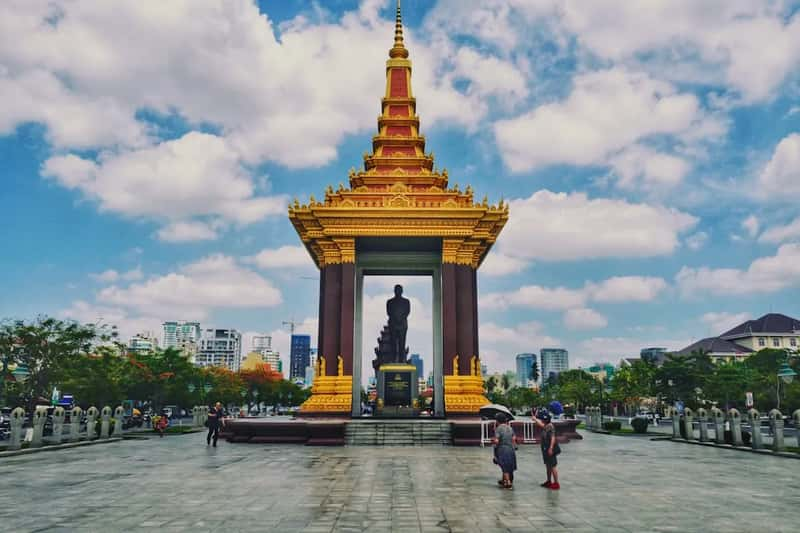
Genuine independence arrived in 1953, and with it came a name that many people still recognize today. After almost a century of French colonial rule, Cambodia regained its independence in 1953 under King Norodom Sihanouk.[4] This was the country’s first taste of self rule in generations, and the monarchy leaned into a title that emphasized continuity and tradition.
From this point onward, the name Cambodia became the most widely used English-language reference to the country, while Kampuchea remained the Khmer-language equivalent, and independence ushered in a period of nation-building and optimism.[4] This arrangement, one name for international diplomacy and another for domestic use, would become a recurring pattern in the decades ahead. It also set the stage for the naming whiplash that was about to follow.
The Khmer Republic and the end of the monarchy
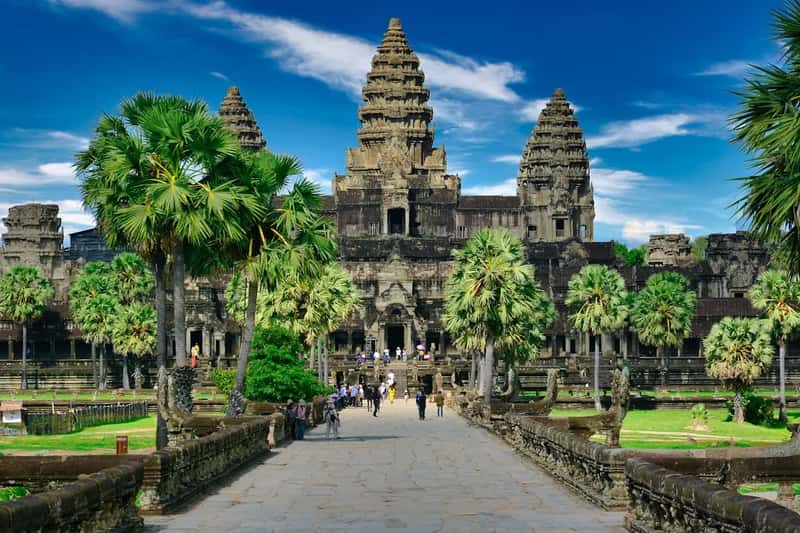
Stability did not last. In 1970, while Sihanouk was traveling abroad, a coup reshaped the country’s government and its name in the same stroke. In 1970, whilst Sihanouk was outside of the country, Lon Nol led a right-wing pro-American coup, which led to the formation of the first Khmer republic.[5]
The monarchy was gone, at least on paper, and the new leadership wanted a name that reflected a republic rather than a kingdom. The country was officially titled Sathearonaroat Khmae, or Khmer Republic, during the 1970 to 1975 period.[6] This was the first time since independence that the word Cambodia itself had been dropped from the official title entirely, replaced by a name built around the Khmer people rather than the old royal designation.
Democratic Kampuchea and the darkest chapter
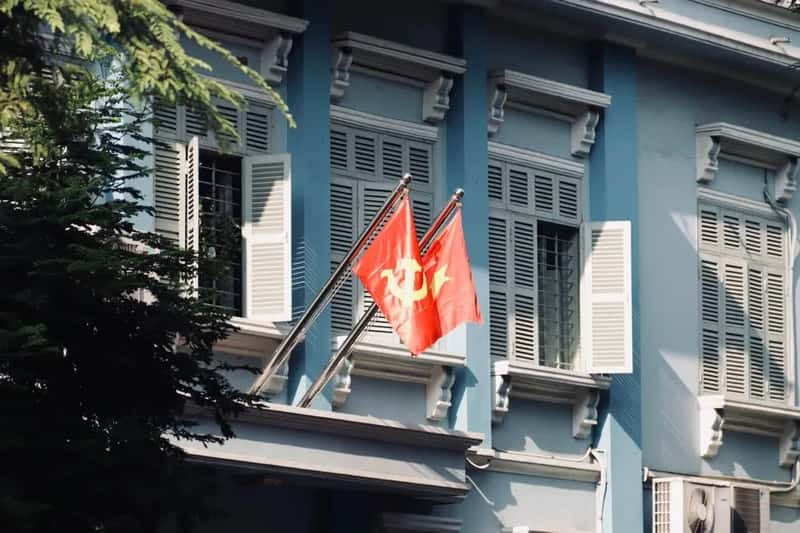
The Khmer Republic collapsed in 1975, and what replaced it remains one of the most studied and grim periods in modern history. When the Republican regime was defeated by local communists five years later, the Marxist-Leninist government that took power called the country Democratic Kampuchea.[3] The name sounded almost bureaucratic, but the reality behind it was anything but.
The reign of the Khmer Rouge and the era of Democratic Kampuchea was to be the most severe in recent Cambodian history, with up to a fourth of the population dying of hunger, exhaustion or executed, making it one of the worst episodes in global history.[5] The name Democratic Kampuchea lasted only a few years, but it remains the most infamous title the country has ever carried, a label now inseparable from the atrocities committed under it.
Vietnamese occupation and the People’s Republic of Kampuchea
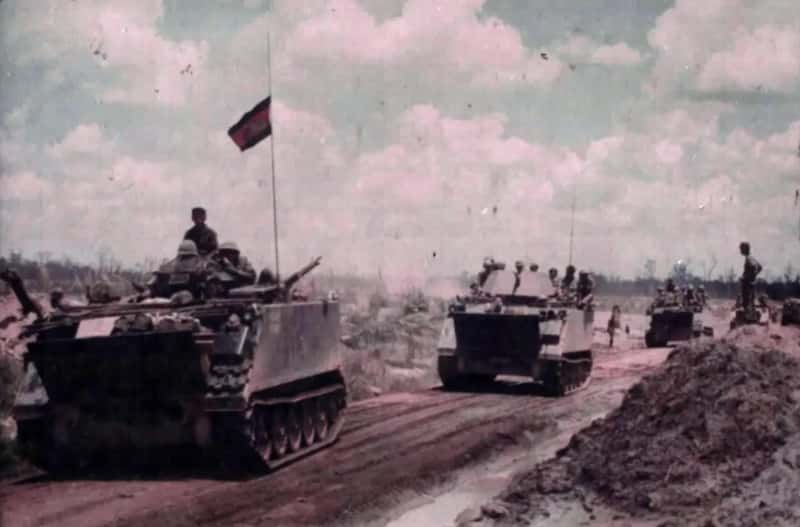
The Khmer Rouge regime did not end through internal reform, it ended through invasion. A Vietnamese invasion in December 1978 drove this regime from power and the newly established, pro-Vietnamese government came to office under the name of the People’s Republic of Kampuchea.[2] The word Kampuchea stayed, but everything else about the government changed hands.
Interestingly, even though this new government opposed the Khmer Rouge ideologically, it kept using the same English exonym in international settings. The Vietnamese-backed Hun Sen-led government, while ideologically opposed to the Khmer Rouge, retained this usage, calling the country the People’s Republic of Kampuchea in international bodies.[6] This decade long occupation period shows how a name can outlast the ideology that first attached it, simply through inertia and diplomatic convenience.
A neutral name for an uncertain transition
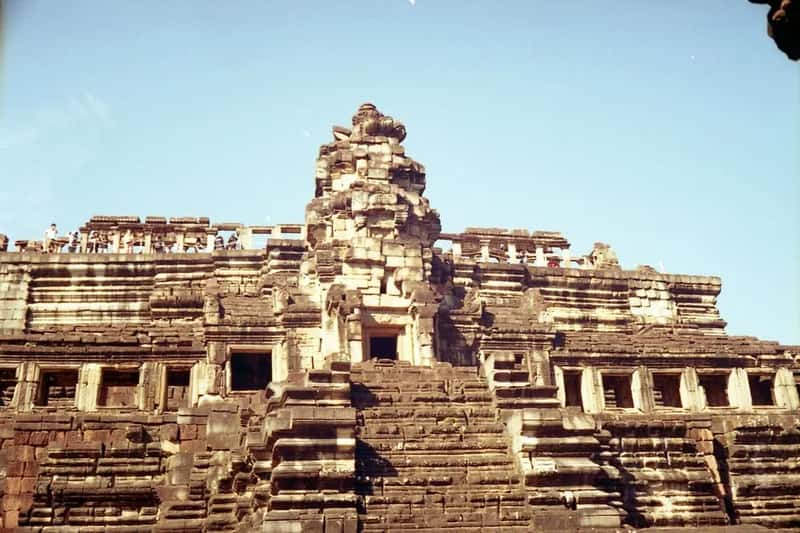
By the late 1980s, Vietnamese troops began withdrawing, and Cambodia’s leadership needed a name that felt less tied to the recent past. When the Vietnamese withdrew their forces in 1989, the ruling party remained in power, but its leaders renounced Marxism-Leninism and renamed their country the State of Cambodia.[2] This was a deliberate softening, a way of stepping back from both the Khmer Rouge legacy and the Vietnamese occupation label in one move.
In 1989, the name State of Cambodia was adopted, in part due to the association of Kampuchea with the Khmer Rouge period, as well as emphasizing continuity with the earlier Kingdom of Cambodia.[6] It was a transitional title in every sense, meant to hold the country steady while United Nations peacekeepers helped organize elections and a return to normal governance.
The monarchy returns, and the name comes full circle
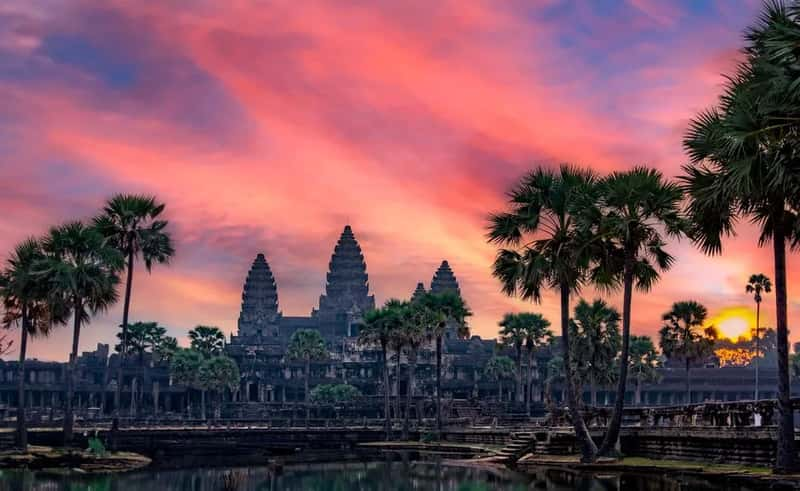
The State of Cambodia era did not last long either. This name lasted until 1993, when Sihanouk, who had abdicated the throne in 1955, became king for a second time, and the country restored its pre-1970 name, the Kingdom of Cambodia.[2] After more than two decades of republics, communist states, and transitional titles, the country landed back on the very name it had carried at independence.
The 1993 Constitution, drafted after the Paris Peace Accords, reaffirmed these names, though Serei Kâmpŭchéa occasionally appears in patriotic contexts.[1] That name, Kingdom of Cambodia, remains the country’s official title today, more than three decades on, making it by far the longest stretch of naming stability the country has enjoyed since the French protectorate ended.
Two names, one country, and why both still matter
What makes Cambodia’s story unusual is not just the number of changes but the fact that two names, Cambodia and Kampuchea, have coexisted for most of the modern era without either one fully disappearing. The official exonym of the country in English has varied between Cambodia and Kampuchea even when the endonym has remained consistent in Khmer, reflecting the usage that different Cambodian governments have used in international bodies such as the United Nations.[6] In other words, the domestic word barely moved, while the international label kept shifting depending on who held power.
Today, the Khmer name Préahéa Kâmpŭchéa is used in official documents, while Cambodia dominates international contexts.[1] This quiet duality, one word for the world stage and a related one for home, is arguably a more accurate way to understand the country’s naming history than counting official title changes alone. It reflects a nation that never really lost its own name, even while the political label wrapped around it kept getting rewritten.
How Cambodia compares to the rest of the world
Plenty of countries have changed their names once, sometimes twice, usually tied to independence or a break with colonial history. Persia became Iran in 1935, Siam became Thailand in 1939, and Ceylon became Sri Lanka in 1972.[7] Sri Lanka itself went through a couple of adjustments too, moving from Ceylon to the Republic of Sri Lanka and then to its current full title within a handful of years.
Cambodia’s case stands apart because the changes were not evenly spaced or driven by a single cause. They came in rapid succession across just two decades, from monarchy to republic to communist state to occupied territory to transitional government and back to monarchy again. Few nations anywhere have compressed that much political upheaval, and that many official renamings, into such a short and turbulent stretch of their own history.
Final thoughts
Cambodia’s naming history is really a shorthand version of its political history, each label a marker for who held power and what they wanted the world, or their own citizens, to believe about the country at that moment. From ancient Kambuja to the modern Kingdom of Cambodia, the word has bent and reshaped itself again and again without ever fully disappearing. That persistence, through invasion, revolution, and eventual peace, says something quieter but more lasting than any single name change could on its own.