


Your phone holds more of your life than your wallet ever did. Photos, messages, banking apps, work email and years of location history all travel with you, and the rules covering that data change the moment you cross a border. Some governments treat personal information as something to guard. Others treat it as something to inspect.
This guide goes country by country. It draws on privacy rankings, internet freedom research from Freedom House, and official border statistics from 2024 to 2026. No law can promise perfect safety, and a few of these entries come with caveats, so each one explains what the evidence shows and where its limits are.
Ireland: Top Scorer in a Tough Field

When Comparitech ran its Surveillance States study, Ireland ranked first with a score of 3.2, followed by Portugal, Norway, France and Denmark, all of which scored 3.1.[1] That study is a few years old now. Still, it remains one of the broadest comparisons of how governments handle surveillance and data.
Note that the top score is 3.2 out of five, not a perfect mark. The study took into account categories ranging from use of biometrics and CCTV to data sharing and retention laws.[1] Ireland sits at the front of the pack, which is not the same as having no weak spots.
Portugal: Steady Marks Across the Board

Portugal landed just behind Ireland in the same Comparitech ranking. It scored 3.1, level with Norway, France and Denmark.[1] That puts it among the best performers in a study of 47 countries.
Portugal is covered by the EU’s General Data Protection Regulation, which gives visitors rights over how companies handle their information. For a traveler, that mostly matters for hotels, booking platforms and apps used locally. The law governs how businesses treat your data, so it won’t stop an officer from looking at your phone at a border.
Norway: Strong Rules From Outside the EU
Norway isn’t an EU member, yet it still scored 3.1 in Comparitech’s study. It was one of five countries just behind Ireland.[1] Through its membership in the European Economic Area, Norway applies the same GDPR framework as EU states.
That means a visitor’s data held by Norwegian businesses falls under rules similar to those in neighboring Sweden or Denmark. It’s a useful reminder that EU level privacy protection extends beyond the EU itself. If you’re comparing destinations, don’t rule out countries just because they sit outside the bloc.
France: Strong Scores and an Active Regulator
France is another country that scored 3.1 in the Comparitech ranking.[1] Its data protection authority, the CNIL, has a reputation for pursuing large technology companies over issues like cookies and tracking. For tourists, that oversight sits quietly in the background of everyday app and website use.
There’s a caveat worth knowing, though. One travel privacy guide notes that destinations including the European Union, Hong Kong, Canada, Australia, New Zealand, China, and Russia all grant border agents broad authority to search or seize devices.[2] Strong consumer privacy law and border powers are two separate things.
Denmark: Consistent Privacy Performer
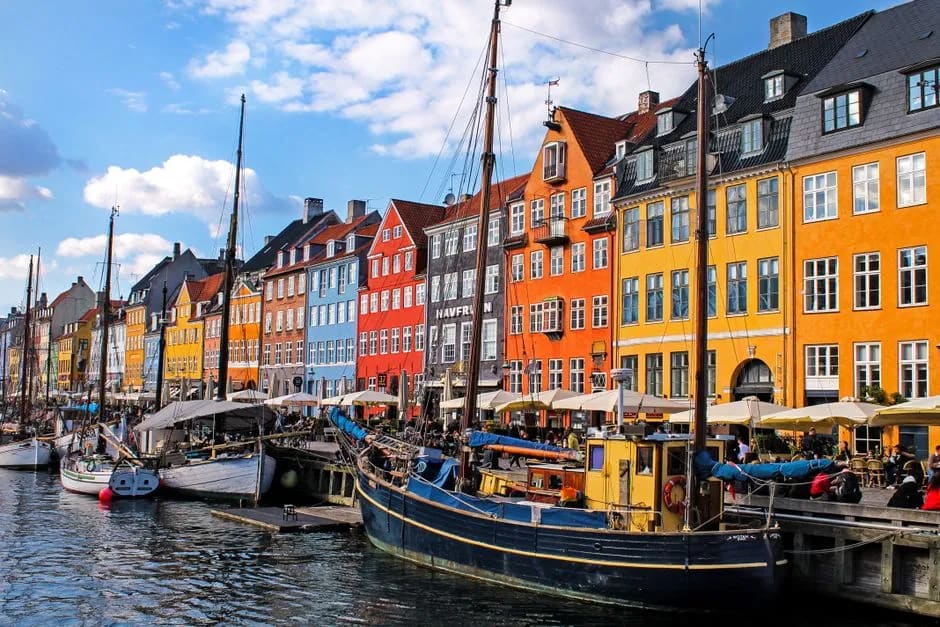
Denmark completes the group of countries that scored 3.1 behind Ireland.[1] The Comparitech table behind those scores looked at a long list of factors, including government access to data, communication data retention, and border and trans-border issues.[3] A good result across that many categories suggests the strength isn’t a one trick score.
As an EU member, Denmark also applies GDPR to businesses handling your information. In practice, a traveler there benefits from clear rules about consent and data use. As with everywhere in Europe, the sensible habit is still to keep your phone updated and locked.
Iceland: The Freest Online Environment in 2025

Freedom House’s 2025 report found that China and Myanmar remained the world’s worst environments for internet freedom, while Iceland held its place as the freest online environment.[4] That report assessed 72 countries, accounting for 89 percent of the world’s internet users.[4] Being at the top of a list that large is a meaningful signal.
Internet freedom isn’t identical to data privacy, but the two overlap. A country that doesn’t censor or throttle traffic is also less likely to demand that visitors hand over their communications. For anyone worried about connecting freely to messaging apps, email and cloud storage, Iceland is about as easy as it gets.
Estonia: Named Freest in the 2026 Report
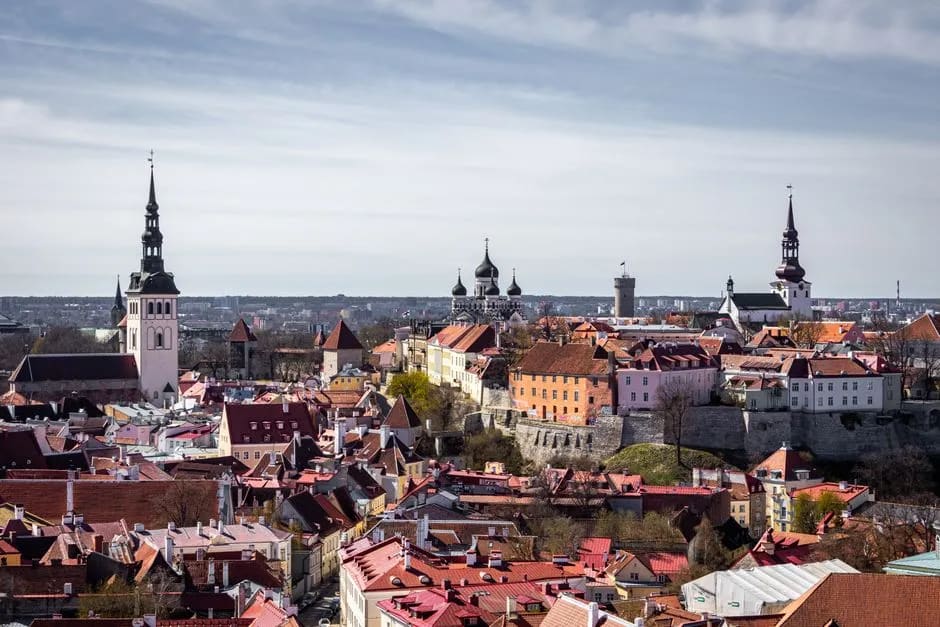
Freedom House’s newest edition covers developments from June 2025 to May 2026. It names Estonia as the freest online environment.[5] That makes it a current, not just historical, standout.
Estonia is widely known for running much of its public life online, which makes its strong ranking more notable. A heavily digital country that still scores well on freedom suggests its systems are built with safeguards. Visitors can generally expect open access to the internet and to the apps they rely on at home.
Luxembourg: No Facial Recognition by Stated Policy

In Comparitech’s biometric data study, Luxembourg tops other countries to become the best at protecting biometric data because it explicitly states that it will not use facial recognition software.[6] That matters to travelers because airports and borders are where face scanning is most common. Fewer cameras matching your face means less biometric data collected from you.
The study scored 96 countries on the type of biometric data collected and how it is used.[6] Comparitech itself describes the results as protection “to some extent,” so treat the top spot as relative rather than absolute. Even so, a firm public stance against facial recognition is rare.
Malta: Among the Better Scores in the EU

Within the EU, Comparitech’s ranking placed Malta near the top with a score of 3.0 in its list of leading EU countries.[3] That’s slightly below Ireland’s 3.2, but well above the bottom of the table. The study’s labels were measured, describing even that score as some safeguards with weakened protection.
That phrasing is a fair reminder that no country in the study earned a flawless report card. Malta’s strength is mainly that it sits within GDPR and avoids the worst surveillance practices. For a short holiday, that’s a reasonable level of comfort.
Switzerland: Privacy Reputation Backed by Rankings

Switzerland appears among Comparitech’s strongest countries outside the EU, scoring 3.0 alongside South Africa, Argentina and Canada.[3] A separate overview of privacy havens credits Switzerland, Nordic countries, and select Latin American nations with the strongest protection through constitutional privacy rights, independent enforcement, and rejection of mass surveillance agreements.[7] That second source is a VPN comparison site, so weigh it accordingly.
Switzerland also updated its federal data protection act, which took effect in 2023. For visitors, the practical benefit is clearer rules on how companies use personal data. As elsewhere, the law protects you from businesses far more than from a customs inspection.
Argentina: A Latin American Privacy Leader

Argentina scored 3.0 in Comparitech’s study, putting it among the best non EU countries. It shared that score with Switzerland, South Africa and Canada.[3] Few places outside Europe made that cut.
Other analysts note a wider trend. One overview says that Brazil leads Latin America into comprehensive privacy protection, with Chile, Colombia and Argentina following.[8] It’s a more recent source, though not an authoritative one, so it supports the broad picture rather than any exact ranking.
South Africa: Strong Showing Outside Europe
South Africa is the other non European name in the top group. It scored 3.0 in Comparitech’s study, tied with Switzerland, Argentina and Canada.[3] Its main privacy statute is the Protection of Personal Information Act, which has been fully in force for several years.
That law gives travelers, like residents, some rights over how organizations handle their details. It’s a good example of strong privacy rules turning up outside the usual European and North American list. Anyone booking safaris or hotels there can do so with reasonable confidence about how their information is treated.
Uruguay: A Quiet Privacy Standout
One ranking places Uruguay sixth globally, ahead of Canada and Australia.[7] The same source says the country’s 2008 Personal Data Protection Act was ahead of its time, and that recent amendments require companies to delete user data within 30 days of account deletion.[7] Treat it as a useful pointer rather than settled fact, since it comes from a VPN focused site.
Even with that caution, Uruguay’s reputation for stable, rules based governance is consistent with the broader picture of Latin American privacy gains. For travelers, it’s one of the less obvious but sensible choices. Check current guidance before you go, as data rules keep evolving.
Finland: GDPR Rules and a Low Drama Approach

Finland is part of the EU, so GDPR applies to the businesses you’ll deal with during a visit. That includes hotels, rental services and apps. The country also has a national data protection ombudsman who oversees compliance.
Finland doesn’t appear at the top of every ranking, and this article doesn’t claim otherwise. What it offers is the baseline protection that comes with EU membership, along with a stable legal environment. For a traveler who simply wants predictable rules, that counts for a lot.
China: The Lowest Scores for Internet Freedom
The 2025 Freedom House report gave China an internet freedom score of 9 out of 100, with websites and social media blocked.[9] The report says internet users in China have faced the world’s worst conditions for internet freedom for over a decade.[9] Comparitech’s study of surveillance also ranked China last, with a score of 1.8.
For phones, the risks are concrete. One security guide says that under counterespionage rules in force since July 2024, state security officers can inspect and search electronic devices, including smartphones and computers, with approval from superiors.[10] A university guide adds that encrypted devices may be subject to decryption requests or confiscation.[11] A November 2025 security briefing reported that the US delegation to a Beijing summit issued burner phones to nearly everyone traveling.
Related Stories From Travelbinger



Russia: Border Inspections Now Written Into Law

Russia scored only 17 out of 100 in the 2025 Freedom on the Net report, which also found it underwent the steepest 15 year decline in internet freedom.[12] The newest edition reports that Russian authorities expanded shutdowns and restrictions on virtual private networks.[5] That makes it harder to rely on the usual workarounds.
On the device side, one guide says a law from July 2025 gives border guards the express right to inspect electronic devices on entry and exit.[13] The same source notes the law doesn’t specify whether travelers can be compelled to unlock a phone. Another travel guide says the US State Department advises travelers to assume there is virtually no digital privacy in Russia.[2]
Iran: The Biggest Decline in the 2026 Report
Freedom House’s latest report says Iran experienced the year’s largest decline, joining China and Myanmar as the world’s worst environments for internet freedom.[5] It describes a nationwide shutdown lasting approximately 88 days, the longest recorded in the history of the study.[5] The previous year’s report had already scored Iran at 13 out of 100.
For a traveler, the shutdown matters in two ways. You may lose access to your usual messaging and cloud services, and you can’t count on being able to reach home reliably. Authorities have also restructured access so that only a privileged few can connect to global platforms, which leaves most visitors with very limited online options.
Myanmar: Tied for the Worst Internet Freedom Score

Myanmar scored 9 out of 100 in the 2025 edition, the same as China. Censorship intensified in China and Myanmar, which remained the world’s worst environments for internet freedom.[12] A summary of the findings describes harsh censorship, shutdowns and repression under military control.
The report’s wider finding is sobering. People in at least 57 of the 72 countries covered were arrested or imprisoned for online expression on social, political, or religious topics, a record high.[4] A traveler’s old posts and chats can matter more in this kind of environment than they would at home.
United States: Rising Warrantless Phone Searches at the Border

The US surprises many people on this list. Official figures show that officers searched 55,318 electronic devices in fiscal year 2025, up 17.6 per cent from 47,047 in 2024.[14] Of those, 50,922 were basic searches.[14] CBP stresses that this affects a very small share of travelers, saying less than 0.01% of all arriving international travelers had their devices searched.[15]
The scope is also widening. A directive released in January reportedly lets agents search flash drives, SIM cards, smartwatches, GPS devices, vehicle infotainment systems, and drones.[16] Courts remain divided, and the EFF and ACLU filed a brief in March 2026 arguing that CBP needs a warrant.[17] The odds of being searched are low, but the legal protections are thinner than many visitors expect.
United Arab Emirates: Broad Surveillance Authority, With Limited Public Detail
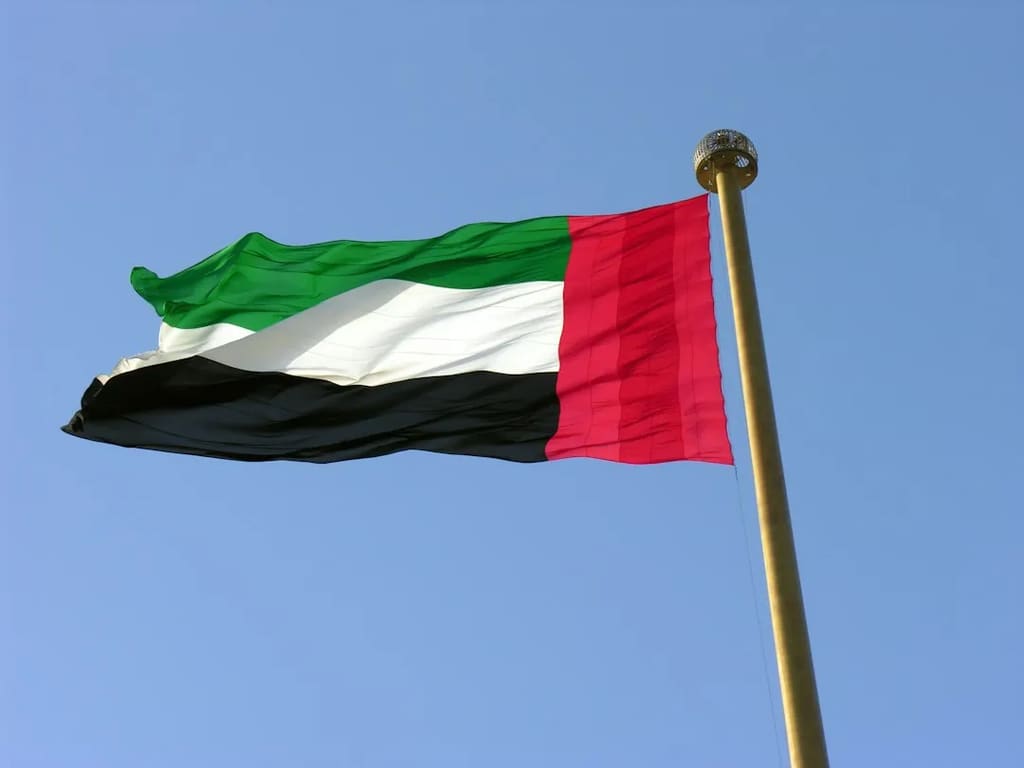
Evidence on the UAE is thinner than for the other entries here, so caution is warranted. One border security guide lists the country alongside others where China, Russia, and the UAE have broad surveillance authority and may inspect or clone devices without disclosure.[18] Publicly available detail on how often that happens is limited.
The same guide recommends a clean travel phone for places where device inspection is common or state level surveillance is a concern.[18] For many travelers, a short transit stop poses little practical risk. If you handle sensitive work data or rely on VPNs, check current official travel advice for the UAE before you fly.