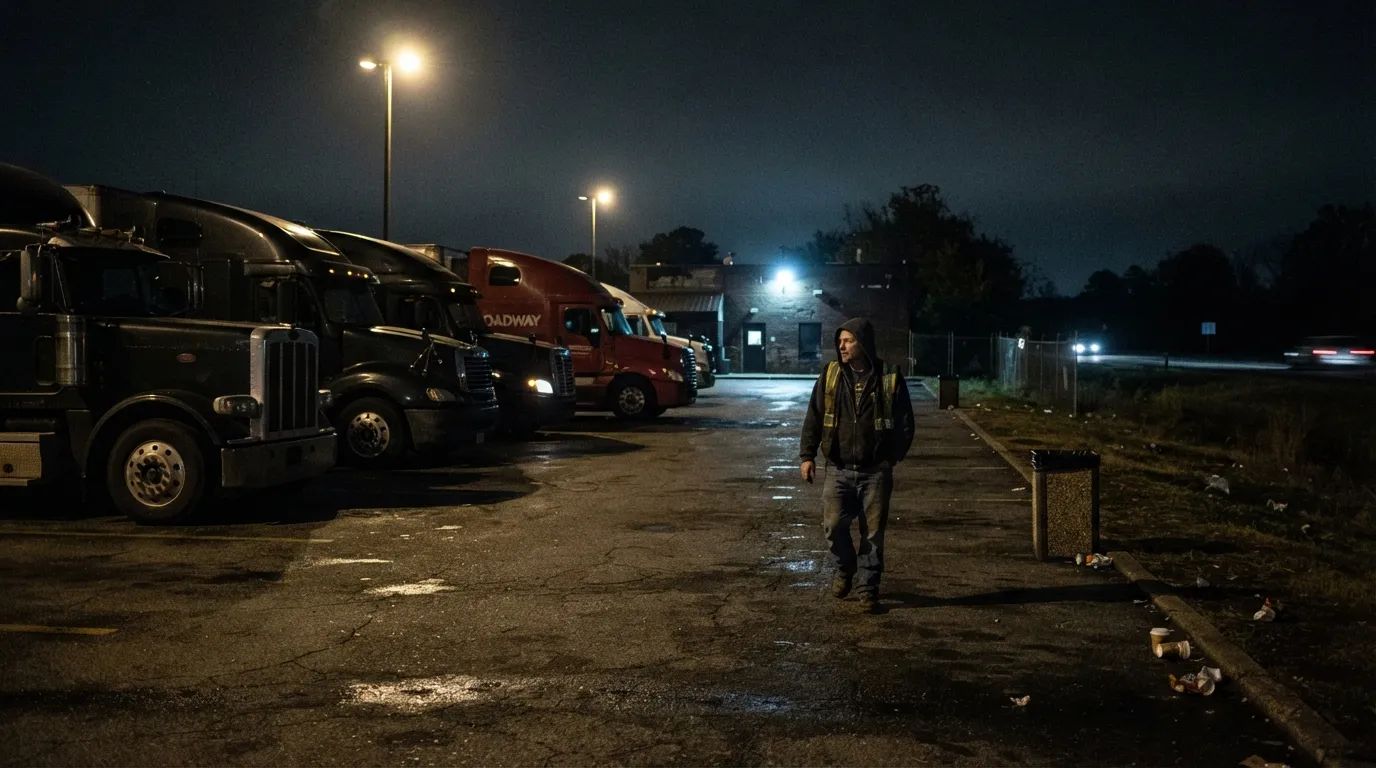
To most people, a rest stop is thirty seconds of relief between naps in the passenger seat. To a driver who has logged half a million miles, that same parking lot is a live readout of danger, exhaustion, and broken infrastructure – and they’re reading it before they’ve even opened the door.
Every stop tells a story most travelers never learn to see: who’s too tired to keep driving, which lot turns dangerous after dark, why the shower line matters more than the food counter. We ranked ten things experienced drivers clock without even trying – and the last one will change how you look at every rest area you ever pull into.
#10 – The Parking Lot Tells You Everything Before You Even Step Out
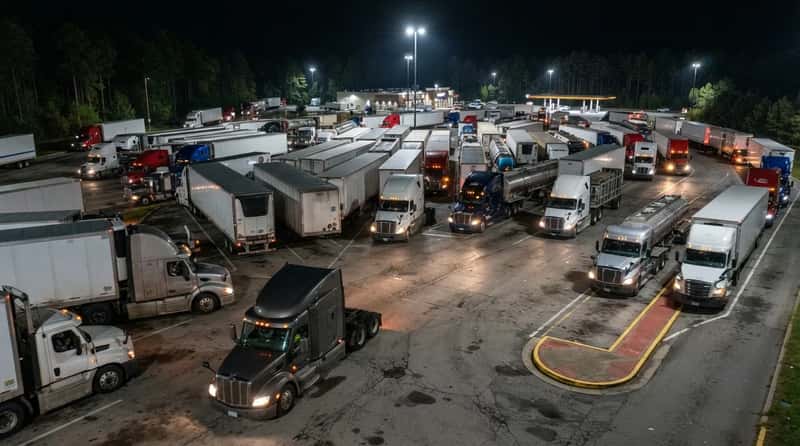
Experienced drivers scan the lot the second they pull in. A full lot doesn’t mean a safe lot – it means you may already be too late.
Popular facilities fill up early in the evening. Late-arriving drivers are left circling, or worse, parking illegally on ramps and shoulders.
Total U.S. truck stop and travel center revenue tops $100 billion a year, yet 98% of drivers still struggle to find safe parking after 10:00 PM. Veterans read the lot in seconds – how many rigs are double-parked, how many are jammed into fire lanes, how many drivers simply gave up.
Drivers routinely burn nearly an hour a day just hunting for a spot, and every one of those minutes counts against their legal hours-of-service clock.
- A crowded lot at 7 PM means no spots by 9 PM
- Rigs parked on highway on-ramps mean the whole system is full
Fast Facts
- Truck parking has ranked among the industry’s top five concerns every year since 2015, and it’s the #1 issue drivers themselves report
- The average driver loses about 56 minutes a day just searching for a legal spot
- That lost time costs drivers an estimated $5,600 to $7,000 a year in lost pay
- Only 13% of truck parking nationwide sits at public rest areas – the other 87% is private and fills fast
But that’s nothing compared to what drivers notice about #9.
#9 – The Lighting Is the First Security Signal
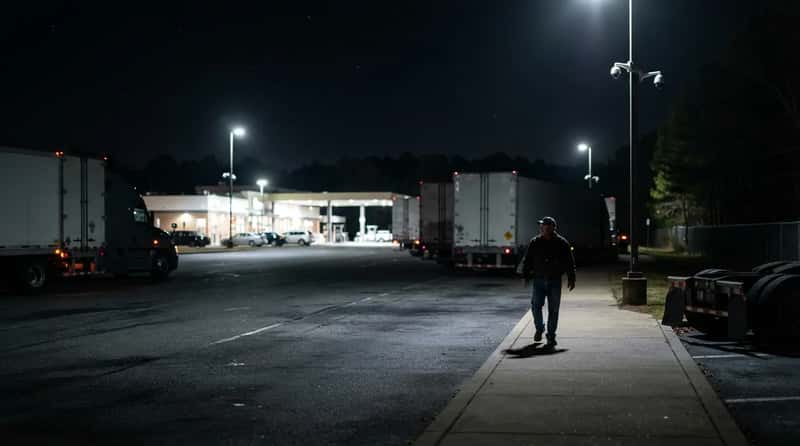
Long-haul drivers notice the lights before they notice anything else. A dark corner isn’t an inconvenience – it’s a red flag.
Safety is the single biggest factor drivers weigh when choosing a stop, cited by 21% as their top concern. They’re scanning for lighting, cameras, and visible security before they even think about food.
The most dangerous hour to use any highway rest area is after dark, and the risk only climbs the later it gets. Veterans already know which corners of the lot the cameras cover – and which ones go pitch black by 11 PM.
Plenty of truckers won’t even use the bathroom alone at night. They wait for another driver to walk with them, and that’s not paranoia – that’s pattern recognition earned the hard way.
- Well-lit lot near the building means lower risk
- Isolated dark end of the lot gets a hard pass
But that’s nothing compared to what drivers notice about #8.
#8 – The Bathrooms Are Graded on a Curve – and Most Fail

Civilian travelers expect a working toilet. Long-haul drivers expect one and treat anything cleaner than that as a small luxury.
Physical activity spaces were rated “bad” or “terrible” by 41.61% of drivers surveyed. Bathroom services weren’t far behind at 28.42%, with safety close after at 34.24%.
A dirty bathroom tells a driver everything about how a stop is run. If nobody’s cleaning the restroom, nobody’s watching the parking lot or rotating the food either.
Drivers expect parking, restrooms, and showers to be free after they’ve already paid for fuel. When a shower costs extra on top of hundreds of dollars in diesel, the frustration isn’t overreacting – it’s earned.
- Clean, stocked bathrooms mean a stop worth returning to
- Broken locks and no soap mean drivers move on
But that’s nothing compared to what drivers notice about #7.
#7 – The Food Situation Is Far Worse Than It Looks on the Menu Board
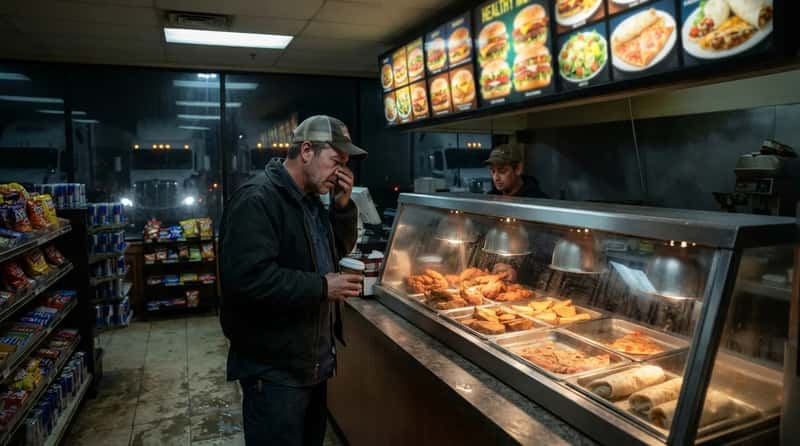
The hot food counter looks inviting at midnight. Drivers who’ve done this for years know exactly what’s missing from it.
Limited access to affordable, healthy food is one of the most common complaints among long-haul drivers. Add poor storage and no real time to prep meals, and the menu board rarely matches what a driver actually needs after ten hours behind the wheel.
Most stops are still built around fried food, packaged snacks, and energy drinks – exactly the wrong fuel for someone fighting fatigue. Long-haul driving already comes loaded with health risks: sedentary hours, poor diet, disrupted sleep, and chronic stress.
Only 42% of drivers rate food services as “good” or better. Healthy, affordable options remain genuinely rare on the road.
- Fried food and energy drinks dominate most menus
- Real, affordable healthy meals are the exception, not the rule
But that’s nothing compared to what drivers notice about #6.
#6 – The Shower Queue Runs on Unwritten Rules
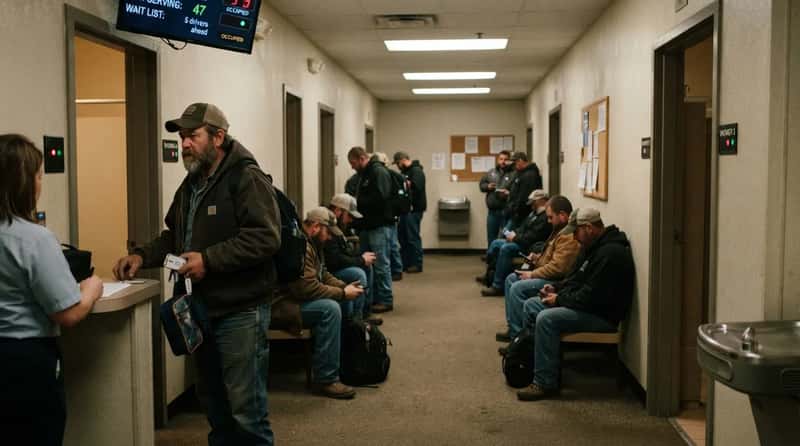
Most people don’t realize showers at truck stops run on a reservation system. That system has its own quiet hierarchy that outsiders never learn.
Very few stops offer everything drivers actually want – showers, healthy food, laundry, internet, exercise space. A shower isn’t a bonus out here; it’s a basic necessity after days on the road.
At busy stops, the wait can stretch well past an hour during peak evening hours. Veterans reserve a shower the moment they park, before they eat and before they call home – rookies usually learn this the hard way on their second overnight run.
A shower can also cost anywhere from $10 to $50 a night, adding up to thousands of dollars a year out of a driver’s own pocket. Finding a stop that even has one available is getting harder every year.
- Reserve early or wait – there’s no in-between
- The best stops have shower attendants; most don’t
Quick Compare
- Reserve the moment you park: shortest wait, most reliable slot
- Wait until after dinner to reserve: expect the line to stretch past an hour
- Skip the reservation entirely: don’t count on a shower before sunrise
But that’s nothing compared to what drivers notice about #5.
#5 – Fatigue Is Written on Every Face in the Lot
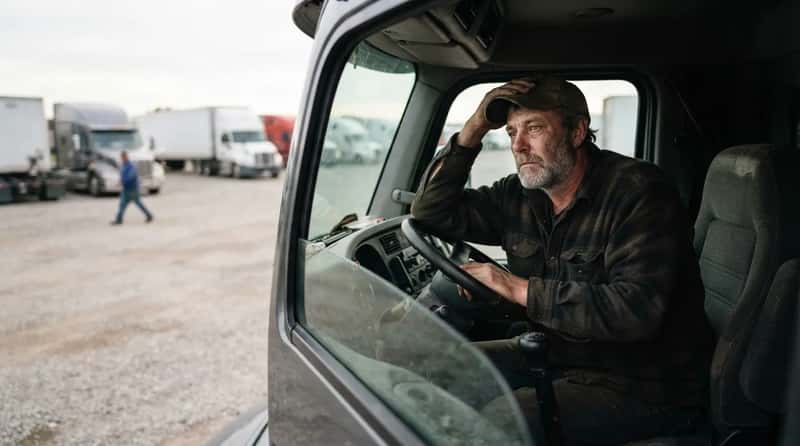
Veterans develop a sharp eye for fatigue in other drivers, sometimes sharper than any piece of safety tech has managed to replicate.
In a survey of 593 long-distance truck drivers, 25% admitted they’d fallen asleep at the wheel at least once in the past year. That means one in four drivers at any given stop has already had a close call most people will never hear about.
Long, uninterrupted drives wear down mental sharpness fast, slowing reaction times and stacking the odds toward mistakes. Experienced drivers spot it instantly – the ten-minute sit in a parked cab before moving, the thousand-yard stare at the pump, the coffee cup refilled twice before the driver even heads back out.
A 15 to 20 minute break improves performance, even in people who are already sleep-deprived.
National Sleep Foundation research summary
Veterans take that seriously. Rookies, more often than not, don’t.
- The 2 AM lot is a quiet parade of exhaustion
- Skipping real rest makes a driver a danger to everyone else
But that’s nothing compared to what drivers notice about #4.
#4 – The “Fitness Area” Is Almost Always a Punchline
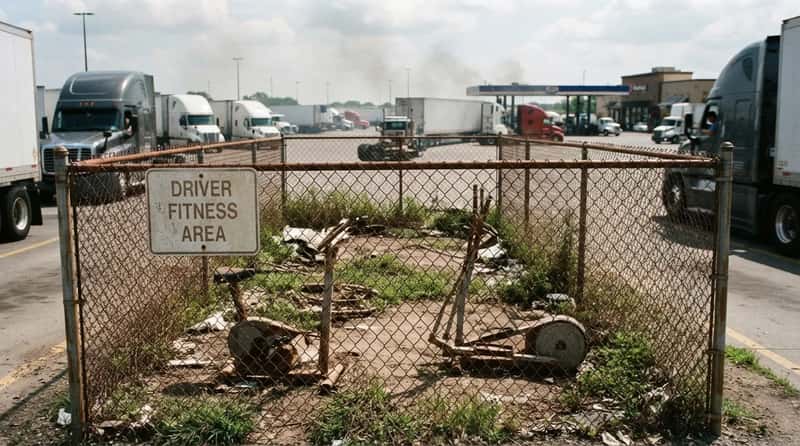
Every modern truck stop brochure mentions a fitness area. Drivers know exactly what that means in practice – not much.
Physical activity spaces were rated “bad” or “terrible” by 41.61% of drivers, the single worst-rated category of any amenity at any stop. The reality on the ground backs the number up completely.
Many stops have no real walking paths, and the ones that exist run through high-traffic lanes crowded with reversing rigs. That’s enough to keep most drivers from even trying.
Only 2% of truck stop visitors use a fitness room daily. The drivers who do exercise usually do it between the trailers – push-ups, stretches, a short walk in the dark – because the official setup simply isn’t there.
- Most gyms: one cable machine, one treadmill, no real space
- Most workouts: stretching next to the rig, out of necessity
Worth Knowing
- Physical activity space is the single worst-rated amenity category at any stop
- Only 2% of truck stop visitors use a fitness room on a given day
- Most “walking paths” run straight through lanes crowded with reversing rigs
- The real workout for most drivers: stretches and push-ups next to the trailer
But that’s nothing compared to what drivers notice about #3.
#3 – The Parking Shortage Forces Genuinely Dangerous Choices
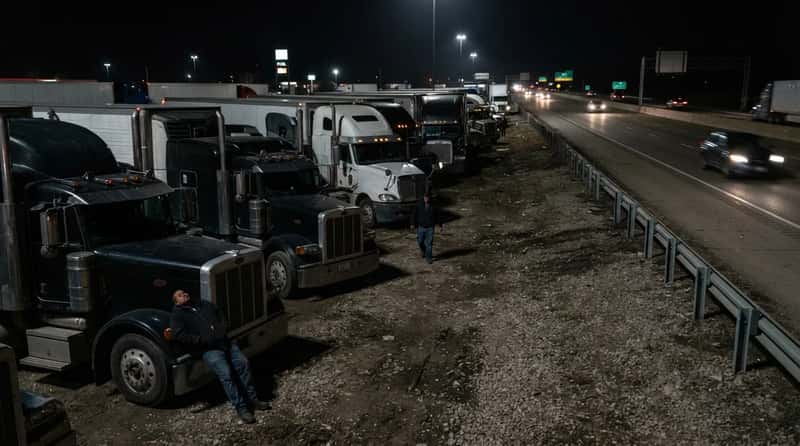
Here’s the part the industry doesn’t love to advertise: the parking shortage doesn’t just inconvenience drivers. It actively pushes them toward danger.
When there’s nowhere legal to stop, drivers say they’ll either keep driving while fatigued or park somewhere unsafe. That’s not a rare, isolated behavior – it’s a documented, widespread response to a system that keeps failing them.
Sleep loss is linked to 13% of heavy truck accidents, and that number traces straight back to the parking shortage and thin rest stop amenities. Every mile a driver pushes past exhaustion because there was no spot left is a mile of extra risk for everyone else on that road.
- Fatigued driving is legally impaired driving – the science is settled
- Right now, drivers are left to solve a structural problem alone
But that’s nothing compared to what drivers notice about #2.
#2 – Some Rest Stops Hide Real Danger, and Drivers See It First
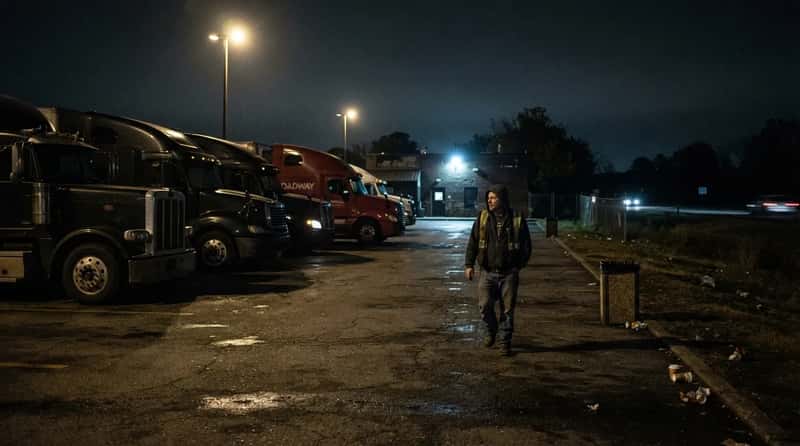
This is the part that genuinely shocks most civilians. After dark, rest stops aren’t just inconvenient – they can be actively dangerous, and long-haul drivers know it intimately.
Hard crime data on rest stops is scarce, but robbery, vandalism, prostitution, and panhandling are far from unheard of. Drivers notice things that never make the local news.
Roughly 41% of trafficking victims rescued at rest stops are minors, which is why some cities now partner directly with truckers to spot trafficking activity in progress. Drivers who spend enough time at these locations start recognizing the pattern fast – a vehicle that’s parked too long, someone who doesn’t belong, an exchange that doesn’t add up.
Parking on the shoulder of a highway is dangerously common for American drivers. Every night, they’re weighing crime risk at a poorly secured stop against the danger of parking roadside – and picking the lesser evil.
- Veterans trust their gut, and their gut is usually right
- A stop that “feels off” at 1 AM probably is
At a Glance
- Truckers Against Trafficking has trained more than 1.2 million drivers to spot the warning signs
- Roughly 41% of trafficking victims recovered through trucker tips are minors
- The organization has trained drivers for more than a decade, turning truck stops into informal watch points
But the single most revealing thing long-haul drivers notice at every stop? That’s #1, and it will change how you see every rest area you visit from now on.
#1 – The Whole System Runs on the Drivers Themselves
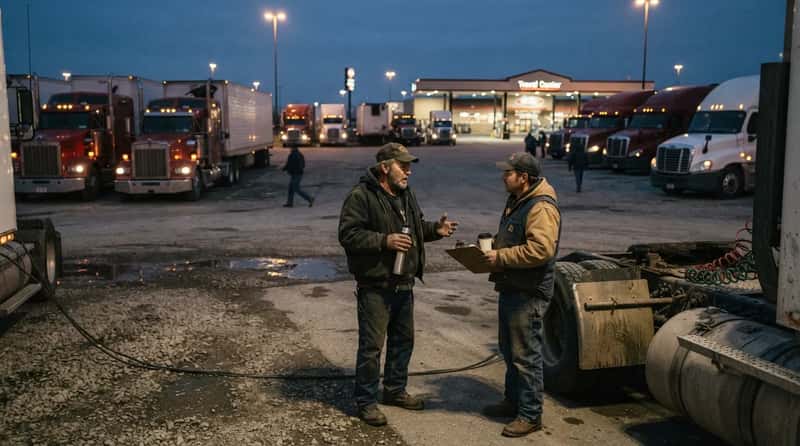
Turns out, the infrastructure most people take for granted at rest stops works largely because experienced drivers built informal systems to cover every gap the official one left open.
Rest stops don’t always offer the basic services drivers need for their health, and yet the freight keeps moving anyway. The reason is the drivers, not the facilities.
Veterans trade intel like currency: which stop has reliable showers at 11 PM, which fuel desk will hold a spot by phone, which lot has a guard actually worth trusting. Parking and basic amenities – fuel, food, restrooms, showers – matter most to drivers, yet safe, affordable, available parking is still chronically scarce.
Knowing when to stop is a driver’s responsibility. Having somewhere safe to stop is supposed to be shared responsibility – and the data shows that promise keeps getting broken.
Drivers have compensated with decades of unrecognized, hard-won knowledge passed quietly from cab to cab. Every rest stop observation they make isn’t a casual preference – it’s a survival skill.
- The unofficial driver network beats most apps for accuracy
- Without it, the whole system would be measurably more dangerous
The Bottom Line

Long-haul drivers don’t see rest stops the way the rest of us do. They read the lot, grade the lighting, clock the bathroom, judge the food, skip the useless gym, trade parking intel, and quietly watch for the things most travelers never notice at all.
It’s an industry where drivers routinely pay a premium just for basic human dignities – sleep, safety, a clean body at the end of a long shift. The people keeping your supply chain moving are doing it despite a system that keeps under-delivering on its most basic promises.
Next time you pull into a rest stop, look around with fresh eyes. The veteran parked two spots down has already catalogued everything you missed – and probably decided in the first ten seconds whether it’s safe to stay.