The world has never felt more like a place where you can simply pick up and start fresh somewhere new. Remote work made it possible, rising living costs at home made it tempting, and a growing wave of countries actively rolling out the welcome mat has made it increasingly real for millions of people. Meanwhile, on the other side of that coin, some nations that once felt like obvious choices are quietly – or not so quietly – pulling up the drawbridge.
In 2026, there are around 300 million expats in the world, making up roughly three and a half percent of the world’s population. That number keeps climbing. The expat-focused platform InterNations conducts an annual survey measuring things like ease of language learning, quality of healthcare, and how friendly locals are toward foreigners – and their 2024 survey drew more than 12,500 respondents representing 175 nationalities living across 174 countries. So who’s really rolling out the welcome mat, and who’s slamming the door? Let’s find out.
Panama: The Quiet Champion at the Top of the List

If you haven’t heard people buzzing about Panama lately, you haven’t been hanging around enough expat circles. Panama topped the InterNations ranking as the friendliest country for expats in 2024, pushing Mexico to the second spot – and it’s easy to see why, with affordable housing, great weather, and an easy visa process.
Nearly nine in ten expats said their income covers a comfortable life there, and over eight in ten reported being happy with their overall experience. Settling in, making local friends, and enjoying a balanced lifestyle are all described as surprisingly straightforward.
Healthcare is excellent, the economy is relatively strong, and both local Panamanians and the sizable expat community have a well-earned reputation for being genuinely welcoming. The official language is Spanish, and the country uses the U.S. dollar, which removes a huge layer of financial complexity for American expats in particular. Honestly, that last detail alone changes the whole calculus for a lot of people.
Mexico: The Perennial Favorite That Still Delivers

Mexico ranked second in InterNations’ 2024 friendliness survey, continuing to win hearts with warmth and vibrancy – and nearly nine in ten expats say they’re happy living there, thanks to friendly locals, a strong sense of welcome, and a culture that’s genuinely easy to adapt to.
About 85 percent of survey respondents noted that they feel welcome in Mexico. The country ranks first in terms of getting used to local culture and second when it comes to finding local friends. However, Mexico does have documented issues with safety and bureaucracy that expats need to navigate.
Mexico is frequently cited for its affordable cost of living, and American interest has surged dramatically – from roughly 18,000 visa applications in 2019 to over 30,000 by 2022. That trajectory has only continued. Think of Mexico as a best friend who has a few rough edges but fundamentally makes your life better just by being around.
Costa Rica: The Gold Standard for Feeling at Home

Costa Rica was named the most expat-friendly country in 2024 for ease of settling in, ranking first in two of three subcategories and placing in the top ten across all measured factors. That is a remarkable, consistent performance.
A striking 88 percent of expats in Costa Rica reported feeling extremely welcome, compared to just 63 percent globally, and 83 percent said they felt at home, versus 58 percent globally. An impressive 90 percent of respondents favourably rated the general friendliness of locals, compared to 63 percent globally.
Costa Rica won across all categories as the place with the most ease of settling in, the friendliest place, and the culture most welcoming to outsiders. Retirees still favor warm, sunny destinations like Costa Rica, and Americans in particular consistently name it as one of their top picks when dreaming about a move abroad.
Spain: Still Open, But the Fine Print Is Getting Longer

Spain had claimed the top spot among the best expat countries for three consecutive years before its recent slide in the rankings. Still, the appeal is undeniable. Valencia, Madrid, Barcelona, Seville, and Bilbao all boast large English-speaking expat communities, and Valencia ranked first in InterNations’ 2024 Quality of Life Index.
Spain ranks 11th in the settling-in category and offers an accommodating environment for expats – more than three quarters of respondents feel at home and welcome, and most agree it’s easy to make friends locally and adapt to local culture.
Spain offers a digital nomad visa and an entrepreneur visa, and in November 2024 the government extended its job-seeking visa from three months to a full year. However, obtaining the digital nomad visa has become more complicated, with applicants now required to provide additional documentation around their business, including proof of its existence at least a year prior and proof of ongoing contracts. So Spain is open, but it’s getting more selective about who it lets through the more complex doors.
Thailand: Southeast Asia’s New Digital Nomad Hotspot

As of July 2024, the Thai government launched the Destination Thailand Visa (DTV), now officially live for those looking to work and travel in the country. The DTV allows holders to stay for up to 180 days per entry and is valid for five years.
The DTV has already crossed 35,000 applicants in just one year since its launch, showing strong global traction. For expats, it offers a practical five-year, multiple-entry visa that permits stays of up to 180 days at a time, renewable without the red tape of traditional work permits.
Thailand, especially Chiang Mai, has long been associated with the digital nomad lifestyle, offering a low cost of living, coworking spaces everywhere, and excellent internet quality. However, some limitations remain – as of now, most Thai banks do not permit DTV holders to open local accounts, which complicates day-to-day life for digital nomads reliant on local payment systems. It’s paradise with a few bureaucratic thorns.
Germany: Quietly Rolling Out the Red Carpet for Skilled Workers
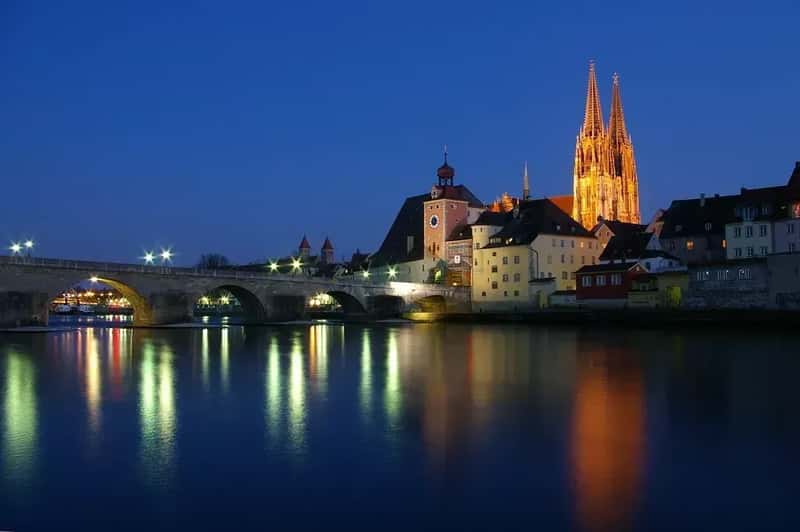
Germany doesn’t exactly come to mind when you think “warm and welcoming,” and let’s be real, the data backs that up in terms of social integration. The Nordic and northern European countries, including Germany, continue to perform badly when it comes to ease of settling in. Yet from a legal and professional standpoint, the story is remarkably different.
In January 2024, the German Parliament passed a law making it easier for non-European foreigners residing in Germany to gain citizenship. Naturalization is now possible after five years of residence, down from eight. Dual nationality is recognized, and children born to foreign parents can obtain German nationality at birth if one parent has legally lived in Germany for at least five years – a reform that could benefit up to ten million people.
Germany’s Skilled Workers Immigration Act introduced a fast-track procedure for temporary work visas and permits for foreigners offered jobs in shortage sectors including healthcare, IT, engineering, skilled trades, and transport – with the accelerated procedures applying to the first 25,000 applicants. Germany is essentially saying: we want your talent, even if making friends here is a work in progress.
Portugal: Yesterday’s Dream, Today’s Complicated Reality

Portugal was once considered the golden ticket of European relocation. Sun, surf, affordable cities, a flexible golden visa, and a relatively easy path to citizenship. I think it’s safe to say that era is over – at least in its original form.
The foreign-born population surged from around 400,000 in 2017 to 1.1 million in 2024, rising from four percent to fifteen percent of the total population. This rapid growth created significant administrative problems, and the number of immigrants surged further with 29 percent more arrivals in 2022 alone according to the OECD. Critics say the reforms risk creating additional barriers for immigrants already contributing to Portugal, shifting from a model of integration to one of filtration.
The UK and Canada: Tightening the Gates

” countries that once attracted enormous waves of expats and immigrants are now pushing back – hard. The motivations differ slightly country to country, but the direction is unmistakable.
The United Kingdom announced its objective to reduce net migration in a major White Paper in May 2025. The Netherlands had already set reducing migration as a goal in its 2024 coalition agreement, and Canada – for the first time – set a threshold for overall temporary residents as a proportion of its population, deciding to reduce immigration targets.
There is an unmistakable shift in attitudes to international immigration across many governments, with tighter border and entry rules aimed at reducing numbers. The reasons range broadly from concerns about overpopulation straining public services, to worries about national identity and cultural concerns. It’s a political reality that anyone planning a move needs to factor in very carefully right now.
The United States: Closing Doors Faster Than Almost Anyone

The United States has historically been a top destination for expats and immigrants from around the world. That reputation is taking serious hits under the current policy landscape.
In December 2025, President Trump issued a newly enlarged travel ban restricting the entry of nationals of 20 new countries as well as the Palestinian Authority, meaning that roughly one in five people seeking to immigrate to the United States legally are now barred from doing so.
The country most heavily impacted by the new restrictions is Nigeria. Over the last decade, Nigerians received an average of 128,000 immigrant and nonimmigrant visas on an annual basis, and nearly all of those visas will now be restricted, effectively blocking legal immigration from the most populous country in Africa. Notably, a recent Gallup poll found that approximately 20 percent of Americans say they would like to move abroad permanently, with one of the most common reasons being lower confidence in U.S. institutions.
Kuwait and the Nordic Countries: The Hardest Places to Feel at Home

Not every difficult destination is difficult because of policy. Some places simply make integration feel nearly impossible – regardless of how welcoming the laws on paper might be.
Kuwait ranked last out of 53 countries in the global expat survey for the seventh year in a row – with just 22 percent of expats satisfied with their social life, compared to 52 percent globally, and only 26 percent feeling that locals are friendly toward foreign residents, against 61 percent globally.
On the opposite end of the friendliness spectrum, countries of Scandinavia present significant social challenges for expats, with Norway ranking at the very bottom of the list as a country where expats have a hard time adjusting to local culture and find very sparse opportunities to make local friends. Nine of the bottom ten countries in the ease of settling in index are European, with Nordic nations consistently performing poorly in this category. It’s a reminder that safety, income, and infrastructure can coexist with a deeply cold social environment – and for many people, that trade-off simply isn’t worth it.
Conclusion

The global expat landscape in 2026 is genuinely polarized. On one side, countries like Panama, Costa Rica, Thailand, and Germany are actively building systems to attract and retain foreign talent. On the other, nations that once seemed like obvious destinations – Portugal, Canada, Australia, the UK, and the United States – are tightening rules, raising thresholds, and sending a clearer message: we’re being more selective now.
Talent attraction remains a common goal across many governments, with countries competing and benchmarking against each other in that category – even as the levers of wider migration policy are being pulled toward greater restriction. The story here is not simply about open or closed. It’s about who a country wants, and on what terms.
For anyone dreaming about a life abroad, the takeaway is this: the window is still open in many places, but it’s moving. The best time to research your options is right now – before the fine print changes again. What would surprise you most about where the world’s most welcoming countries actually are?