
There’s a specific moment many former cruise fans describe: standing at a port, surrounded by thousands of people, staring at a bill that somehow doubled from the advertised fare, watching the ship burn fuel at the dock. That moment tends to be quiet and clarifying. It’s the moment a vacation starts feeling like a transaction you didn’t quite agree to.
This year, I cancelled my cruise. It wasn’t a snap decision born from one frustrating experience. It was the result of looking honestly at what modern cruising has actually become, from the economics to the environmental footprint to the effect on the places those ships visit. What I found was more complicated, and harder to ignore, than I expected.
The Price Tag Has Changed – Even If the Advertised Fare Hasn’t
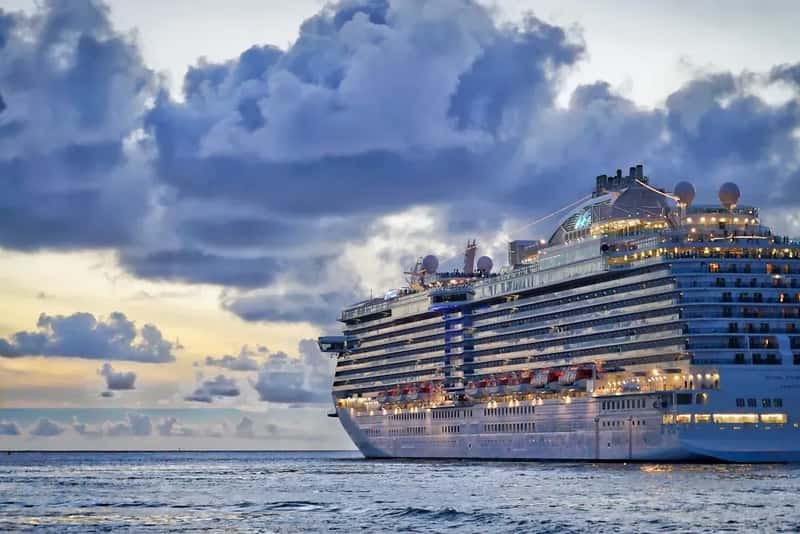
Fares across most ocean lines are up roughly six to seven percent year-over-year, yet many travelers report that the onboard experience feels diminished. That’s a concerning combination. You’re paying more, and getting less, almost simultaneously.
Wi-Fi, gratuities, spa access, and specialty dining are increasingly being excluded from base fares on major lines. Advertised cruise prices may remain stable, but travelers must budget separately for services that were once included in the core fare. The cruise brochure price is now closer to a floor than a ceiling.
The Hidden Fee Spiral Is Getting Worse
One key reason cruise lines implement hidden fees is to compensate for the low ticket prices that draw in a large customer base. Cruise lines may advertise attractive base fares, but these low prices can lead to a perception of value that does not reflect the total cost of the cruise experience once additional charges are considered.
At big lines such as Royal Caribbean and Norwegian, it’s not uncommon for a family of four staying in a single cabin to see around $70 to $80 a day in service fees added to its bills. On a typical seven-night cruise, that’s around $500 in fees for a family of four. Several major cruise lines raised their fees in early 2026, with one pushing its automatic gratuity to $17 per person per day, and another raising its rate to $20 per day.
What You Get Onboard Is Quietly Shrinking
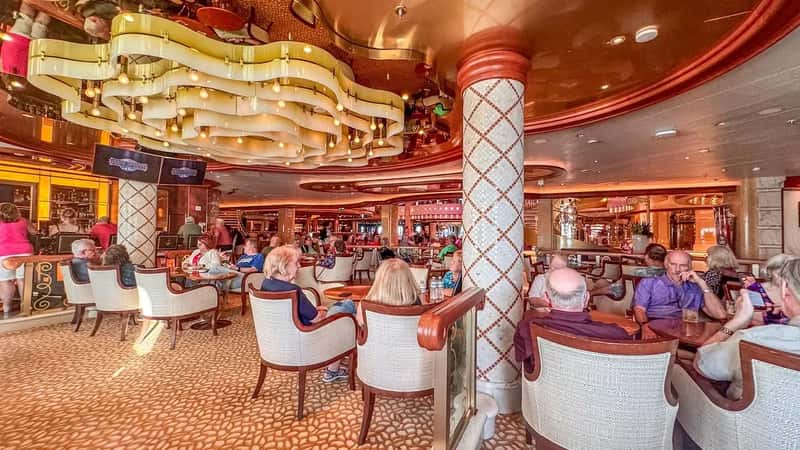
From menu changes in the main dining room to the removal of free room service on several cruise lines, cruise passengers have real complaints. While many understand that the cost of everything has increased, they don’t like getting less for more money. The frustration is understandable, because it’s grounded in real experience.
Many cruise passengers have noticed a decline in the food quality offered in the main dining room. From meat dishes that are tough to pasta dishes that lack flavor, these complaints have become common, even on premium cruise lines. Cruise lines used to offer twice-a-day housekeeping, usually a full cleaning of the stateroom as well as a quick turndown in the evening. Contemporary cruise lines like Carnival, Norwegian, and Royal Caribbean have reduced daily housekeeping from twice a day to once a day.
The Industry Is Doing Well – But Passengers Are Seeing Less of That
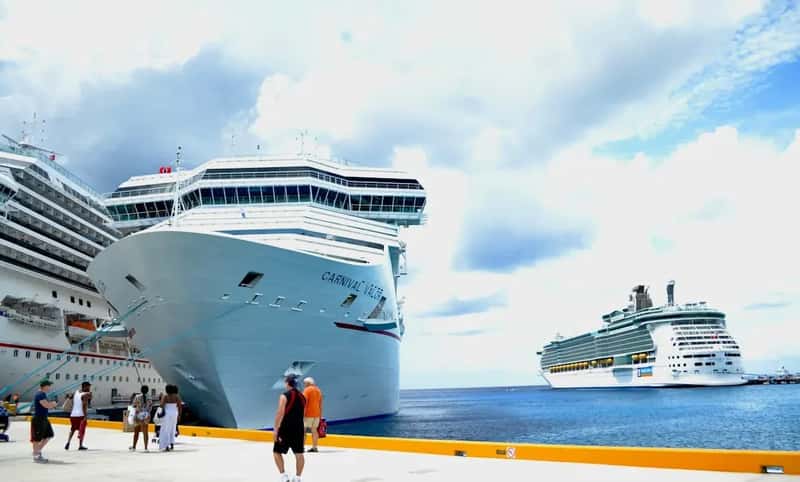
Globally, the industry welcomed nearly 35 million passengers in 2024, the most in cruising history. Cruise Lines International Association is projecting 37.7 million passengers in 2025 for a global economic impact of $168.6 billion. These are record numbers, by any measure.
The gap between corporate performance and passenger experience is striking. Despite record passenger demand and some of the strongest forward bookings the industry has ever seen, cracks are showing beneath the surface of cruising’s post-pandemic boom. Fares across most ocean lines are up roughly six to seven percent year-over-year, yet many travelers report that the onboard experience feels diminished. The shareholders are doing well. The guests are doing the math.
The Environmental Cost Is Hard to Justify
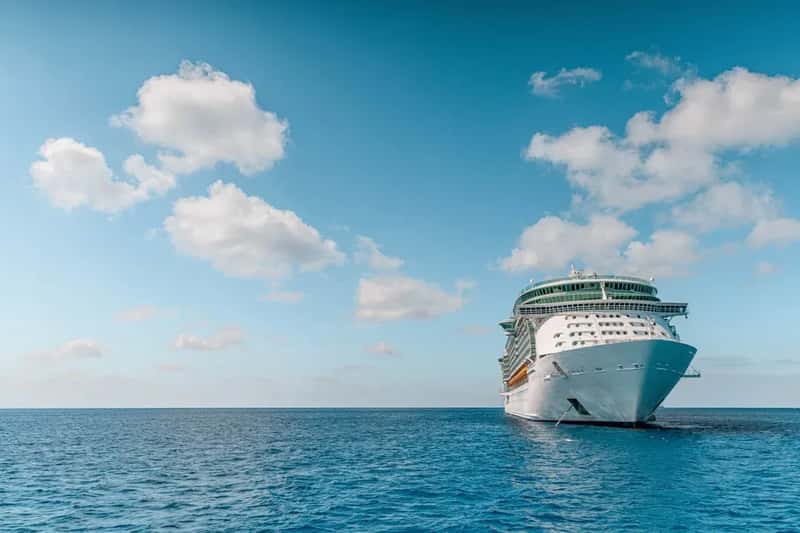
The average cruise passenger is responsible for 421.43 kilograms of CO2 per day, according to 2025 industry analysis. For context, cruise ships have been estimated to release twice the amount of CO2 into the atmosphere per person than flying and staying in a four-star hotel. That comparison alone is worth sitting with.
Other than water, air, and noise pollution, solid waste generated on cruise ships is also deeply problematic. It is estimated that about 50 tons of solid waste are generated during a one-week cruise, and that some 24 percent of the solid waste generated by vessels worldwide comes from cruise ships. One study revealed that 218 cruise ships in Europe released four times more sulfur oxide than all of the cars in Europe. Those numbers are difficult to dismiss as minor footnotes.
LNG Isn’t the Clean Solution It’s Marketed As
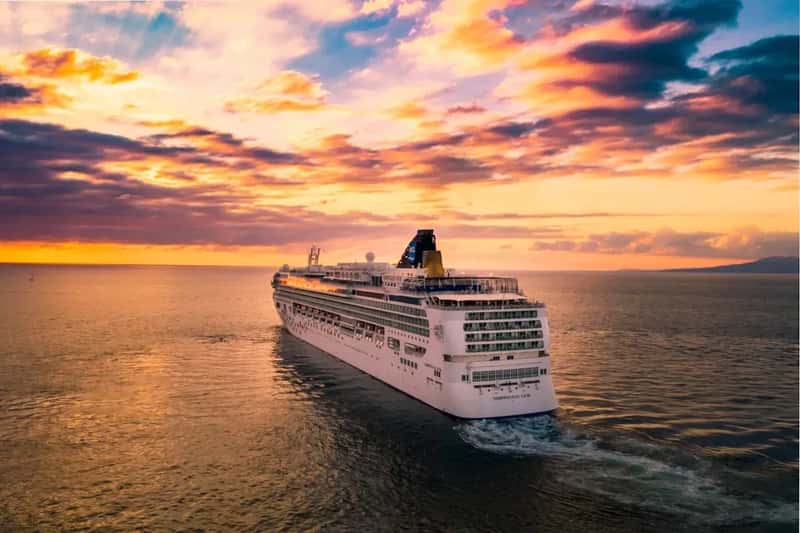
Cruise lines have started incorporating LNG-powered cruise ships into their fleets. LNG reduces the amount of carbon dioxide emissions and is considered the most environmentally friendly way to cruise at this time. That framing sounds reassuring, until you look a little deeper.
While burning LNG generates less carbon dioxide and sulfur dioxide emissions compared to other fossil fuels, it remains a highly polluting source of fuel. Gas is primarily made of methane, a planet-heating greenhouse gas trapping about 80 times as much heat as carbon dioxide over a 20-year period. The types of engines that cruise ships use leak unburned methane into the atmosphere – a phenomenon called “methane slip” – and the life-cycle greenhouse gas emissions from these engines end up being higher than using low-sulfur marine gas oil. The green marketing runs ahead of the green reality.
The Places You Visit Are Paying a Real Price
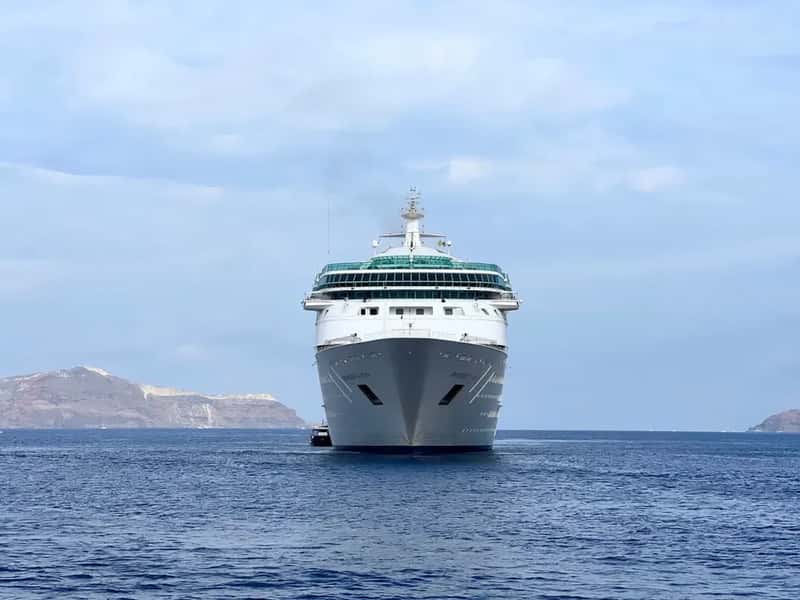
On peak summer days in Santorini, as many as 17,000 cruise passengers arrive, placing significant strain on an island with only 20,000 permanent residents. The abrupt spike in visitors during peak seasons in coastal areas like Santorini puts a tremendous strain on the water supply. In May 2025, 15 villages on the island were left with almost no water pressure due to extreme overconsumption.
Cruise passengers typically have minimal time in each port and spend much of their money on board or through tours booked via the cruise line, resulting in limited economic benefits for local communities. Cruise ships commonly sail under the flags of countries considered tax havens by the OECD. While cruise liners profit from systems and public services in the places they operate most, they generally do not pay taxes to these places. The ports bear the burden. The benefits flow elsewhere.
Cities Are Starting to Say No

In July 2025, the city of Barcelona announced a significant change to its cruise tourism policy. Two of its cruise terminals at the Moll Adossat port will be permanently closed by October 2026, reducing the city’s cruise traffic by nearly half. This decision was driven by concerns over crowding in the city’s historic neighborhoods, pollution from docked ships, and growing public discontent.
Cruise passengers are increasingly suffering the wrath of locals fed up with overtourism, as residents greet ships with protests and chants. In extreme cases like Barcelona, citizens are spraying water on tourists, forcing them to leave the city’s main attractions. Cannes will ban ships carrying over 3,000 passengers starting in January 2026, aiming to reduce pollution and manage crowds. The resistance is no longer fringe sentiment – it’s official policy in a growing number of ports.
What You Could Do Instead

None of this means travel itself is the problem. Slower travel, longer stays in fewer places, independent itineraries that put money directly into local restaurants and guesthouses – these options exist and they’re genuinely enjoyable. River cruises, generally considered less intrusive than ocean voyages, are one middle ground worth exploring. If you prefer a more sustainable vacation choice, consider an all-inclusive resort or a sailboat cruise. Even a land cruise, such as a bus tour, would be more environmentally friendly.
Some travelers who love the sea are switching to expedition-style voyages on smaller vessels that visit fewer ports with tighter passenger limits. Others are simply choosing destinations that ask to be visited slowly, on foot, by train, with time to actually see the place rather than swarm it. The point isn’t to stop traveling. It’s to be honest about what kind of traveler you want to be, and what kind of experience you’re actually paying for.
The Honest Question Worth Asking
The cruise industry is, by its own numbers, thriving. CLIA predicts 37 million passengers globally will set sail on a cruise in 2025, and by 2028, the number rises to 42 million. For millions of people, it still delivers something real: ease, variety, family-friendly logistics, the pleasure of waking up in a new harbor. That’s not nothing.
Still, the honest question is whether the product being sold in 2026 matches the one being advertised. Fares are up. Service is thinner. The environmental footprint is substantial. The destinations are strained. And the fees keep multiplying in the fine print. For many people, the answer to that question is quietly changing – not with outrage, but with the simple act of booking something else instead.