Passengers 75 and older used to be the only adults allowed to keep their shoes on at security, and now everyone can. Seat and boarding rules have shifted just as fast, and advice that was right a few years ago can now cost you a good seat, a place in line, or your patience at the gate.
Stay for the final item. It shows how a boarding pass with a blank where your seat should be can quietly put you first in line to be left behind, and the one request that fixes it. First, a change at security that has some travelers rechecking the math on a $75 membership.
#12 – The Shoes-On Perk at 75 Went Universal
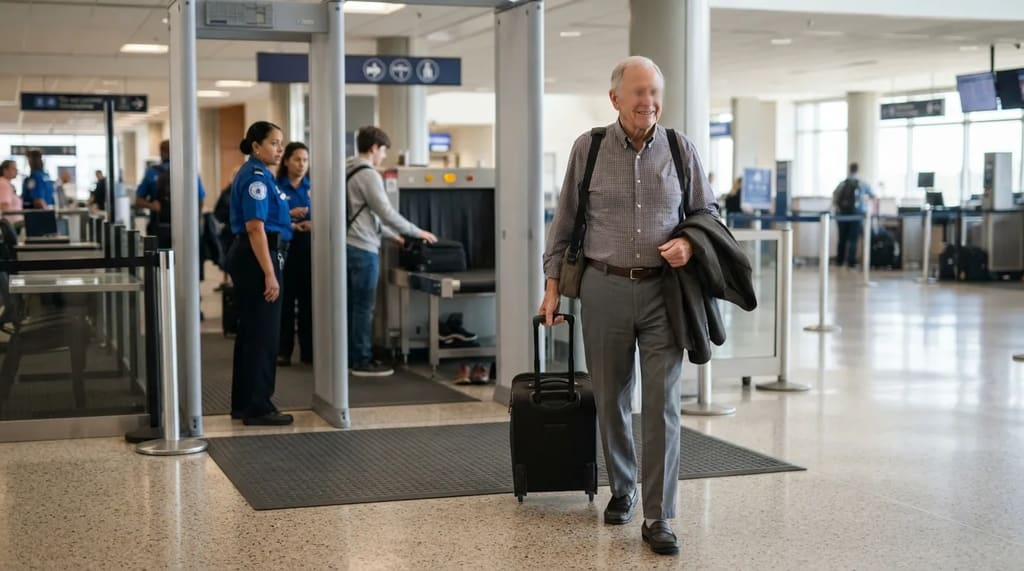
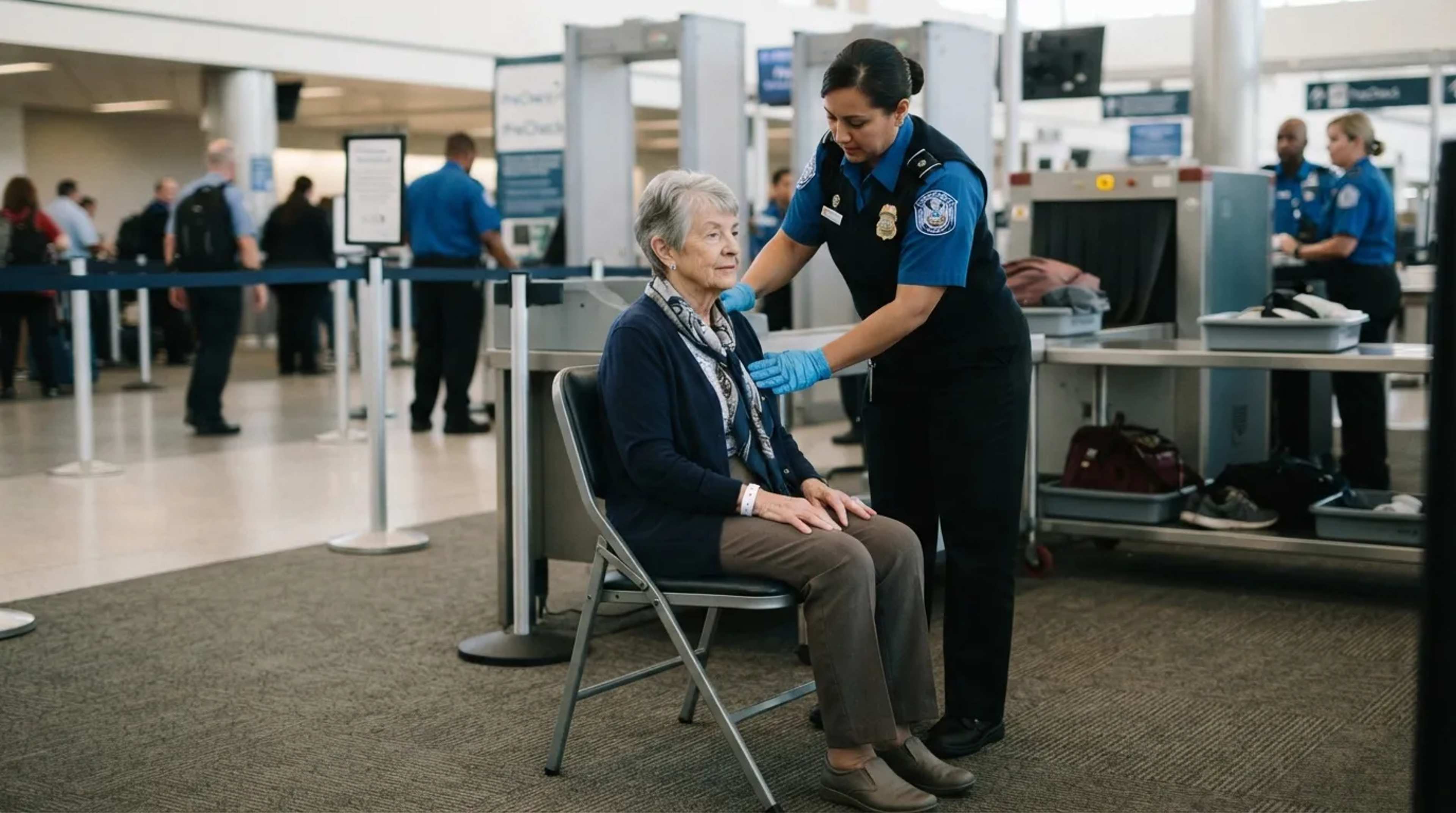
For years, only children 12 and under and passengers 75 and older could keep their shoes on at the checkpoint. TSA ended the shoe-removal mandate on July 8, 2025, so every traveler now keeps shoes on unless an alarm or extra screening says otherwise.1
Age 75 still counts for something. TSA says passengers 75 and older can receive some form of expedited screening, though what that looks like varies by checkpoint, and TSA’s own page says light jackets still come off for body-scanner screening.
TSA PreCheck has no senior discount at any age. It costs $75 or more, and AARP notes that members who paid for the shoes-on perk now have to decide whether the other benefits justify the fee.
My verdict: if shoes were the only reason you enrolled, don’t renew on autopilot. What PreCheck still saves is belts, jackets, laptops and liquids, which matters only if you fly often enough to feel it.
Security isn’t the only place a long-standing routine stopped paying off. One airline changed how its passengers get seats, and the old trick of checking in early to grab a good position no longer works.
#11 – Southwest Ended Open Seating on January 27
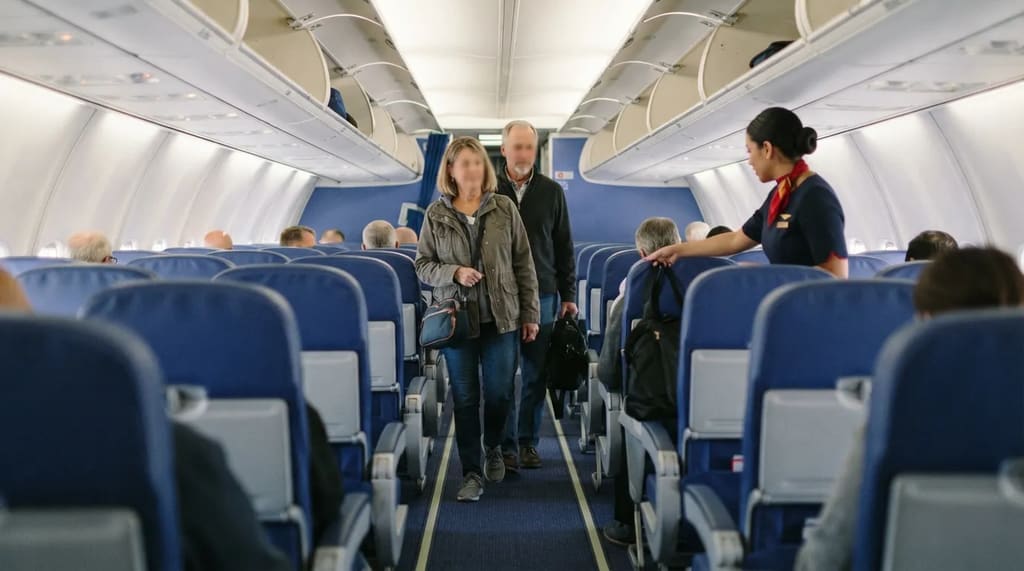
If you’ve flown Southwest for years, choosing your own seat after boarding was a habit baked into your travel life. The airline discontinued open seating on flights departing January 27, 2026, and beyond.2
Under the old system you got a lettered group, A through C, and picked any open seat once aboard. Your position was set at check-in, usually 24 hours before departure, which is why so many travelers set alarms for it.
That alarm is retired. Checking in early no longer buys a better boarding position, because the eight boarding groups are now based on seat location, fare type, tier status and credit card benefits.2
Quick Compare
- Before: lettered groups A through C, with your spot set by check-in time.
- Now: eight boarding groups tied to seat location, fare, status and card benefits.
- Before: pick any open seat after you board.
- Now: your seat is assigned.
The gate routine hasn’t vanished entirely. After launch, Southwest adjusted its approach, and groups one and two were still being told to line up before boarding began.
Watch the screens and listen to the agent instead of assuming the old rules or the new ones.
Assigned seats bring a price ladder with them. The bottom rung puts you toward the back of the cabin and in the last boarding group.
#10 – The Lowest Southwest Fare Seats You Last
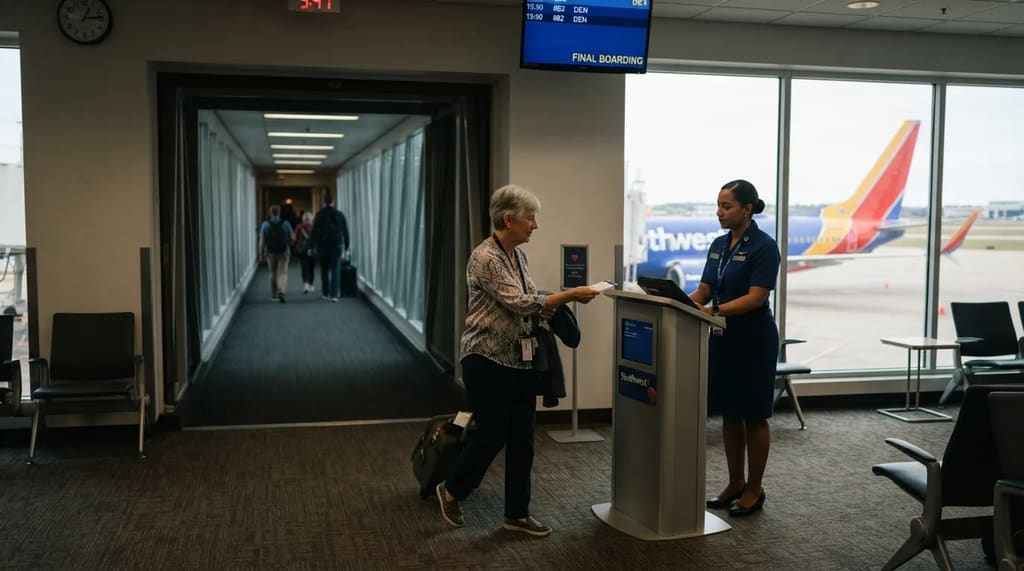
The cheapest fare on the screen has a catch that shows up at the gate, not at checkout. A Basic fare gives you a standard seat toward the back of the cabin, assigned at check-in, and you board last.2
Basic is also nonrefundable and doesn’t allow changes. So a late-boarding seat comes with no flexibility if a medical appointment or a family plan shifts.
Moving up the ladder changes what you control:
- Choice lets you pick a standard seat at booking and make same-day changes.
- Choice Preferred adds a seat closer to the front, selected in advance, and early general boarding.
- Choice Extra includes an extra-legroom seat chosen at booking, with early boarding.
Choice fares let you pick your seat at booking. My verdict: if you walk slowly, need a bin near your seat, or carry medication you can’t check, Basic is a false economy once seat and boarding position are counted.
Fares sort travelers one at a time, but couples and families travel together. Whether they board together comes down to one detail in how you book.
#9 – One Reservation Keeps Your Group Together
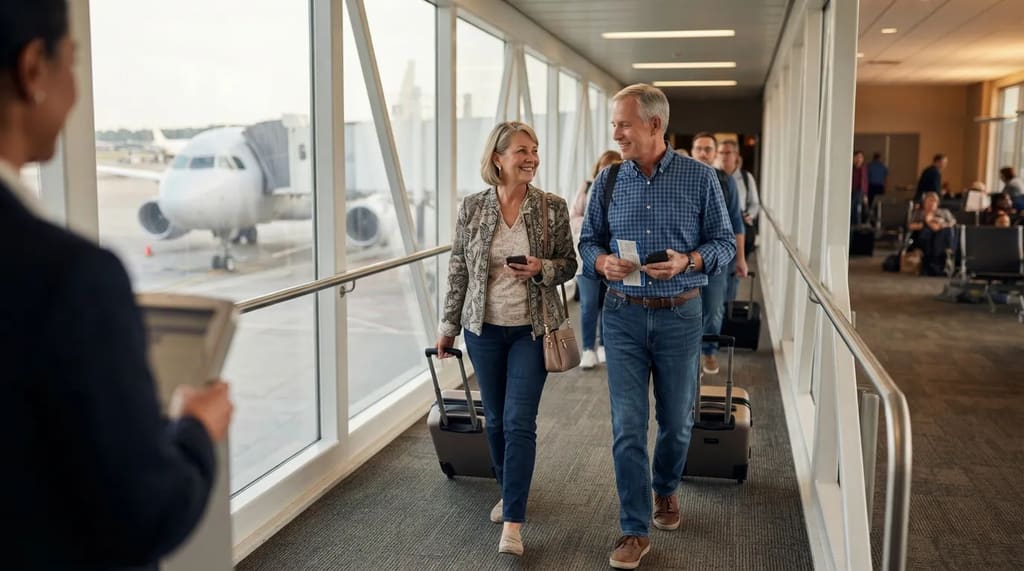
Everyone on the same reservation of nine or fewer customers is assigned the same boarding group.2 That sentence is the whole trick, and it’s easy to break without knowing.
A couple who buy two separate tickets in two separate transactions aren’t covered by that promise. Book everyone on one reservation, and your spouse or travel partner boards when you do, even on a lower-priced fare like the Basic fare above.
Rapid Rewards credit cardmembers who didn’t receive an earlier group board in Group 5. The gate looks different too: there are no numbered columns, just two alternating lanes with screens showing which group is up.
A separate area handles preboarding for active-duty military, buyers of the priority boarding product, and customers who need to preboard. Which brings up the last group, and who may use it.
That preboarding area exists because of a federal rule, and the rule works differently from what many travelers over 55 expect.
#8 – Preboarding Follows Need, Not Birthdays
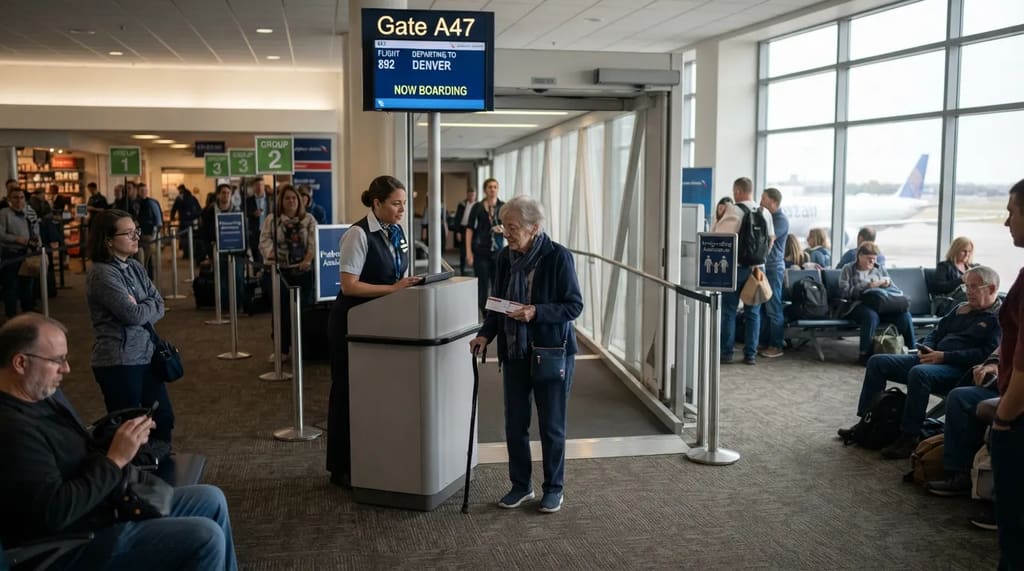
Turning 65 doesn’t move you to the front of the line, and neither does 75. Federal rules require airlines to let a passenger with a disability who self-identifies at the gate as needing extra time or assistance to board, stow equipment or be seated board before all other passengers.
The trigger is what you need, not how old you are. Tell the gate agent you need extra time or help to board, and say it before the line forms.
Airlines can attach conditions. They may require preboarding as a condition of certain seating or in-cabin stowage accommodations, and they may ask passengers to check in early or provide advance notice or documentation.
My verdict: don’t wait for your group to be called and then ask for help. The benefit of preboarding is getting to your seat before the aisle fills and the bins close.
Preboarding gets you down the jet bridge. Where you sit afterward falls under one of three systems, and your airline’s choice decides how you have to ask.
#7 – Three Ways Airlines Hold Seats for You
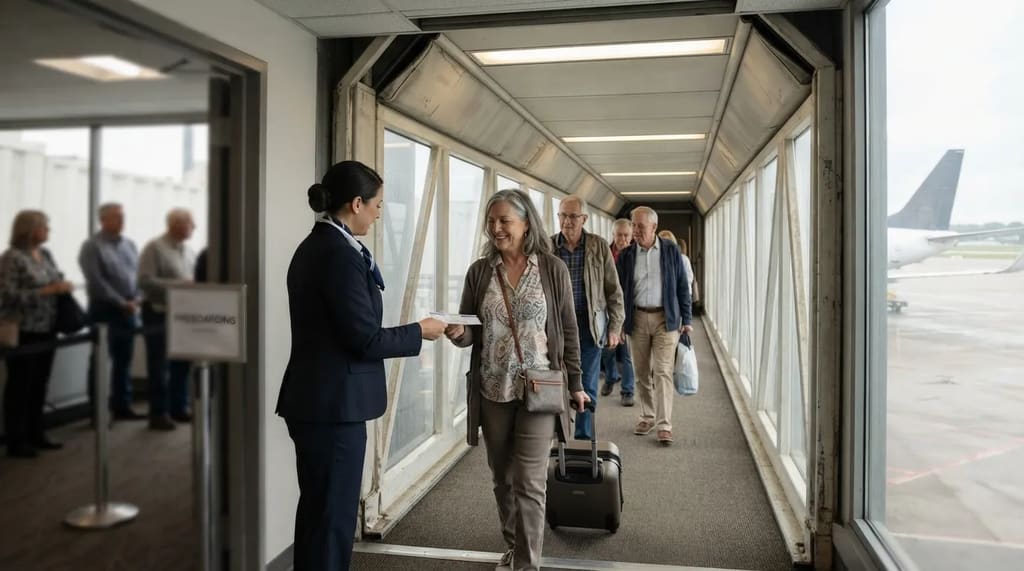
Federal rules don’t make every airline hold seats the same way. Airlines must use one of three methods: block, priority, or preboarding.3 4
- Block: the airline reserves an adequate number of seats and must not assign them to passengers who don’t qualify.
- Priority: the airline designates an adequate number of seats as priority seats.
- Preboarding: qualifying passengers board first so they can choose seats that suit them, which applies if the airline doesn’t offer advance seat assignments.
If an airline assigns seats only on the day of the flight, it has to use the priority approach. An airline that wants a different method needs written concurrence from the Department of Transportation.3
DOT’s Seating Accommodation Methods page lists the method each large U.S. airline uses, so look yours up before you call. That page also explains each method in more detail.
Knowing the method before you ask puts you ahead of most people in the gate area. Then you’re asking for something the airline already has to offer, not begging for a favor.
#6 – Bulkhead Seats Reserved for Specific Needs
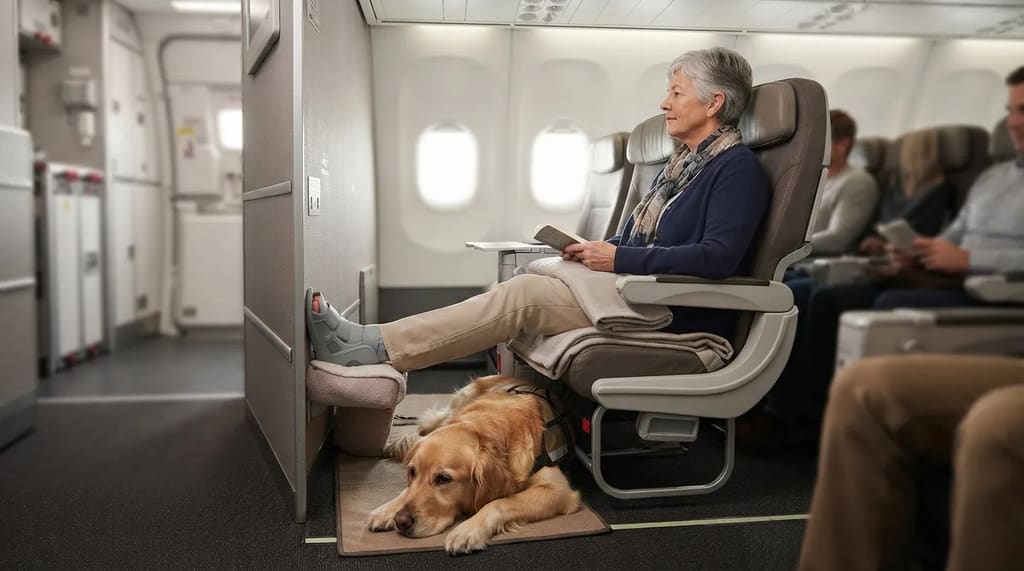
Federal rules name particular situations for reserved seats. They include bulkhead or other seating for a fused or immobilized leg, or for service animal travel, and greater leg room when the passenger has a fused or immobilized leg.
Those passengers must identify themselves to airline personnel as needing the seat, and it applies only if the seat exists in the same class of service. The airline won’t guess, so the identification is yours to give.
Other needs aren’t left out. The airline must provide a seat assignment that best accommodates the disability, if the passenger meets its procedures.
Worth Knowing
- You have to speak up: the airline won’t assume you need the seat.
- The seat must exist in the class of service you booked.
- Procedures can include advance notice or documentation.
- The seat map is fullest at the gate, so ask at booking.
Ask for the seat that best fits your need, and describe the need in plain, practical terms.
Bulkhead isn’t the only seat with extra room. Another one is easy to buy online, and it comes with a job description written into federal rules.
#5 – Exit Row Seats Come With a Job
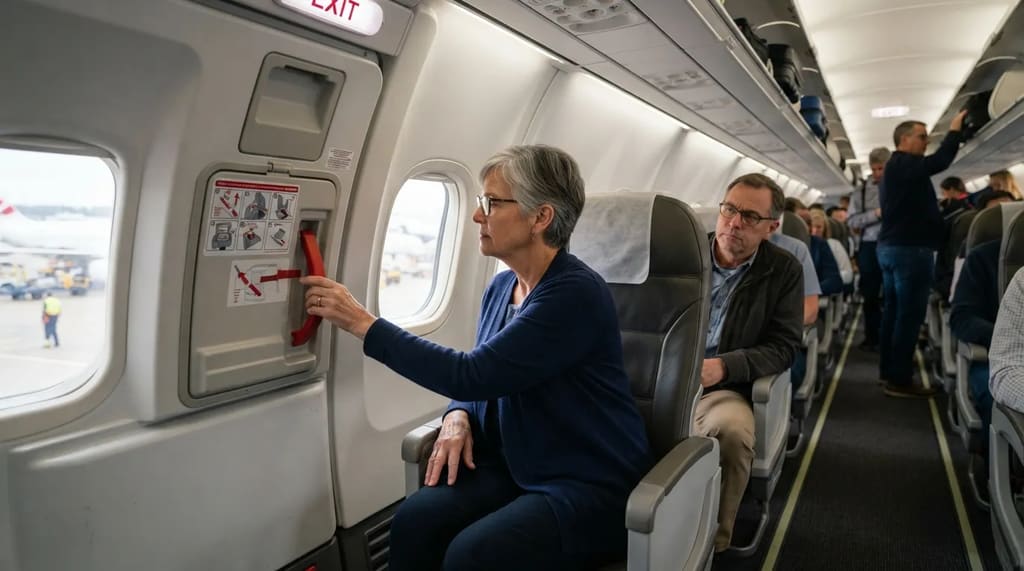
Extra legroom in the exit row is payment for a duty. Federal regulations require the passenger to understand verbal instructions, quickly activate the evacuation slide, and open and lift the exit door.5
You must also be at least 15 and able to understand and speak English. Glasses and hearing aids don’t disqualify you, because the FAA allows passengers who wear corrective eyewear or hearing aids to sit there.6
My verdict: for many travelers over 55, the extra-legroom seat that isn’t an exit row is the better buy. On many aircraft, economy plus or comfort economy offers similar legroom without the eligibility requirements or the limited recline.
Price doesn’t change the rules either. At American, an exit row seat can be a Main Cabin Extra seat starting at $20, and buying one doesn’t change the exit row requirements.
Comfort and duty aside, one small seat feature decides how easily you can get in and out of a row. Federal rules say how many aisle seats must have it.
#4 – Half the Aisle Seats Have Armrests That Lift
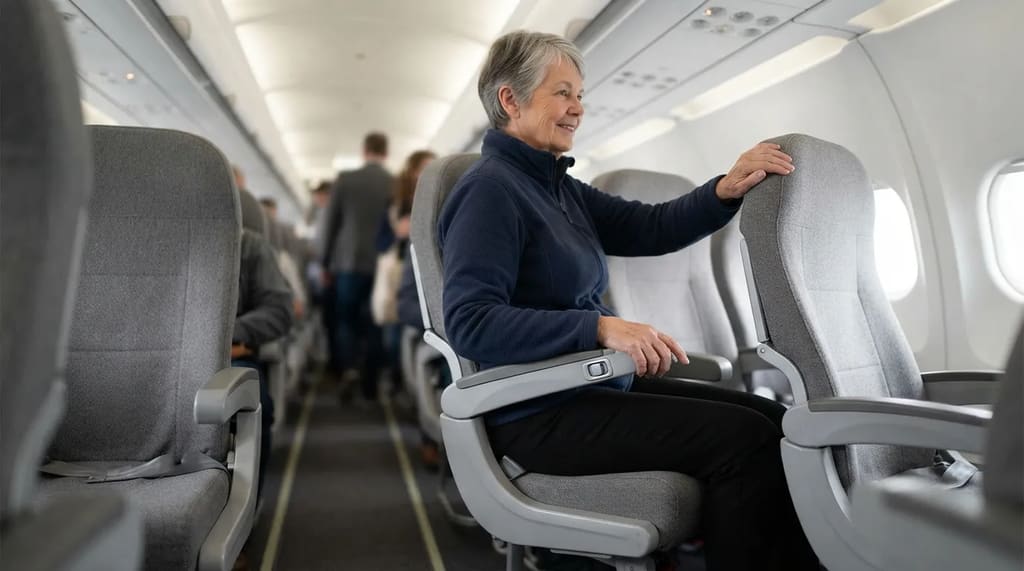
On aircraft with 30 or more passenger seats, federal rules require movable armrests on at least half of the aisle seats.4 Most people never notice the little release button, until a bad knee makes it matter.
A raised armrest lets you slide sideways into the seat instead of lowering yourself over a fixed barrier. For anyone with a hip or knee replacement, or a back that complains after a long drive to the airport, that’s a real difference.
Here’s the catch: half is not all. Seat maps often don’t show which aisle seats have the feature, so the airline won’t hand it to you automatically.
Fast Facts
- The rule covers aircraft with 30 or more passenger seats.
- At least half of the aisle seats must have movable armrests.
- Seat maps often don’t flag which ones qualify.
- Passengers with a mobility disability can request the seat that best accommodates them.
An aisle seat with a movable armrest is a common ask. Make the request when you book, and repeat it at check-in.
Getting into the seat is only half the trip. The next item covers the gear that has to get on the plane with you, and the fees you don’t have to pay for it.
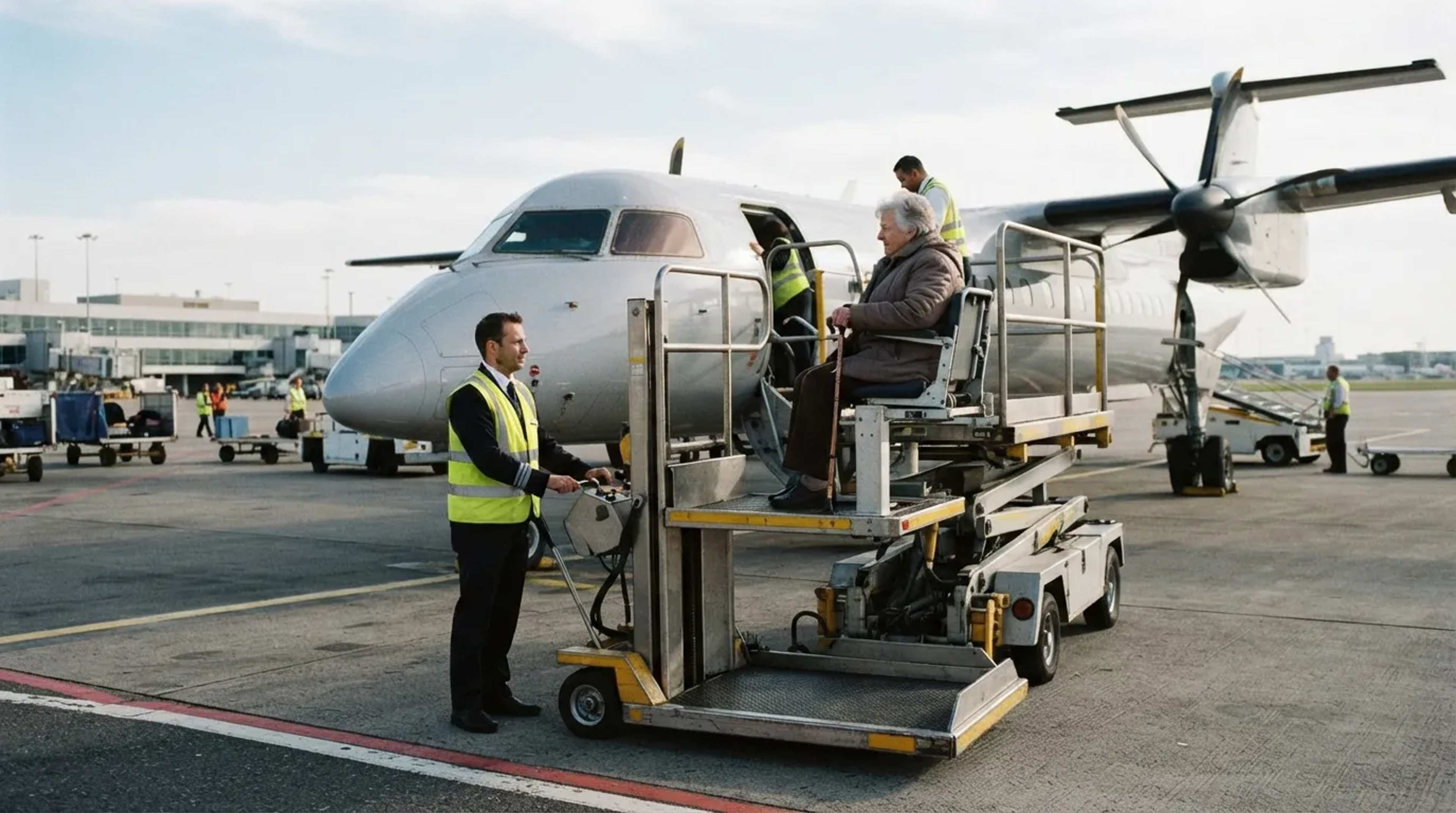
#3 – Wheelchair Help Is Free, Even If You Can Walk
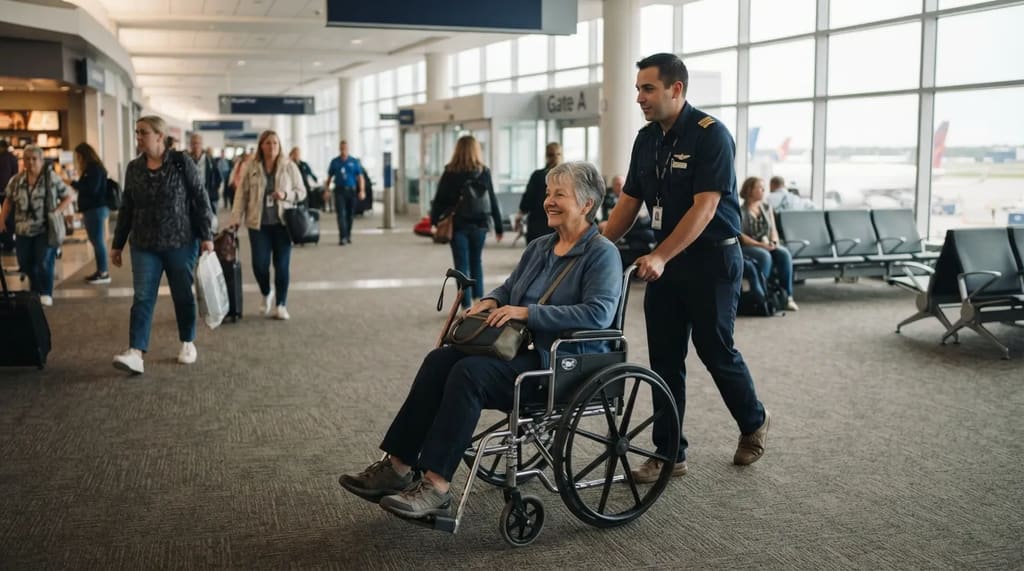
U.S. airlines can’t charge you for wheelchair assistance. Ask when you book, or ask at the airport counter if your plans change.
You don’t have to be unable to walk to use it. A mile-long concourse, a tight connection, or knees that give out somewhere around gate B47 are all good reasons to ask.
Your own mobility aids get protection too. Wheelchairs and walkers can be checked at no charge, and they’re supposed to be returned to you as close to the aircraft door as possible.
A folding wheelchair can ride in an onboard closet if the plane has one and there’s room. Canes can stay with you in the cabin, as long as they’re stowed safely.
My verdict: ask for the chair before the terminal wears you down, not after you’re already exhausted. Saving your energy for the flight is the whole point.
Some gear is more than a convenience, though. Medical devices have their own rules, and one of them can save you a fight at the gate.
#2 – Your CPAP and Oxygen Concentrator Aren’t Carry-Ons
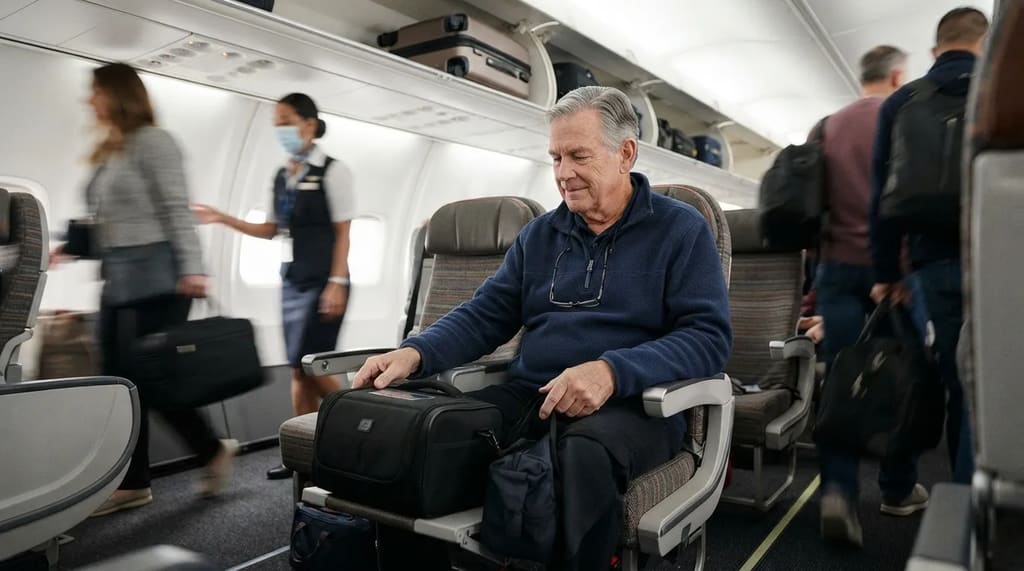
U.S. airlines generally don’t count medical devices like a CPAP machine toward your carry-on limit. Travelers still get tripped up at the gate, because agents don’t always know the rule.
Related Stories From Travelbinger
Portable oxygen has stricter terms, so read the checklist below before you book. Call the airline before the trip, not from the security line.
Liquid medications get a break at security as well. TSA allows medically necessary liquids in reasonable quantities above 3.4 ounces, as long as you tell the officer at the checkpoint.
At a Glance
- Only FAA-approved portable oxygen concentrators are allowed on board.
- Bring enough battery power to run the device for 150% of the flight’s expected duration.
- Some airlines ask for a doctor’s statement or advance notice for oxygen.
- A CPAP machine generally doesn’t count toward your carry-on limit.
My verdict: keep every medication and device in your carry-on, never in a checked bag. A lost suitcase is an inconvenience, but lost medicine is a crisis.
Those two rules protect your health. The last one protects your place on the plane, and it hides in plain sight on your boarding pass.
#1 – A Boarding Pass That Says ‘See Agent’ Can Cost You Your Flight
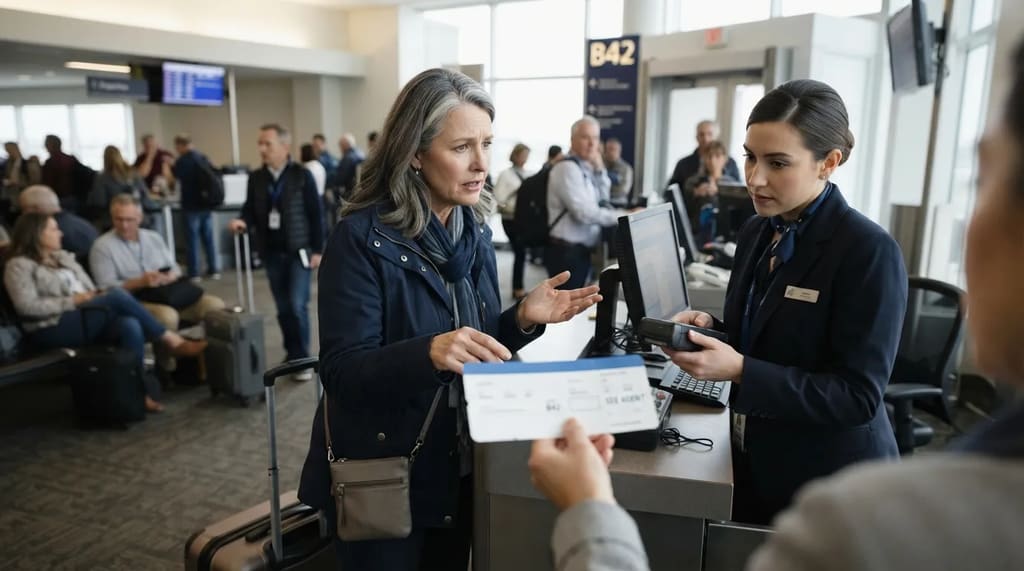
Sometimes the seat field on your boarding pass is blank, or it says ‘gate’ or ‘see agent.’ Most travelers shrug and assume the agent will sort it out.
That blank is worth taking seriously. Airlines often sell more tickets than seats because they expect some passengers not to show up.
When everyone does show up, the airline asks for volunteers first. If it can’t find enough, it can deny boarding to passengers against their will.
Each airline publishes its own priority rules for who goes first. Common factors include the fare you paid, your frequent flyer status, and how late you checked in.
A cheap ticket, no status and no seat number can check every one of those boxes. That’s why a blank seat field can put you near the front of the line for being bumped.
If you’re involuntarily denied boarding and you checked in on time, federal rules may entitle you to compensation. It’s generally 200% of your one-way fare for a delay of one to two hours on a domestic trip, and 400% for a longer one, with caps.7
Before you leave the counter or kiosk, ask the agent to put a confirmed seat number on your boarding pass. Then ask one more question: ‘Is this seat confirmed, or could I still be moved?’
Look back over all twelve and a pattern shows up. Airlines rarely hand out these protections on their own, and they tend to go to the traveler who asks early and asks clearly.
You don’t need to be pushy, and you don’t need to apologize. You just need to know the rule exists, and be the person who says it first.
Bonus: The Insider Move When a Gate Agent Says No
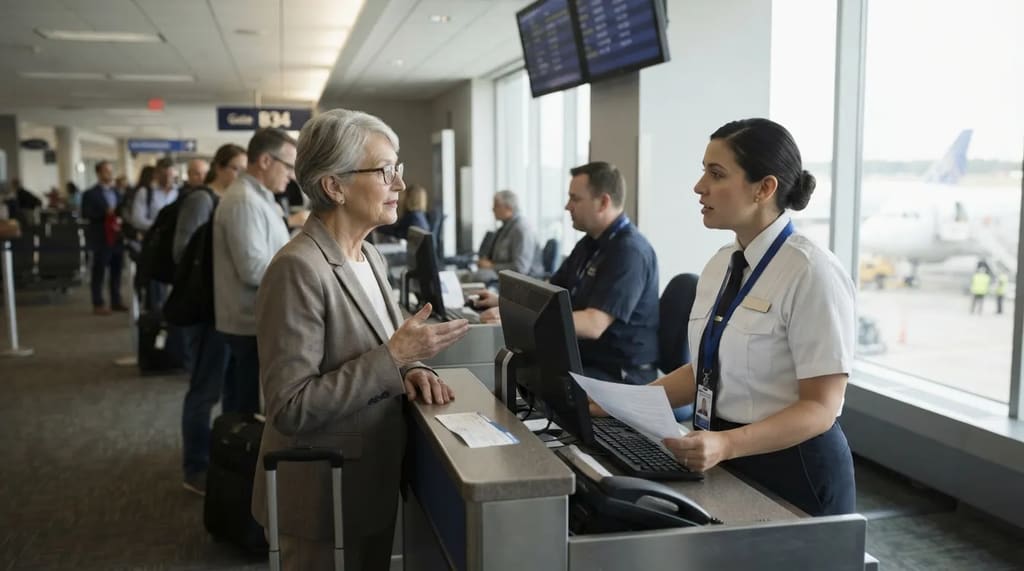
Every U.S. airline must make a Complaints Resolution Official, or CRO, available during operating hours. The CRO can be reached in person or by phone, and the CRO has the authority to overrule the agent in front of you on disability-related requests.
That includes a seating accommodation you’ve been told isn’t possible. Most travelers never ask for the CRO, so most never hear about it.
- Step 1: Stay calm and politely say, “I’d like to speak with a Complaints Resolution Official about this seating request.”
- Step 2: Say exactly what you need, such as an aisle seat with a movable armrest or a seat that fits a mobility need, and when you asked for it.
- Step 3: If the CRO’s answer is still no, ask for a written explanation of why. Airlines are required to follow up in writing when they refuse a requested accommodation.
- Step 4: Still stuck? The Department of Transportation runs a disability hotline at 1-800-778-4838.
Do this before you board, not after. A seat fix is far easier at the gate than at 30,000 feet.
- CBS News Shoe Rule: https://www.cbsnews.com/news/tsa-shoes-rule-expires/
- Southwest Assigned Seating: https://www.southwest.com/customer-enhancements/assigned-seating/
- DOT Seating Accommodation Methods: https://www.transportation.gov/resources/individuals/aviation-consumer-protection/seating-accommodation-guide/seating-1
- DOT Disability Bill of Rights: https://www.transportation.gov/airconsumer/disabilitybillofrights
- Exit Row FAA Requirements: https://www.foxnews.com/travel/flight-passengers-sitting-row-must-pass-certain-requirements-what-know
- Exit Row Rules Guide: https://thepointsguy.com/guide/guide-to-plane-exit-row-rules
- DOT Bumping and Oversales: https://www.transportation.gov/individuals/aviation-consumer-protection/bumping-oversales