Picture a 67-year-old scanning the terminal for the senior lane everyone swears exists. It isn’t there. TSA documents no official perk for the 60-to-74 crowd. The twist is that the free help behind this title is real, and almost nobody mentions it at the counter.
Nearly all of it depends on need and on asking, not on your birthday. Some of it changed in 2025, which has left a lot of seasoned flyers working from an outdated playbook. One of these services gets turned down more than any other, and the reason will make you wince.
#13 – The “Senior” Shoe Perk That Quietly Went to Everyone
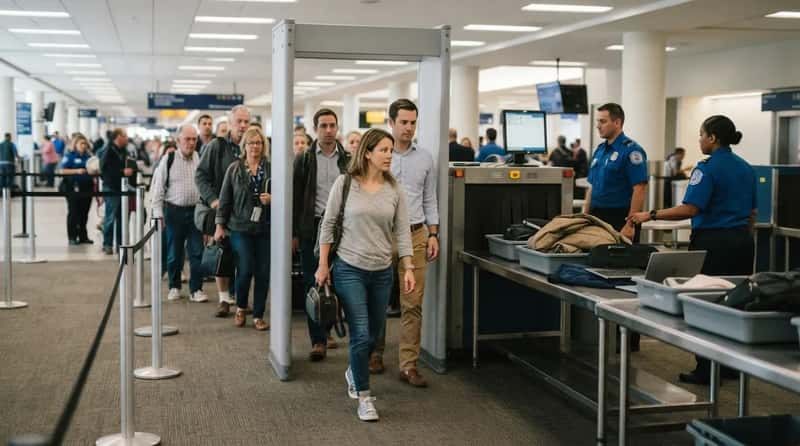
For years, hitting 75 meant you could finally keep your shoes on at security. As of July 8, 2025, TSA no longer requires passengers to remove their shoes at checkpoints nationwide. Before that, only children 12 and under and passengers 75 and older were exempt. Now everyone gets the break.
So the birthday some people were counting down to no longer unlocks anything extra. The perk didn’t vanish. It was handed to the whole line. Officers can still ask anyone to take their shoes off if an alarm goes off or if you’re picked for additional screening. “Shoes on” is the default, not a guarantee.
But one age line still counts at the checkpoint, and it probably isn’t the one you’d guess. #12 explains it…
#12 – The Age 75 Track That Still Exists (With a Catch)
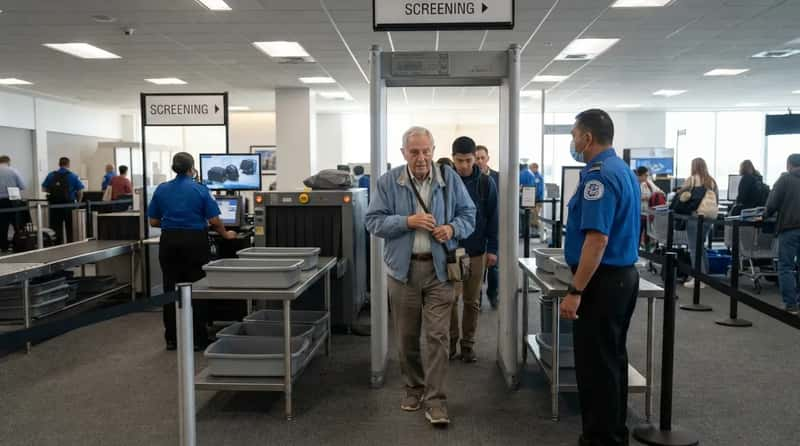
One age-based screening break really does remain. TSA says passengers 75 and older can receive some form of expedited screening. In regular lines, that has meant keeping a light jacket on. Nothing in TSA’s guidance points to a special lane that starts at 65.
Here’s the catch. “Can” is the operative word. The expedited treatment comes through TSA’s risk-based approach, so it isn’t a promise. Officers judge age by sight, and equipment differs from airport to airport.
There’s also a debate brewing among frequent flyers. With shoes-off gone, some argue TSA PreCheck is harder to justify. AARP noted that members who paid $75-plus for shoes-on screening now have to decide whether the remaining perks are worth it. Others say the faster lane still earns its fee.
At a Glance
- Under 75: No official TSA screening perk tied to age.
- 75 and older: May receive expedited screening, such as keeping a light jacket on.
- Shoes: Optional for everyone since July 8, 2025.
- The fine print: An alarm or extra screening can still mean shoes off.
The biggest free tool at security isn’t tied to age at all, and most people only find it after a bad day. That’s #11…
#11 – The Free Helpline Most Travelers Only Discover After a Bad Day
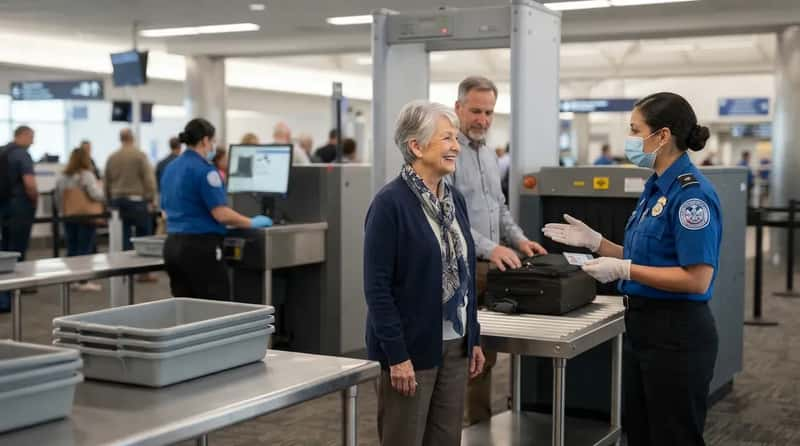
TSA runs a helpline that can line up checkpoint help before you ever leave home. TSA Cares is free, and it’s meant for travelers with disabilities, medical conditions, and other situations that make standard screening difficult. Contact them at least 72 hours before departure, by form or by calling (855) 787-2227.
The list of covered situations is broad. It includes mobility limitations, hearing or vision loss, prosthetics, implanted devices, and serious medical needs. It does not cover the ride to your gate. TSA Cares doesn’t provide wheelchair help from curb to aircraft. That comes from your airline. Deaf and hard-of-hearing travelers can use the federal relay at 711.
Missed the 72-hour window? #10 is the backup plan almost nobody knows is allowed…
#10 – The Specialist You Can Summon at the Checkpoint Itself
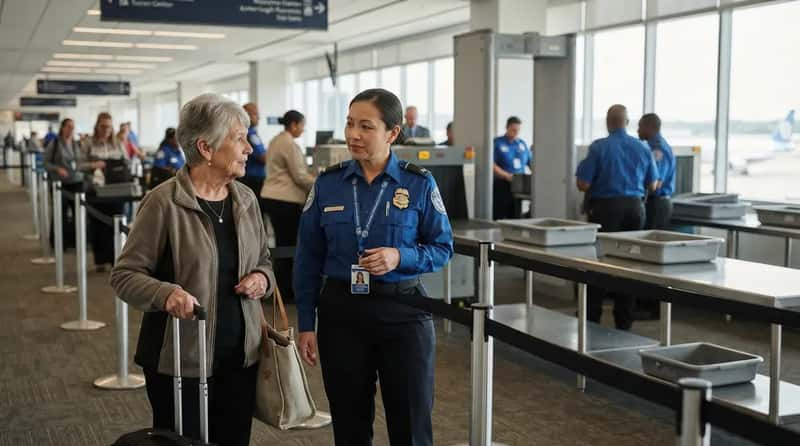
Running late on planning doesn’t shut you out. You can request a Passenger Support Specialist in advance online, or ask a TSA officer for one when you’re standing at the checkpoint. That surprises a lot of people who assume the help line is the only door.
A Passenger Support Specialist is a TSA officer with specialized training in assisting and communicating with people who have disabilities or medical conditions. One person who already understands your situation can replace a dozen awkward explanations. Requesting one doesn’t exempt you from screening. It just changes how you get through it.
One honest caveat: service levels vary by airport. Some checkpoints handle these requests smoothly, and others are stretched thin. If the first officer seems unsure, ask for a supervisor.
Quick Compare
- TSA Cares: Free, best when you call at least 72 hours ahead at (855) 787-2227.
- Online request: Ask for a Passenger Support Specialist before you travel.
- At the checkpoint: Ask any TSA officer for a specialist on the spot.
If you’d rather not explain anything out loud, #9 does the talking for you…
#9 – The Silent Card That Explains Your Condition for You
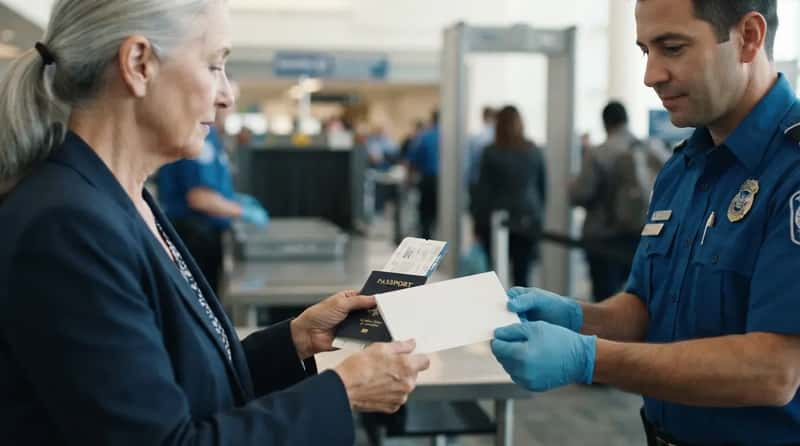
Not everyone wants to announce a medical history in front of a crowded security line. TSA offers a Disability Notification Card you can fill out, listed alongside the help line and the support request form. You hand it over, and the explanation is done.
It’s free, and it helps most when your condition isn’t visible. A hip or knee replacement, a pacemaker or a hearing problem doesn’t announce itself. The card lets an officer know before the pat-down conversation gets awkward. It also spares you from repeating the same story to every officer along the way.
And for travelers who can’t stand for long, #8 changes the whole checkpoint experience…
#8 – The Seated and Private Screening Option Nobody Announces
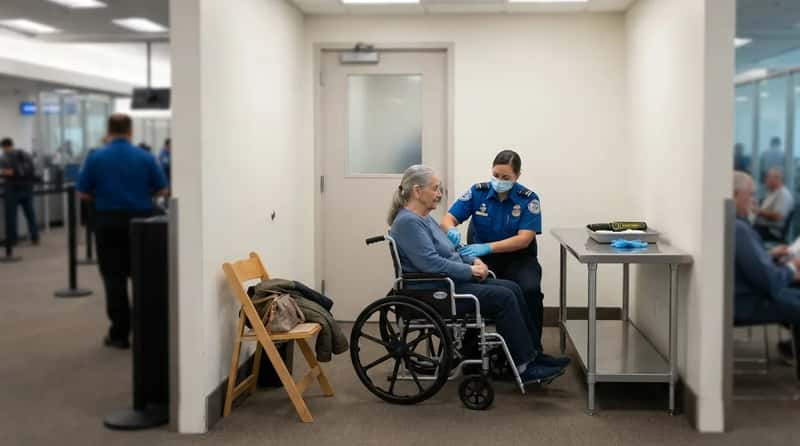
Standing with your arms overhead isn’t mandatory for everyone. TSA checkpoints have procedures to screen you without making you stand, walk, or give up equipment you need. That includes staying in your wheelchair or scooter if you use one.
Travelers can also ask for a private screening if a pat-down is needed. Plenty of people grit their teeth through a public pat-down without realizing they could have asked for a private room. Ask before the pat-down starts, not after.
The next one is about a bottle in your carry-on that could quietly cost you time…
#7 – The Medical Liquids Rule That Saves Your Carry-On
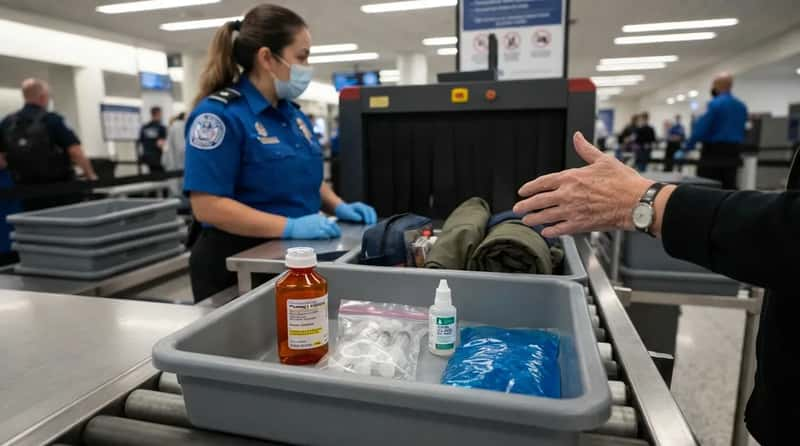
The 3.4-ounce liquid limit has a medical exception. TSA allows reasonable quantities of medically necessary liquids, gels and similar items above that size. The key is declaring them upfront. They’re screened separately from the rest of your bag.
That covers things like liquid medications, saline and gel packs used for medical reasons. If you only mention them after the bag has gone through the X-ray, you’ve turned a simple check into a delay. One short sentence at the start of the line avoids the whole mess.
Keeping medications labeled and together makes the conversation faster. It’s a small habit that heads off a big headache at the belt.
Fast Facts
- The standard carry-on container limit is 3.4 ounces, or 100 milliliters.
- Medically necessary liquids and gels can exceed that in reasonable quantities.
- Say so at the start, before your bag reaches the belt.
- Those items get screened separately from everything else.
Now for a tool that works without any paperwork at all. It’s #6…
#6 – The Sunflower Lanyard: A Free “Please Be Patient” Signal
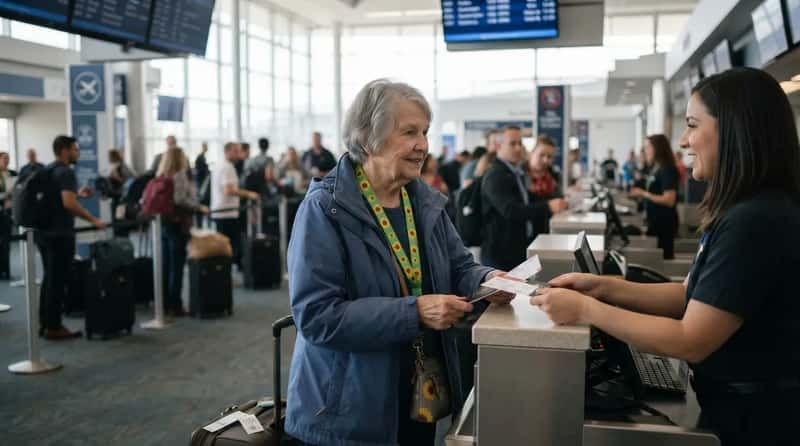
A green lanyard covered in yellow sunflowers is quietly spreading through U.S. airports. At DFW, the free program lets travelers with non-obvious conditions wear one to tell trained employees they may need extra assistance, understanding or time. There are no prerequisites for asking for or wearing one.
It isn’t a fast pass. It signals you need patience, not a shortcut. CVG says the lanyard doesn’t entitle you to anything other than identifying that you may need help or more time. Wearers don’t have to disclose their condition or explain why they need help.
Some critics say a lanyard shouldn’t be necessary to earn a little patience. Still, it’s free at participating airports, so it costs nothing to try.
The next entry is about getting on the plane, and it’s less obvious than you’d think…
#5 – Early Boarding and Priority Seating Are Rights, Not Favors
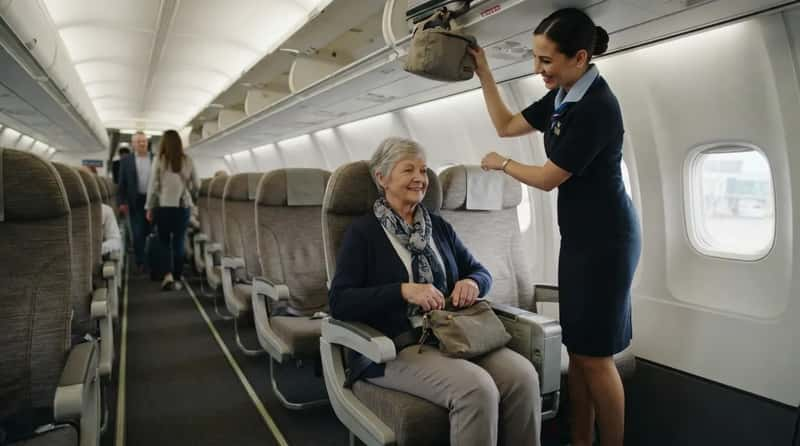
Airlines must let passengers with disabilities who ask board early, and they must offer certain seating accommodations for people with mobility needs. That can mean an aisle seat with a movable armrest. These rules key on disability, not age. Turning 65 alone doesn’t trigger them.
If you have a mobility limitation, ask at the gate or when you book. Don’t wait until the boarding crush. Pre-boarding means you reach your seat without a stream of passengers backing up behind you in the aisle.
Wondering whether your airport has a ride for the long gate walk? #4 has the answer, with a warning…
#4 – The Courtesy Cart Many Airports Don’t Broadcast
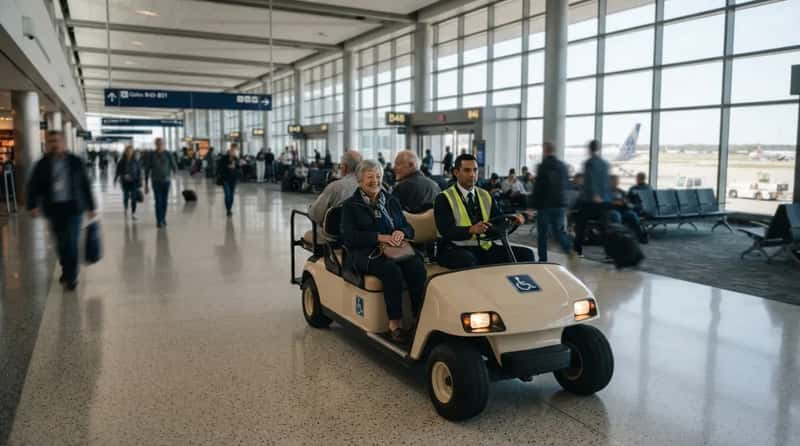
Picture Gate B47 sitting a 25-minute walk from security, with a connection ticking down. Many larger airports run courtesy carts or shuttles for travelers who can’t make that trek. Availability, rules and boarding spots vary by airport. The reliable move is to ask the airline desk, an information counter or a uniformed staff member.
Don’t mix this up with TSA Cares. That service guides you through screening, and it doesn’t drive you anywhere. For rides, the airline wheelchair service (#1) is the dependable option, while carts are a bonus where they exist.
Check your departure airport’s website before you travel. Accessibility pages often explain exactly where to find terminal transport.
Worth Knowing
- Screening help: TSA Cares, free, no rides included.
- Terminal rides: Airline wheelchair service, the dependable option.
- Courtesy carts: A bonus that depends on your airport.
- Where to look: The airport’s accessibility page or an information counter.
When things go wrong, #3 is the little-known person who can fix it on the spot…
#3 – The Complaint Resolution Official Airlines Must Provide
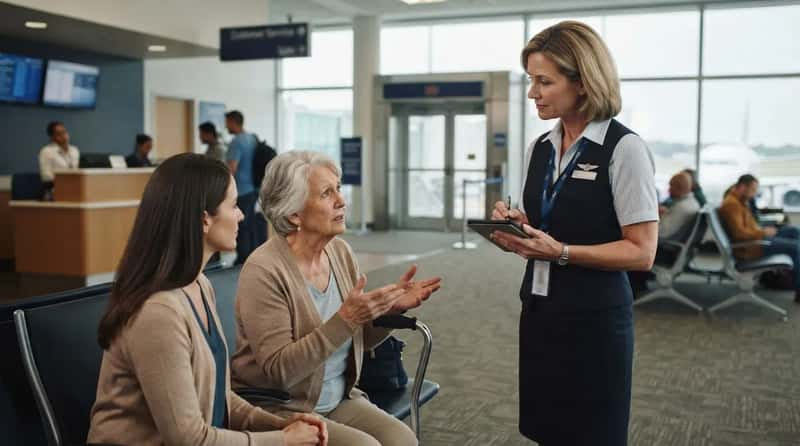
Under U.S. Department of Transportation rules, airlines must make a Complaint Resolution Official available to resolve disability-related disputes. That person can be reached in person or by phone during operating hours. Most travelers have never asked for one by name. If a gate agent refuses a service you’re entitled to, ask for the CRO.
Enforcement is real. In October 2024, DOT fined American Airlines $50 million over unsafe physical assistance and undignified treatment of wheelchair users between 2019 and 2023. That doesn’t mean every trip goes wrong. It does show regulators take these rules seriously.
Crossing the Atlantic? #2 reveals a system built very differently from the American one…
#2 – Europe’s Free Passenger Assistance Covers Age-Related Mobility Needs
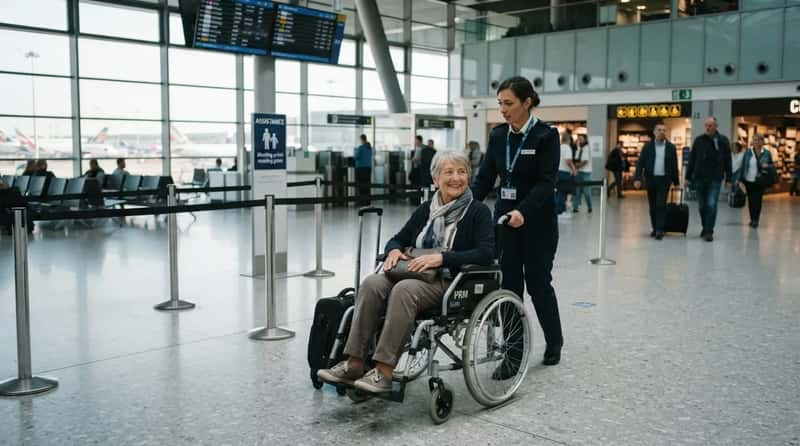
In the EU and UK, passenger assistance is a legal entitlement, and the airport covers the cost. Airlines can’t charge you for it. You don’t need to be labeled “disabled” to qualify. People with reduced mobility, including from age, are covered.
The usual rule is to request help at least 48 hours before your flight, through the airline or your travel agent. Staff then meet you at a designated point and guide you through check-in, security and boarding. Travelers report that how well it works varies by airport, so confirm again a day before you fly.
The most underused free service of all is #1, and pride is the usual reason people skip it…
#1 – The Free Curb-to-Gate Wheelchair Escort Too Many Travelers Refuse
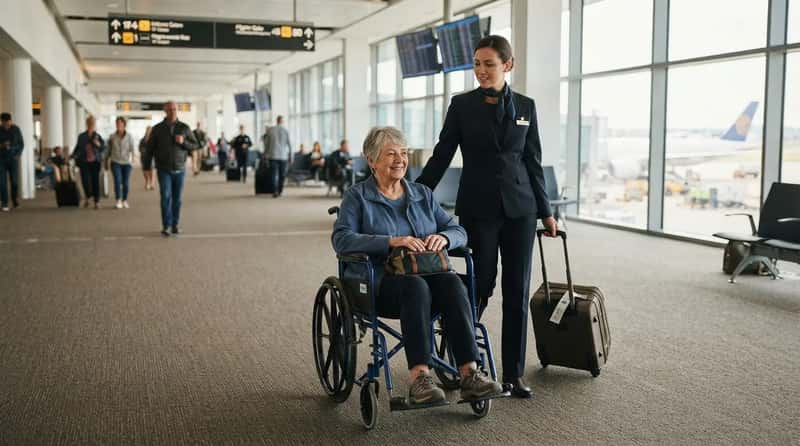
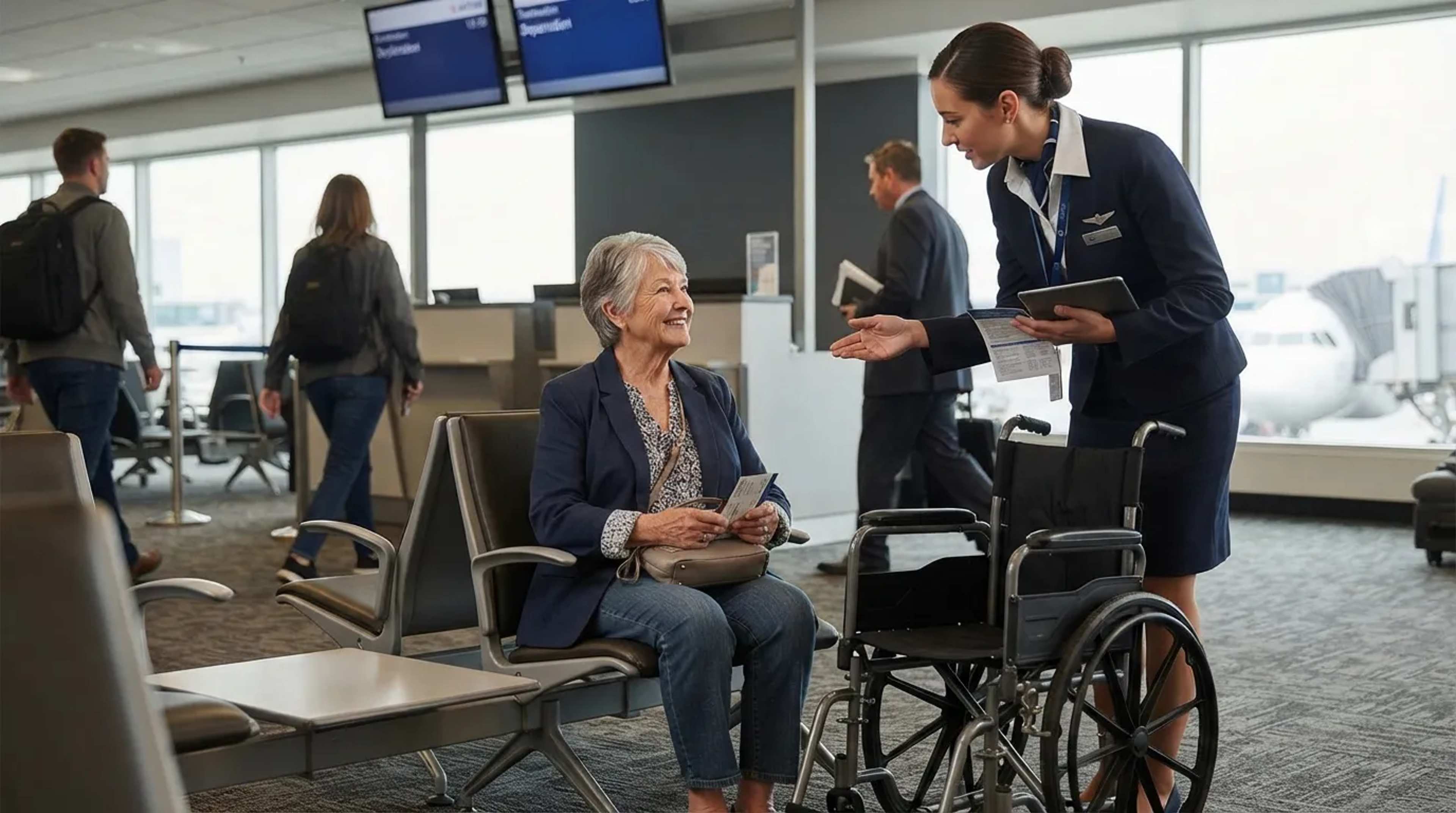
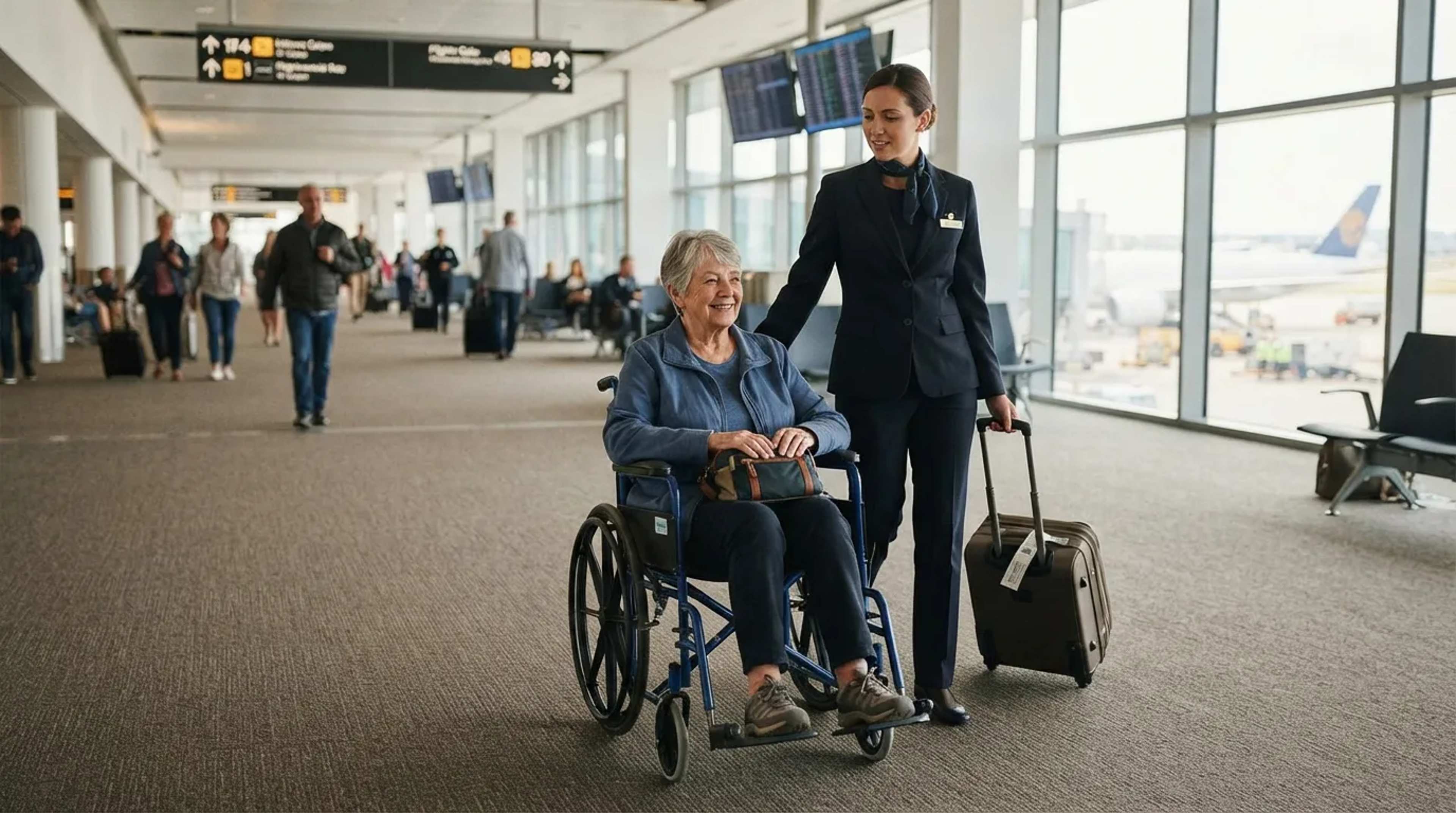
Airlines provide wheelchair help through the terminal at no charge, and plenty of people turn it down out of pride. DOT rules require prompt enplaning, deplaning and connecting assistance, including moving within the airport terminal. You don’t have to be unable to walk at all. Many travelers use the service only for the long distances.
The rules have tightened lately. A DOT final rule took effect on January 16, 2025. It defines “dignified” assistance as help that respects a passenger’s independence, autonomy and privacy. Airline staff who give physical assistance must receive training under the rule by June 17, 2026, so rollout may feel uneven from one airport to the next.
On a tight layover, accepting the escort can be the smartest move you make. A wheelchair can get you across a terminal in time for a connection you’d otherwise miss, and nobody at the gate is keeping score of your pride.
The real shock is how little of this depends on age. Turning 65 unlocks nothing automatically, and even the 75-plus shoe perk now belongs to everyone. What actually helps is a handful of free tools that each work only if you ask.
So the next time you’re facing a long terminal and a short clock, remember that the help was there the whole time. Which of these did you never know about before today?