Here’s what most senior-travel advice skips: turning 65 won’t erase a baggage fee at a U.S. airline by itself. A first checked bag costs $45 each way on Delta, United, American, Alaska and Southwest as of November 2026, so a round trip runs $90 per bag. But thirteen specific situations will wipe a fee out, and each one is worth raising at the counter.
The biggest waiver on this list needs no card, no annual fee and no minimum age, and it covers the largest gear you’ll ever check. It’s waiting at #1. First comes the discount that sounds like it should work and doesn’t.
#13 – The Senior 65+ Fare Box That Won’t Cut Bag Fees
A senior fare lowers the ticket price and does nothing for the bag fee. American’s booking engine can offer a “Senior (65+)” passenger type on some routes, and United has the same choice in a dropdown on united.com for select routes.
Delta offers senior discounts on certain domestic markets for passengers 65 and older, but its own page says some discounts aren’t available at delta.com. You’d have to phone reservations to see the fare.
United’s senior discount applies to a standard fare, so compare it with the cheapest Basic Economy fare on the same flight, which may still be lower. That comparison takes two minutes on a screen.
My verdict: skip the hold music. A discount that never touches the bag fee isn’t worth an hour on the phone.
One airline went further and dropped both its senior fare and its free checked bags, and the second change is the one that costs you.
#12 – Southwest’s Retired Senior Fare and the $45 Bag
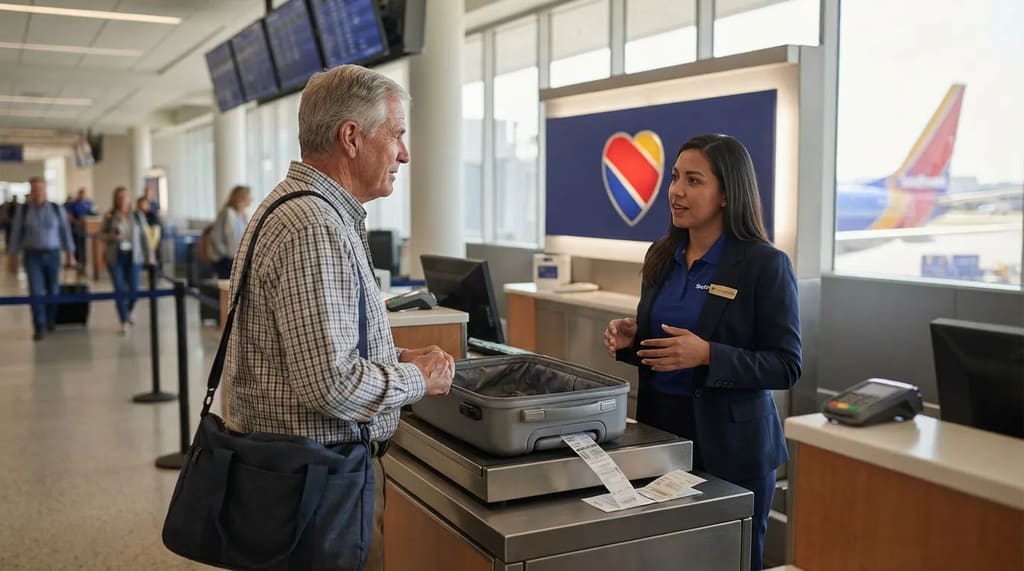
Southwest once sold fares aimed at travelers over 65, and the airline no longer does. The program ended in 2019, so there’s no age discount to ask for at a Southwest counter.
The bag perk went the same way. Less than a year after ending its Bags Fly Free policy, Southwest raised its first-bag fee from $35 to $45 for tickets booked from April 9, 2026, and a second bag went to $55.1 Any guide still promising two free bags is out of date.1
Two things still work in your favor. Every Southwest fare, Basic included, comes with one free carry-on bag and one free personal item, and the airline has a no-change-fee policy for every passenger.
Fast Facts
- First checked bag: $45 each way, up from $35
- Second checked bag: $55
- New fees apply to tickets booked from April 9, 2026
- Free on every fare: one carry-on and one personal item
If you pack light, your bag bill is $0. If you don’t, it’s $45 each way, the same as everywhere else.
#11 – Why Paying for Your Bag Online Costs Less
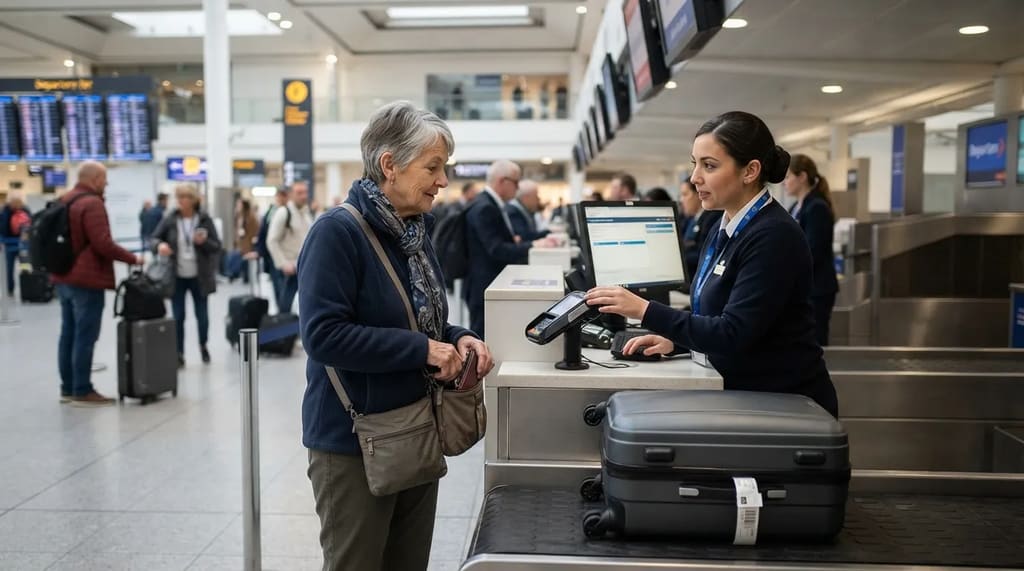
Five dollars sounds small until you see where it’s charged. United and American charge $50 for a first bag if you wait, and JetBlue can reach $59. Delta and Southwest charge a flat fee whenever you pay, so timing changes nothing there.
American stacks a second charge on top. It adds $5 on Basic Economy tickets, which means the same suitcase can cost $45 on one American fare and $55 on another if you pay late.
This is the one item where asking at the counter works against you. Pay online when you must check a bag. The counter is the most expensive place to decide, and you’ll pay the highest price there.
The seat has its own fee, and refusing to pay it doesn’t leave you standing at the gate.
#10 – What You Get If You Skip the Seat Fee
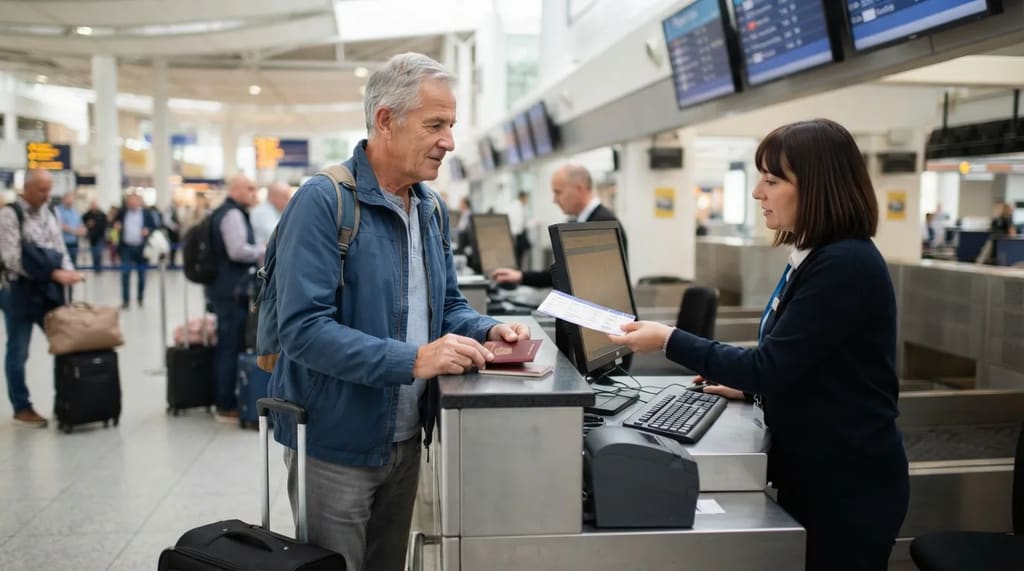
Declining the fee doesn’t leave you without a seat. If you skip the fee on American’s Basic Economy, the airline assigns you a seat for free at check-in, and United does the same.
The same logic holds elsewhere. On any airline and fare, you can take a remaining seat for free once check-in opens, usually 24 hours before departure.
My verdict: paying weeks ahead for a seat is overrated when you fly alone and don’t mind where you land. If you’re traveling with a spouse, leftover seats may not sit side by side, and the later items on this list cover who gets that seat free.
Overseas, one airline sells travelers over 65 a yearly membership that includes a free checked bag.
#9 – Air France’s 49-Euro Senior Pass
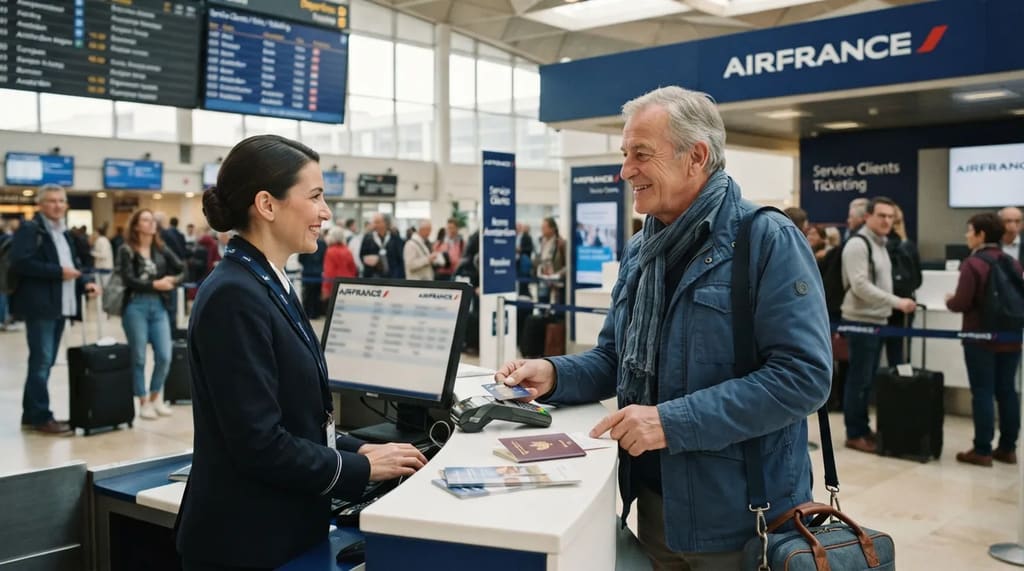
Air France is the one airline in this research with a genuine age line, and it sells the perk rather than handing it out. The Senior Pass offers flexible tickets, free checked baggage and discounts, and is available from age 65 for €49 a year.2
Read the geography before you pay. It advertises up to 30 percent off, but only within Europe, and U.S. routes are excluded.2 A single transatlantic trip won’t get the savings.
That makes the pass a different kind of tool from the fare box in #13, because it bundles the bag and the ticket together. It pays off only if you fly within Europe more than once a year. It’s a membership, not something you get just by asking.
Some tickets already include a free bag, and where you’re flying decides which ones.
#8 – The First Bag Already Built Into Your Fare
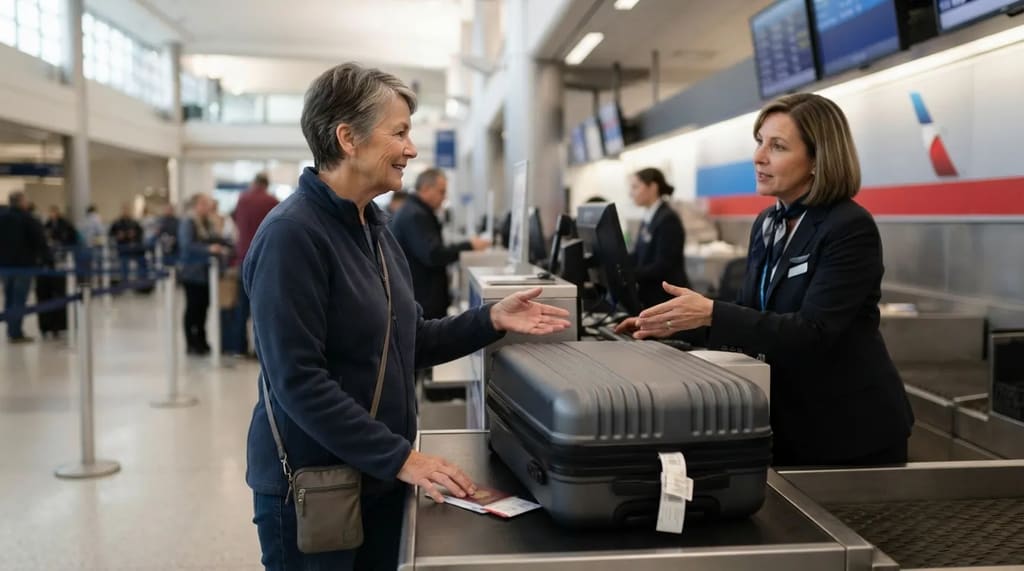
With the exception of Basic Economy, all long-haul international Main Cabin tickets on American include one free checked bag. If you’re flying to Europe or farther, check the fare rules before you pay anything for a bag.
Cabin class works the same way. You can avoid United’s checked-bag fees by paying more to travel in premium economy, business or first class. That’s a steep way to buy a free suitcase, but on a long trip the bag fee is a small part of the difference.
Quick Compare
- American, long-haul international: Main Cabin includes one free bag; Basic Economy doesn’t
- United, premium cabins: premium economy, business and first skip the bag fee
- Domestic upgrade: Basic to Main Cabin sometimes costs less than the bag fee itself
Domestic flights are where the arithmetic gets interesting. Price both options on the same flight, with the bag added to the cheaper fare, before you click.
Beyond the fare, one waiver follows you from trip to trip and covers the people booked alongside you.
#7 – The Airline Card or Status That Pays Your Bag Fee
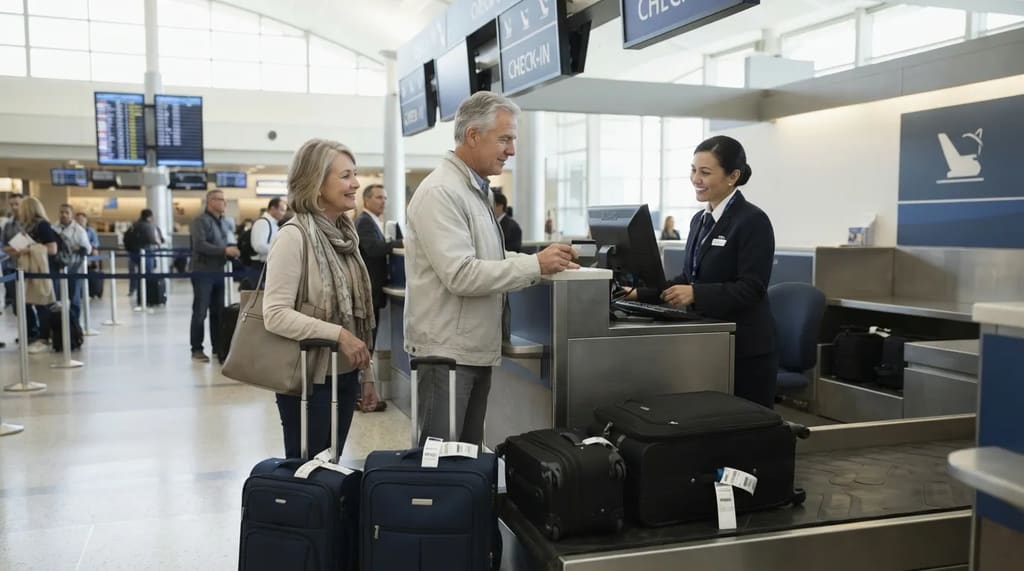
The most common standing waiver in U.S. travel ignores your age and follows your account. American’s card waiver covers the first checked bag for you and up to four companions on the same domestic reservation.
Delta’s co-branded cards offer a free first bag for the primary cardholder and up to eight companions on the same reservation, plus a second free bag for the cardholder on domestic flights. Elite status works similarly: even United’s lowest tier, Premier Silver, waives the first bag for the member and as many as nine people booked with them.
Do the math first. A couple checking one bag each pays $180 on one round trip at $45 each way. If the annual fee is below your yearly bag total, the card pays for itself. Add up what your household paid one airline last year.
My verdict: an airline card is overrated for someone who flies once a year and a bargain for a family that flies one airline several times. The $5 online discount in #11 is small beside this, but it’s free.
A different kind of ID earns two free bags on four airlines, and it has to be shown in person.
#6 – The Military ID That Waives the Bag Fee
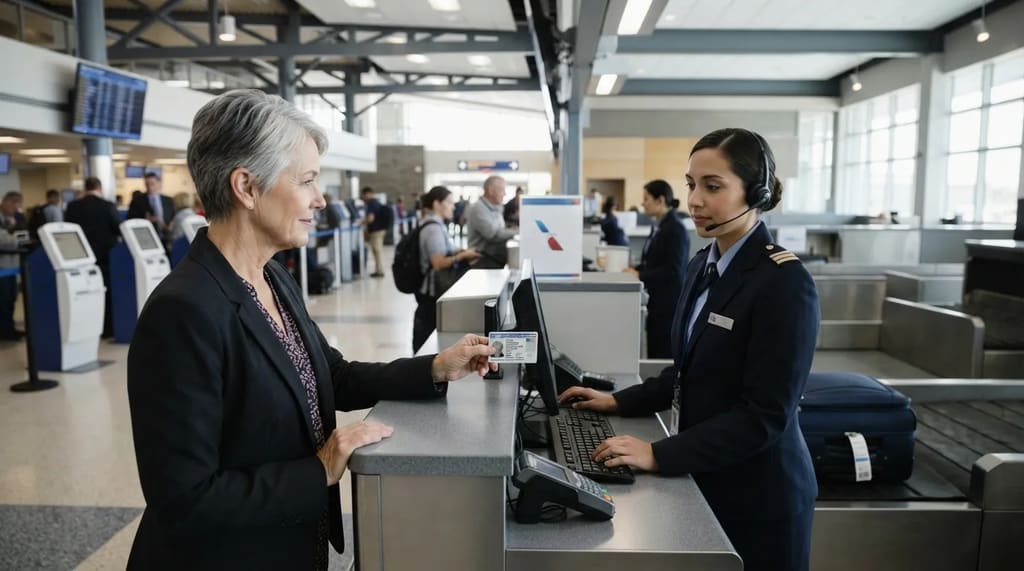
Service members check at least two bags free on personal trips on Delta, United, American and Southwest. On orders, American gives members and their dependents up to five free checked bags.
Dependents matter here. United extends the free bags to accompanying dependents. If a son or daughter is on active duty and you’re traveling with them, ask which airline rules cover the people in the group.
The research covers active-duty members, not retirees, so don’t assume a veteran’s ID earns the same waiver. Ask the airline what it recognizes before you count on it.
#5 – Seat Fees When You Fly With a Grandchild
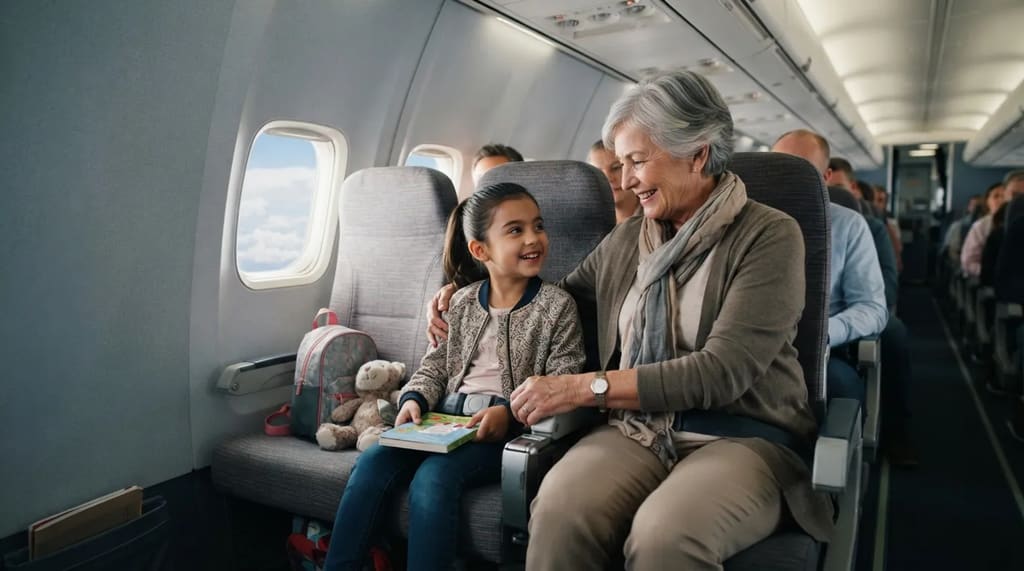
There’s no legal requirement for airlines to seat children next to their parents for free. A grandparent traveling with a child is in the same position.
Washington tried to change that. A rule proposed by the Biden administration would have required carriers to seat parents or an accompanying adult next to young children for free when adjacent seating is available at booking, but it was never finalized.
Airlines answer on their own. Some commit to fee-free family seating and others don’t, and the age cutoff is generally 13 and under, varying by carrier.
Worth Knowing
- No federal rule guarantees free adjacent seats for a child and an adult
- The proposed fix was never finalized
- Family-seating cutoffs usually sit at 13 and under, but vary by airline
- Delta says it strives to seat families together on request and points those who can’t to reservations
Book everyone on the same reservation and raise it at the desk, not the gate. By the gate, the seat map is already full, and the agent has little left to move.
There’s a fee you’ve already paid that you can take back: the one for a bag that never showed up on time.
#4 – The Bag Fee Owed Back When Your Suitcase Is Late
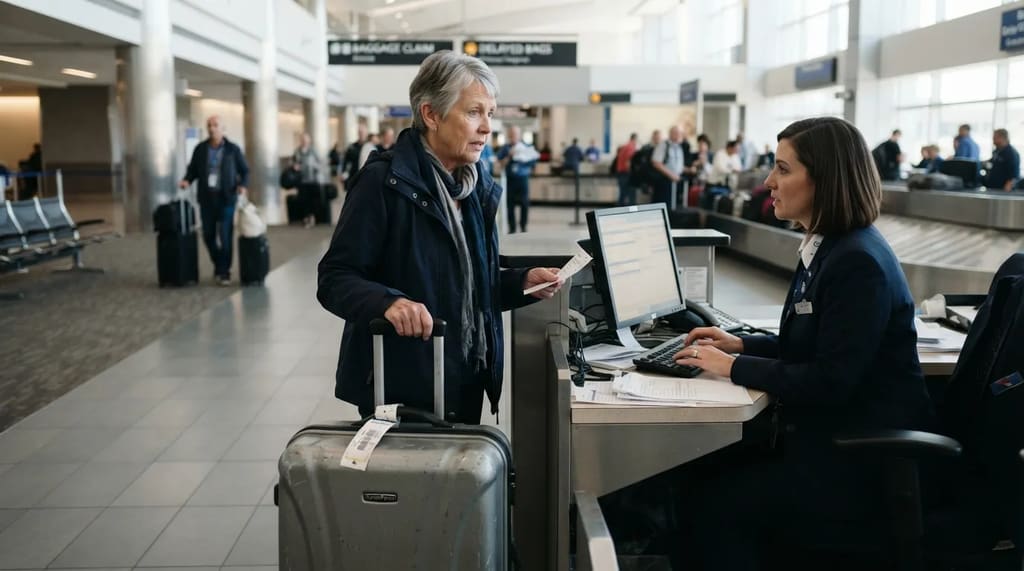
Your bag arrives a day late, and the airline keeps the money it charged to carry it. Under a 2024 Department of Transportation rule, airlines must refund the checked-bag fee when a bag is significantly delayed.3
A refund is due if your bag isn’t delivered within 12 hours of a domestic arrival3 4, with longer windows on international trips. A $45 fee comes back in full, which dwarfs the $5 you’d save by paying online in #11.
You can claim a refund of the bag fee, so ask for it. Don’t assume the airline will volunteer it while you’re filling out the missing-bag form.
One kind of bag is never charged at all, and what’s inside it is the reason.
#3 – The Bag of Medical Supplies That Skips the Fee
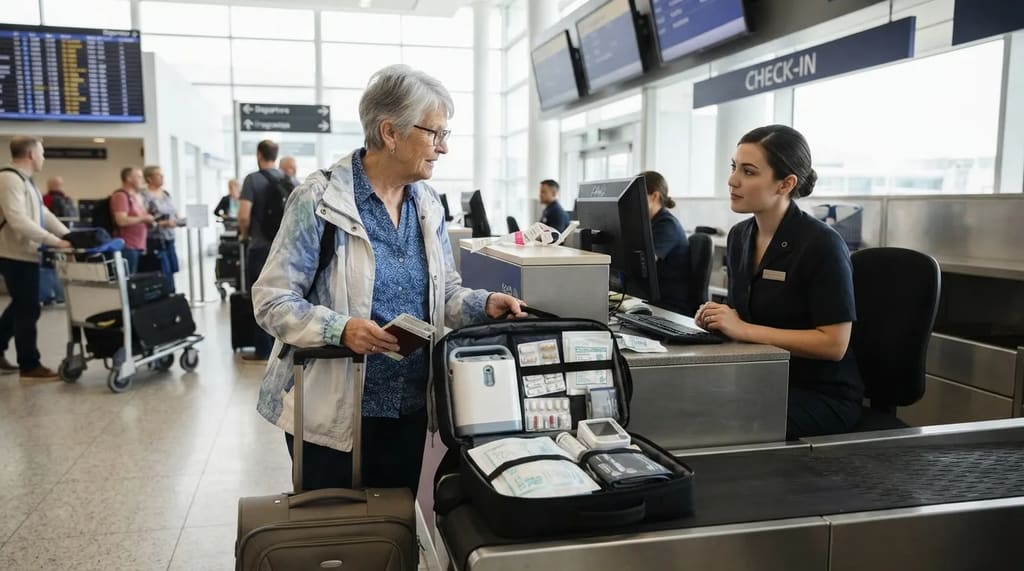
Frontier says bags containing only medical devices and supplies are exempt from carry-on and checked bag fees.5 That’s a specific policy from a low-fare airline, which makes it easy to miss.
The word “only” is the catch. The exemption is written for a bag that holds medical equipment and nothing else, so pack your clothes in a different suitcase.
The research found this policy at Frontier, not across the industry, so ask your own airline before you pack. If it has a similar rule, you’ll want the medical items in their own bag when you reach the counter.
Federal law gets firmer once the subject is a seat, and all you have to do is say why you need it.
Related Stories From Travelbinger



#2 – Fee-Only Seats That Must Be Free for a Disability Need
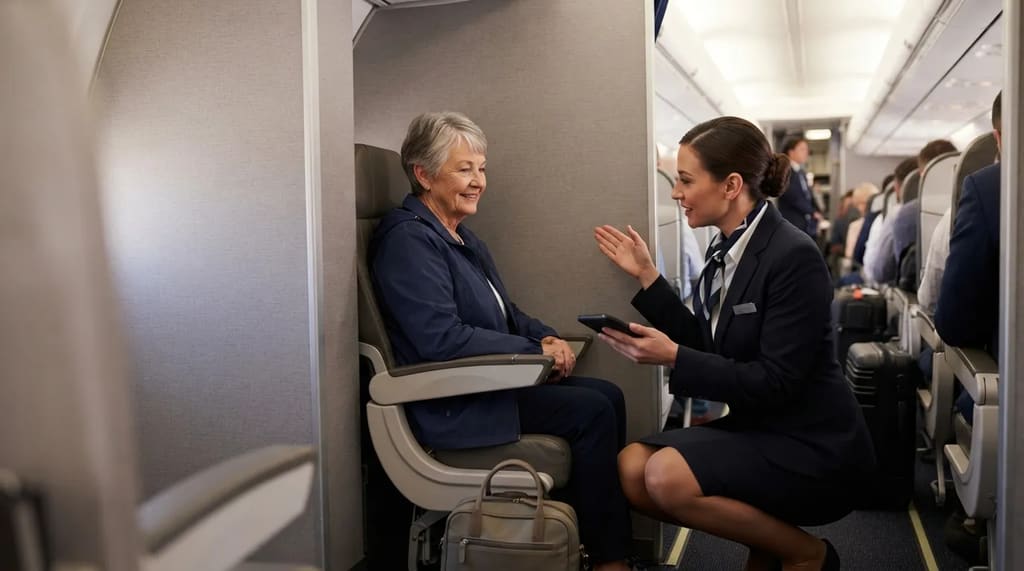
Suppose the only bulkhead seat left carries a fee, and your disability requires a bulkhead. The Department of Transportation says the airline must assign it to you without a fee, if it’s in the class of service you bought.6
The rule reaches beyond bulkheads. Under the Air Carrier Access Act, required accommodations such as movable aisle armrests, bulkhead seats and other seats must be provided free of charge. The trigger is a self-identified, disability-related need, not age alone.
That’s why a healthy 62-year-old who wants extra legroom isn’t covered, while a traveler with a mobility limit may be. A preference for a window is not a need. Name the need first, and the seat becomes a free accommodation. A hip replacement that calls for an aisle gives the agent something to act on.
The same logic covers a caregiver. Federal regulation requires airlines to seat a passenger with a disability next to a traveling companion who provides personal care, and the advance seat-selection fee shouldn’t apply. Count on one adjacent seat free, not a whole party’s worth. The free check-in seat from #10 comes with no such guarantee.
One waiver goes further than any seat rule, because it covers the biggest gear you’ll ever check.
#1 – Wheelchairs, Scooters and Walkers That Fly Free
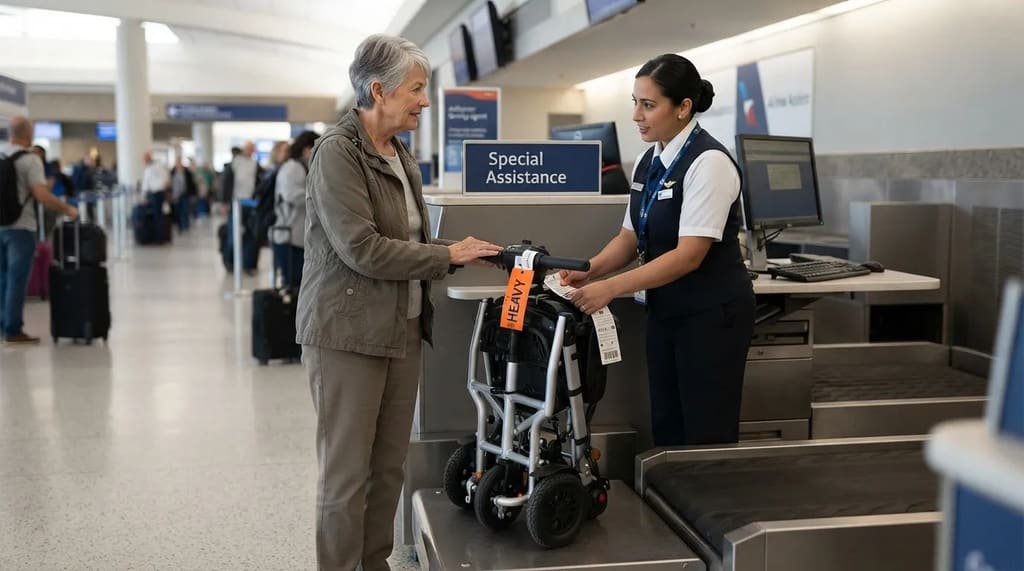
The checked-bag fee for a wheelchair, scooter or similar device is $0. Airlines must stow assistive devices as cargo in the baggage compartment at no extra cost, and if yours can’t go in the cabin you don’t pay a checked-bag fee.7
This is the only item here with no card, no membership and no minimum age. Under the Air Carrier Access Act it carries no age ceiling and no income test. The device decides, not the birthday.
Why It Stands Out
- No card, membership or minimum age required
- Covers wheelchairs, scooters, walkers and other assistive devices
- Skips a $90 round-trip charge at a $45 fee each way
- Saves more than #4 and #11 combined
The dollars add up quickly. A $45 bag fee each way would be $90 a round trip, and a mobility device skips it entirely.
The protection isn’t limited to chairs. U.S. carriers waive fees for transporting wheelchairs, scooters, walkers and other assistive devices. Check with the airline or the Department of Transportation about how the rules apply to your situation.
Look at what every working waiver here was attached to: a card number, a military ID, a medical device, a late suitcase, a documented need. None of them cares how old you are. That’s why “I’m 66” gets you a polite smile at the counter and “I travel with a walker” gets you a $0 bag fee.
Before your next trip, decide which of those facts is true for you, and say that one first.
Which one applies to you, and have you ever tried it at a ticket counter?
Bonus: The Insider Move When the Agent Says No
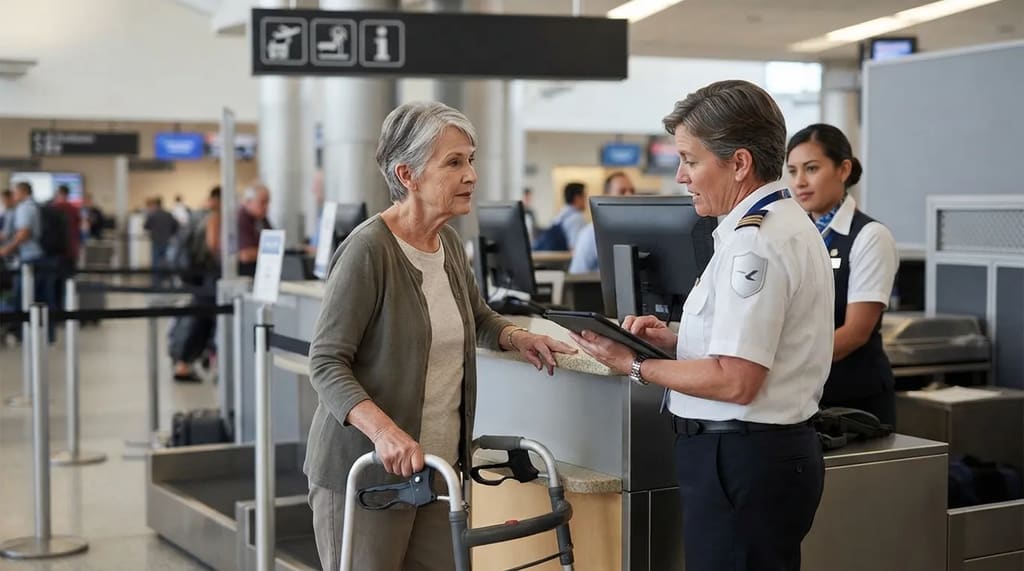
Agents misapply disability rules more often than you’d expect, and most travelers give up or pay on the spot. Federal rules give you a better option: ask for the airline’s Complaints Resolution Official, usually called the CRO.
Under the Air Carrier Access Act, every U.S. airline must make a CRO available at each airport it serves, in person or by phone, whenever a passenger with a disability asks. The CRO has the authority to overrule the agent in front of you.
- Step 1: Stay calm and say, “I’d like to speak with the Complaints Resolution Official.” Use those exact words.
- Step 2: State the need first (for example, “I use a walker” or “I need a bulkhead seat for a hip condition”), then name the fee you believe should be waived.
- Step 3: If the fee is still charged, pay it so you can fly, then write down the agent’s name, the time and the amount. Ask the airline for a refund in writing and keep the receipt.
- Step 4: If the refund is refused, file a complaint with the Department of Transportation’s Aviation Consumer Protection Division. Its disability hotline is 1-800-778-4838.
One more habit helps: before you travel, have the airline’s accessibility desk note your device or seat need in your reservation. A documented note is far harder for a counter agent to wave away.
- The Points Guy Southwest Fees: https://www.thepointsguy.com/news/southwest-hikes-checked-bag-fees/
- Air France Senior Pass: https://wwws.airfrance.fr/en/information/offres/cartes-de-reduction/carte-senior
- DOT Refund Final Rule: https://www.transportation.gov/briefing-room/biden-harris-administration-announces-final-rule-requiring-automatic-refunds-airline
- DOT Automatic Refund Rule: https://www.transportation.gov/briefing-room/what-airline-passengers-need-know-about-dots-automatic-refund-rule
- Frontier Medical Devices Policy: https://faq.flyfrontier.com/help/may-i-bring-medicine-andor-medical-devices-on-the-plane
- DOT Bulkhead Seat Guidance: https://www.transportation.gov/sites/dot.gov/files/docs/Developmental_Disabilities_Guide.pdf
- DOT Disability Bill of Rights: https://www.transportation.gov/airconsumer/disabilitybillofrights