Turning 70 does not get you a faster line at the cruise terminal. Cruise lines don’t hand out boarding perks by birth year, and that catches a lot of passengers off guard while they stand in a packed terminal hall. But there are real shortcuts, and they’re built around a stated need, not a birthday. Plenty of eligible travelers never ask for them.
The best ones sit inside forms, side lanes and requests nobody announces over a loudspeaker. One of them may even flip what you think is the smart move on boarding morning. Here’s what the cruise lines’ own guidance says.
#13 – Wheelchair Help, Even If You Can Still Walk
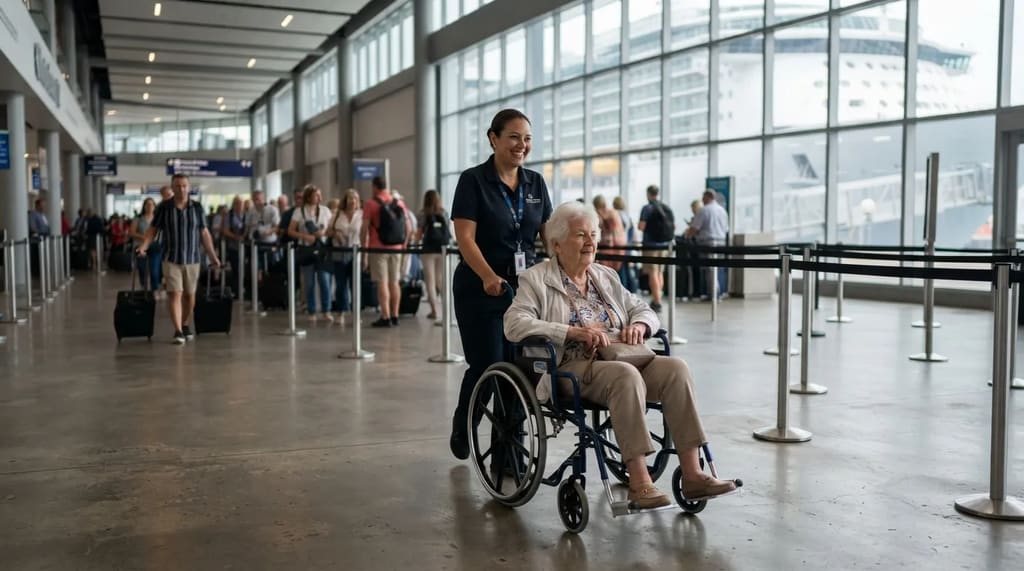
Embarkation day often means a longer walk than the whole rest of the cruise.
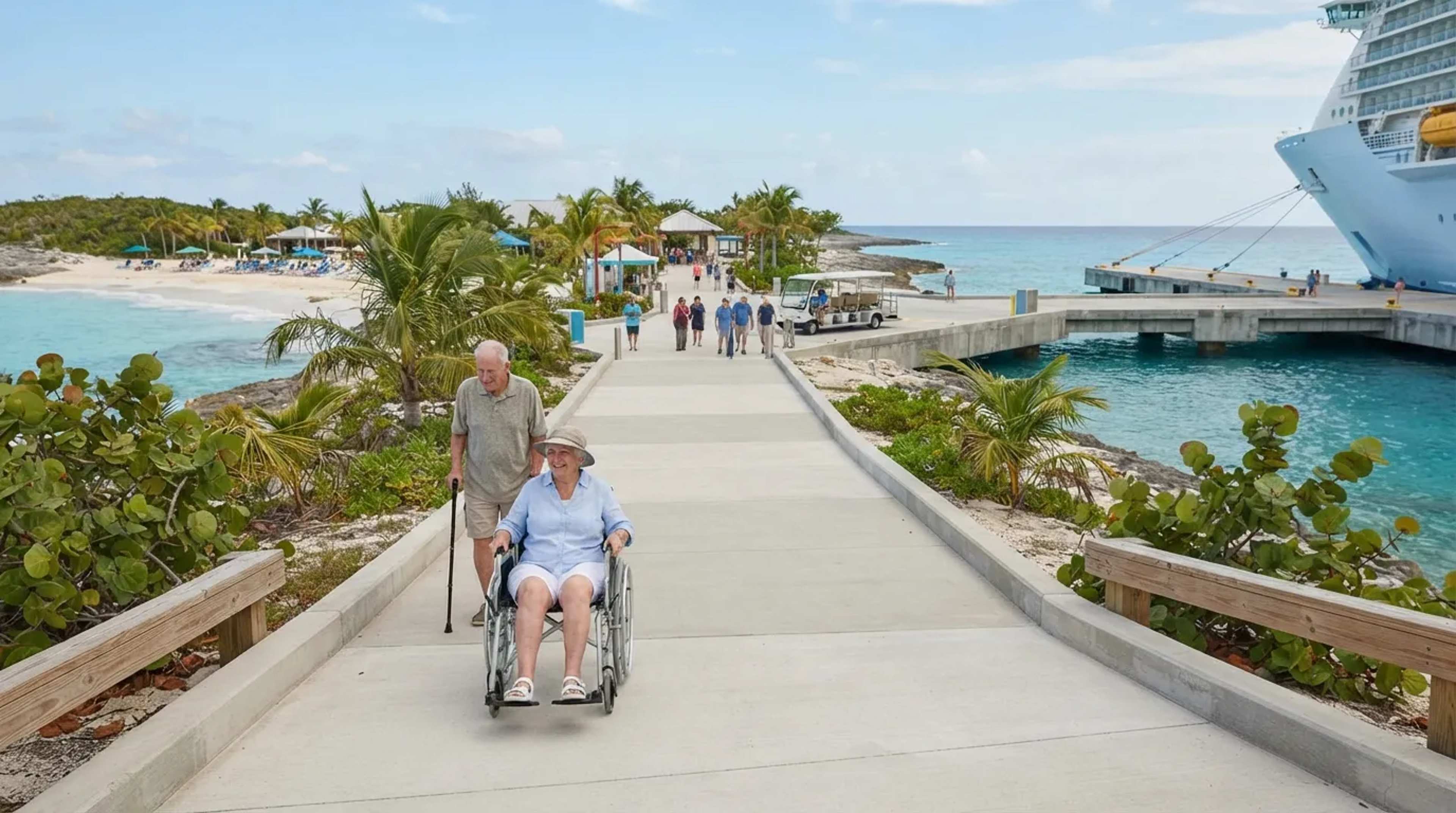
Terminals are big, and the route runs from curb to check-in to security to gangway. One accessibility guide advises asking for wheelchair help even if you can walk short distances, because it gets you through security and check-in faster.
Many cruisers feel they haven’t earned it. The guidance says otherwise. Royal Caribbean says wheelchair assistance for boarding is available from terminal check-in to the ship.1
The catch is timing. During peak times there may be a wait for assistance.1 One travel guide also relays that Norwegian’s wheelchair assistance typically doesn’t start until 11 am.
- Ask ahead where you can.
- Expect the escort to end at the ship, not at your cabin door.
But the next shortcut is one that many veteran cruisers actually get backwards…
#12 – The Arrival Time You Pick (And the One You Shouldn’t)
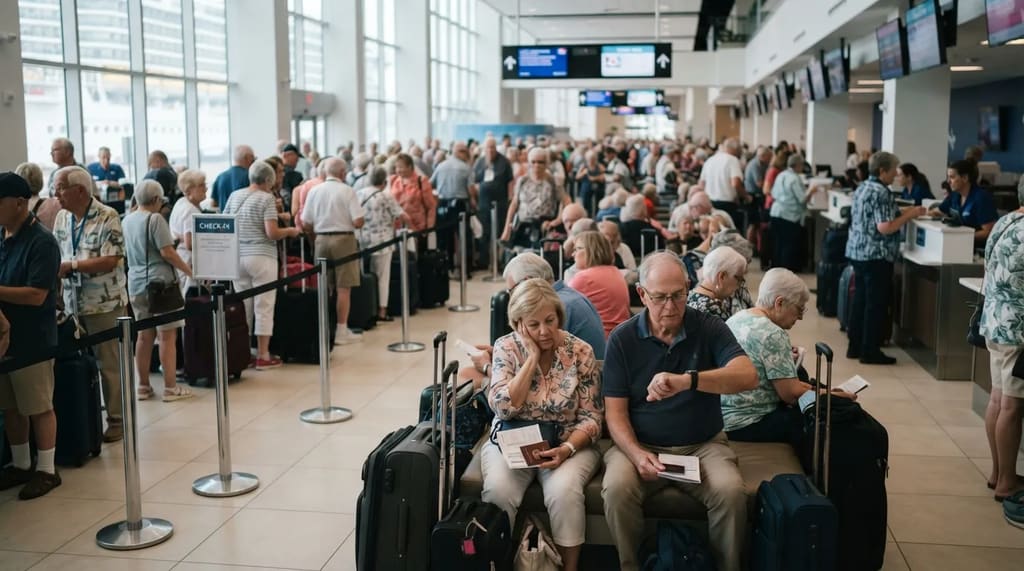
The earliest slot is not always the smartest one.
Most big lines now have you choose an arrival time during online check-in. Royal Caribbean asks guests to arrive within their chosen slot and to finish app check-in at least three days before the cruise.
Many cruisers fight for the first slot. Disney’s own guidance for guests with disabilities points the other way. The first two hours are typically the busiest, and a later check-in time may be the least impactful.2
Arriving too early can backfire too. One Norwegian guide warns that arriving too early may mean being asked to wait outside the terminal.
So the rush for the 10 a.m. slot may be the real mistake for anyone who tires easily in crowds. Picking a calmer window is a legitimate choice, not a downgrade.
Quick Compare
- Earliest slot: Disney’s guidance says the first two hours are typically the busiest.
- Later slot: May be the least impactful choice if crowds wear you out.
- Far too early: One Norwegian guide says you may be asked to wait outside.
Check your own line’s terminal guidance before you decide.
But that’s nothing compared to the lane most passengers walk straight past at #11…
#11 – The Accessibility Line Nobody Mentions
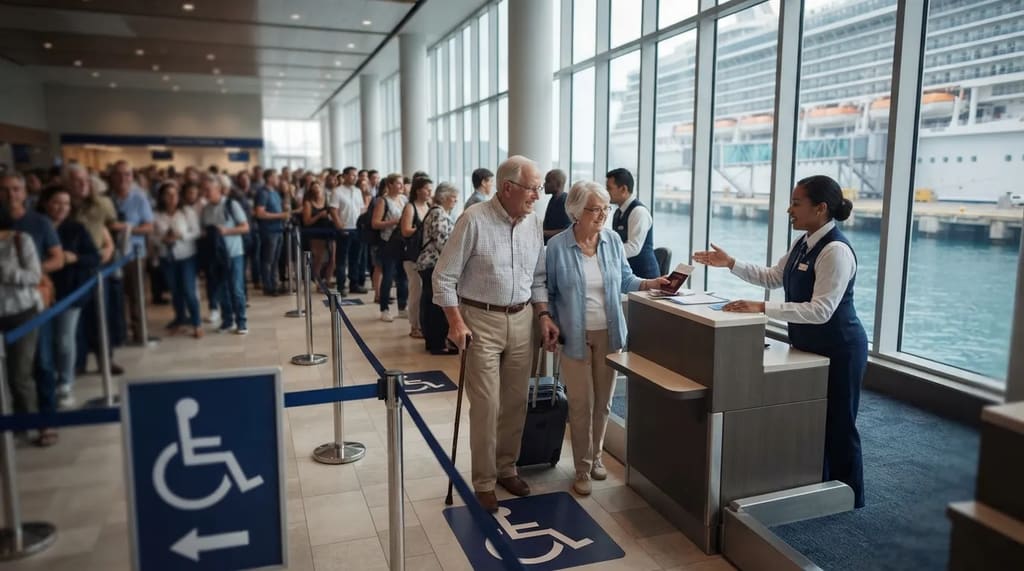
Some terminals have a separate lane. Most passengers don’t know to look for it.
Celebrity says guests with mobility disabilities are offered quicker processing at the pier, and priority boarding is offered if boarding hasn’t begun.3
Princess has an Accessibility Lane at check-in. Norwegian lists dedicated check-in counters with staff trained in accessibility needs.
One cruise guide says to look for the special assistance line when you arrive, which lets you board before the crowds.
Note the wording on Celebrity. Priority boarding is tied to boarding not yet having begun. Once the general rush starts, the advantage shrinks.
- Look for signage on arrival.
- Ask a terminal staffer if you can’t find it.
And the person traveling with you might get a perk of their own at #10…
#10 – Bringing Your Travel Companion Through the Same Line
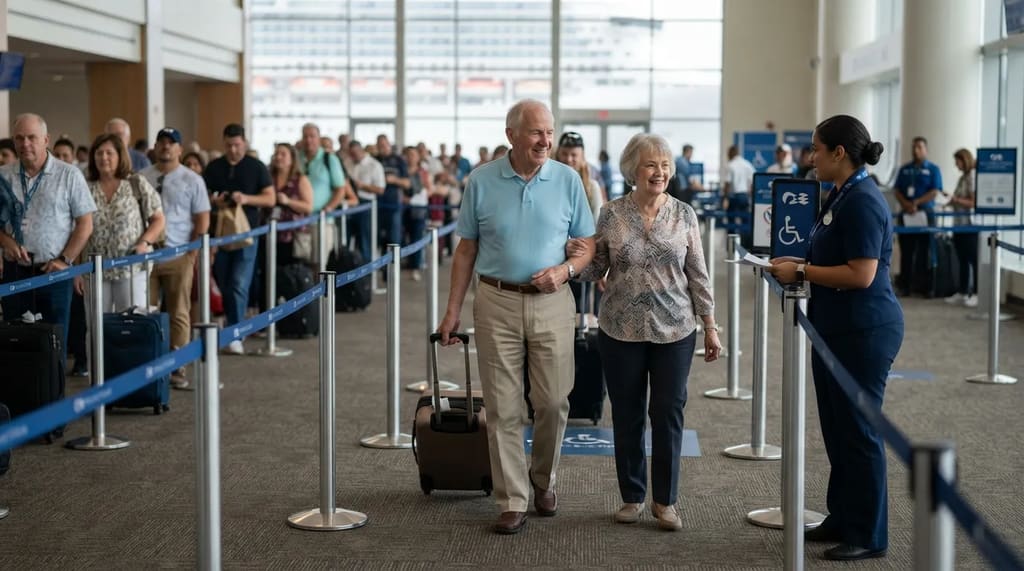
You shouldn’t have to be separated from your spouse or friend at the pier.
Princess says the people traveling with you can use its Accessibility Lane too. That detail is easy to miss and matters a lot in practice.
Picture the alternative. One person is escorted ahead, and the other drags the carry-on bags through the main hall alone. Most people don’t realize you can raise this.
Other lines handle it differently. Rules vary by line and terminal, so the safe move is to ask directly whether your companion may join you. Put that question on your request form.
The benefit goes beyond speed. A cruise guide notes that early boarding means you can get to the elevators before the rush starts. That is a real comfort when you’re traveling with someone who also tires easily.
Never assume. Ask once, in writing, before sailing.
But the form at #9 is where age stops mattering entirely…
#9 – The Medical-Condition Box on the Form
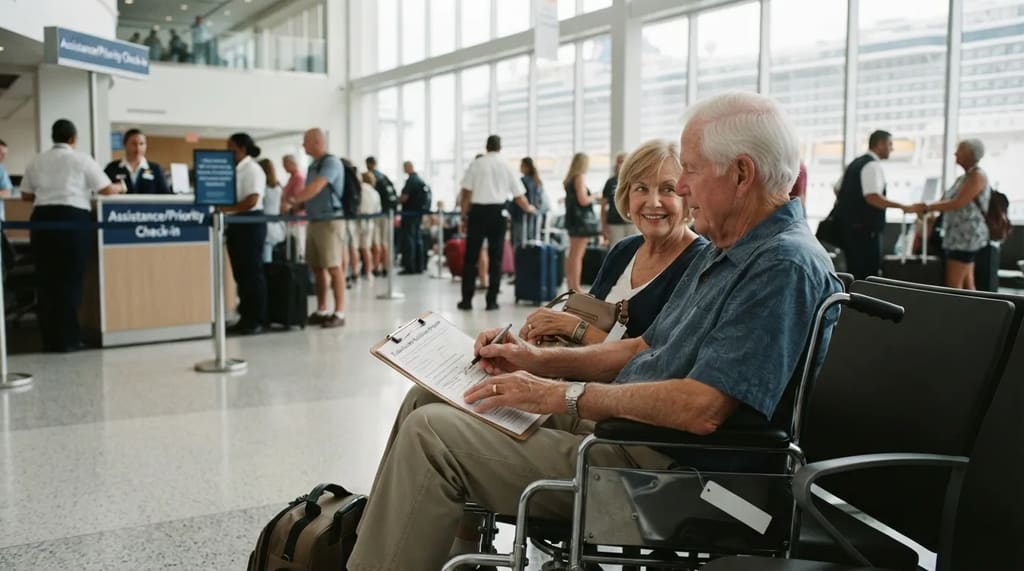
Age doesn’t unlock priority boarding. A stated need does.
One review of cruise perks is blunt about it: early boarding is tied to a stated need, not an age.
Here’s the specific example. MSC’s accessibility form includes a box for guests who need priority at embarkation and disembarkation because of a medical condition.4
The same form has an option for guests who don’t use a mobility device but need wheelchair help on embarkation day.4
That second option matters for the over-70 crowd. Many passengers don’t own a scooter or walker. They just can’t manage a long, crowded walk.
- You don’t need to use a chair full-time.
- You do need to say what you need.
Next up is a timing issue that catches almost everyone at #8…
#8 – Priority Access to Your Cabin
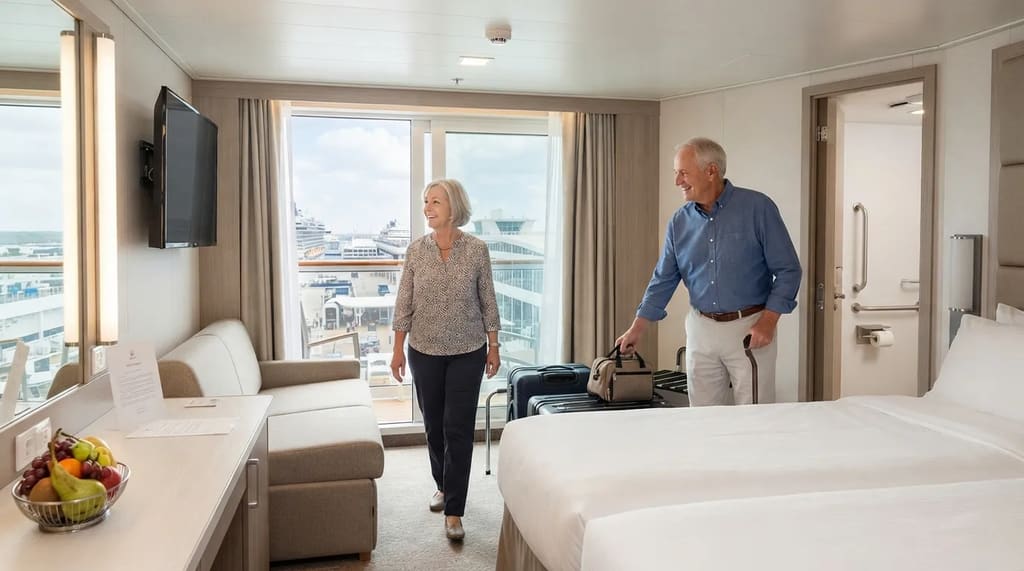
Getting on the ship early doesn’t always mean getting into your room.
Cabin timing is the quiet frustration of embarkation day. Accessible cabins typically become available at the same time as all other cabins, usually 1:00 to 2:00 PM.
So you can be aboard by late morning with nowhere to sit down.
There is a workaround. You can request priority cabin access through the accessibility desk when you pre-register your needs.
It is a request, not a guarantee. Cabins still have to be cleaned and turned over. But a note on file gives the crew something to act on.
Meanwhile, expect the main lunch venues to be busy. Knowing where the quieter seating is ahead of time helps.
- Pre-register your needs first.
- Check with the accessibility desk when you board.
But the next request costs nothing and almost nobody makes it at #7…
#7 – A Personal Orientation Walk
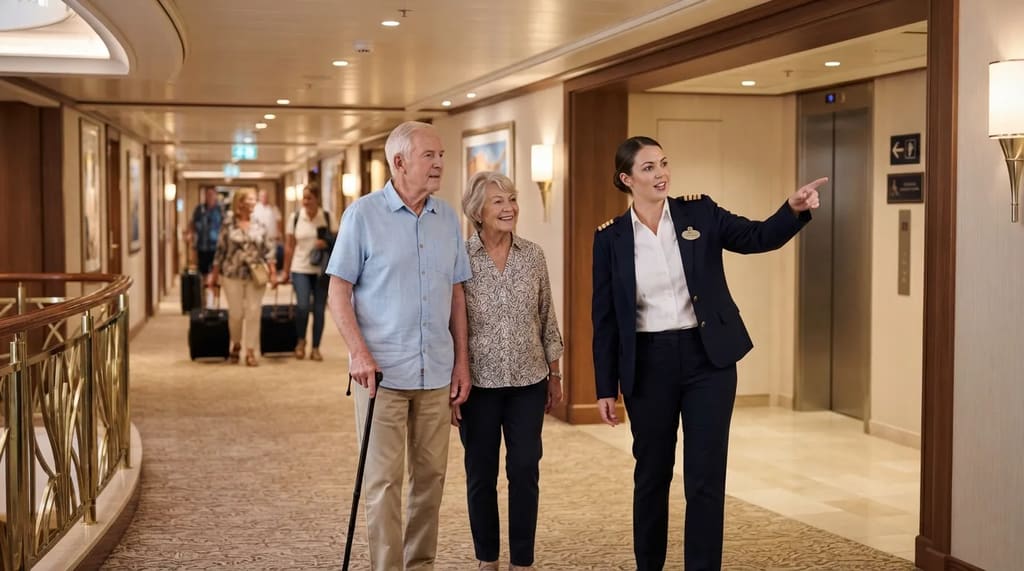
Big ships are confusing. A guided orientation can save you hours of wandering.
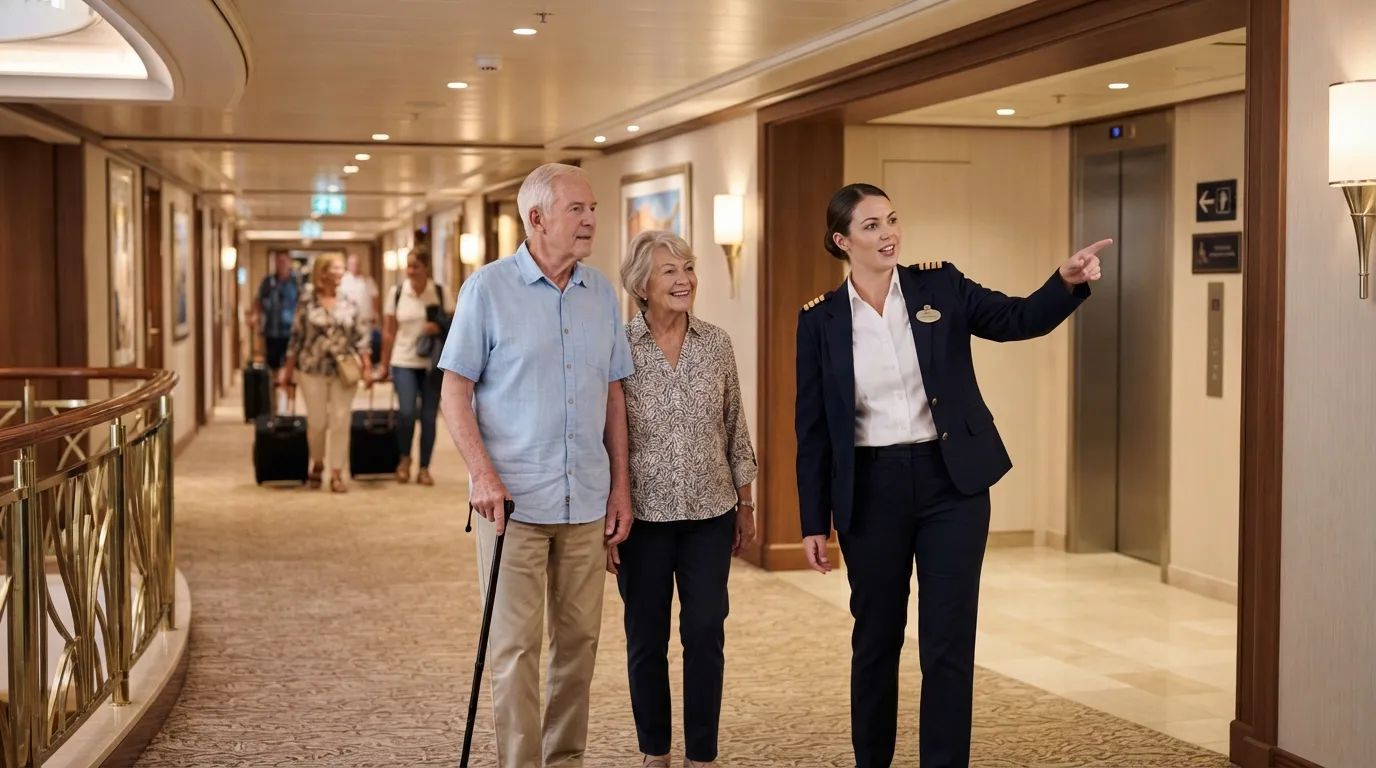
MSC says an orientation tour of the ship can be offered on request on embarkation day, together with a meeting with staff.5
Margaritaville at Sea offers an embarkation-day meet and greet to discuss accessibility needs, on request.
Most passengers never hear about these. They’re not on the daily schedule, and they don’t appear on the boarding pass.
For anyone who finds long corridors tiring, an early walkthrough is practical. You learn where the elevators are, where the nearest restroom sits and which route to the dining room has the fewest stairs.
Not every line advertises this. But asking costs nothing, and the worst answer is “no.”
Ask at the guest services desk, not the pier.
The paperwork at #6 is where most medical needs are won or lost…
#6 – The Separate Forms for Medical Equipment
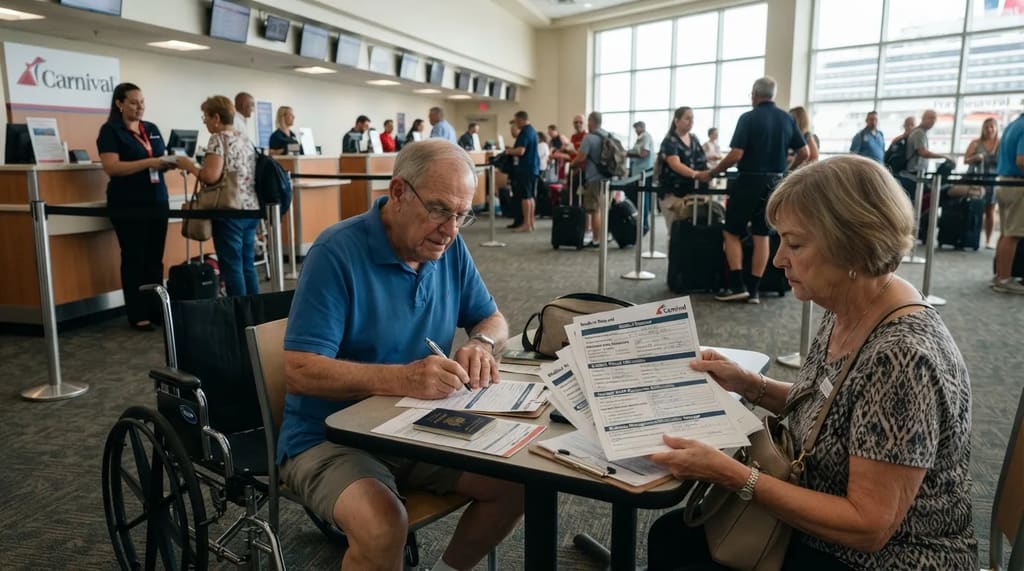
One general request often isn’t enough. Equipment usually needs its own form.
Carnival is a good example. It splits its paperwork into separate forms for wheelchair assistance, mobility devices, oxygen and CPAP, and diabetes and medicine storage.6
That’s a lot of forms, and a lot of travelers miss one.
At a Glance
- Wheelchair assistance has its own form.
- Mobility devices have their own form.
- Oxygen and CPAP are handled separately.
- Diabetes and medicine storage is a separate request too.
Carnival also runs wheelchair assistance on a first-come basis. The earlier your form arrives, the better your place in line.
Rental options exist too. Carnival’s form lists rental options, including Care Vacations and Special Needs at Sea.
Why does it matter on embarkation day? Because medical gear and medicine storage are things the crew needs to know about before you reach the gangway, not after.
- Match each need to its own form.
- Keep confirmation emails on your phone.
But the next shortcut means your equipment can be waiting before you are at #5…
#5 – Equipment Delivered Straight to Your Stateroom
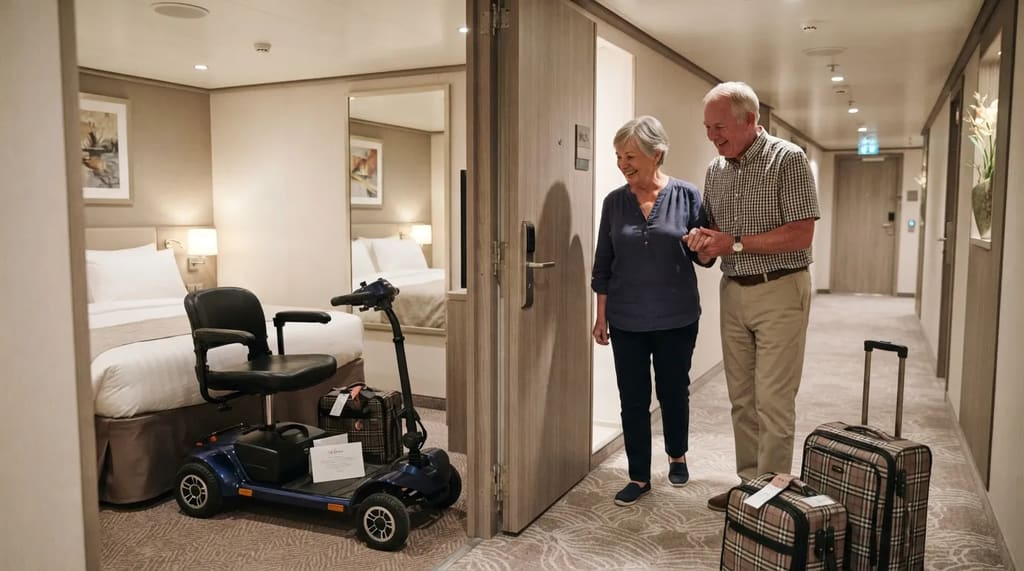
You don’t have to haul a scooter through the terminal.
Mobility rental companies exist for exactly this. One guide notes that many companies will deliver directly to your stateroom on embarkation day.
Another source says these mobility aids can be delivered directly to your stateroom before embarkation and collected after your cruise.
That turns the hardest part of the trip into one of the easiest. No lugging, no folding in a crowded hall, no worrying about whether it fits the elevator.
The details matter, though. Confirm the delivery window with the rental company and check that your cruise line accepts the equipment type you’ve ordered.
Don’t assume the device you rent will be allowed on every part of the ship or at every port. More on that at #3.
Book it early. Popular sailings fill up.
The detail at #4 surprises almost everyone who has never cruised before…
#4 – The Safety Drill, Done Early and Quietly
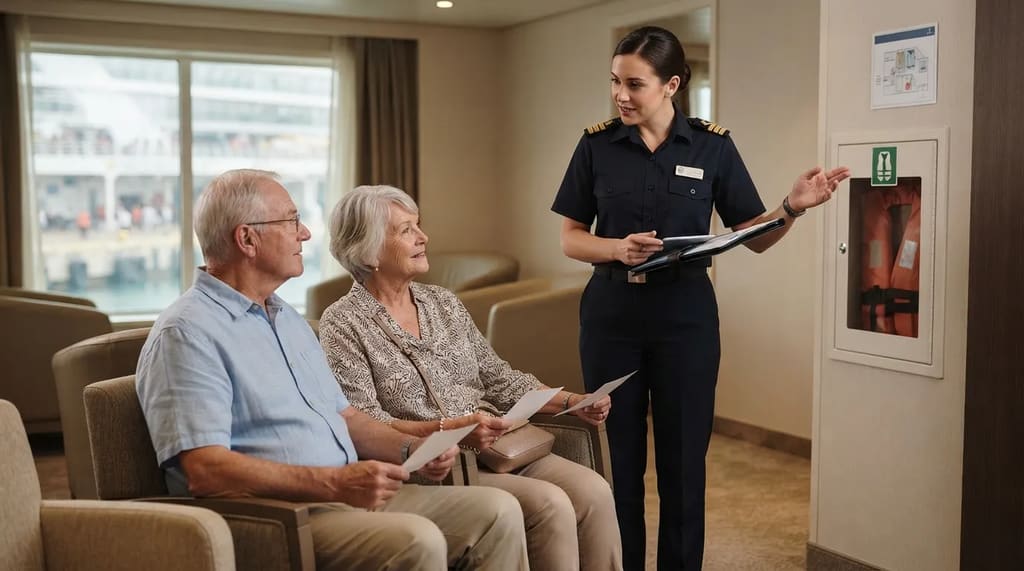
The muster drill worries more first-time cruisers than any other part of day one.
Few people realize you can get it out of the way early. On most sailings it means watching the safety video and checking in at your assembly station, which is usually quick and can be done early when it’s quiet.
That tip appears in a guide written for sensory-sensitive families. It applies just as well to anyone who dislikes standing in a crowded corridor.
One roundup of embarkation requests lists private safety briefings among the things reception can settle for guests who need them.
Details vary by line and ship. Ask when you board what the options are if standing for a long time is hard for you.
Don’t skip it, though. The drill is a safety requirement, and the crew will want to confirm you’ve done it.
But the question at #3 can decide whether your favorite port is even on the table…
#3 – Asking About Tender Ports and Gangways Now
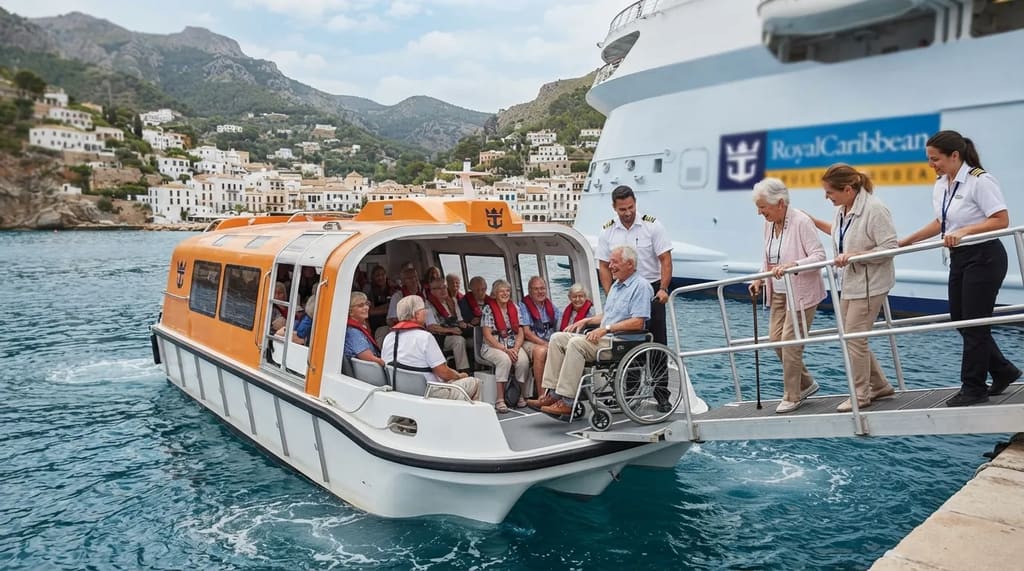
Your dream port might be unreachable for your mobility device.
Royal Caribbean is direct about it. Guests using assistive devices may not be able to get on or off the ship because of gangway steepness, tendering, weather, tides and shore facilities.1
Related Stories From Travelbinger

Tender ports are the biggest surprise. Most tenders require guests to take steps and use a collapsible manual wheelchair, and motorized chairs and scooters can’t go aboard unless roll-on capability exists.1 7
Roll-on capability is not guaranteed.
Worth Knowing
- Gangway steepness, weather and tides can all limit access.
- Most tenders involve steps and a collapsible manual wheelchair.
- Motorized chairs and scooters need roll-on capability to board a tender.
- Reception can settle tender-port details on embarkation day.
Embarkation day is the moment to raise this at the desk. One roundup lists tender-port details among the things reception can settle.
A port that looks like the highlight of the itinerary can become a quiet day aboard. Better to learn that on day one than on the morning you arrive.
Ask which ports are tendered, then plan your days accordingly.
The shortcut at #2 happens on the last morning, but you have to ask for it before…
#2 – Assisted Debarkation, Requested the Night Before
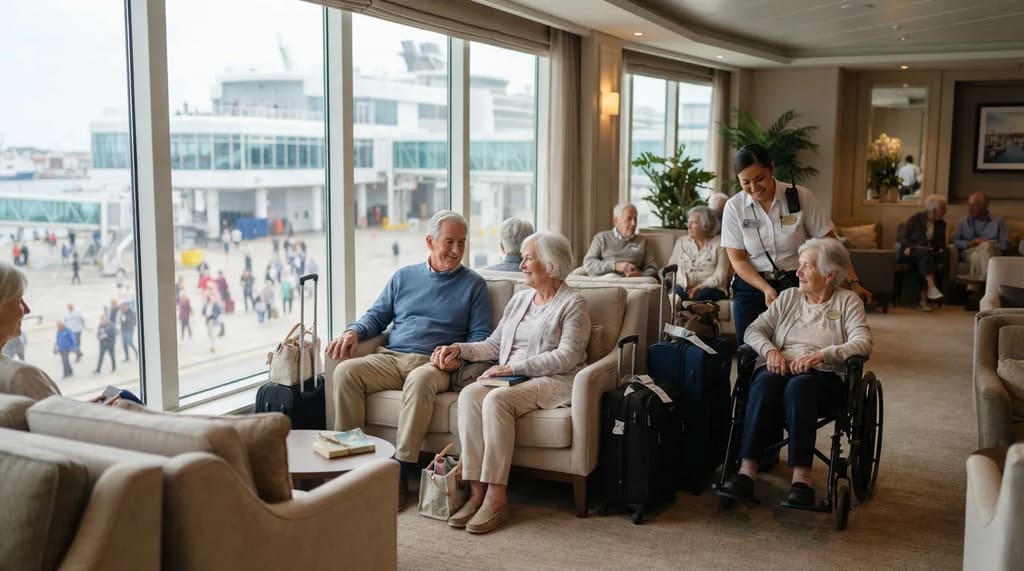
The worst crush of the cruise comes at the end. You can skip it.
Self-assist disembarkation means carrying your own luggage off first. That may not be practical with a mobility device.
The alternative is simple. Request assisted debarkation, which typically means waiting in a designated lounge and being escorted off by crew after the self-assist rush. One guide adds that this is quieter and involves less crowding.
Timing matters here. Guides advise requesting it through guest services the night before arrival.
Royal Caribbean also lists early disembarkation among its possible accommodations.
Here’s the part many cruisers get wrong. They assume the fastest exit is the best one. For many older travelers, the slower, escorted route is actually the better deal.
- Ask the night before.
- Confirm the lounge location.
But none of this works without the shortcut at #1…
#1 – The Request Filed Before You Ever Leave Home
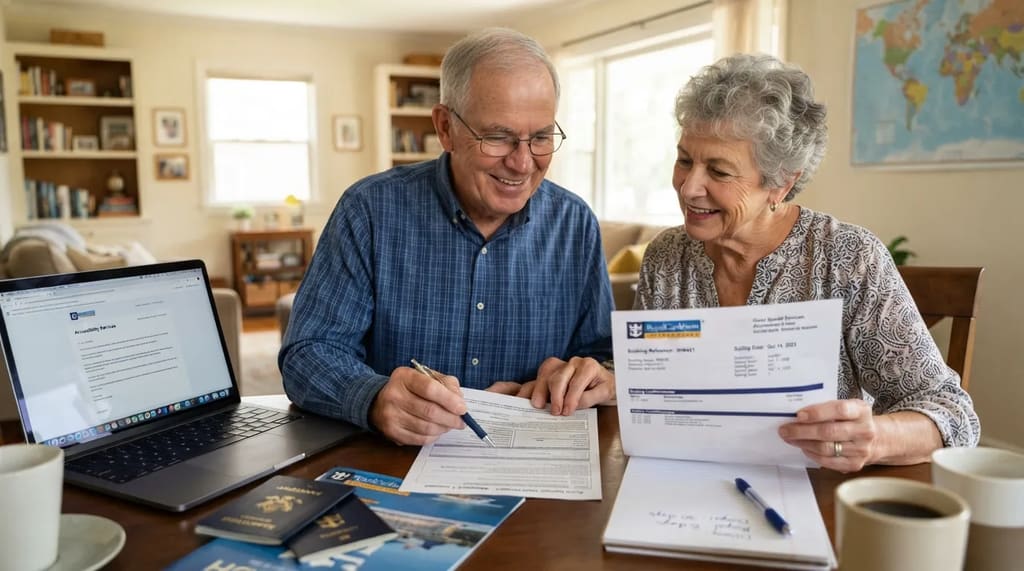
Every other shortcut on this list depends on this one.
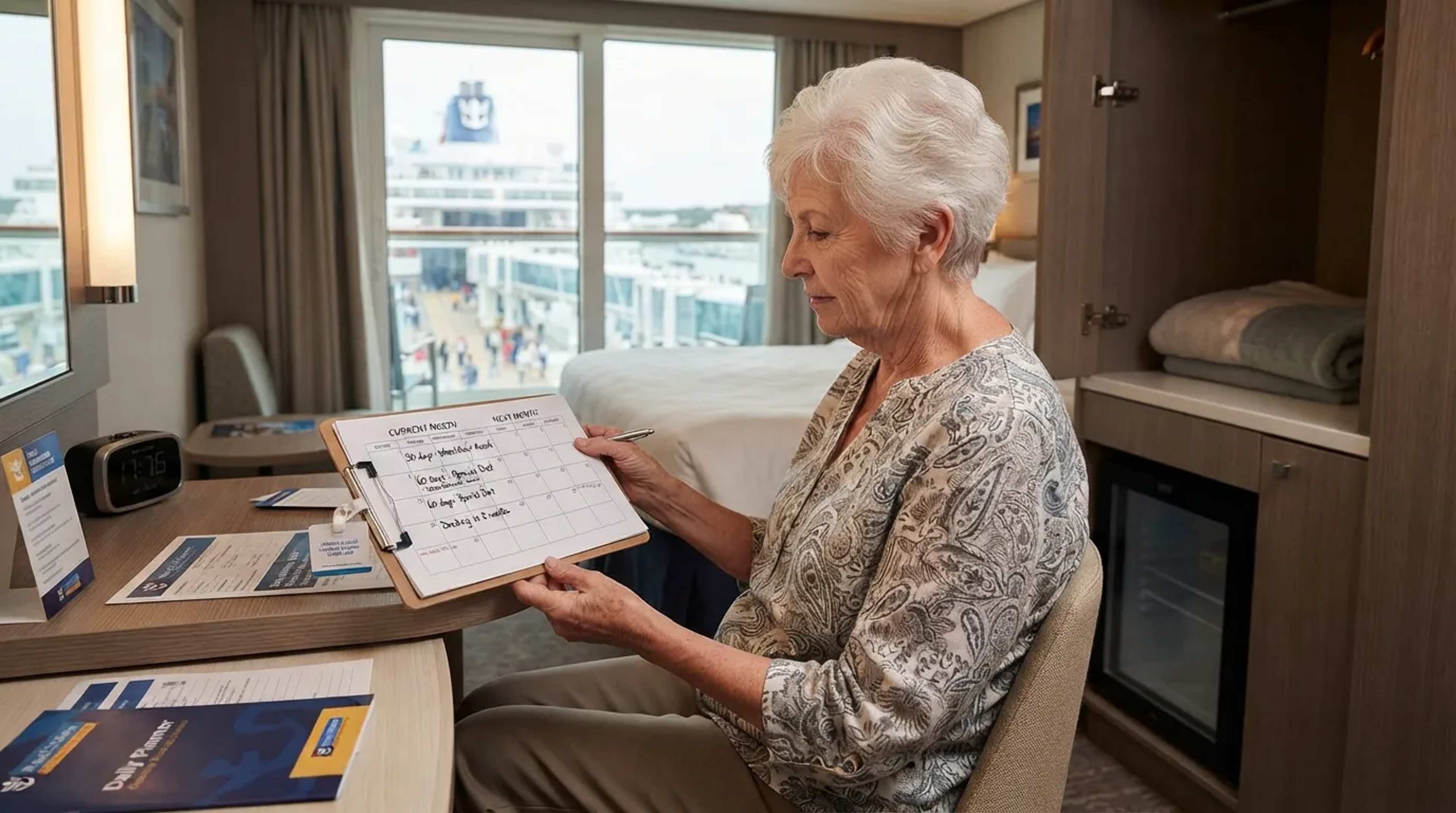
Cruise guides keep repeating the same rule. Contact the cruise line’s accessibility department at the time of booking, not at embarkation.
Royal Caribbean asks for contact 30 days before your cruise to prioritize pier assistance.1 For Disney, one guide says to fill out the Special Services Form at least 60 days before you sail.
Celebrity is more flexible. It says you can request assistance once you arrive at the pier or contact them beforehand so they can prioritize you.
Fast Facts
- Royal Caribbean: Contact them 30 days out to prioritize pier assistance.
- Disney: One guide says to submit the Special Services Form at least 60 days before sailing.
- Celebrity: Ask at the pier, or contact them beforehand to be prioritized.
- Any line: Get every confirmation in writing.
Then comes the step most people skip. Get each confirmation in writing. It’s the one thing you can show a busy desk agent on embarkation day.
If something goes wrong, Royal Caribbean says you can ask for a Complaint Resolution Official, trained in U.S. disability regulations.
Everything else on this list follows from this single step.
The biggest truth behind all 13 shortcuts is that age alone doesn’t unlock any of them. A stated need does. Wheelchair help, priority lanes, medical-condition boxes, early cabin access and assisted debarkation all depend on paperwork, timing and asking clearly.
And the earliest arrival slot, the one everyone races for, may be the wrong move if crowds wear you out. Many of the best perks are tied to forms filed weeks ahead, not to a conversation at the pier.
Rules vary by line, ship and terminal, so always check with your own cruise line. Which of these would you actually use? Tell us in the comments.
- Royal Caribbean Pier Assistance: https://www.royalcaribbean.com/gbr/en/experience/accessible-cruising/additional-assistance
- Disney Guests With Disabilities: https://wdpromedia.disney.go.com/media/wdpro-assets/dcl/finder/guest-services/guests-with-disabilities/DCL%20%20Information%20for%20ASD.pdf
- Celebrity Accessibility FAQs: https://www.celebritycruises.com/faqs/accessible-cruising
- MSC Accessibility Request Form: https://www.msccruises.com/int/-/media/global-contents/special-needs-form/special-needs-form_eng.pdf
- MSC Accessibility and Medical: https://www.msccruisesusa.com/accessibility-medical
- Carnival Pre-Cruise Forms: https://www.carnival.com/about-carnival/special-needs/pre-cruise-forms
- Celebrity Special Needs Form: https://www.celebritycruises.com/content/dam/celebrity/pdf/CEL-Special-Needs-Form-Revised-062221.pdf