You packed three formal outfits, a dozen swimsuits, and a portable fan. Then a sea day goes sideways, and the one thing you need is sitting in a bathroom drawer back home. No one keeps an official cabin-by-cabin inventory, so think of this list as a pattern rather than a census. Still, cruise health guidance and the people who write about ship infirmaries keep flagging the same gaps.
The twist is how ordinary they are. There’s no exotic gear and no survival kit, just small, boring things that turn a bad afternoon into a bill with a lot of zeros. The countdown starts with the number one reason people end up at the ship’s medical center, and it ends with a price tag that can run into six figures.
#13 – The Seasickness Remedy Everyone Swears They Won’t Need
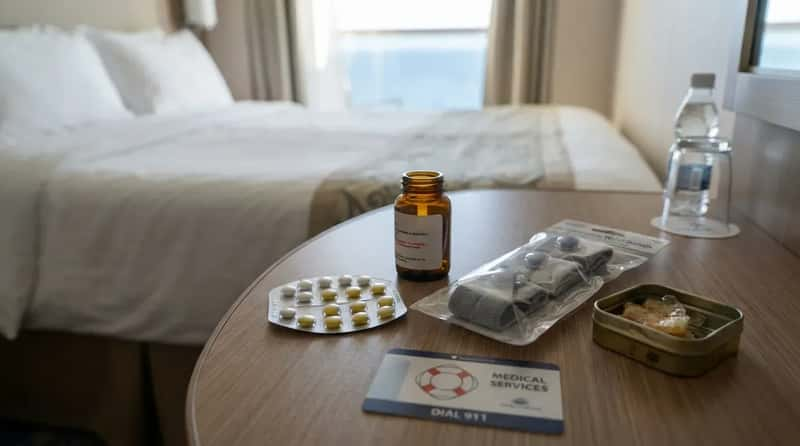
Seasickness is the classic “I’ll be fine” gamble, and it’s the one that fills the waiting room. One cruise-travel roundup calls it by far the number one reason passengers visit the ship’s medical center. Cruise Ship Tracking estimates motion sickness affects 25–30% of passengers to some degree. Cruise Critic notes that seasoned travelers bring Dramamine or Bonine pills, or prescription scopolamine patches.
Waiting until you’re already green gets expensive. Cruise Ship Tracking lists a seasickness injection at roughly $100–200. Here’s the part some travelers resent hearing: one cruise guide says the evidence for ginger and acupressure wristbands is weak. Plenty of people still swear by them, and that debate is worth having in the comments. But an empty pill bottle is a bigger problem, and that’s #12.
#12 – The Prescription Math That Quietly Falls Apart at Sea
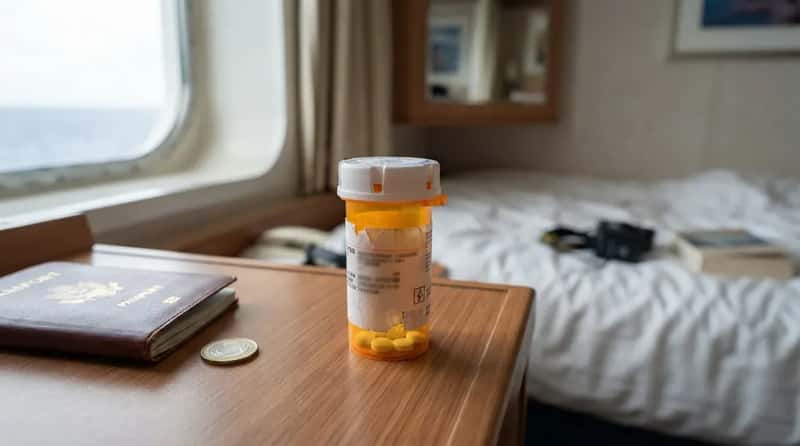
The mistake usually isn’t forgetting your pills. It’s miscounting the days. One roundup says passengers on blood pressure drugs, insulin, or blood thinners often forget to add the travel days before and after the sailing. Then the bottle runs empty while the ship is still days from home.
U.S. News says the ship may not stock your exact medication and dosage. If it doesn’t, the refill has to be filled at a pharmacy in the next port. That roundup also says an emergency refill in a foreign port takes far longer than most passengers expect. Both sources say to pack enough for the whole trip plus a few extra days, and to tell the medical team on day one, not day four. The paperwork you carry matters almost as much as the pills, as #11 shows.
#11 – The Medicine Bottle Without a Label (and the Missing Medical Cheat Sheet)
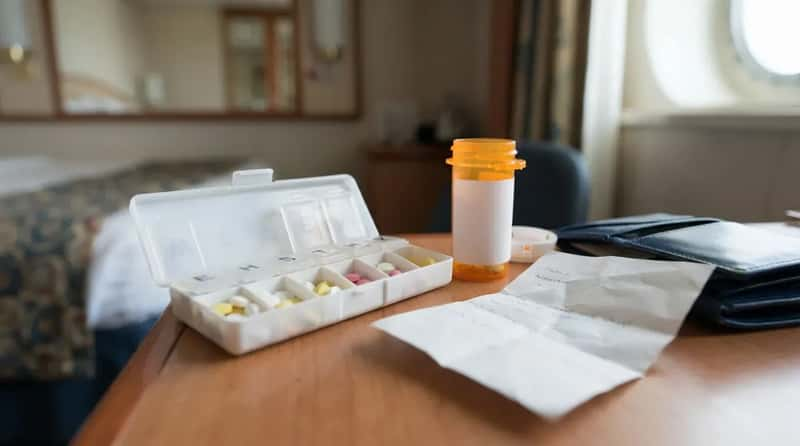
Loose pills in a weekly organizer look tidy. To a medical team, they’re a mystery. U.S. News recommends keeping prescriptions in their original containers. An unlabeled pill is basically a guessing game for anyone who has to treat you.
Travel Care Air suggests sharing your allergies, chronic conditions, prescription drugs, and any emergency medicines, such as an epinephrine auto-injector, as soon as a medical emergency begins. A folded page in your wallet with those details beats trying to recall them while you’re in pain. Another guide says chronic conditions can be managed on board if you bring your medical history and enough medication. Still, the real enemy of a healthy cruise may not be allergies or pills. It’s the thing your whole deck touches at #10.
At a Glance
- Keep every prescription in its original, labeled container
- List your allergies and chronic conditions on one page
- Note any emergency medicine, such as an epinephrine auto-injector
- Bring your medical history, plus enough medication for the whole trip
#10 – The Plain Soap Habit That Beats the Fancy Sanitizer

Everyone knows the “cruise ship virus” reputation. Vanderbilt’s Dr. William Schaffner used that very phrase for norovirus in a CNN interview. Analyses of CDC data count 16–18 posted stomach-bug outbreaks in 2024 and 23 in 2025, with 18 of those 2025 outbreaks caused by norovirus. Those counts differ slightly between analyses.
The twist is that cruise outbreak trackers say hand sanitizer is less effective against norovirus than soap and water, yet the sanitizer stations get all the attention. Outbreak counts are also partly an artifact of reporting. The CDC posts one when 3% or more of passengers or crew report symptoms, and one tracker notes the rise may partly reflect higher passenger volumes and better reporting. So what happens if you do get hit? That’s #9.
#9 – The Rehydration Gap Nobody Plans For
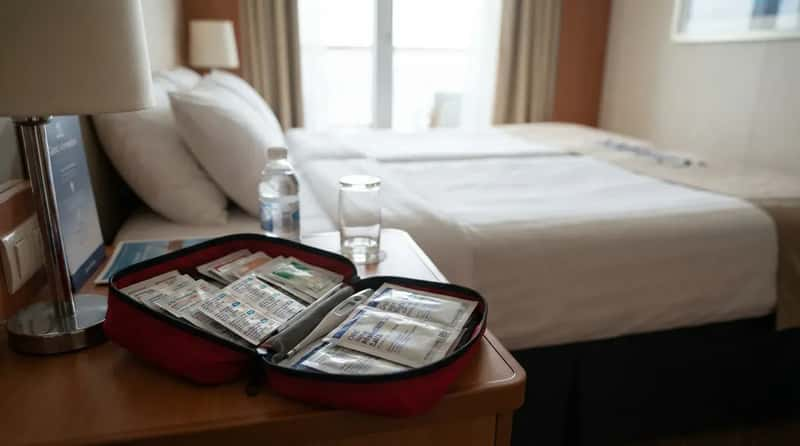
When a stomach bug hits, the first problem isn’t the nausea. It’s fluid loss. Fodor’s calls dehydration the most common complication, especially among the young and elderly, and says it may require medical attention. A basic travel first-aid kit, including anti-nausea and antidiarrheal medicine, is on Fodor’s suggested packing list.
Travel Care Air warns that a child with vomiting or diarrhea should be evaluated by the medical center, because these illnesses can spread quickly. Don’t write it off as simple seasickness. One outbreak tracker says the ship’s medical center can offer anti-nausea medication and IV fluids. Most people don’t think about any of this until they’re already sick, which is also true of the next item.
#8 – The Four-Item Kit That Covers the Most Common Cruise Complaints
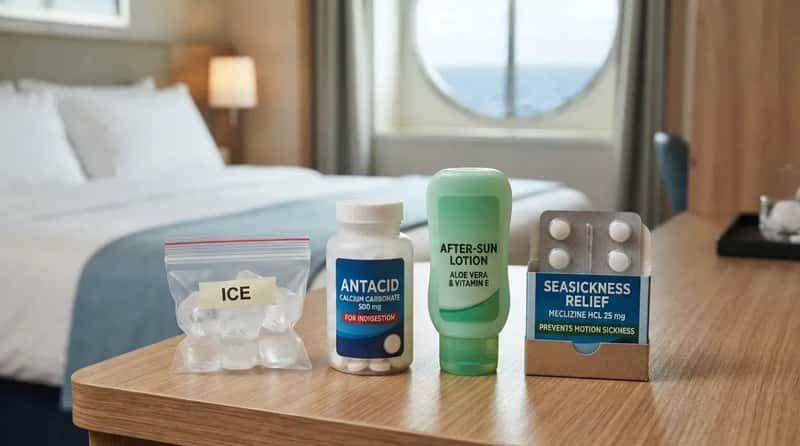
Cruiseable lists the four most common ailments on board as bruises, indigestion, seasickness, and sunburn. Bruises and sore muscles from stumbling around on a moving ship are the least glamorous of the bunch. The cheapest fix is a few plastic bags for ice.
The same guide suggests an antacid such as Tums or Alka-Seltzer for indigestion, and buffet logic (“it’s included, so I’ll try everything”) causes plenty of that. Sunburn is the other predictable one. A cabin without aloe or after-sun lotion sends passengers to buy it onboard at cruise-ship prices. And speaking of bruises, a footwear mistake causes the bigger injuries at #7.
Fast Facts
- Bruises: plastic bags for ice
- Indigestion: an antacid like Tums or Alka-Seltzer
- Seasickness: pills or patches, packed before you sail
- Sunburn: aloe or after-sun lotion from home
#7 – The Shoes That Turn a Sea Day Into an Injury Report
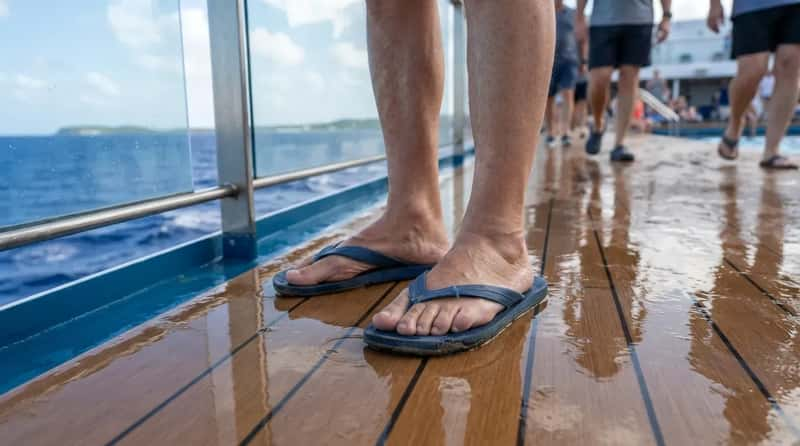
U.S. News says seasickness and injuries from trips or falls are common reasons passengers end up in the ship’s medical center. One cruise roundup says staff see plenty of this on Caribbean and Mediterranean itineraries, where passengers rack up long walking days in flip-flops. The footwear you pack matters as much as the sunscreen.
Wet pool decks, stairs, and a floor that moves a little all add up. Shoes with grip and a closed heel are the unglamorous answer. Older travelers carry extra risk: Cruise Ship Tracking says passengers over 65 make up a disproportionate share of medical emergencies at sea. Flip-flops are a cruise cliché, and they may be one of the riskiest things in the suitcase. But that looks small next to what a blister can become at #6.
#6 – The Blister Kit That Stops a Tiny Wound From Becoming a Medical Case
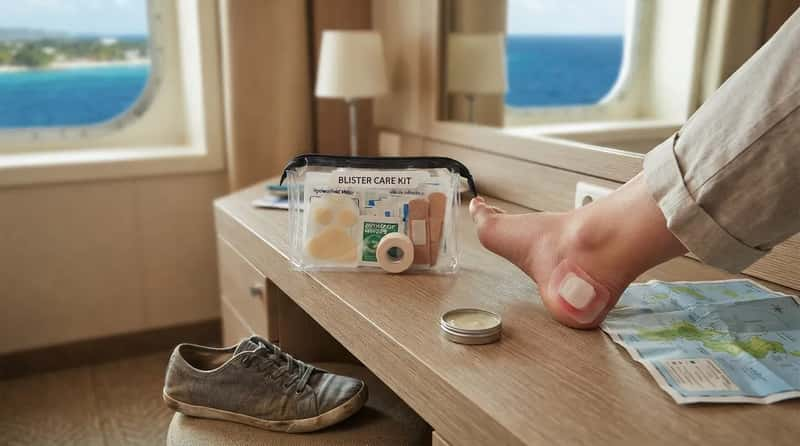
It starts as a rubbed-raw heel after a day ashore. A cruise-travel roundup says ship doctors name untreated wounds as one of their most preventable serious cases. It adds that passengers often wait several days before mentioning it.
That’s the sneaky part. Cruise Critic says ship medical staff can treat minor injuries, so nobody needs to tough it out. A few adhesive bandages and blister pads cost almost nothing. Long walking days in port, sweaty shoes, and a tropical climate are a bad mix for broken skin. Cheap supplies in the cabin beat a clinic visit. But what if you’re not sure you’re sick at all? That’s #5.
#5 – The Thermometer Nobody Packs and the Symptom Everyone Hides
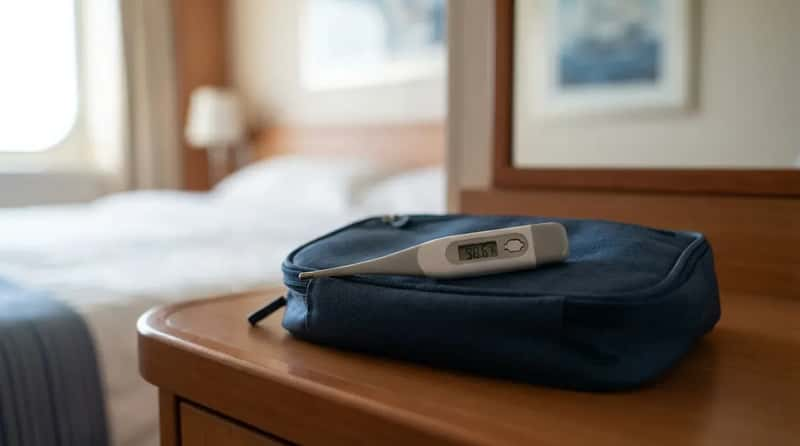
Nobody wants to be the person who reports a stomach bug and gets confined to the cabin. Travel Care Air still advises reporting illness to the ship’s medical center as soon as it starts, and U.S. News adds that the team will evaluate your symptoms and whether you’re contagious. A 2024 outbreak review cited by Discovery Health MD found that sharing a cabin with an ill person raised the odds of getting sick dramatically.
A small thermometer in your toiletry bag gives you something concrete to tell staff. It turns a vague “I feel off” into a clear report. Hiding symptoms to protect your vacation is understandable, but it’s also exactly how an outbreak spreads. Staying quiet isn’t just a risk for you. And the next item is for the people whose medicine has to stay cold.
#4 – The Cold-Chain Plan for Insulin and Other Fridge Medicines

For people on certain insulins or biologics, a warm cabin is a real problem. Cruise Ship Tracking says refrigerated medications can be stored in the cabin mini-fridge, or in the medical center’s refrigerator on request. Many travelers never ask.
The catch is that mini-fridges aren’t always reliable, and shore excursions in hot ports add risk. A small insulated travel pouch helps on port days. Another cruise roundup says passengers on insulin often miscount trip length, so a spare supply matters too. Pack more than you think you need, and tell the medical center early. The next surprise has nothing to do with the cabin and everything to do with your wallet, at #3.
Worth Knowing
- The cabin mini-fridge is one option for cold medicine
- The medical center’s fridge is available on request
- An insulated pouch helps on hot port days
- A spare supply covers a miscounted trip length
#3 – The Health Insurance Card That Doesn’t Work at Sea
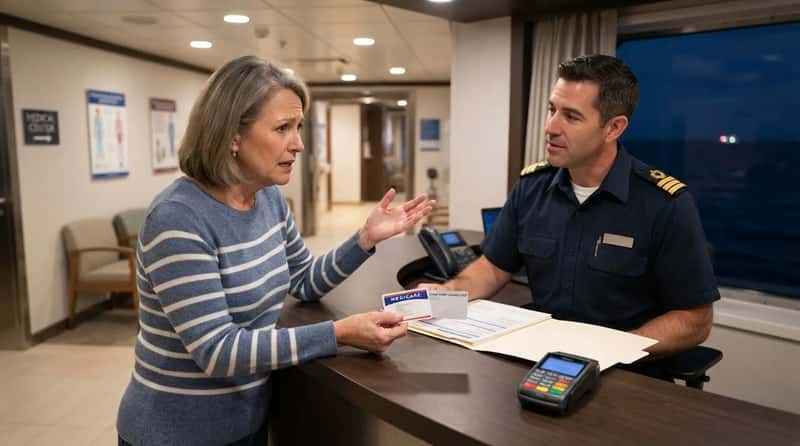
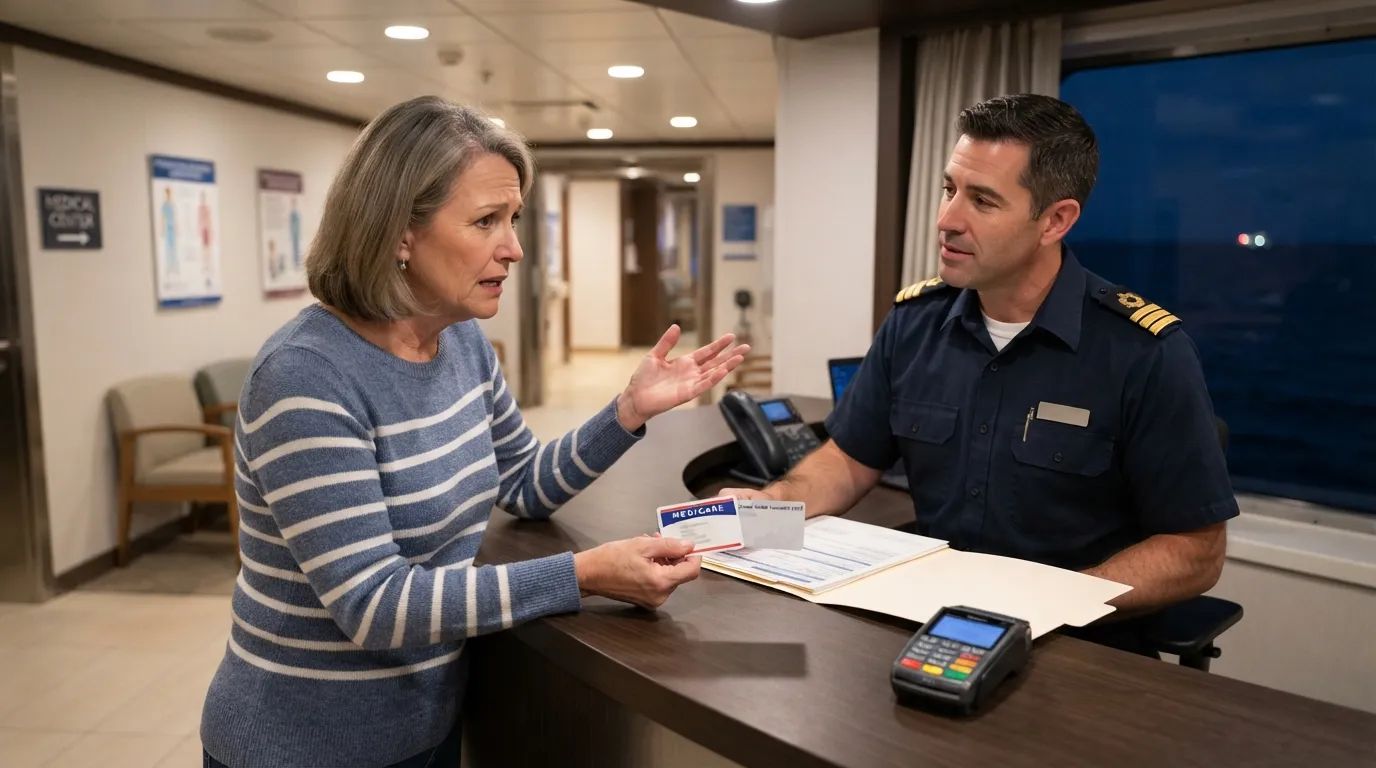
Many travelers assume their health plan follows them onto the ship. A travel insurance resource citing the CDC and State Department says most cruise lines don’t accept U.S. health insurance or Medicare. Passengers pay out of pocket and seek reimbursement later.
NBC reported on a couple on a Queen Mary 2 crossing who learned this the hard way. Their medical bill came as a shock, and they couldn’t simply hand over an insurance card. NBC also noted that Medicare beneficiaries have no Medicare coverage outside the country. That’s a nasty surprise for retirees, who make up a major share of cruise passengers. So what does the clinic actually cost? That’s next.
#2 – The Clinic Bill That Lands on Your Onboard Account

The ship’s medical center isn’t free. Sources disagree on pricing, which tells you it varies. General Travel Insurance says a basic consultation costs around $100 in regular hours, while Cruise Ship Tracking puts it at $150–300. Tower Hill cites $150–200 per hour for treatment in a medical emergency.
Extras are billed separately. X-rays, lab tests, IV fluids, and medications add up fast, per General Travel Insurance, and Cruise Ship Tracking says the charges go straight to your onboard account. Fodor’s notes one exception: if you’re injured during a cruise-sponsored shore excursion or aboard the ship, treatment may be free. Even so, none of this compares to what a serious emergency costs, at #1.
#1 – The Evacuation Coverage That Separates a Scare From a Six-Figure Bill
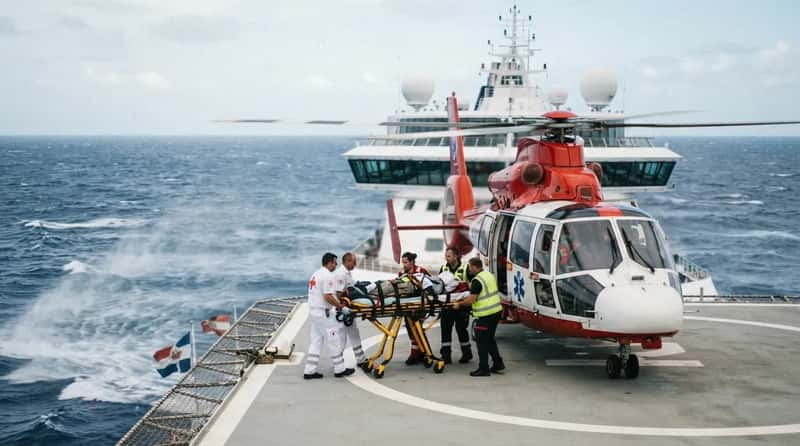
This is the item that tops the list. A ship’s medical center can stabilize you, but serious cases may need a hospital onshore. Cruise.insure says evacuation can run $50,000–250,000 or more. Other sources give lower ranges: General Travel Insurance quotes $10,000–50,000, and USA Travel Health Insurance says anywhere from about $15,000 to well over $200,000.
The gap depends on location, distance, and method. Cruise.insure says cruise-line policies often cap evacuation at $25,000–50,000. It recommends at least $250,000 in coverage, while NerdWallet, via USA Travel Health Insurance, suggests at least $100,000. Cruise Ship Tracking says cruise insurance typically runs 5–10% of trip cost, so $150–300 for a $3,000 trip for two. Read the evacuation section itself, not the summary. It may be the most important thing missing from your cabin.
None of these thirteen items is glamorous, and that’s the point. Most are cheap, small, and easy to forget in the rush of packing. Ship doctors can treat plenty, but they can’t conjure a pill supply or a policy you never bought.
Which one would you have forgotten?