The call comes in marked urgent: no power, no cold air, a dead elevator, a “flooded” bathroom. The engineer grabs a toolbox and hustles upstairs, bracing for a mess. Then the fix takes about four seconds and needs no tools at all.
That’s the quiet running joke of hotel maintenance. Hotels are packed with hidden switches, safety cutoffs and energy-saving tricks nobody explains at check-in, so a perfectly healthy room can feel haunted. A few of these will make you rethink the last time you reached for the room phone, and one of them is almost impossible to guess.
#13 – The Window That “Won’t Open” Is Doing It on Purpose
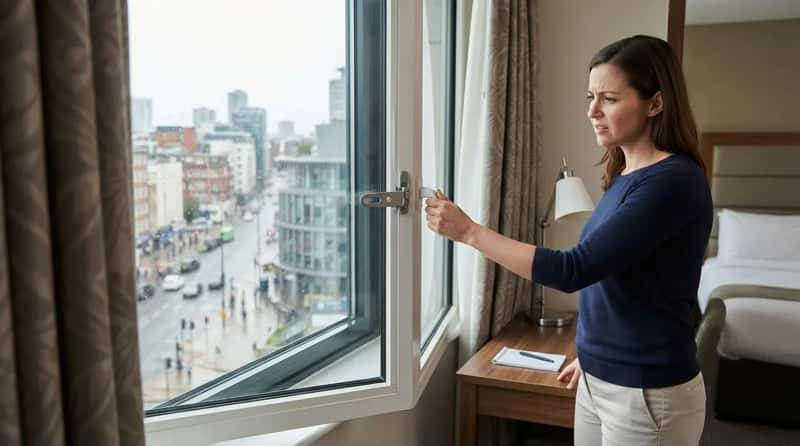
You walk in, head straight for the window to let in some fresh air, and it’s sealed shut or open only a few inches. Most guests assume a stuck latch or a painted-over frame, so they call it in. In many hotels, though, restricted or fixed windows are a deliberate choice for guest safety, noise control and climate control.
Fast Facts
- Look for a small stop, limiter tab or fixed pane. That’s usually the design, not damage.
- The usual reasons are fall safety, street noise and steady room temperature.
- If you really want fresh air, ask the desk about a room with a balcony or an opening door.
Operable windows also work against the building’s heating and cooling system, which is balanced around closed rooms. A window cracked open on a hot day can make the AC work harder and can confuse in-room sensors. Engineers would much rather explain a window than rebuild a frame that was never damaged. Next up is a blue screen that convinces guests the whole building lost its cable.
#12 – The “No Signal” TV That Was Just Listening to the Wrong Input
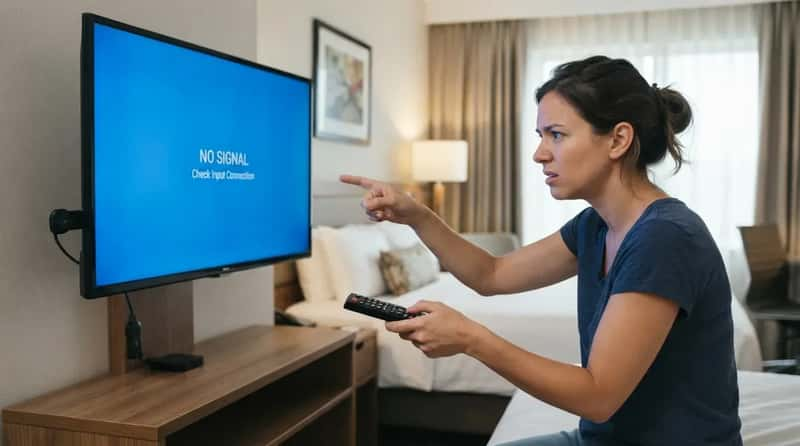
The screen is a flat, accusing blue, the remote does nothing helpful and the guest is sure the cable is dead. A common culprit is simpler: the TV was left on a different input, such as a streaming stick or an HDMI port the last guest used. Preventive maintenance checklists for hotel rooms include resetting the TV to its default input and welcome screen, plus replacing remote batteries every 90 days.
That means a dead remote and a wrong input can look exactly like a broken television. Some guests also mash the buttons so fast that the TV never gets a chance to respond. Engineers will tell you the “broken” TV is one of the cheapest calls they make, and one of the most common. The next one raises the stakes, because it involves your passport.
#11 – The In-Room Safe That “Ate” Your Passport
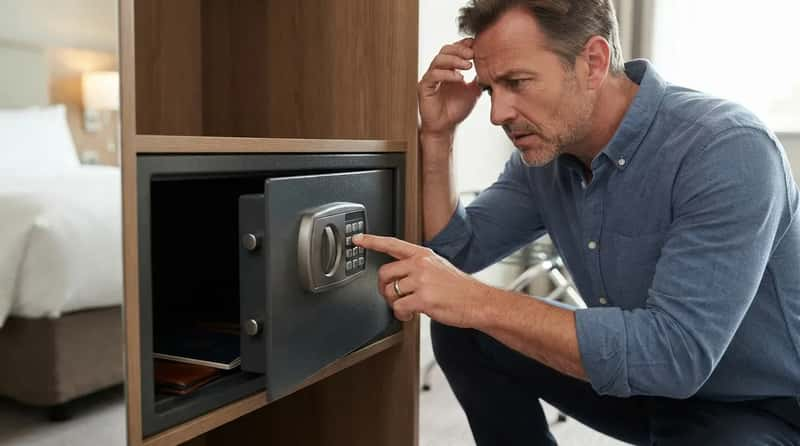
Few things spike a traveler’s heart rate like a locked safe with a passport inside. In many cases the safe isn’t malfunctioning at all. The code was entered slightly differently from how it was set, a required button got skipped, or the batteries were running low.
Hotels can typically open these safes with a staff override, so nothing is actually lost. The scary part is how quickly a guest decides the safe is “broken.” Engineers often say the smartest habit is to test the lock with the door open before you put anything valuable inside. They would rather watch you test it once than rescue a passport at 5 a.m. on departure day.
Worth Knowing
- Most in-room safes run on batteries, and weak power is a classic cause of a stubborn lock.
- Many models have a backup key slot or a staff reset code for emergencies.
- The 10-second test: set your code, close the door, then open it again before you load it up.
#10 – The Shower That “Won’t Get Hot” Has a Safety Limit Built In
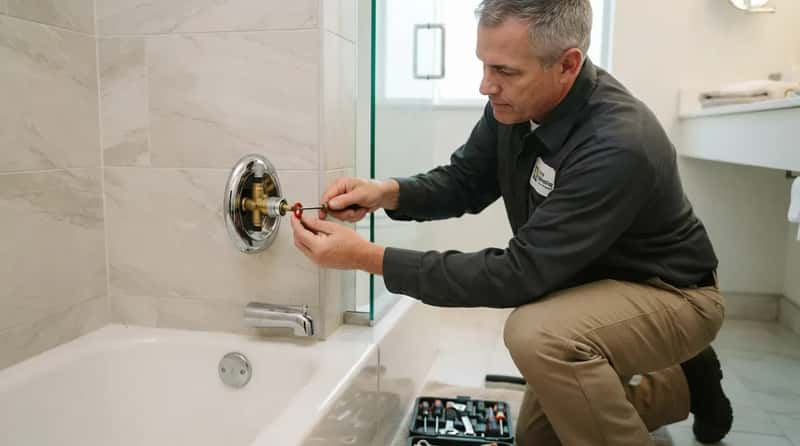
You turn the handle as far as it goes and the water just stays warm. Cue the complaint about the broken water heater. Many shower valves have a hot-limit stop, an adjustable setting that caps the maximum temperature to reduce scald risk.
In a big building, hot water also takes a while to travel from the boiler to your floor. Some guests turn the diverter the wrong way too, so the water pours from the tub spout while the shower head sits dry. Engineers will often check the limit setting only after confirming the water has had a full minute to run hot. The fix is usually a patient minute, not a plumber. Next, a fixture that looks like it’s failing when it’s actually being thrifty.
#9 – The “Clogged” Toilet That Is Really Just Water-Saving Design
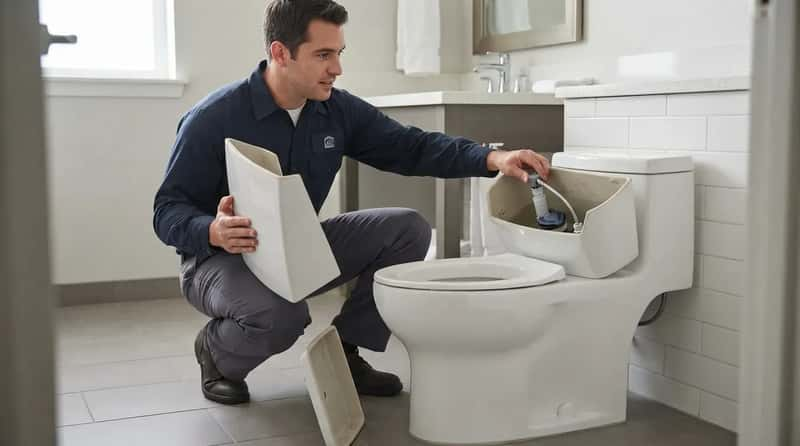
A weak-sounding flush sends plenty of guests straight to the phone. Many modern toilets are built to use less water, and the tank needs a moment to refill before the next flush works well. Flush twice in a row and the second one can come out underpowered, which looks exactly like a clog when it isn’t.
Real clogs do happen, and engineers say the usual causes are things that shouldn’t be flushed, like wipes and thick wads of paper. It’s a case where a very modern design can look like a very old problem. Still, nothing generates more frustration than the next one.
#8 – The Wi-Fi That Is “Down” Until You Open a Browser

Your phone says you’re connected, but nothing loads, so the front desk gets a call about a dead network. Many hotel networks use a login page, called a captive portal, that appears only after your device tries to reach a website. Until you accept the terms or enter your room number, the connection looks live but goes nowhere.
Other times, a phone is still clinging to the hotel’s guest network from a previous stay or to a weaker signal down the hall. Engineers often say the network was working fine and the device just hadn’t been asked to log in yet. The next culprit is the one that makes guests feel personally targeted.
#7 – The Thermostat That “Ignores You” Is Quietly Running Its Own Schedule
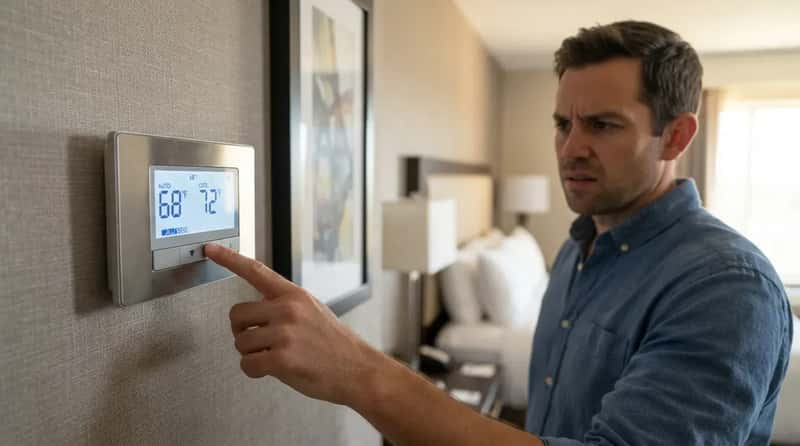
You push the temperature down and the room barely responds. Many hotels now use smart thermostats that dial back when they don’t detect motion. Some systems also nudge the unit into an energy-saving mode when no one appears to be in the room, which can make a freshly arrived guest feel ignored by the machine.
Guests aren’t wrong that it feels strange to lose control of your own room. Engineers can sometimes adjust setpoints or switch a unit from auto to fan hold. So the “broken” thermostat may be perfectly healthy, though it may still be worth a polite request.
At a Glance
- Empty room: the system often drifts to an energy-saving setback.
- Fresh arrival: motion sensors may need a little time to notice you.
- Slow response: the unit may be on auto or a fan-only setting.
- Best move: walk around the room, set your temperature again, then call if nothing changes.
Now for a dead outlet that was just waiting for one tiny button.
#6 – The Dead Bathroom Outlet That Needed One Tiny Button
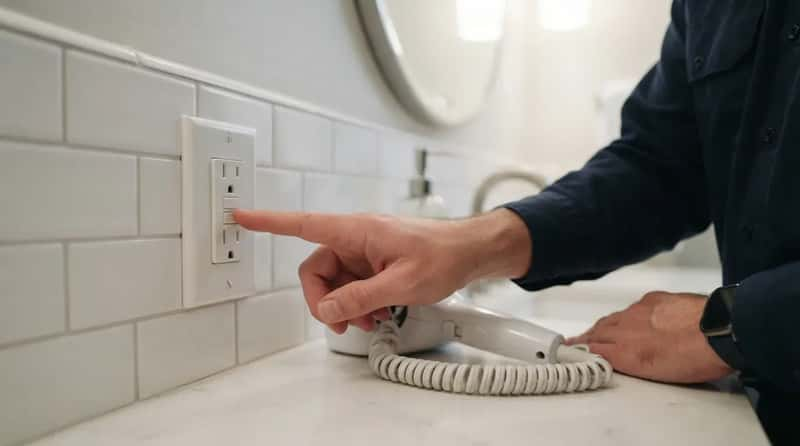
The hair dryer won’t turn on, and the outlet looks fine. Bathroom outlets are usually GFCI outlets, which can trip from moisture or a surge and look completely dead until someone presses reset. In many rooms the button sits right on the outlet, and engineers often start by looking for the TEST and RESET buttons.
A tripped GFCI is the device working correctly, protecting you at the exact moment it looks broken. Hotel maintenance checklists even include pressing the test and reset buttons on all GFCI outlets monthly. Sometimes the outlet is also tied to a wall switch, so check that first. The next one has caused plenty of awkward hallway moments.
#5 – The Key Card That “Stopped Working” for Reasons You’d Never Guess
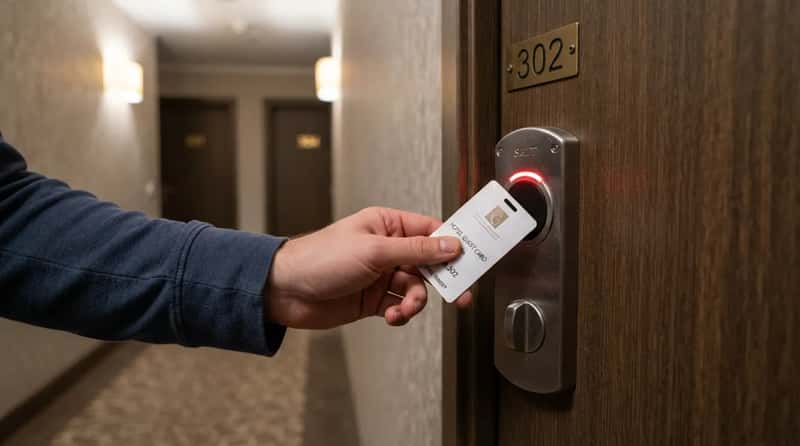
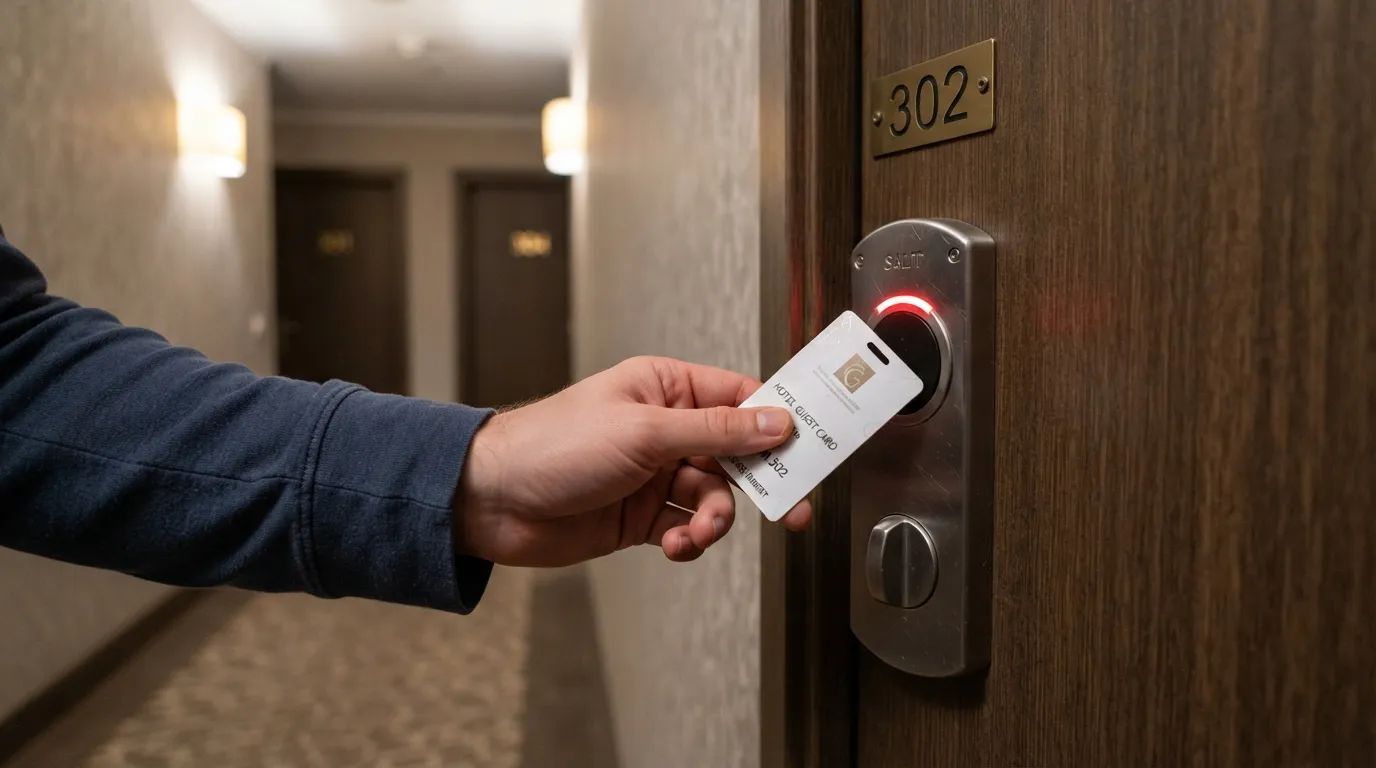
You tap the lock, get a red light and immediately blame your phone for wiping the card. Magnetism gets blamed constantly, but front-desk workflows point to more mundane causes. These include stay dates that don’t match the system or a card encoded with the wrong room number.
A physically bent or worn card is another common cause. Real lock problems exist too, such as weak batteries, but those typically hit every guest in the room, not just one. Engineers are often relieved when the answer is a simple re-encode at the desk. And the elevator in the next entry sets a trap for nearly everyone.
#4 – The Elevator That “Won’t Move” Until You Tap Your Key
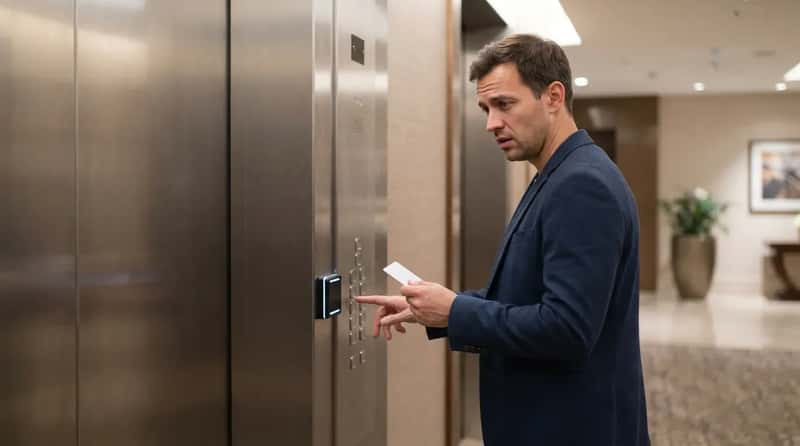
You press your floor number and nothing happens, so you assume the elevator is broken. In fact, many hotels use card readers that only let guests reach certain floors. That’s a security feature, not a malfunction, and it keeps outsiders off guest floors.
Quick Compare
- Normal guest mode: tap your key card, then press your floor.
- Fire service: the car can recall to a set floor and ignore ordinary button presses.
- Maintenance or service mode: the car may skip normal calls while staff work on it.
If you skip the tap, the button may do nothing at all, and you can stand there pressing it like a game show contestant. Elevators can also drop into special modes, such as fire service, maintenance or priority runs, which can change how the car responds. The easiest first move is to tap your key card on the reader before pressing a button. The next scene plays out in total darkness.
#3 – The Pitch-Black Room That Wakes Up When You Slot the Card In
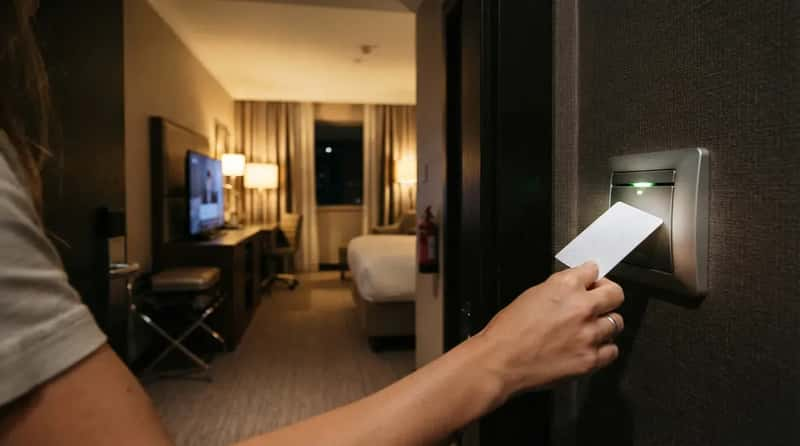
You open the door, flip every switch and get nothing but darkness. Many rooms have a card slot near the door that powers the lights, TV and cooling. As soon as you pull the card out and leave, everything goes off.
First-time guests often report a power outage before spotting the little slot on the wall. There’s a trick some travelers swear by: leaving another card in the slot. Some older slots may accept any card-shaped object, while many newer installs require the hotel’s own key. Engineers have mixed feelings about this hack, and some would rather you simply ask for a second key. The next complaint is the one they say they hear most.
#2 – The “Warm” AC That Was Actually Shutting Itself Off
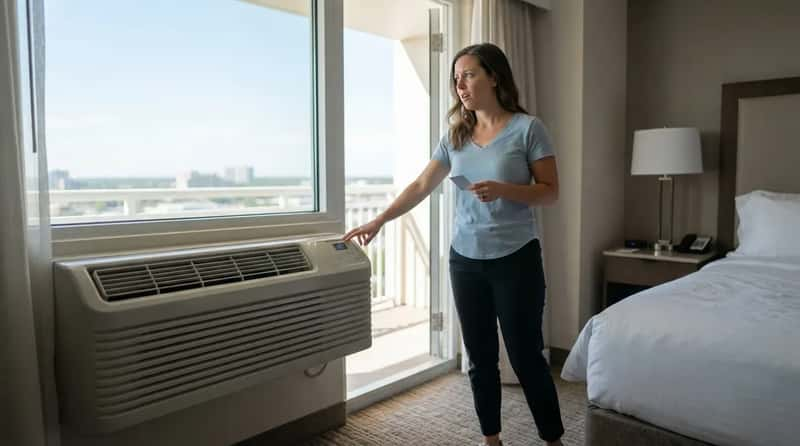
The air feels weak or warm, and the guest decides the AC is dead. Fan-only settings, auto-mode behavior and room sensors are common reasons. Some systems use sensors that shut down the compressor when a balcony door is open, which can leave the fan running with no cooling at all.
A room that’s been empty and hot can also take a while to cool down, even when everything works. Some guests don’t realize the unit is on a setting that never gets colder than the room already is. Engineers say a closed balcony door fixes more of these than any wrench. But the final entry isn’t about a gadget at all.
#1 – The Door That “Wouldn’t Open” Because Someone Inside Flipped One Switch
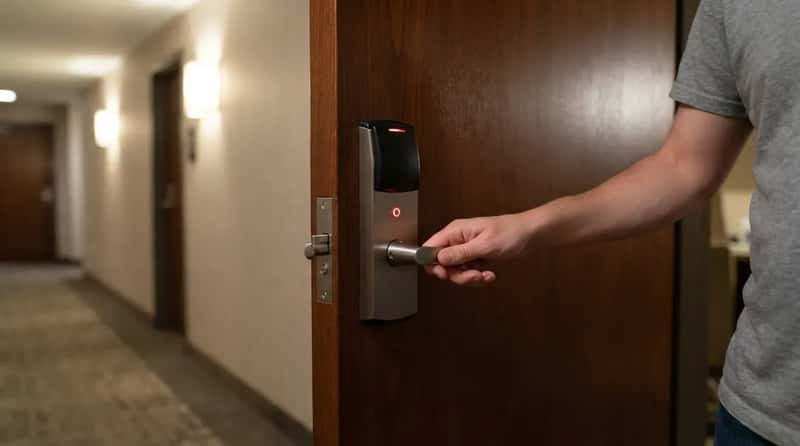
You tap your card and the lock gives you a red light, but you know the card is right. Many hotel doors have a deadbolt or privacy function that blocks outside cards when it’s engaged from inside. A roommate in the shower, a late sleeper or a half-awake guest who threw the bolt can make a perfectly good lock look faulty.
Engineers say these calls are surprisingly emotional, because guests start to wonder whether the room was double-booked or whether someone else is in there. In most cases the answer is much calmer: a bolt, a switch and a very confused morning. The reassuring part is that your key card, your lock and your room are usually fine.
The next time something in a hotel room seems dead, silent or stubborn, look for the button, the slot or the setting first. Odds are the room isn’t broken. It’s just waiting for you to speak its language.