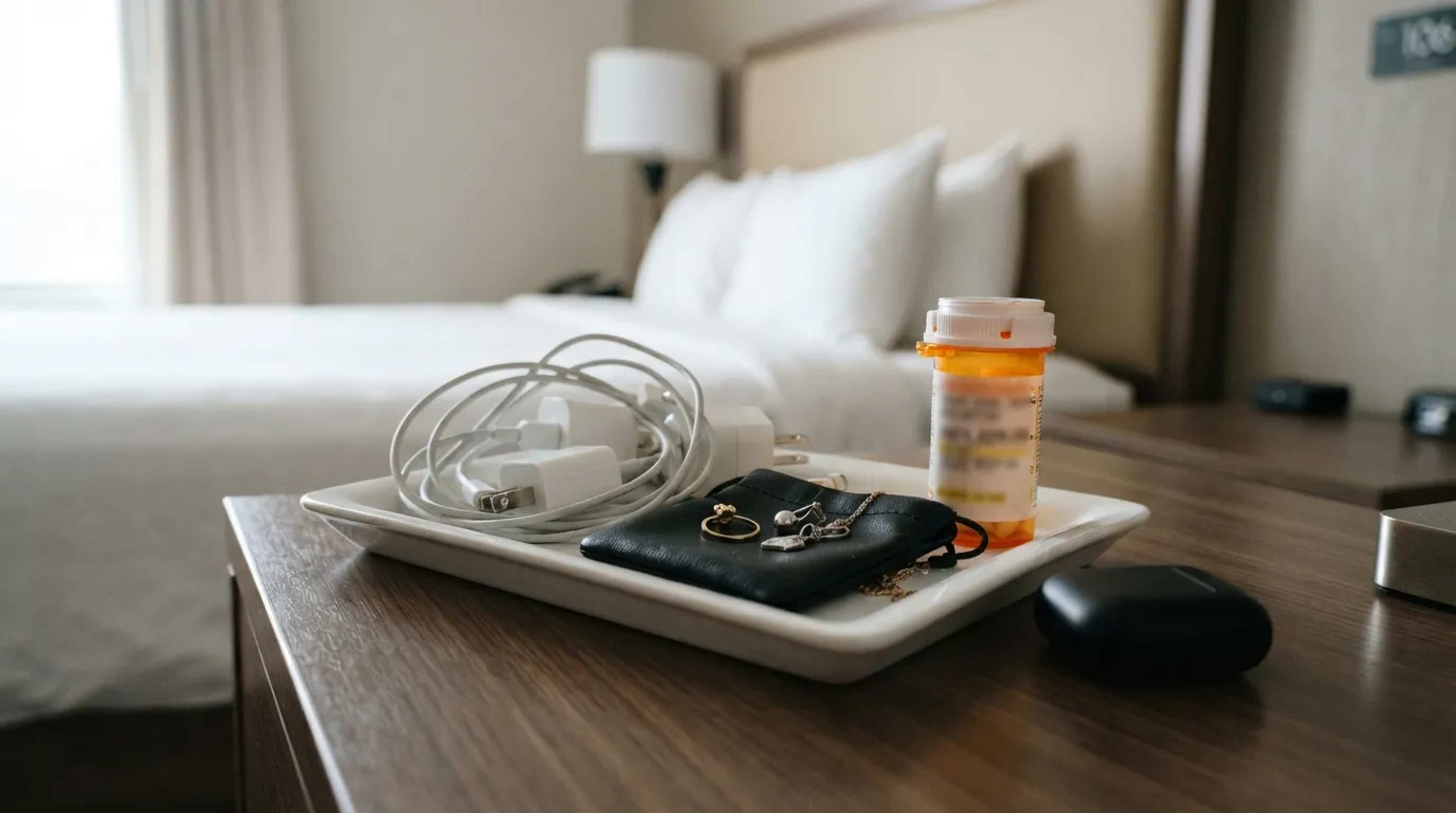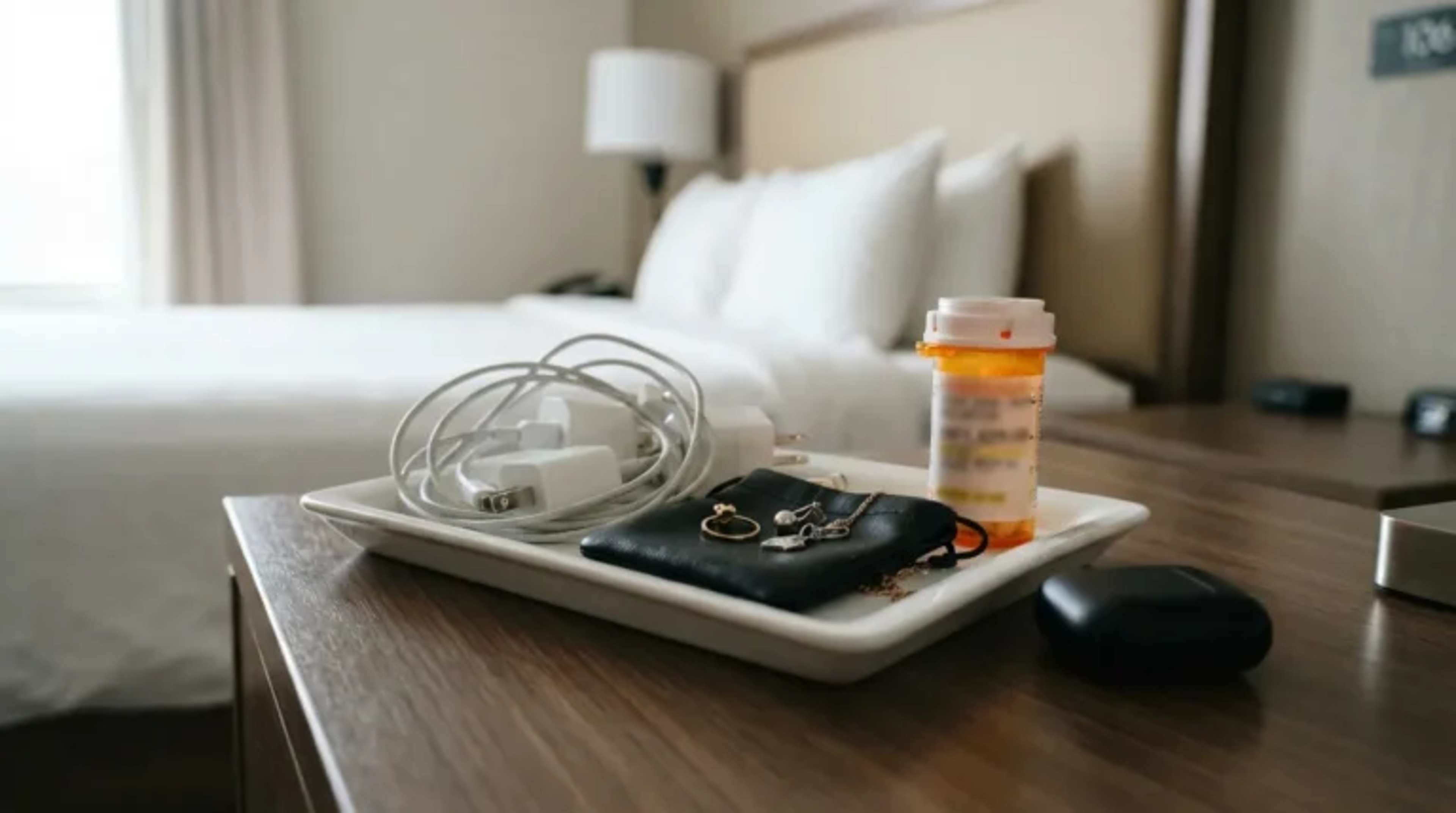
Ask a seasoned retiree what ruined their first big tour, and the answer is rarely the itinerary. It’s the suitcase. Somewhere between a cobblestone street, a hotel with no elevator and a check-in desk that wants $100 for an overweight bag, the “just in case” pile stops feeling clever.
What makes this list sting is that most of these items looked perfectly sensible at packing time. A few were on every checklist you’ve ever read, and one of them can fry in a foreign outlet. We’ve counted them down from the mildly annoying to the one that hurts most, and the top spot isn’t what you’d guess from the first few.
#13 – The Brand-New Walking Shoes That Turned Day Two Into a Limp

New shoes bought “especially for the trip” are one of the most common long-tour mistakes. Guided tours often mean hours on your feet, sometimes on uneven stone and steep steps. Shoes that felt perfect in the store can start rubbing in brand-new places after a few miles.
A blister on day two is hard to shake when you still have two weeks of walking ahead. Skin tends to heal more slowly with age, so a small hot spot can turn into a real problem.
Travellers who have been burned pack the pair they’ve already walked in for months. They bring a second broken-in pair too, so one can dry out while the other gets worn.
But that’s nothing compared to the weight hiding in the next bag…
#12 – Hardcover Books and Paper Guidebooks That Weighed More Than Your Shoes

Three paperbacks and a thick guidebook can easily add several pounds to a bag. That’s before you’ve bought a single souvenir. Most travellers finish one book at most, and the guidebook often stops being opened after the first two days.
So the rest gets dragged through every airport and hotel lobby, and nobody ever thanks it for the ride.
An e-reader weighs well under half a pound and holds thousands of titles. Many guidebook publishers sell digital editions, and phones can store offline maps. Plenty of experienced travellers also say a free city map from the hotel desk does the same job as a paper one, and costs nothing to leave behind.
Next up is an item that can actually damage your electronics…
#11 – The Full-Size Hair Dryer That Never Worked Abroad

Many U.S. hair dryers can be ruined by plugging them into a foreign outlet. The U.S. standard is about 120 volts, while most of Europe runs at about 230. Unless the appliance is labeled dual-voltage, a plug adapter alone won’t protect it.
The adapter only changes the shape of the prongs. It does nothing about the power.
Quick Compare
- U.S. and Canada: about 120 volts
- Most of Europe and the U.K.: about 230 volts
- Japan: about 100 volts
- Check the label: “100-240V” means the device is dual-voltage
Plenty of travellers have watched a dryer pop, smell like burning plastic or simply give up. Most hotels on organized tours already supply one in the room. If you can’t live without your own, a compact dual-voltage model is the safer choice, and it takes up far less space.
The next item is quietly ruining wardrobes on every tour…
#10 – Heavy Cotton Jeans That Never Dried in a Hotel Sink

Jeans are one of the slowest-drying things you can pack. They’re thick, and they soak up a lot of water. After a rainy day or a quick sink wash, they can still be damp the next morning.
Many tours move on every day or two. That means damp clothes end up sealed inside a suitcase, and you open it later to a smell nobody wants.
Veteran travellers lean on lightweight synthetic or merino blends instead. These fabrics dry much faster and resist odors, so fewer outfits can cover a long trip. Denim lovers will push back hard on this, but plenty of long-haul packers say two pairs of jeans is one pair too many.
- Pack quick-dry trousers in dark colors that hide wrinkles.
- Roll rather than fold to save space and reduce creases.
But the next regret has a more social cost…
#9 – Formal Outfits for Dress-Up Nights Nobody Dressed Up For

The sequined jacket often comes home with the tags still on. Several major cruise lines have relaxed their formal-night rules in recent years, and many land tours are even more casual. Most dinners turn out to be “smart casual” at best.
Sometimes the people at the next table are in walking shoes and a fleece, and you’re the one in the blazer.
Policies differ from line to line, so check what your operator or ship actually requires. One neat top and a pair of dark trousers usually clears the bar. A lightweight scarf or a simple jacket can dress an outfit up without taking over half the suitcase.
But what’s in your toiletry bag may be an even bigger problem…
#8 – Full-Size Toiletry Bottles That Leaked All Over a Suitcase
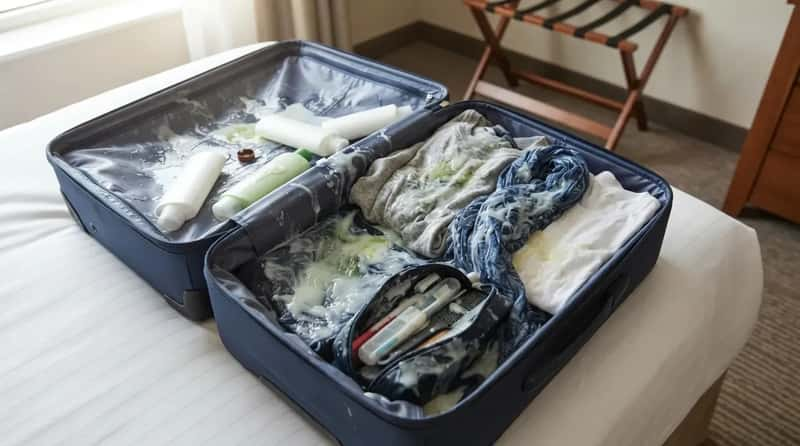
A leaking shampoo bottle can wreck an entire bag of clothes. Cabin pressure changes and rough baggage handling are enough to pop a loose cap. Opening your suitcase to find everything slick and sticky is a rough way to start a hotel stay.
In a carry-on, TSA limits liquids to containers of 3.4 ounces (100 ml) or less. That rule alone sends many travellers back to the sink to decant their products.
Plenty of hotels provide shampoo, conditioner and soap, so you may not need to bring any. Solid shampoo bars and tablet toothpaste pack flat and can’t spill. Some travellers say the best skincare routine for a tour is the shortest one, and they cut it to three products.
The next item sounds responsible, which is exactly the problem…
#7 – Real Jewelry That Spent the Whole Trip Locked in a Safe

Valuable jewelry is among the things travellers most often wish they’d left at home. Many people wear it once, then spend the rest of the tour worrying about it. Hotel safes aren’t always in the room. Some are small, and some are awkward to reach.
Travel insurance policies often cap payouts for jewelry and other valuables, so check the fine print before you rely on one. A simple watch and a few inexpensive pieces are easy to replace if something goes missing. That’s far less stressful than reporting a loss to a hotel manager in a language you barely speak.
The next mistake involves medication, and the stakes are higher…
#6 – Prescription Pills Packed in the Checked Bag

Checked bags can be delayed, misrouted or lost, and your medicine goes with them. Regular medication is often the one thing you can’t easily replace on a tour. TSA advises keeping medications in your carry-on.
With pills in your cabin bag, a lost suitcase is an inconvenience. Without them, it can become an emergency.
Keep pills in their original labeled containers, since that makes questions at borders simpler. Many travellers also bring a printed list of their prescriptions with generic drug names. Pack a few extra days’ supply, too, in case your return is delayed. It’s one of the few “just in case” items almost nobody regrets.
But the next item is banned from the hold for a very serious reason…
#5 – A Power Bank in the Suitcase That Never Should Have Been There
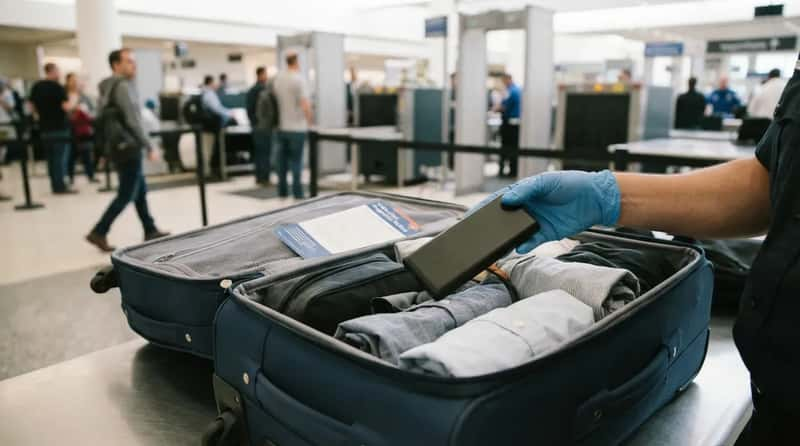
Spare lithium batteries and power banks are not allowed in checked luggage. The FAA requires them to travel in the cabin. The reason is fire risk: a damaged battery can overheat, and a crew can only reach it if it’s in the cabin.
Travellers who ignore this can end up with a bag opened or a battery confiscated. It’s a lousy surprise at the start of a long trip.
Fast Facts
- Cabin only: spare lithium batteries and power banks must ride with you
- Up to 100 Wh: generally allowed without special approval
- 101 to 160 Wh: needs airline approval, usually limited to two spares
- Typical phone power bank: a 10,000 mAh unit is roughly 37 Wh, well under the limit
Rules on using power banks during a flight have also tightened. Several airlines changed their policies in 2025, so check your carrier’s current rules before you fly. And the real clutter is the cables. Many travellers carry a tangle of them, when one multi-port charger would cover a phone, a tablet and a camera.
The next item rides in the carry-on, and it does a different kind of damage…
#4 – The Overstuffed Handbag That Wrecked Everyone’s Shoulders

A heavy shoulder bag can leave you sore after a single day of sightseeing. Tours mean carrying a bag from morning to evening, and everything adds up. Water bottles, umbrellas, snacks, a camera and a wallet quickly turn into several pounds.
Over a long day, one-sided weight pulls on the neck and back. By late afternoon, you’re not looking at the cathedral anymore. You’re looking for a bench.
Many experienced travellers switch to a lightweight cross-body bag or a small day pack, which spreads the load more evenly. The rule of thumb is to carry only what you’d need before you’re back at the hotel. Plenty of people also say hauling your passport around all day is the real mistake. Many hotels have a safe, and a photocopy often does for casual outings.
But the most common mistake of all is stuffed into suitcases as clothing…
#3 – A Pile of Bulky Sweaters Instead of Thin Layers

One thick sweater takes up the space of three thin layers. Long tours often cross climates, from cool mornings to warm afternoons. Bulky knitwear can be too hot indoors and still not warm enough in a cold wind.
Why It Stands Out
- Base layer: thin merino or synthetic that sits against the skin
- Mid-layer: a light fleece or knit you can peel off indoors
- Shell: a packable jacket that blocks wind and rain
- Bonus: mixing the pieces gives you far more outfits than one big sweater
It also dries slowly, and a damp sweater is miserable to wear.
Layering is what experienced travellers swear by. A thin base layer, a light mid-layer and a packable shell can adapt to nearly any weather. Merino wool and synthetic blends are lightweight and fast-drying. Three thin layers mixed differently can also make more outfits than one big sweater ever will.
The next one is the item that fills the suitcase before anything else…
#2 – Seven Pairs of Shoes for “Every Occasion”
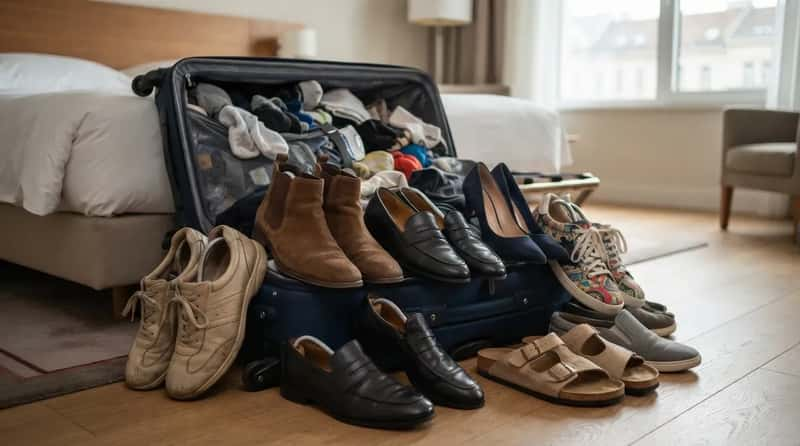
Shoes are the heaviest, bulkiest thing most travellers pack in excess. A single pair can weigh a pound or two, and shoes don’t compress. Packing a different pair for each outfit eats a huge share of your suitcase.
On most tours you end up wearing the same one or two pairs anyway. The rest ride along like unpaid passengers.
Many seasoned travellers settle on three pairs at most: comfortable walking shoes, a dressier option and sandals. They wear the bulkiest pair on the flight so it doesn’t count against the bag. Some tour fans say packing shoes to match outfits is the clearest sign of a first-timer. The people who’ve done it before pick outfits that match their shoes.
But the biggest regret of all is the bag that holds everything else…
#1 – The Oversized Suitcase You Can’t Lift Yourself
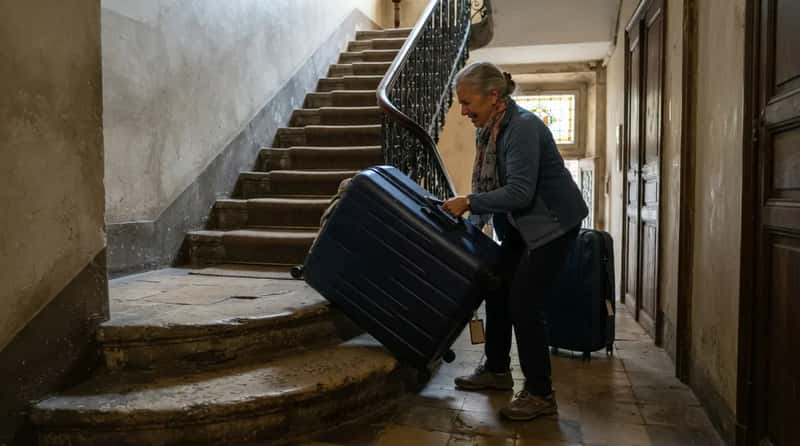
Many travellers say the suitcase itself was their biggest mistake. A big bag stuffed to the zipper is easy to fill and hard to move. Most U.S. airlines cap standard checked bags at 50 pounds (23 kg), and overweight fees can run $100 or more. Many international carriers set the limit even lower on some fares.
The real trouble begins off the plane. Older hotels may have steep stairs, tiny elevators or no lift at all, and cobblestone streets in many historic European cities can jam wheels.
At a Glance
- Typical checked limit: 50 lb (23 kg) on many U.S. airlines, lower on some international fares
- Empty weight: a large hard-shell case can weigh around 10 lb before you add a single sock
- What that means: roughly a fifth of a 50-lb allowance is just the bag
- Tour rules: many operators set their own luggage limits, so ask before you pack
A bag you can’t lift into a coach hold or up a flight of steps means asking strangers for help, and many travellers hate doing that. The best packers aim for a single bag they can lift on their own.
Look back over all 13 and a pattern shows up. Almost every regret comes from packing for the traveller you imagine, not the one who has to carry the bag. Shoes that aren’t broken in, a dryer that can burn out, pills in the wrong bag and a suitcase too heavy to lift all start as “just in case” choices.
Fast-drying layers, one trusted pair of shoes, medicine and batteries in the cabin, and a bag you can lift yourself solve most of it. Which item do you wish you’d left at home?